• IP addresses are NOT logged in this forum so there's no point asking. Please note that this forum is full of homophobes, racists, lunatics, schizophrenics & absolute nut jobs with a smattering of geniuses, Chinese chauvinists, Moderate Muslims and last but not least a couple of "know-it-alls" constantly sprouting their dubious wisdom. If you believe that content generated by unsavory characters might cause you offense PLEASE LEAVE NOW! Sammyboy Admin and Staff are not responsible for your hurt feelings should you choose to read any of the content here.

    The OTHER forum is HERE so please stop asking.

SIX YEARS INTO HYFLUX's COLLAPSE: Where did the “missing” $3 Billion go? Some investigations drag out for years and such mysteries never get solved.

Hyflux Director Simon Tay described retail investors as "noises"
See how cocky they were, please screenshot and keep


Singapore is going to the dogs

Simon Tay won the President's Award For Environment.
Double insult to Hyflux investors and disheartening that Singapore gives awards to undeserving evil-doers because of their background.

 
Olivia Lim is Ho Ching’s BFF…both women with short hair, butch & ugly and love to fuck men’s assholes.
 
Like Ong Beng Seng, the Hyflux trial is just a show for optics. Our country's regulators (PUB and MAS) are also clearly at fault, so everyone will just go through the motion and close case, who is going to return our hard-earned money? Where is our social safety net?
No one understand wtf is going on.555
 

Tuaspring project was riskier than a typical integrated plant: Hyflux prosecution witness​

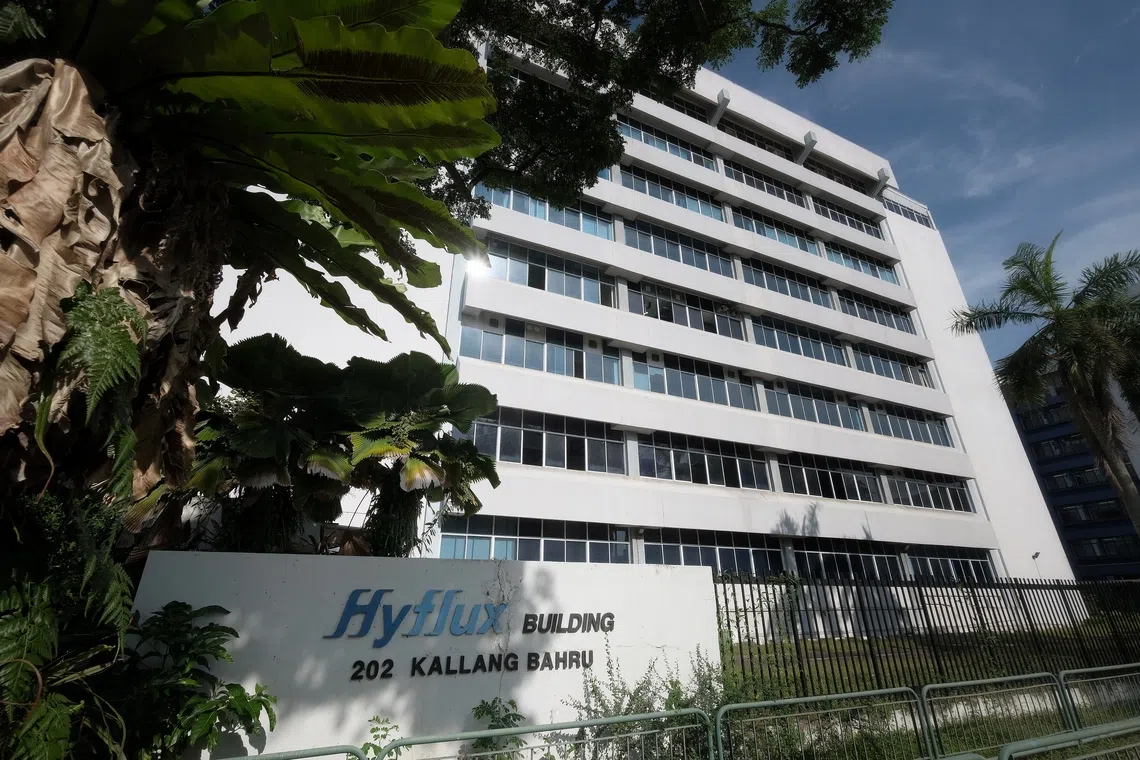
A Hyflux building at Kallang Bahru, 3 Jun 2020. The buildings looks like it is empty and unoccupied. The gates are locked and there are no guards in sight.


PUB committed to buying only desalinated water – and not electricity – from Tuaspring under a long-term agreement, the witness said.

Oct 27, 2025

SINGAPORE – The troubled Tuaspring plant came with a higher risk profile than what one bank lender understood to be typical of an integrated water and power plant (IWPP).

National water agency PUB committed to buying only desalinated water – and not electricity – from Tuaspring under a long-term agreement, according to Ms Jeanne Soh’s testimony at the State Courts on Oct 27.

Thus, margins could be squeezed depending on fluctuations in wholesale electricity pricing and the amount of electricity demanded, among other forms of risk arising from a new entry into power generation.

Ms Soh was part of a team at Sumitomo Mitsui Banking Corporation (SMBC) that worked on the Tuaspring loan negotiations at the time.

She is the first prosecution witness from among a group of six banks, which in 2010 and 2011 were in discussions with Hyflux to finance the plant for which the now defunct water treatment provider won the tender.

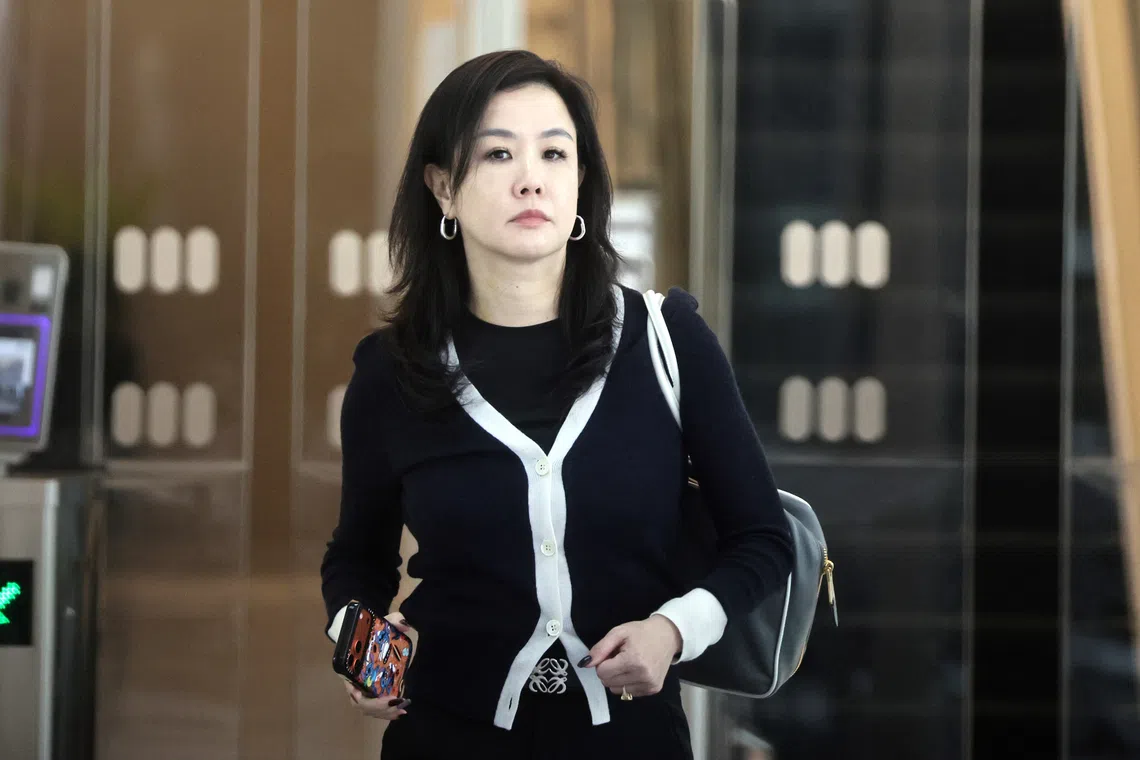
Former Hyflux chief executive Olivia Lum is facing charges of non-disclosure of material information in announcing the project win in March 2011, as well as in the issue of preference shares the following month, relating to Hyflux’s entry into power generation.

When Deputy Public Prosecutor Eric Hu asked about Ms Soh’s understanding of an IWPP, she said: “(Tuaspring is) different from our understanding of (an) IWPP because only the water has (a) purchase agreement and not the power.”

Ms Soh was then a vice-president of structured finance for the Asia-Pacific, dealing with energy and infrastructure projects for SMBC.

The other five banks involved were DBS Bank, Mizuho Corporate Bank, BNP Paribas, ANZ and MUFG.


The banks assessed that excess power generated by the power plant likely needed to be sold to the wholesale market, especially as it was not clear if the Energy Market Authority or electricity retailers were going to commit to buying electricity in advance, she said.

She contrasted this with IWPPs in the Middle East, where she said such integrated plants are more commonly found than in Asia. These typically have agreements in place for both water and electricity purchase, she said.

Ultimately, only SMBC, Mizuho and DBS collectively offered a loan of $150 million for the desalination plant – down from an initial proposal of $537 million for the whole project.

Earlier in her testimony, Ms Soh had said the understanding SMBC had in June 2010 was of Tuaspring as a desalination plant that PUB had called a tender for, with a water purchase agreement that was “quite in line with what we see on the market”.

Responding to another question from Mr Hu, Ms Soh said the six banks learnt of the power plant around November 2010.

“We were all quite surprised, or very surprised, because we were not expecting they were going to build a power project along with the desalination plant.”


Mr Hu then asked Ms Soh to give a walkthrough of the risks she highlighted in an e-mail dated Nov 19, 2010, to then Hyflux chief financial officer Cho Wee Peng.

Cho has been charged with conniving in Hyflux’s omission to disclose the information about Tuaspring.

Of the e-mail, Ms Soh said: “After learning that they are going to build a power plant, the lenders decided to come together to highlight the risk associated with the power plant to Hyflux.”

Asked about Hyflux’s response to the e-mail, Ms Soh said: “They continued to provide us with whatever information they (could) give at that point in time.”

These concerns from the November e-mail would later culminate in an 18-point list of questions the loan syndicate sent to Hyflux in December 2010.

The banks wanted to know how Hyflux intended to compete with the three dominant power generation companies then – PowerSeraya Group, Tuas Power and Senoko Power – given Hyflux’s inexperience with power generation.

They also sought a breakdown of cash flow projections between the power plant and desalination plant.

In addition, they wanted to find out if the loan facility for the desalination plant could access the cash flow for the power project as collateral, and vice versa.

“The two projects, notwithstanding that they called it an integrated project, to us, they are two different risk profiles,” Ms Soh said.

This also meant the potential need for the desalination plant to have a shorter loan tenor, with a more rapid rate of repayment.

Other concerns raised by the banks included how Hyflux arrived at the financial buffer built in for cost overrun and the completion schedule for the power plant and the desalination plant.

“If the power project gets delayed, the power project will not be able to supply electricity to the desalination plant,” Ms Soh said.

She added that costs would potentially be higher if Tuaspring needed to buy power from the grid in the meantime, impacting the ability for loans to be repaid.

A side letter signed by the banks was later issued in January 2011 to formally state their concerns.

Mr Hu also asked Ms Soh about the phrasing of an in-principle commitment letter issued for the desalination plant loan.

The letter had mentioned “in-principle management support”, instead of “in-principle approval”.

Ms Soh said the lenders were not comfortable with “using such strong language”, with the project having evolved to include a power plant. She also noted that the letter was not binding.

Two separate loan structures, with a higher debt servicing coverage ratio requirement of 1.5 times to 1.75 times or even higher for the power plant, were also mooted.

Near the end of the three-hour hearing, Mr Hu showed Ms Soh a tabulation of cash flow figures extracted from the financial model Hyflux had provided in seeking the loan. Mr Hu said: “Without the sale of power, no matter how much of (the) water is sold, the net cash flow will be negative.”

Lum’s defence counsel, Senior Counsel Davinder Singh, repeatedly objected to this tabulation.

“This document was not in existence, nor was this format in existence, at the material time,” said Mr Singh.

Nonetheless, Principal District Judge Toh Han Li initially allowed Ms Soh to refer to the tabulation.

Subsequently, Mr Singh said the document “leads one to (a) certain conclusion”, and had only been produced at the trial itself.

He added that “(to) suggest these are the numbers, these are the minuses, these are the pluses, leads the witness”.

The judge then called for the tabulation to be taken off Ms Soh’s display screen on the stand.

Mr Singh also objected to questions from Mr Hu on why SMBC did not take part in a subsequent $720 million loan by Maybank for the project.

“The foundation has not been established (on) whether SMBC was invited to be part of this facility.”

Rephrasing, Mr Hu asked if SMBC was involved in discussions on the loan with Maybank. Ms Soh said no in reply.

The trial continues.

 

Hyflux did not initially reveal power plant plan to avoid leak of its strategy, says defence​

Sumitomo Mitsui Banking Corporation executive Jeanne Soh said she did not remember if Hyflux’s power strategy was shared with SMBC.


Sumitomo Mitsui Banking Corporation executive Jeanne Soh said she did not remember if Hyflux’s power strategy was shared with SMBC.

Summary
  • Hyflux initially withheld its power plant plans from banks to prevent bidding strategy leaks to competitors for the Tuaspring project.
  • After submitting its bid, Hyflux shared its power strategy and financial model with the banks, who remained "supportive" despite their concerns.
  • Banks clarified "management support" meant credit approval was pending due diligence, and they continued working with Hyflux despite power plant risks.
AI generated

Oct 28, 2025

SINGAPORE – Hyflux did not initially tell potential bank lenders about plans to build a power plant, as it wanted to ensure “there was no leak of its bidding strategy to competitors” before it submitted its bid for the Tuaspring project, the defence told the State Courts on Oct 28.

In trying to show that there was nothing untoward about Hyflux not revealing its power strategy initially, lawyer Jaikanth Shankar – part of the legal team representing

Hyflux founder Olivia Lum – cited earlier trial testimony from Mr Nah Tien Liang.

Mr Nah, who is Hyflux’s former vice-president of investment, had made reference to an Oct 8, 2010 mandate letter, which spells out the conditions under which Hyflux and the consortium of banks will work towards a loan facility.

He had said that this letter did not reference the power plant because Hyflux viewed the power plant as being “very strategic”, Mr Shankar noted in his cross-examination of Sumitomo Mitsui Banking Corporation (SMBC) executive Jeanne Soh.

But after its bid was submitted on Oct 21, 2010, Mr Shankar said Hyflux voluntarily and openly shared its confidential information with the banks, including its bidding strategy and the power plant.

Ms Soh said she did not remember if Hyflux’s power strategy was shared with SMBC.

“But there was information shared with us,” said Ms Soh, now a managing director for structured finance at SMBC.

The consortium of banks comprised SMBC, DBS, Mizuho Corporate Bank, BNP Paribas, MUFG and ANZ.

In October 2010, they issued in-principle commitment to Hyflux’s $527 million term loan request, for its bid for the desalination project tender from national water agency PUB.

However, the banks did not know until November 2010 that the Tuaspring project included a power plant as well.

Lum, former chief financial officer Cho Wee Peng and four independent directors are fighting their non-disclosure charge, among other charges.

Mr Shankar pointed out that Hyflux “moved reasonably quickly in sharing its power strategy and financial model with the banks” soon after it submitted its bid.

He pointed out that the water treatment firm shared its power strategy with the banks in mid-November.

It also shared its financial model on Dec 1, 2010, and offered to provide a briefing on its power strategy and proposed power organisation on Dec 3 that year.

The lawyer also pointed to a Dec 8, 2010 letter that SMBC sent to Hyflux, after the consortium was informed of the company’s power strategy, power plant and financial model.

In this letter, it acknowledged it remained “supportive of (Hyflux’s) bid for this project”.

It said: “Subject to our financial credit committee’s approval, mutual agreement of the financing terms and satisfactory evaluation, we will work closely with you towards a successful financial close if you are awarded the preferred bidder.”

When the consortium of banks informed Hyflux in January 2011 that they were willing to explore financing the project, the word “approval” was replaced with the phrase “management support”.

The defence took Ms Soh through a Jan 12, 2011 e-mail from SMBC’s Mr Allen Hsiao to Hyflux, in which Mr Hsiao explained that the banks used “management support” because it reflected the status of the credit application process at the time.

Mr Shankar asked: “All the banks were saying at this stage was they haven’t received credit committee approval, and they want to make sure their letter reflected that?”

Ms Soh replied: “It’s clear that it’s not the credit approval stage. We preferred the phrase management support, not approval.”

The lawyer then asked: “In view of what was said about ‘management support’, management was supportive of the (Hyflux) bid?”

Ms Soh replied: “Management was supportive of us continuing to explore financing with Hyflux.”

The defence also took Ms Soh through a Jan 13, 2011 e-mail she had sent to Hyflux’s Jinny Goh. In it, Ms Soh said the bank group had discussed extensively on the “management support” phrase, and finally agreed to insert the debt amount of the power facility after initially wanting to remove it.

On Jan 14, 2011, the banks sent Hyflux another letter on its request for submission to PUB.

They said that they had in-principle management support to provide a credit facility of up to $283 million for the water desalination plant, and up to $244 million for the power plant.

It was important to split the two plants as they had different risk profiles, Ms Soh said on Oct 27.

When asked about the Jan 14, 2011 letter in her cross-examination, Ms Soh explained: “The language we used is heavily disclaimed because we have not proceeded with our due diligence of the power plant... It reflected what was provided by Hyflux to us because we have not done our own due diligence.”

Mr Shankar asked: “If at any point, the banks were so concerned about the project, the risk profile and bankability that they didn’t want to touch it, they would have said so to Hyflux?... In fact, if that was their view, they wouldn’t have issued the Jan 14, 2011 letter?”

Ms Soh replied: “I can’t speak for the other banks, but from SMBC’s perspective, we still do not have enough information about the power project.

“We still have concerns, but we (didn’t) walk away. We still continued to work with (Hyflux).”
 

Defence, prosecution spar over Hyflux’s stated plans for share issue proceeds​

Corporate lawyer Ng Joo Khin was called to the stand on Nov 17 as the 18th prosecution witness.


Corporate lawyer Ng Joo Khin was called to the stand on Nov 17 as the 18th prosecution witness.


Summary
  • Hyflux's Olivia Lum faces charges over non-disclosure of material information regarding its entry into power generation in 2011.
  • Corporate lawyer Ng Joo Khin testified that his firm had drafted a share offer information statement (OIS) based on Hyflux's instructions.
  • Disagreement arose over the accuracy of disclosures on how Hyflux intended to use proceeds, with the defence arguing it's unrelated to the charges.
AI generated

Nov 17, 2025

SINGAPORE – The accuracy and relevance of disclosures relating to how Hyflux intended to use proceeds generated from a preference share issuance in 2011 became a bone of contention in court on Nov 17.

Tense exchanges between Deputy Chief Prosecutor (DCP) Christopher Ong and Senior Counsel Davinder Singh, who is defending former Hyflux chief executive Olivia Lum, punctuated proceedings throughout the day.

Lum is accused of failing to disclose material information in both the initial announcement of the Tuaspring project win in March 2011 and subsequent share issue in April 2011, regarding the defunct water treatment provider’s entry into power generation.

Corporate lawyer Ng Joo Khin was called to the stand on Nov 17 as the 18th prosecution witness.

Mr Ng, who is with a law firm known then as Stamford Law and now as Morgan Lewis Stamford, had advised Hyflux on the share issue and preparation of the shares’ offer information statement (OIS) in 2010 and 2011.

DCP Ong began by asking Mr Ng about the role Stamford Law played in the OIS drafting.

Mr Ng said the law firm prepared the first draft of the OIS based on instructions and information from Hyflux’s management, as well as relevant public information.

There were then several rounds of exchange between Hyflux and the law firm, he added.

Mr Ng said it was rare for firms that were not banks to issue preference shares.

DCP Ong went on to ask Mr Ng if anyone at Hyflux had told him the reason it wanted to issue preference shares, to which he replied he did not recall being told.

Mr Ng said Ms Joscelyn Tan, Hyflux’s former legal officer for corporate finance, had first approached him about the share issue.

DCP Ong moved on to ask Mr Ng various questions about the parts of the OIS dated April 13, 2011, detailing Hyflux’s plans for the share issue proceeds.

The document said: “The net proceeds from the issue of the Class A cumulative preference shares will be used to fund the group’s water and infrastructure projects and for general working capital in the estimated proportions of 80 per cent and 20 per cent, respectively.”

DCP Ong asked Mr Ng: “If the entire proceeds were instead used to fund just one particular project, would that be consistent with what is stated here?”

Responding, Mr Ng said the “usual advice” given in that scenario would be for Hyflux to specify what the project was.

Mr Singh rose to object, sparking an extended exchange with DCP Ong.

The defence lawyer said the charges and allegations against Lum did not relate to whether disclosures on the use of the proceeds were misleading or inaccurate.

He added that the “only allegation” before this line of questioning was that Hyflux did not disclose three pieces of information: its entry into the electricity business, that the sale of electricity would make up a large part of Tuaspring’s revenue, and that the profitability of the project hinged on electricity sales.

“This new line (of questioning) is about the use of the funding, which is a completely different thing,” Mr Singh said.

Demurring, DCP Ong said the statement on the use of proceeds was “part and parcel of the concealment of the true nature of the Tuaspring project”.

Principal District Judge Toh Han Li interjected, saying he preferred the prosecutor did not go on for too long with the line of questioning.

To this, DCP Ong said the questions were relevant to show if there was a decision at the time of the OIS to hide aspects of the Tuaspring project, as evidence on “obfuscating the use of the preference shares” goes towards proving intent to omit the three pieces of information.

The judge said he would allow the questions, but reserved judgment on how to evaluate the evidence on usage of proceeds and whether to place any weight on it.

Mr Singh cross-examined Mr Ng when court resumed after lunch.

He asked Mr Ng about the extent of oversight he had on the drafting of the OIS.

To this, Mr Ng said he mainly worked with a team comprising then junior partner Soh Chun Bin and two associates, including one named Leo SueAnne.

He also said Ms Leo would “more likely than not” be the one looking at each section of the OIS for compliance with Singapore Exchange listing rules then.

Mr Singh asked if Ms Leo had helped draft the OIS and examined the drafts for compliance with listing rules, including asking Hyflux for necessary information, and Mr Ng replied yes.

Mr Ng also later said Ms Leo was senior enough to decide if any changes needed discussion with him.

Mr Singh then asked Mr Ng to compare two drafts of the OIS: one from March 8, 2011, and another from March 17, 2011.

The defence lawyer pointed out that a paragraph on plans to build a power plant to supply electricity to the desalination plant in Tuaspring, and that excess power would be sold to the power grid, was not added by Ms Leo, but by Hyflux.

Mr Singh pointed out that Mr Ng’s team would have had access to that information, as it was included in the March 7, 2011, announcement of the project win and was public information, appearing to suggest that the lawyers should have included the public information in the draft disclosures but did not.

Mr Singh repeatedly suggested to Mr Ng that he did not read the drafts closely, or he would have understood that the paragraph signalled Hyflux’s entry into a new business.

“(What) is clear is that it was Hyflux, who having seen Stamford’s draft... communicated this information and asked to insert this information in this section,” he added, later clarifying for the judge that the addition was a tracked change in a document.

Mr Singh is expected to continue his cross-examination of Mr Ng on Nov 18. Ms Joscelyn Tan of Hyflux is slated to be the next witness after him.
 
Back
Top