
- Joined
- Jul 19, 2011
- Messages
- 28,322
- Points
- 113
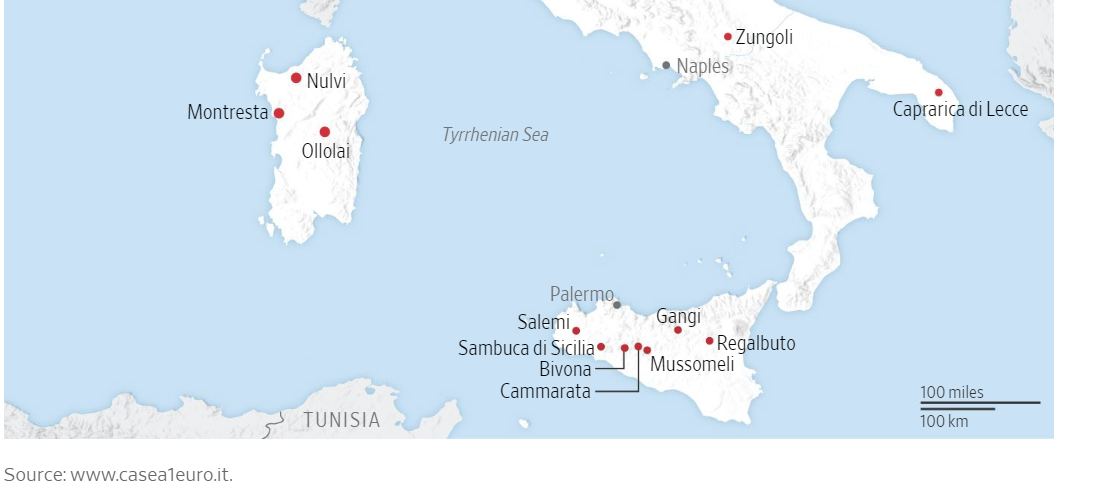
Leonardo Ciaccio, mayor of Sambuca in Sicily, put 16 houses up for auction at a starting price of €1 early this year as part of an effort to halt the depopulation of his small town. Within weeks, more than 100,000 people, mostly from the U.S., requested information.
“We had to hire people who speak English,” Mr. Ciaccio said. “At some point, we were joking in the office that there was no point in answering the phone: Nobody calling spoke Italian.”
Staff at the town hall took turns taking tour groups twice a day around the ancient settlement in Sicily’s western hills. Sambuca sold all 16 houses, choosing the highest bidders able to commit to renovating the dilapidated properties.
“Now Sambuca is in a renaissance,” said the mayor, who is preparing another auction of abandoned properties in coming months.
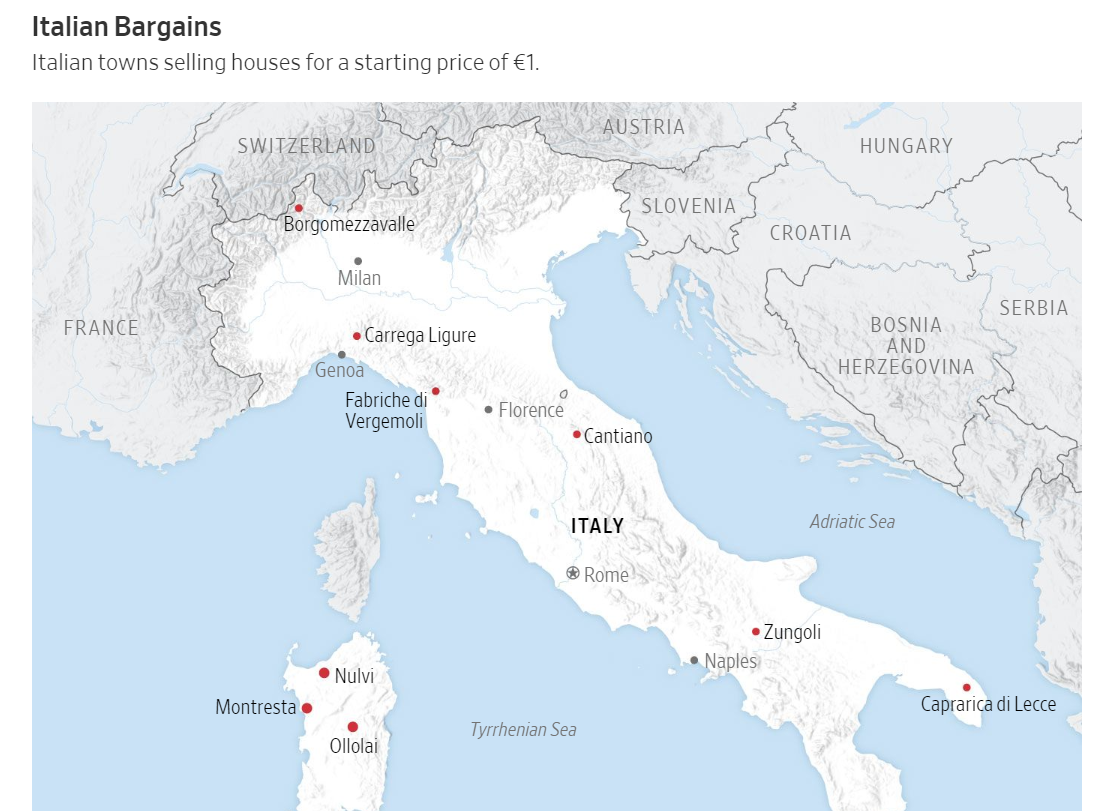
Sambuca isn’t alone in resorting to such tactics. According to www.casea1euro.it, 16 towns in Italy, most of them in the poorer south, are selling abandoned houses for as low as €1—about $1.11. The catch: Buyers need to renovate them.
Other depopulated areas of Italy offer other financial incentives to Italians or foreigners. The northern region of Emilia Romagna pays up to €30,000 to young couples who buy or renovate a house in small communities in the Apennine Mountains, and gives tax breaks to companies that move there.
The region of Molise, which lies east of Rome but is so off the beaten track that Italians joke it doesn’t really exist, recently offered a stipend of €700 a month for three years to anyone, Italian or otherwise, who settles in its underpopulated villages. Newcomers must pledge to open a business or renovate a property.
Small towns and villages in many European countries are under demographic pressure as people leave for big cities and those remaining have fewer children. The population of rural areas across the European Union, currently about 142 million, is projected to fall by around 8 million by 2050, according to Epson, an EU-funded research program. Urban areas, in contrast, are forecast to gain 24 million inhabitants by then.
Small-town shrinkage is particularly acute in Southern Europe, where immigration compensates less for locals moving away: Migrants tend to settle in Northern Europe or large cities, Epson found.
In Italy, as small towns have lost people, some have also lost basic services, from pharmacies to schools, rendering their future still bleaker. Rome-based think-tank Openpolis says such a vicious circle of depopulation threatens more than 4,200 towns in Italy.
In Sambuca, a jumble of baroque buildings with an Arabic quarter from the Middle Ages, the number of residents has fallen by roughly 30% since the early 1950s to 5,800. The decline has been especially rapid in the last 15 years.
Many people from small towns doubt that auctioning off empty houses can solve the wider problem, but praise such initiatives for at least attracting attention. “It won’t be the solution, but something at least is moving,” said Massimo Castelli, mayor of the northern Italian village of Cerignale.
Sambuca’s auctioned houses sold for a few thousand euros on average, said Mr. Ciaccio, the mayor. The highest bid was €25,000, paid by a woman from Virginia.
The first round of auctions attracted so many buyers that Sambuca residents sold roughly 100 additional houses privately, Mr. Ciaccio said, most of them in good condition.
Robert Duong, a 39-year-old former actuary from St. Louis, Mo., bought one of the privately offered houses. When he first visited Sambuca, he was afraid the locals wouldn’t accept Americans like him who don’t speak Italian.
“It was quite the opposite. People were incredibly nice and generous with their time,” Mr. Duong said. He is renovating his house, for which he paid €30,000, and hopes to start spending long periods in Sambuca so he can gain Italian residency and perhaps work as an English teacher.
“It’s incredible how lonely you can feel when you live in big cities,” said Mr. Duong, who lived in New York City for many years. “I wanted to be part of a community. This is what I needed.”
Mr. Duong said Sambuca’s residents gave him tours and advice on everything from how to buy a car to how to get health insurance. Many invited him to their homes for drinks or dinner.
Marie Ohanesian Nardin, a California-born writer who is married to a gondolier from Venice and already lives in Italy, found a privately offered house in Sambuca that appealed to her, partly because it didn’t need much restoration. “Many homes had been abandoned for a long time and there was a lot of work to do,” she said.
Massoud Ahmadi, an economic consultant from near Washington, snapped up an auctioned three-story house, topped by a terrace and located in the center of the town, for €10,150. He is learning Italian and plans to spend several months a year working remotely in Sambuca. Mr. Ahmadi has hired a local architect, Domenico Carì, to renovate the place at a projected cost of €50,000 to €60,000.
“This has been a revolution for Sambuca,” Mr. Carì said.
Another client of Mr. Carì is actress Lorraine Bracco, best known for her psychiatrist role in “The Sopranos,” who also bought a house at auction in Sambuca. Discovery Channel has been filming a show that follows Ms. Bracco’s renovation of her house.
Ms. Bracco later bought the house next door and plans to connect the two, turning them into a large vacation house for herself, her family and friends.
Mr. Carì sees the new arrivals bringing more than just economic value. “When newcomers arrive here who marvel at seeing a flock of sheep or a tiny chapel, it touches your heart,” he said.
Write to Giovanni Legorano at [email protected]
“We had to hire people who speak English,” Mr. Ciaccio said. “At some point, we were joking in the office that there was no point in answering the phone: Nobody calling spoke Italian.”
Staff at the town hall took turns taking tour groups twice a day around the ancient settlement in Sicily’s western hills. Sambuca sold all 16 houses, choosing the highest bidders able to commit to renovating the dilapidated properties.
“Now Sambuca is in a renaissance,” said the mayor, who is preparing another auction of abandoned properties in coming months.
Sambuca isn’t alone in resorting to such tactics. According to www.casea1euro.it, 16 towns in Italy, most of them in the poorer south, are selling abandoned houses for as low as €1—about $1.11. The catch: Buyers need to renovate them.
Other depopulated areas of Italy offer other financial incentives to Italians or foreigners. The northern region of Emilia Romagna pays up to €30,000 to young couples who buy or renovate a house in small communities in the Apennine Mountains, and gives tax breaks to companies that move there.
The region of Molise, which lies east of Rome but is so off the beaten track that Italians joke it doesn’t really exist, recently offered a stipend of €700 a month for three years to anyone, Italian or otherwise, who settles in its underpopulated villages. Newcomers must pledge to open a business or renovate a property.
Small towns and villages in many European countries are under demographic pressure as people leave for big cities and those remaining have fewer children. The population of rural areas across the European Union, currently about 142 million, is projected to fall by around 8 million by 2050, according to Epson, an EU-funded research program. Urban areas, in contrast, are forecast to gain 24 million inhabitants by then.
Small-town shrinkage is particularly acute in Southern Europe, where immigration compensates less for locals moving away: Migrants tend to settle in Northern Europe or large cities, Epson found.
In Italy, as small towns have lost people, some have also lost basic services, from pharmacies to schools, rendering their future still bleaker. Rome-based think-tank Openpolis says such a vicious circle of depopulation threatens more than 4,200 towns in Italy.
In Sambuca, a jumble of baroque buildings with an Arabic quarter from the Middle Ages, the number of residents has fallen by roughly 30% since the early 1950s to 5,800. The decline has been especially rapid in the last 15 years.
Many people from small towns doubt that auctioning off empty houses can solve the wider problem, but praise such initiatives for at least attracting attention. “It won’t be the solution, but something at least is moving,” said Massimo Castelli, mayor of the northern Italian village of Cerignale.
Sambuca’s auctioned houses sold for a few thousand euros on average, said Mr. Ciaccio, the mayor. The highest bid was €25,000, paid by a woman from Virginia.
The first round of auctions attracted so many buyers that Sambuca residents sold roughly 100 additional houses privately, Mr. Ciaccio said, most of them in good condition.
Robert Duong, a 39-year-old former actuary from St. Louis, Mo., bought one of the privately offered houses. When he first visited Sambuca, he was afraid the locals wouldn’t accept Americans like him who don’t speak Italian.
“It was quite the opposite. People were incredibly nice and generous with their time,” Mr. Duong said. He is renovating his house, for which he paid €30,000, and hopes to start spending long periods in Sambuca so he can gain Italian residency and perhaps work as an English teacher.
“It’s incredible how lonely you can feel when you live in big cities,” said Mr. Duong, who lived in New York City for many years. “I wanted to be part of a community. This is what I needed.”
Mr. Duong said Sambuca’s residents gave him tours and advice on everything from how to buy a car to how to get health insurance. Many invited him to their homes for drinks or dinner.
Marie Ohanesian Nardin, a California-born writer who is married to a gondolier from Venice and already lives in Italy, found a privately offered house in Sambuca that appealed to her, partly because it didn’t need much restoration. “Many homes had been abandoned for a long time and there was a lot of work to do,” she said.
Massoud Ahmadi, an economic consultant from near Washington, snapped up an auctioned three-story house, topped by a terrace and located in the center of the town, for €10,150. He is learning Italian and plans to spend several months a year working remotely in Sambuca. Mr. Ahmadi has hired a local architect, Domenico Carì, to renovate the place at a projected cost of €50,000 to €60,000.
“This has been a revolution for Sambuca,” Mr. Carì said.
Another client of Mr. Carì is actress Lorraine Bracco, best known for her psychiatrist role in “The Sopranos,” who also bought a house at auction in Sambuca. Discovery Channel has been filming a show that follows Ms. Bracco’s renovation of her house.
Ms. Bracco later bought the house next door and plans to connect the two, turning them into a large vacation house for herself, her family and friends.
Mr. Carì sees the new arrivals bringing more than just economic value. “When newcomers arrive here who marvel at seeing a flock of sheep or a tiny chapel, it touches your heart,” he said.
Write to Giovanni Legorano at [email protected]


