
-
IP addresses are NOT logged in this forum so there's no point asking. Please note that this forum is full of homophobes, racists, lunatics, schizophrenics & absolute nut jobs with a smattering of geniuses, Chinese chauvinists, Moderate Muslims and last but not least a couple of "know-it-alls" constantly sprouting their dubious wisdom. If you believe that content generated by unsavory characters might cause you offense PLEASE LEAVE NOW! Sammyboy Admin and Staff are not responsible for your hurt feelings should you choose to read any of the content here. The OTHER forum is HERE so please stop asking.
You are using an out of date browser. It may not display this or other websites correctly.
You should upgrade or use an alternative browser.
You should upgrade or use an alternative browser.
Taiwan Media call PM Lau Lan Wong IDIOT, 白痴!!!
- Thread starter Eisenhut
- Start date
Not too long ago…TW media still singing praise of Mr Wong de woh
really praise to sky !!


- Joined
- May 16, 2023
- Messages
- 47,529
- Points
- 113
Taiwan roti prata
really praise to sky !!
- Joined
- May 16, 2023
- Messages
- 47,529
- Points
- 113
Ask himself to diam diam lah, dun know how many Nippon Bu he fucked and how much Nippon $$$$ in his pocket
新加坡的那个白痴! Tell that Singapore idiot how many Chinese the Japanese occupation kill!
When was small, entertainment was limited. Used to stroll along Elizabeth Walk, crossing over to the Padang towards SRC. From there, could see the War Memorial Monument and was told about the sacrifices of the heroes who had died during the war.

- Joined
- Aug 10, 2008
- Messages
- 13,688
- Points
- 113
Have you ever stepped out of your village? Kampong Buangkok?
- Joined
- Aug 10, 2008
- Messages
- 13,688
- Points
- 113
They already died. They are dead. They are dead because Japanese killed them. They are fighting a war. Singapore was still a colony under British.When was small, entertainment was limited. Used to stroll along Elizabeth Walk, crossing over to the Padang towards SRC. From there, could see the War Memorial Monument and was told about the sacrifices of the heroes who had died during the war.
There's no Republic of Singapore yet. Which era are you born???
They already died. They are dead. They are dead because Japanese killed them. They are fighting a war. Singapore was still a colony under British.
There's no Republic of Singapore yet. Which era are you born???
We talking about Chinese.
Fact:
Singapore population is 70% Chinese who has Chinese names.
- Joined
- May 16, 2023
- Messages
- 47,529
- Points
- 113
China's Real Estate Collapse Sends Local Debt To Record $18.9 Trillion

BY TYLER DURDEN
THURSDAY, DEC 04, 2025 - 11:35 AM
Almost 20 years ago, when the Lehman/AIG collapse and the ensuing global financial crisis sent the world into a brief but acute depression, it was China's massive debt-fueled growth dynamo that kick started the world economy and lifted the globe out of what would have been a lost decade - if not worse. The one trade off to this historic kickstart: China ended up doubling its total debt, which then continued growing at an exponential rate until the covid collapse sent China's property sector - the biggest asset of its massive middle class - into a tailspin, and sparked a historic economic crisis. Only this time, because its total debt was already at 350% of GDP, Beijing no longer could wave a magic debt wand, inject a few trillions in credit, and make it all go away. Instead, the housing market has been in steady decline for the past 5 years and if anything, the decline has accelerated now that China's Vanke - the last remaining state-backed property giant - is on the verge of collapse.
Unfortunately for China, which has done an admirable job of shoving all its economic woes under the rug while pretending it is growing at a immutable 5% year in and out, it's about to get worse.
As Japan's Nikkei reports, China's local government debt continues to balloon as the prolonged, 5-year-long and counting, real estate slump has led to slumping income from property sales, pushing local government bond issuance for the year to a record high.
The total owed by local governments and the local government financing vehicles (LGFV) that fund their projects now sits at an estimated 134 trillion yuan ($18.9 trillion), which suggests that total public debt to GDP is far above 200%... and rising (by comparison in the US it is 100%... and rising). Add another 200% in private sector debt, and you can see why China debt problem is even bigger than that of Japan. It's also what, according to Rabobank's Michael Every, underlines China’s structural necessity to maintain capital controls and a vast, neo-mercantilist trade surplus (i.e., China will continue dumping goods and exporting deflation as the alternative means game over).
We talking about Chinese.
Fact:
Singapore population is 70% Chinese who has Chinese names.
- Joined
- Jan 23, 2022
- Messages
- 2,634
- Points
- 113
It was only in the early 1900s that the Chinese People call themselves Zhonggouren - but whom were the People of Chin, in reference to the 1st Emperor of China - the mortal who unified the huge landmass and more.
It was the brutal and savage communists who imposed the term zhonggouren upon the Chinese People.
Many millions Chinese were starved or killed by the communists. Many others fled to other nations to rebuild better lives.
Only morons would identify themselves with a proven brutal and failed ideology and call themselves as zhoungggouren.
Chinese are People of Chin, or refer themselves as Han Chinese, in reference to the golden age of the Han empire that reigned and improve upon what the 1st Emperor of Chin had started that lasted 400 years and uplifted a race whom have distinctive facial features and dna.
It was the brutal and savage communists who imposed the term zhonggouren upon the Chinese People.
Many millions Chinese were starved or killed by the communists. Many others fled to other nations to rebuild better lives.
Only morons would identify themselves with a proven brutal and failed ideology and call themselves as zhoungggouren.
Chinese are People of Chin, or refer themselves as Han Chinese, in reference to the golden age of the Han empire that reigned and improve upon what the 1st Emperor of Chin had started that lasted 400 years and uplifted a race whom have distinctive facial features and dna.
- Joined
- Sep 13, 2023
- Messages
- 2,991
- Points
- 113
- Joined
- May 16, 2023
- Messages
- 47,529
- Points
- 113
After 1911 武昌起义bahIt was only in the early 1900s that the Chinese People call themselves Zhonggouren - but whom were the People of Chin, in reference to the 1st Emperor of China - the mortal who unified the huge landmass and more.
It was the brutal and savage communists who imposed the term zhonggouren upon the Chinese People.
Many millions Chinese were starved or killed by the communists. Many others fled to other nations to rebuild better lives.
Only morons would identify themselves with a proven brutal and failed ideology and call themselves as zhoungggouren.
Chinese are People of Chin, or refer themselves as Han Chinese, in reference to the golden age of the Han empire that reigned and improve upon what the 1st Emperor of Chin had started that lasted 400 years and uplifted a race whom have distinctive facial features and dna.
- Joined
- Aug 10, 2008
- Messages
- 13,688
- Points
- 113
I think Chinese , indian and Malay died too.We talking about Chinese.
Fact:
Singapore population is 70% Chinese who has Chinese names.
Don't be racist.
Malays are also dweller of this land.
- Joined
- May 16, 2023
- Messages
- 47,529
- Points
- 113
Malay regiment bravery exhibited in Kent Ridge battle is well documentedI think Chinese , indian and Malay died too.
Don't be racist.
Malays are also dweller of this land.
Aussie infantry also fought very well too
- Joined
- Sep 13, 2023
- Messages
- 2,991
- Points
- 113
Don't be an idiot and disgrace your ancestors. Everywhere the Japanese colonised, they brutalised the natives, whatever race they were. The Chinese had it the worse because of China was key to Japan's 'prosperity' and imperial dreams, but all suffered.I think Chinese , indian and Malay died too.
Don't be racist.
Malays are also dweller of this land.
So don't be a fucking traitor and lick Japanese asses. Even LKY once said you can never trust the Japanese; they have never apologised nor made reparations for all their atrocities - Musha Incident, Sook Ching, comfort women, Unit 731 (biological/chemical warfare experiments on prisoners), public beheading of any natives who resist, torture, etc etc.
- Joined
- Sep 13, 2023
- Messages
- 2,991
- Points
- 113
Laulan Wong, please learn from Korean president Lee Jae Myung on how to make a neutral, constructive comment as a head of state:
https://www.channelnewsasia.com/eas...a-japan-spat-take-sides-lee-jae-myung-5529876
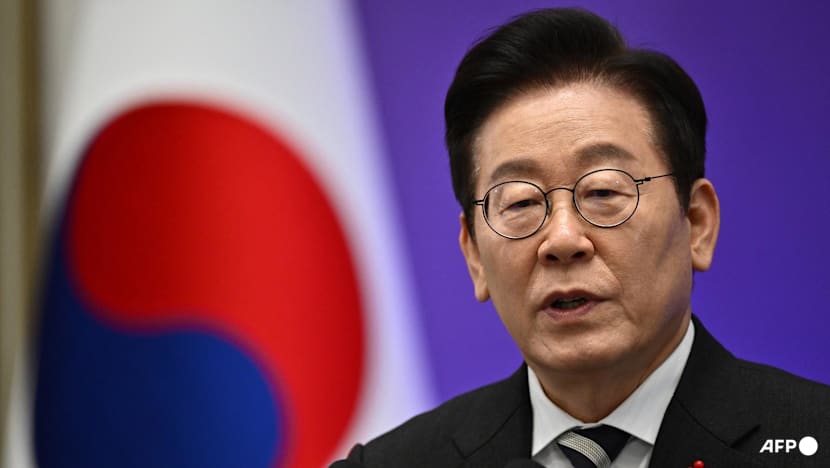
South Korea President Lee Jae Myung holds a press conference at the
Blue House in Seoul on Dec 3, 2025, the first anniversary of the
declaration of martial law by ousted president Yoon Suk Yeol.
SEOUL: South Korea's leader said on Wednesday (Dec 3) that his country wouldn't take sides in an escalating war of words between Japan and China, calling for the two sides to "coexist".
Tokyo and Beijing have been locked in a dispute after Japanese Prime Minister Sanae Takaichi suggested that Tokyo could intervene militarily should China invade Taiwan.
The comments triggered a sharp diplomatic backlash from Beijing, which has urged its citizens to avoid travelling to Japan.
Speaking in Seoul, President Lee Jae Myung told a news conference that taking sides would only worsen tensions.
"The ideal approach is to coexist, respect one another, and cooperate as much as possible," he said, describing northeast Asia as a "highly dangerous region in terms of military security".
https://www.channelnewsasia.com/eas...a-japan-spat-take-sides-lee-jae-myung-5529876
South Korea shouldn't take sides in China, Japan spat: President
South Korea President Lee Jae Myung holds a press conference at the
Blue House in Seoul on Dec 3, 2025, the first anniversary of the
declaration of martial law by ousted president Yoon Suk Yeol.
SEOUL: South Korea's leader said on Wednesday (Dec 3) that his country wouldn't take sides in an escalating war of words between Japan and China, calling for the two sides to "coexist".
Tokyo and Beijing have been locked in a dispute after Japanese Prime Minister Sanae Takaichi suggested that Tokyo could intervene militarily should China invade Taiwan.
The comments triggered a sharp diplomatic backlash from Beijing, which has urged its citizens to avoid travelling to Japan.
Speaking in Seoul, President Lee Jae Myung told a news conference that taking sides would only worsen tensions.
"The ideal approach is to coexist, respect one another, and cooperate as much as possible," he said, describing northeast Asia as a "highly dangerous region in terms of military security".

- Joined
- Aug 10, 2008
- Messages
- 114,441
- Points
- 113
He display a smirk, deserved to be whacked.
How about this one? Quite a charming smirk too, no? Maybe a drone strike will wipe that smirk off his fat face.


Similar threads
- Replies
- 0
- Views
- 375

- Replies
- 34
- Views
- 3K
- Replies
- 2
- Views
- 503

