• IP addresses are NOT logged in this forum so there's no point asking. Please note that this forum is full of homophobes, racists, lunatics, schizophrenics & absolute nut jobs with a smattering of geniuses, Chinese chauvinists, Moderate Muslims and last but not least a couple of "know-it-alls" constantly sprouting their dubious wisdom. If you believe that content generated by unsavory characters might cause you offense PLEASE LEAVE NOW! Sammyboy Admin and Staff are not responsible for your hurt feelings should you choose to read any of the content here.

    The OTHER forum is HERE so please stop asking.

Singapore is a global safe haven de woh

k1976

Alfrescian
Loyal
Joined
May 16, 2023
Messages
44,321
Points
113

Why Singapore is becoming a refuge for investors​

PUBLISHED WED, JAN 28 2026 5:59 PM EST

Lucy Handley@LUCYHANDLEY@IN/LUCY-HANDLEY-B2B0A61A/
WATCH LIVE

KEY POINTS
  • Investors like Singapore for its location, English common-law and large private capital markets, according to KPMG executive Anton Ruddenklau, describing it as a "hub" for capital flows into and out of Asia.
  • Morgan Stanley said that many investors consider Singapore an "illiquid safe haven," in a research note last year, but that new policies designed to "reinvigorate" the stock market will change this.
  • Singapore is also seen by investors as a way to tap into emerging markets in Southeast Asia, where regulations can be complex.
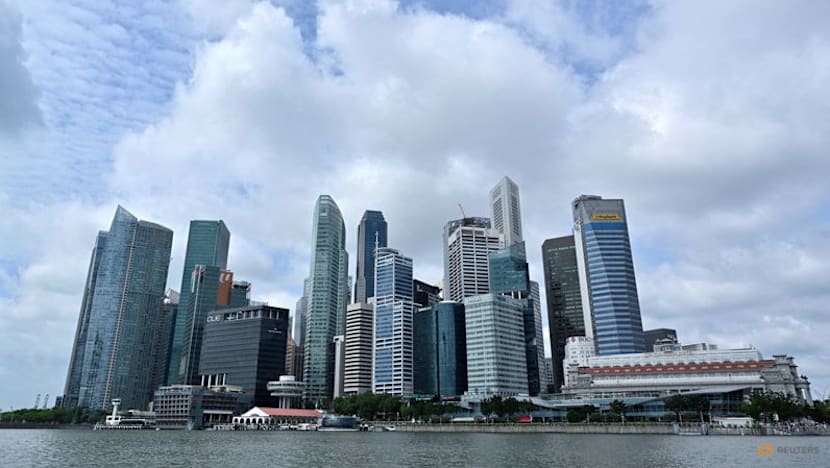
An aerial view of Singapore's skyline.

An aerial view of Singapore's skyline.
Tong Thi Viet Phuong | Moment | Getty Images
When KPMG executive Anton Ruddenklau moved to high-rise Singapore from the leafy streets of a London commuter town, one of the first things he noticed was how easy it was to do business in the Southeast Asian nation.

"People are set up to build relationships here," he told CNBC by phone.

It was January 2021, and Ruddenklau moved to Singapore to lead KPMG's financial services advisory practice in the country. "You arrive and you realize that actually the government has a nation-building mindset that's hugely enabling," he said.

And, while Ruddenklau said Singapore as a market by itself is "not particularly interesting," because of its small population, investors like it for its location, English common-law and large private capital markets, he added, describing it as a "hub" for capital flows into and out of Asia.

The level of foreign direct investment (FDI) in Singapore as a percentage of GDP is one of the highest in the world, according to the World Bank, with many international investors seeing the country as something of a refuge.

"A big reason Singapore attracts overseas investors is credibility," according to Geoff Howie, a market strategist at the city-state's stock exchange SGX Group. "It offers policy stability, strong institutions, deep trade and financial connectivity, and a currency that is increasingly seen as an anchor of macro discipline rather than a swing factor," he told CNBC by email.

Indeed, the Singapore dollar hit its highest level against the U.S. dollar since October 2014 this week. As of Wednesday, it was trading at about 1.26.

In the five years that Ruddenklau has lived in Singapore, he's observed it move away from being a "little red dot" — an affectionate, colloquial term referring to its size on the map — to something much more. Now it is "much more of a globally significant middle power," Ruddenklau said, referring to a term Canadian Prime Minister Mark Carney used last week to describe his own country.
 
According to AI

Examples of Illiquid Safe Havens
  • Real Estate: Residential or commercial properties are often considered defensive, as they can hold value during stock market volatility.
  • Physical Assets/Collectibles: Antiques, art, or precious metals (when held physically in large amounts).
  • Private Equity/Direct Investments: Long-term investments in businesses or private ventures that provide income stability.
  • Infrastructure: Investments in essential services (utilities, bridges, energy) that provide steady cash flow regardless of economic cycles.

Risks
  • Cash Flow Crisis: If an investor needs cash immediately during a market crash, selling these assets may force a loss.
  • Valuation Difficulty: Unlike stocks, the true market value of an illiquid asset may not be transparent until it is sold.
  • High Entry/Exit Barriers: They often require significant capital to enter and long periods to exit.

Contextual Examples
  • Singapore as a City-State: Morgan Stanley noted that investors consider Singapore an "illiquid safe haven" due to its role as a stable, long-term wealth repository, even though its stock market (prior to reforms) was considered less liquid than major global exchanges.
  • Alternative Asset Classes: The Financial Conduct Authority (FCA) created Long Term Asset Funds (LTAFs) to help investors gain access to these types of assets, such as private debt or infrastructure, which are traditionally illiquid.
 
An "illiquid safe haven" is an investment that tends to retain, protect, or increase in value during periods of economic downturn or market volatility (a safe haven), but cannot be quickly bought or sold without a significant loss in value or taking a substantial amount of time to transact (illiquid)
.
While traditional safe havens like U.S. Treasuries are highly liquid, illiquid safe havens are typically tangible assets or specialized vehicles favored by long-term investors or high-net-worth individuals to hedge against inflation and market crashes.

Key Characteristics
  • High Value Retention: They act as a refuge during market turmoil, often showing low or negative correlation with crashing equity markets.
  • Low Tradability: These assets have low trading activity, wide bid-ask spreads, and cannot be immediately converted into cash.
  • High Transaction Costs: Selling these assets quickly usually results in significant losses.
  • Long-Term Horizon: Because of the difficulty in selling, they are unsuitable for short-term trading and are better for long-term capital preservation.
 
All financial centres attract huge amount of wealth. Except hong Kong due to credibility issues
 
Back
Top