

- Joined
- Nov 29, 2016
- Messages
- 5,674
- Points
- 63
https://mil.news.sina.com.cn/china/2019-09-27/doc-iicezzrq8691580.shtml
中国新一代反坦克导弹已追平世界顶级水平(图)
中国新一代反坦克导弹已追平世界顶级水平(图)
483
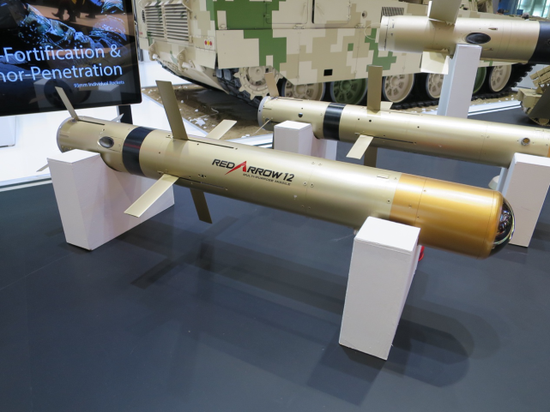
图注:红箭12反坦克导弹最大的特征便是导弹头部的成像导引头。
随着时代的发展,一大批新型装备的出现让我军装备建设进入了一个崭新的阶段。在便携式反坦克导弹方面,新一代的红箭-11和红箭-12反坦克导弹将替代原先的红箭-73和红箭-8型反坦克导弹。
红箭11和红箭12是我国全新一代的反坦克导弹,前者采用激光驾束制导,后者使用图像制导。如果按照国际上比较通用的分类方法来分类的话,两者都可以归为第三代的发射后不管反坦克导弹,当然硬要分个高下的话,红箭12导弹的制导体制更为先进一些。
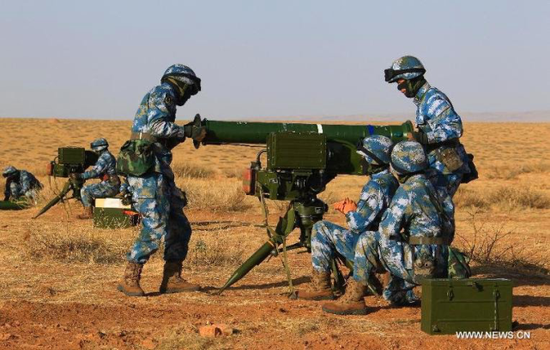
从外观上来讲,采用筒装发射装置的反坦克导弹大多是差不多的,但是因为制导体制的不同它们的性能却有天壤之别。第一代反坦克采用线控手动操控,射手通过瞄准装置来观察目标与导弹之间的角偏差,然后手动操控导弹飞向目标,这些导弹的射程大多不远且飞行速度不快,例如我军曾大量装备的红箭-73就是一代反坦克导弹的典型代表。第二代反坦克导弹仍然采用线控,但是导弹的操控由火控系统自主来完成。第二代反坦克在使用时,射手操控瞄准机构对准目标,导弹发射后,其测角装置自动测量导弹与目标之间的角偏差,自动发出导弹修正航行飞向目标。由于不用手操导弹,导弹的飞行速度要比一代反坦克导弹有了很大的提高,飞行速度大多超过了200米/秒,同时为了对付新出现的三代主战坦克,导弹的体积和直径都比一代导弹增大的不少,目的是为了增加射程和提高威力。我军曾大量装备的红箭-8反坦克导弹以及美国的陶式反坦克导弹便是这一代的典型代表。在二代反坦克导弹的后期出现了很多取消导线采用指令制导的型号,他们的发射和制导仍然需要发射装置始终对准目标,火控系统自动测量导弹与目标的角偏差,然后通过毫米波或者激动指令来控制导弹飞向目标。由于导弹和发射装置之间没有了导线的束缚,射程可以做的更远。例如我国的红箭-9型反坦克导弹,我们通常把这一类的反坦克导弹称之为二代半产品。
在二代半之后,新一代反坦克导弹的技术出现了分叉。
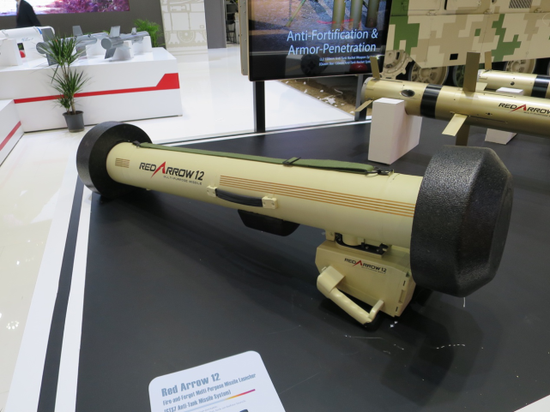
图注:相较于红箭8反坦克导弹发射装置的笨拙,红箭12的发射装置是非常的便捷。
一方是以西方为代表的国家,他们利用先进的热成像元件研制了全新的图像制导反坦克导弹。图像制导反坦克导弹在发射前,射手锁定目标,导弹根据目标图像自动飞向目标。其优点在于,射手只在发射前瞄准目标,发射后便可以转移阵地从而大幅度提高了射手的安全性;另外由于不再需要什么测量导弹与目标的角偏差什么的,导弹的制导装置可以做的很小,并且导弹可以采用高飞俯冲弹道,直接打击坦克的顶部,从而导弹不用再强调战斗部威力,可以将更多的空间用来增加射程。我们之前所说的红箭-12便是此种类型。
另一方是以俄罗斯为代表的国家,虽然他们在热成像元器件上的水平一般,但是他们走了另外的一条技术路线,这便是激光驾束制导导弹。激光驾束导弹在发射时一样需要射手瞄准目标,在导弹发射后到导弹命中目标的过程中,射手需要全程用激光束照射目标,并将导弹引导到激光束中,导弹感应与波束轴线的偏差自动修正航向。激光驾束制导导弹虽然没有图像制导导弹那么智能,但是整体价格要便宜很多。并且由于实现了自动修正偏差,导弹的速度可以做的很快,并且其具有较强的抗干扰能力,前文中提到的红箭-11便是此类型。
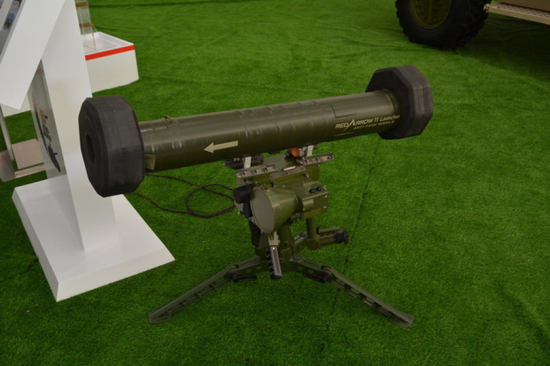
图注:红箭11的发射装置虽然没有红箭12那么小巧,但也是十分小巧的。
不管是红箭-11还是红箭-12,他们让中国的反坦克导弹的水平提高了很大一截,至少现在的反坦克导弹射手可以在更短的时间内完成发射,或者做到射后不管。当然中国反坦克导弹的发展并没有止步于此,据外媒分析,新一代的导弹将图像制导导弹和双向数据链融合在一起,不仅在更远的距离上实现了射后不管,还可以实现人在回路,射后锁定。
one single PLA warrior can man-pack 6 advanced missiles which are FIRE-&-FORGET with 90% hit rate. Who else got such kind of fire power? This tiny missile can shoot down Dotard's Tomahawk cruise missiles @$2M USD$ each.
Https://mil.news.sina.com.cn/china/2019-09-27/doc-iicezzrq8691580.shtml
China's new generation of anti-tank missiles have tied the world's top level (Figure)
China's new generation of anti-tank missiles have tied the world's top level (Figure)
483
Legend: The biggest feature of the Red Arrow 12 anti-tank missile is the imaging seeker of the missile's head.
With the development of the times, the emergence of a large number of new types of equipment has made our military equipment construction enter a new stage. In terms of portable anti-tank missiles, the new generation of Red Arrow-11 and Red Arrow-12 anti-tank missiles will replace the original Red Arrow-73 and Red Arrow-8 anti-tank missiles.
Red Arrow 11 and Red Arrow 12 are China's new generation of anti-tank missiles. The former uses laser driving guidance and the latter uses image guidance. If classified according to the internationally more general classification method, both can be classified as the third generation of the launch, regardless of the anti-tank missiles, of course, if it is hard to be divided, the red arrow 12 missile's conductor system is more advanced. .
In terms of appearance, anti-tank missiles using cartridge launchers are mostly similar, but their performance is quite different because of the different conductors. The first generation of anti-tank was manually controlled by wire-controlled. The shooter used the aiming device to observe the angular deviation between the target and the missile, and then manually manipulated the missile to fly to the target. The range of these missiles is mostly not far and the flight speed is not fast. For example, our army used to The heavily equipped Red Arrow-73 is a typical representative of a generation of anti-tank missiles. The second generation of anti-tank missiles still use line control, but the control of the missile is done by the fire control system. When the second-generation anti-tank is in use, the shooter controls the aiming mechanism to aim at the target. After the missile is launched, the angle measuring device automatically measures the angular deviation between the missile and the target, and automatically issues a missile to correct the sailing to the target. Because the missiles are not hand-held, the speed of the missiles is much higher than that of the first-generation anti-tank missiles. The flight speed is mostly over 200 m/s. At the same time, in order to deal with the new three-generation main battle tanks, the size and diameter of the missiles are both More than a generation of missiles, the purpose is to increase the range and increase the power. The Red Arrow-8 anti-tank missiles that our army once equipped and the American-style ceramic anti-tank missiles are typical representatives of this generation. In the later stage of the second-generation anti-tank missiles, there were many models that canceled the conductors and commanded. Their launch and guidance still required the launching device to always aim at the target. The fire control system automatically measured the angular deviation of the missile from the target, and then passed the millimeter wave or Excited instructions to control the missile to fly to the target. Due to the absence of wires between the missile and the launcher, the range can be made further. For example, China's Red Arrow-9 anti-tank missiles, we usually refer to this type of anti-tank missiles as second-generation and semi-products.
After the second and a half, the technology of the new generation of anti-tank missiles has turned bifurcated.
Legend: Compared to the awkwardness of the Red Arrow 8 anti-tank missile launcher, the launcher of the Red Arrow 12 is very convenient.
One side is a country represented by the West. They have developed a new image-guided anti-tank missile using advanced thermal imaging components. Before the image-guided anti-tank missile is launched, the shooter locks the target and the missile automatically flies toward the target according to the target image. The advantage is that the shooter only targets the target before launching, and can transfer the position after launching, thus greatly improving the safety of the shooter. In addition, since the angle deviation between the missile and the target is no longer needed, the missile guidance device can do The missile is very small, and the missile can use the high-flying dive trajectory to directly hit the top of the tank, so that the missile does not have to emphasize the power of the warhead, and more space can be used to increase the range. The red arrow -12 we mentioned before is this type.
The other side is a country represented by Russia. Although they are generally on the level of thermal imaging components, they have taken another technical route. This is the laser-driven guided missile. The laser-lasing missile also needs the archer to aim at the target when launching. During the missile launch and the missile hits the target, the shooter needs to use the laser beam to illuminate the target and guide the missile into the laser beam. The missile's induction is offset from the beam axis. Automatically correct heading. Although the laser-steering guided missile is not as intelligent as an image-guided missile, the overall price is much cheaper. And because the automatic correction deviation is realized, the speed of the missile can be made very fast, and it has strong anti-interference ability. The Red Arrow -11 mentioned in the foregoing is this type.
Legend: The launcher of the Red Arrow 11 is not as small as the Red Arrow 12, but it is also very small.
Whether it is the Red Arrow-11 or the Red Arrow-12, they have increased the level of China's anti-tank missiles by a large margin. At least the current anti-tank missile shooters can complete the launch in a shorter period of time, or do it after shooting. Regardless of. Of course, the development of China's anti-tank missiles has not stopped here. According to foreign media analysis, a new generation of missiles combines image-guided missiles and two-way data links, not only at a longer distance, but also after the shooting. The person is in the loop and locks after shooting.
中国新一代反坦克导弹已追平世界顶级水平(图)
中国新一代反坦克导弹已追平世界顶级水平(图)
483
图注:红箭12反坦克导弹最大的特征便是导弹头部的成像导引头。
随着时代的发展,一大批新型装备的出现让我军装备建设进入了一个崭新的阶段。在便携式反坦克导弹方面,新一代的红箭-11和红箭-12反坦克导弹将替代原先的红箭-73和红箭-8型反坦克导弹。
红箭11和红箭12是我国全新一代的反坦克导弹,前者采用激光驾束制导,后者使用图像制导。如果按照国际上比较通用的分类方法来分类的话,两者都可以归为第三代的发射后不管反坦克导弹,当然硬要分个高下的话,红箭12导弹的制导体制更为先进一些。
从外观上来讲,采用筒装发射装置的反坦克导弹大多是差不多的,但是因为制导体制的不同它们的性能却有天壤之别。第一代反坦克采用线控手动操控,射手通过瞄准装置来观察目标与导弹之间的角偏差,然后手动操控导弹飞向目标,这些导弹的射程大多不远且飞行速度不快,例如我军曾大量装备的红箭-73就是一代反坦克导弹的典型代表。第二代反坦克导弹仍然采用线控,但是导弹的操控由火控系统自主来完成。第二代反坦克在使用时,射手操控瞄准机构对准目标,导弹发射后,其测角装置自动测量导弹与目标之间的角偏差,自动发出导弹修正航行飞向目标。由于不用手操导弹,导弹的飞行速度要比一代反坦克导弹有了很大的提高,飞行速度大多超过了200米/秒,同时为了对付新出现的三代主战坦克,导弹的体积和直径都比一代导弹增大的不少,目的是为了增加射程和提高威力。我军曾大量装备的红箭-8反坦克导弹以及美国的陶式反坦克导弹便是这一代的典型代表。在二代反坦克导弹的后期出现了很多取消导线采用指令制导的型号,他们的发射和制导仍然需要发射装置始终对准目标,火控系统自动测量导弹与目标的角偏差,然后通过毫米波或者激动指令来控制导弹飞向目标。由于导弹和发射装置之间没有了导线的束缚,射程可以做的更远。例如我国的红箭-9型反坦克导弹,我们通常把这一类的反坦克导弹称之为二代半产品。
在二代半之后,新一代反坦克导弹的技术出现了分叉。
图注:相较于红箭8反坦克导弹发射装置的笨拙,红箭12的发射装置是非常的便捷。
一方是以西方为代表的国家,他们利用先进的热成像元件研制了全新的图像制导反坦克导弹。图像制导反坦克导弹在发射前,射手锁定目标,导弹根据目标图像自动飞向目标。其优点在于,射手只在发射前瞄准目标,发射后便可以转移阵地从而大幅度提高了射手的安全性;另外由于不再需要什么测量导弹与目标的角偏差什么的,导弹的制导装置可以做的很小,并且导弹可以采用高飞俯冲弹道,直接打击坦克的顶部,从而导弹不用再强调战斗部威力,可以将更多的空间用来增加射程。我们之前所说的红箭-12便是此种类型。
另一方是以俄罗斯为代表的国家,虽然他们在热成像元器件上的水平一般,但是他们走了另外的一条技术路线,这便是激光驾束制导导弹。激光驾束导弹在发射时一样需要射手瞄准目标,在导弹发射后到导弹命中目标的过程中,射手需要全程用激光束照射目标,并将导弹引导到激光束中,导弹感应与波束轴线的偏差自动修正航向。激光驾束制导导弹虽然没有图像制导导弹那么智能,但是整体价格要便宜很多。并且由于实现了自动修正偏差,导弹的速度可以做的很快,并且其具有较强的抗干扰能力,前文中提到的红箭-11便是此类型。
图注:红箭11的发射装置虽然没有红箭12那么小巧,但也是十分小巧的。
不管是红箭-11还是红箭-12,他们让中国的反坦克导弹的水平提高了很大一截,至少现在的反坦克导弹射手可以在更短的时间内完成发射,或者做到射后不管。当然中国反坦克导弹的发展并没有止步于此,据外媒分析,新一代的导弹将图像制导导弹和双向数据链融合在一起,不仅在更远的距离上实现了射后不管,还可以实现人在回路,射后锁定。
one single PLA warrior can man-pack 6 advanced missiles which are FIRE-&-FORGET with 90% hit rate. Who else got such kind of fire power? This tiny missile can shoot down Dotard's Tomahawk cruise missiles @$2M USD$ each.
Https://mil.news.sina.com.cn/china/2019-09-27/doc-iicezzrq8691580.shtml
China's new generation of anti-tank missiles have tied the world's top level (Figure)
China's new generation of anti-tank missiles have tied the world's top level (Figure)
483
Legend: The biggest feature of the Red Arrow 12 anti-tank missile is the imaging seeker of the missile's head.
With the development of the times, the emergence of a large number of new types of equipment has made our military equipment construction enter a new stage. In terms of portable anti-tank missiles, the new generation of Red Arrow-11 and Red Arrow-12 anti-tank missiles will replace the original Red Arrow-73 and Red Arrow-8 anti-tank missiles.
Red Arrow 11 and Red Arrow 12 are China's new generation of anti-tank missiles. The former uses laser driving guidance and the latter uses image guidance. If classified according to the internationally more general classification method, both can be classified as the third generation of the launch, regardless of the anti-tank missiles, of course, if it is hard to be divided, the red arrow 12 missile's conductor system is more advanced. .
In terms of appearance, anti-tank missiles using cartridge launchers are mostly similar, but their performance is quite different because of the different conductors. The first generation of anti-tank was manually controlled by wire-controlled. The shooter used the aiming device to observe the angular deviation between the target and the missile, and then manually manipulated the missile to fly to the target. The range of these missiles is mostly not far and the flight speed is not fast. For example, our army used to The heavily equipped Red Arrow-73 is a typical representative of a generation of anti-tank missiles. The second generation of anti-tank missiles still use line control, but the control of the missile is done by the fire control system. When the second-generation anti-tank is in use, the shooter controls the aiming mechanism to aim at the target. After the missile is launched, the angle measuring device automatically measures the angular deviation between the missile and the target, and automatically issues a missile to correct the sailing to the target. Because the missiles are not hand-held, the speed of the missiles is much higher than that of the first-generation anti-tank missiles. The flight speed is mostly over 200 m/s. At the same time, in order to deal with the new three-generation main battle tanks, the size and diameter of the missiles are both More than a generation of missiles, the purpose is to increase the range and increase the power. The Red Arrow-8 anti-tank missiles that our army once equipped and the American-style ceramic anti-tank missiles are typical representatives of this generation. In the later stage of the second-generation anti-tank missiles, there were many models that canceled the conductors and commanded. Their launch and guidance still required the launching device to always aim at the target. The fire control system automatically measured the angular deviation of the missile from the target, and then passed the millimeter wave or Excited instructions to control the missile to fly to the target. Due to the absence of wires between the missile and the launcher, the range can be made further. For example, China's Red Arrow-9 anti-tank missiles, we usually refer to this type of anti-tank missiles as second-generation and semi-products.
After the second and a half, the technology of the new generation of anti-tank missiles has turned bifurcated.
Legend: Compared to the awkwardness of the Red Arrow 8 anti-tank missile launcher, the launcher of the Red Arrow 12 is very convenient.
One side is a country represented by the West. They have developed a new image-guided anti-tank missile using advanced thermal imaging components. Before the image-guided anti-tank missile is launched, the shooter locks the target and the missile automatically flies toward the target according to the target image. The advantage is that the shooter only targets the target before launching, and can transfer the position after launching, thus greatly improving the safety of the shooter. In addition, since the angle deviation between the missile and the target is no longer needed, the missile guidance device can do The missile is very small, and the missile can use the high-flying dive trajectory to directly hit the top of the tank, so that the missile does not have to emphasize the power of the warhead, and more space can be used to increase the range. The red arrow -12 we mentioned before is this type.
The other side is a country represented by Russia. Although they are generally on the level of thermal imaging components, they have taken another technical route. This is the laser-driven guided missile. The laser-lasing missile also needs the archer to aim at the target when launching. During the missile launch and the missile hits the target, the shooter needs to use the laser beam to illuminate the target and guide the missile into the laser beam. The missile's induction is offset from the beam axis. Automatically correct heading. Although the laser-steering guided missile is not as intelligent as an image-guided missile, the overall price is much cheaper. And because the automatic correction deviation is realized, the speed of the missile can be made very fast, and it has strong anti-interference ability. The Red Arrow -11 mentioned in the foregoing is this type.
Legend: The launcher of the Red Arrow 11 is not as small as the Red Arrow 12, but it is also very small.
Whether it is the Red Arrow-11 or the Red Arrow-12, they have increased the level of China's anti-tank missiles by a large margin. At least the current anti-tank missile shooters can complete the launch in a shorter period of time, or do it after shooting. Regardless of. Of course, the development of China's anti-tank missiles has not stopped here. According to foreign media analysis, a new generation of missiles combines image-guided missiles and two-way data links, not only at a longer distance, but also after the shooting. The person is in the loop and locks after shooting.


