
-
IP addresses are NOT logged in this forum so there's no point asking. Please note that this forum is full of homophobes, racists, lunatics, schizophrenics & absolute nut jobs with a smattering of geniuses, Chinese chauvinists, Moderate Muslims and last but not least a couple of "know-it-alls" constantly sprouting their dubious wisdom. If you believe that content generated by unsavory characters might cause you offense PLEASE LEAVE NOW! Sammyboy Admin and Staff are not responsible for your hurt feelings should you choose to read any of the content here. The OTHER forum is HERE so please stop asking.
You are using an out of date browser. It may not display this or other websites correctly.
You should upgrade or use an alternative browser.
You should upgrade or use an alternative browser.
An overcrowded hell hole where life has no purpose.. (sound familiar?)
- Thread starter Leongsam
- Start date

- Joined
- Jul 10, 2008
- Messages
- 67,770
- Points
- 113
The YouTube Short you linked (from the channel Atom's Whisper) describes John B. Calhoun's famous "Universe 25" experiment (also called the Mouse Utopia or Mouse Paradise study) from the late 1960s/early 1970s. The core events it mentions did happen in the experiment, but the explanation given—that the colony died out because the mice had "no purpose"—is a significant oversimplification and misrepresentation of what actually occurred and what Calhoun concluded.
Calhoun placed four pairs of healthy mice into a large enclosure (about 101 inches square, with walls, tunnels, nesting boxes, etc.) designed as a "utopia":
The population grew rapidly at first (doubling every ~55 days initially), peaking at around 2,200 mice. Then:
The experiment is real and well-documented (Calhoun published on it, and it's covered in sources like Scientific American and later analyses).
The video's claim that "all of this happened because they had no purpose" (and thus "even if you have everything without a purpose, it all becomes worthless") is a popular internet interpretation/moral lesson, but it's not accurate to the science:
In short: Yes, the experiment is real, the behaviors and extinction happened, and it's a striking demonstration of how overcrowding can destroy social structures even with abundance. But no, it wasn't caused by lacking purpose—that interpretation adds a motivational/philosophical spin that's not supported by the evidence. It's more accurately a study of density-driven social pathology.
If you're interested in deeper reading, Calhoun's original papers or summaries from sources like The Scientist magazine or historical reviews provide the most accurate picture. The experiment is often overhyped online as a "humanity doom prophecy," but it's more nuanced (and flawed) than that.
What the Experiment Actually Showed
Calhoun placed four pairs of healthy mice into a large enclosure (about 101 inches square, with walls, tunnels, nesting boxes, etc.) designed as a "utopia":
- Unlimited food and water.
- Plenty of nesting material.
- No predators, no disease risks (initially).
- Enough physical space and resources theoretically to support thousands of mice (up to ~3,000–4,000).
The population grew rapidly at first (doubling every ~55 days initially), peaking at around 2,200 mice. Then:
- Social behaviors broke down dramatically due to overcrowding and high population density in key areas.
- Aggressive males formed groups and attacked others (including females and young).
- Mating and courtship largely stopped.
- Mothers neglected, abandoned, or even attacked their pups → very high infant mortality (up to 96% in some areas).
- Some mice withdrew completely (the so-called "beautiful ones" who just groomed obsessively and avoided all social interaction).
- A "behavioral sink" emerged: pathological behaviors spread and reinforced each other.
- Reproduction collapsed, the last births were around day 600, and the entire colony eventually died out (extinction by ~day 1,000+), even though plenty of food/water remained and space opened up again.
The experiment is real and well-documented (Calhoun published on it, and it's covered in sources like Scientific American and later analyses).
Key Criticisms and Why the Video's Take Is Misleading
The video's claim that "all of this happened because they had no purpose" (and thus "even if you have everything without a purpose, it all becomes worthless") is a popular internet interpretation/moral lesson, but it's not accurate to the science:
- The primary cause was severe overcrowding and the resulting social stress/overload — not a philosophical "lack of purpose." Mice are territorial animals; the design forced constant unwanted social contact, no escape from aggressive individuals, disrupted territories, and inability to form normal hierarchies or private nesting.
- Calhoun himself emphasized density and failed social roles (e.g., inability to maintain territories, mate properly, or care for young) as the trigger for the "behavioral sink." He saw it as a warning about overpopulation and poor urban design in humans, not existential purposelessness.
- The enclosure wasn't truly utopian: It lacked privacy (no real escape from others), forced shared corridors/tunnels (leading to constant conflict), and became a setup where aggressive mice could dominate prime areas while others were trapped in overcrowded central zones.
- Many modern analyses criticize it for design flaws (e.g., it amplified territorial aggression in mice/rats), observational bias, lack of controls (like stress measurements), and over-anthropomorphizing (applying human concepts like "purpose" to rodents). Direct human parallels are weak/debated—humans have culture, technology, migration, etc., that mice don't.
- Comments on the video itself point this out (e.g., overcrowding/stress from no privacy, not "no purpose"; comparisons to cramped captivity).
In short: Yes, the experiment is real, the behaviors and extinction happened, and it's a striking demonstration of how overcrowding can destroy social structures even with abundance. But no, it wasn't caused by lacking purpose—that interpretation adds a motivational/philosophical spin that's not supported by the evidence. It's more accurately a study of density-driven social pathology.
If you're interested in deeper reading, Calhoun's original papers or summaries from sources like The Scientist magazine or historical reviews provide the most accurate picture. The experiment is often overhyped online as a "humanity doom prophecy," but it's more nuanced (and flawed) than that.
- Joined
- Oct 15, 2023
- Messages
- 27,375
- Points
- 113
Even farm animals will fight for personal space, and kill other animals when living cheek by jowl. The PAP doesn't care so long as they continue to live in their GCBs.
- Joined
- Oct 15, 2023
- Messages
- 27,375
- Points
- 113
Overcrowding doesn't affect those staying in GCBs and drive big luxurious cars in SG.

- Joined
- Aug 10, 2008
- Messages
- 115,406
- Points
- 113
10 MILLION population here we come.
Once you see these two MRT stations become operational, you know Sinkieland's population is probably around that number.

https://en.wikipedia.org/wiki/Bukit_Brown_MRT_station
https://en.wikipedia.org/wiki/Mount_Pleasant_MRT_station
One big mrt station at clementi central is now work in progress.Once you see these two MRT stations become operational, you know Sinkieland's population is probably around that number.
https://en.wikipedia.org/wiki/Bukit_Brown_MRT_station
https://en.wikipedia.org/wiki/Mount_Pleasant_MRT_station
- Joined
- Aug 10, 2008
- Messages
- 115,406
- Points
- 113
One big mrt station at clementi central is now work in progress.
That's the Cross Island Line station. They sacrificed a nice police station building and a cluster of HDB flats across the road to build that.

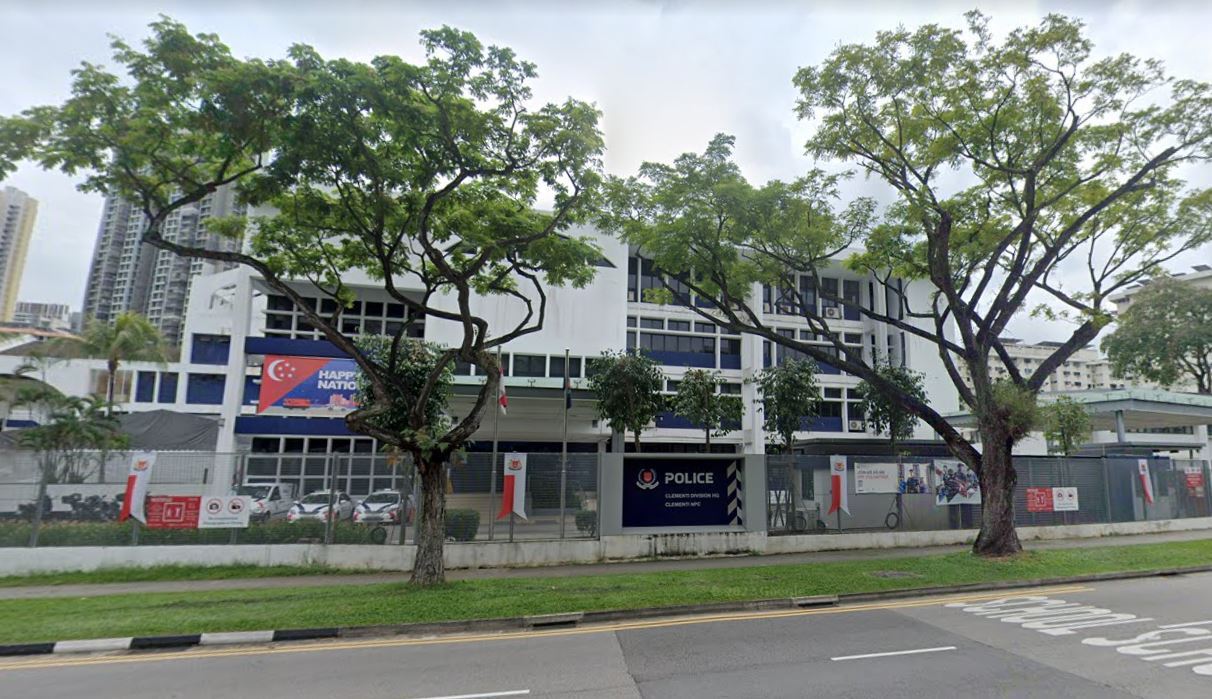
The new Clementi police station is now located at the former ITE campus, across the road from Clementi Fire Station.

- Joined
- Sep 22, 2008
- Messages
- 98,324
- Points
- 113
Nowadays people already like zombie scrolling their phones.

- Joined
- Jun 11, 2017
- Messages
- 1,091
- Points
- 83
This island is never meant to hold more than 5 million people in the first place.

- Joined
- Jun 13, 2023
- Messages
- 12,515
- Points
- 113
Perhaps the life purpose for most who voted for pap is to aim to be in the top.
Pap can exchange sinkies comfort for gdp.
The higher gdp, the more comfortable pap and the elites shall be, the more sinkies suffer.
Now, how do we prevent this from happening ?
Answer : not possible.
Reasons :
1. Becos pap will import more new shitizens
2. Becos people like gansiokbin, who voted for pap, aims to be at the top.
And becos they were unable to, they becum siao cb. But they never want to give up the join the bottom. And will continue to vote pap.
Pap can exchange sinkies comfort for gdp.
The higher gdp, the more comfortable pap and the elites shall be, the more sinkies suffer.
Now, how do we prevent this from happening ?
Answer : not possible.
Reasons :
1. Becos pap will import more new shitizens
2. Becos people like gansiokbin, who voted for pap, aims to be at the top.
And becos they were unable to, they becum siao cb. But they never want to give up the join the bottom. And will continue to vote pap.

- Joined
- Oct 22, 2012
- Messages
- 92
- Points
- 8
Isn’t it wonderful that we’ll be closer to each other soon?10 MILLION population here we come.
- Joined
- Sep 22, 2008
- Messages
- 98,324
- Points
- 113
Hong Kong population 7.5 mil. PAP will use that as a yardstick.This island is never meant to hold more than 5 million people in the first place.
- Joined
- Jul 10, 2008
- Messages
- 67,770
- Points
- 113
This island is never meant to hold more than 5 million people in the first place.
It was perfect at 1.25 million. A nice balance of city, urban and country living was maintained.

- Joined
- May 16, 2023
- Messages
- 48,464
- Points
- 113
Elon Musk Hypotheses?
- Joined
- Oct 15, 2023
- Messages
- 27,375
- Points
- 113
I remember how much more affordable Singapore used to be with 3.5 million inhabitants.This island is never meant to hold more than 5 million people in the first place.
- Joined
- Oct 15, 2023
- Messages
- 27,375
- Points
- 113
That is too small of a market for economic growth.It was perfect at 1.25 million. A nice balance of city, urban and country living was maintained.

- Joined
- Sep 2, 2023
- Messages
- 6,288
- Points
- 113
High IQ people like @tobelightlight already have backup plan in bolehland

- Joined
- Jun 17, 2020
- Messages
- 17,495
- Points
- 113
I was thinking that since the govt want 10 million people for them to suck tax money, I would not be the one to give them. I give to Malaysia govt. At least I got space to feel great in Malaysia,that is what I pay for.. health and space.High IQ people like @tobelightlight already have backup plan in bolehland
Last edited:
Similar threads
- Replies
- 24
- Views
- 935

- Replies
- 1
- Views
- 282
- Replies
- 81
- Views
- 3K

