• IP addresses are NOT logged in this forum so there's no point asking. Please note that this forum is full of homophobes, racists, lunatics, schizophrenics & absolute nut jobs with a smattering of geniuses, Chinese chauvinists, Moderate Muslims and last but not least a couple of "know-it-alls" constantly sprouting their dubious wisdom. If you believe that content generated by unsavory characters might cause you offense PLEASE LEAVE NOW! Sammyboy Admin and Staff are not responsible for your hurt feelings should you choose to read any of the content here.

    The OTHER forum is HERE so please stop asking.

Singapore is a global safe haven de woh

k1976

Alfrescian
Loyal
Joined
May 16, 2023
Messages
44,522
Points
113

Why Singapore is becoming a refuge for investors​

PUBLISHED WED, JAN 28 2026 5:59 PM EST

Lucy Handley@LUCYHANDLEY@IN/LUCY-HANDLEY-B2B0A61A/
WATCH LIVE

KEY POINTS
  • Investors like Singapore for its location, English common-law and large private capital markets, according to KPMG executive Anton Ruddenklau, describing it as a "hub" for capital flows into and out of Asia.
  • Morgan Stanley said that many investors consider Singapore an "illiquid safe haven," in a research note last year, but that new policies designed to "reinvigorate" the stock market will change this.
  • Singapore is also seen by investors as a way to tap into emerging markets in Southeast Asia, where regulations can be complex.
An aerial view of Singapore's skyline.

An aerial view of Singapore's skyline.
Tong Thi Viet Phuong | Moment | Getty Images
When KPMG executive Anton Ruddenklau moved to high-rise Singapore from the leafy streets of a London commuter town, one of the first things he noticed was how easy it was to do business in the Southeast Asian nation.

"People are set up to build relationships here," he told CNBC by phone.

It was January 2021, and Ruddenklau moved to Singapore to lead KPMG's financial services advisory practice in the country. "You arrive and you realize that actually the government has a nation-building mindset that's hugely enabling," he said.

And, while Ruddenklau said Singapore as a market by itself is "not particularly interesting," because of its small population, investors like it for its location, English common-law and large private capital markets, he added, describing it as a "hub" for capital flows into and out of Asia.

The level of foreign direct investment (FDI) in Singapore as a percentage of GDP is one of the highest in the world, according to the World Bank, with many international investors seeing the country as something of a refuge.

"A big reason Singapore attracts overseas investors is credibility," according to Geoff Howie, a market strategist at the city-state's stock exchange SGX Group. "It offers policy stability, strong institutions, deep trade and financial connectivity, and a currency that is increasingly seen as an anchor of macro discipline rather than a swing factor," he told CNBC by email.

Indeed, the Singapore dollar hit its highest level against the U.S. dollar since October 2014 this week. As of Wednesday, it was trading at about 1.26.

In the five years that Ruddenklau has lived in Singapore, he's observed it move away from being a "little red dot" — an affectionate, colloquial term referring to its size on the map — to something much more. Now it is "much more of a globally significant middle power," Ruddenklau said, referring to a term Canadian Prime Minister Mark Carney used last week to describe his own country.
 
According to AI

Examples of Illiquid Safe Havens
  • Real Estate: Residential or commercial properties are often considered defensive, as they can hold value during stock market volatility.
  • Physical Assets/Collectibles: Antiques, art, or precious metals (when held physically in large amounts).
  • Private Equity/Direct Investments: Long-term investments in businesses or private ventures that provide income stability.
  • Infrastructure: Investments in essential services (utilities, bridges, energy) that provide steady cash flow regardless of economic cycles.

Risks
  • Cash Flow Crisis: If an investor needs cash immediately during a market crash, selling these assets may force a loss.
  • Valuation Difficulty: Unlike stocks, the true market value of an illiquid asset may not be transparent until it is sold.
  • High Entry/Exit Barriers: They often require significant capital to enter and long periods to exit.

Contextual Examples
  • Singapore as a City-State: Morgan Stanley noted that investors consider Singapore an "illiquid safe haven" due to its role as a stable, long-term wealth repository, even though its stock market (prior to reforms) was considered less liquid than major global exchanges.
  • Alternative Asset Classes: The Financial Conduct Authority (FCA) created Long Term Asset Funds (LTAFs) to help investors gain access to these types of assets, such as private debt or infrastructure, which are traditionally illiquid.
 
An "illiquid safe haven" is an investment that tends to retain, protect, or increase in value during periods of economic downturn or market volatility (a safe haven), but cannot be quickly bought or sold without a significant loss in value or taking a substantial amount of time to transact (illiquid)
.
While traditional safe havens like U.S. Treasuries are highly liquid, illiquid safe havens are typically tangible assets or specialized vehicles favored by long-term investors or high-net-worth individuals to hedge against inflation and market crashes.

Key Characteristics
  • High Value Retention: They act as a refuge during market turmoil, often showing low or negative correlation with crashing equity markets.
  • Low Tradability: These assets have low trading activity, wide bid-ask spreads, and cannot be immediately converted into cash.
  • High Transaction Costs: Selling these assets quickly usually results in significant losses.
  • Long-Term Horizon: Because of the difficulty in selling, they are unsuitable for short-term trading and are better for long-term capital preservation.
 
All financial centres attract huge amount of wealth. Except hong Kong due to credibility issues
 
Sinki are really really fortunate to have good hands to rise their living standards from fishing kampong to Swiss sterling standard of living sia
 

Singapore GDP resilient in near term, boosted by AI-driven tech demand: MAS​

Singapore’s growth outlook is increasingly tied to the global AI boom, with tech sectors set to drive momentum.
Singapore GDP resilient in near term, boosted by AI-driven tech demand: MAS

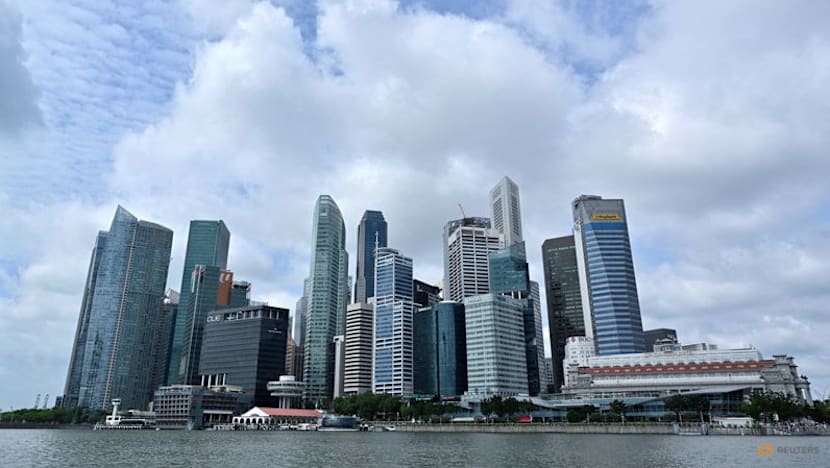
A view of the skyline in Singapore, on Jan 27, 2023. (Photo: REUTERS/Caroline Chia)


Listen
5 min
New: You can now listen to articles.
close.svg


Erin Liam
Erin Liam
29 Jan 2026 03:00PM
BookmarkShare

Set CNA as your preferred source on Google


Read a summary of this article on FAST.


FAST
SINGAPORE: Singapore’s economy is expected to remain resilient in the near term, driven by firm demand in tech-related sectors and continued growth in construction and financial services.

The Monetary Authority of Singapore (MAS) said in its latest quarterly macroeconomic review on Thursday (Jan 29) that a sustained upcycle in artificial intelligence-driven information technology is supporting economic momentum.

ADVERTISEMENT

An AI investment boom in the United States has boosted high-tech production and export activity in economies linked to the electronics supply chain, like Singapore, the central bank said.

Given this global tailwind, tech manufacturing and wholesale trade of electronics and IT equipment are expected to continue outperforming.

Non-tech industries such as construction and financial services are also likely to post firm growth, aided by lending activity and a continuous pipeline of public and private projects. The output gap is projected to stay positive in 2026, though narrower than the year before.

Gross domestic product growth is expected to moderate from 2025, when the economy grew by 4.8 per cent, MAS said.

Globally, growth is expected to ease modestly in 2026, with trade policy uncertainty receding for now and international monetary and fiscal policies likely to remain supportive.

In his New Year message, Prime Minister Lawrence Wong said Singapore’s 2025 economic growth was better than expected, given fractured trade and geopolitical tensions.

He had warned, however, that "sustaining this pace of growth will be challenging", and that Singapore cannot do "more of the same" to remain competitive.
 
Lai Lai Lai…safe haven asset for u, Bosses?

TEMASEK, KHAZANAH PUT MARINA BAY OFFICE TOWER ON THE MARKET FOR $4.8B IN SINGAPORE​

2026/01/28 BY MICHAEL COLE LEAVE A COMMENT

Marina One Singapore

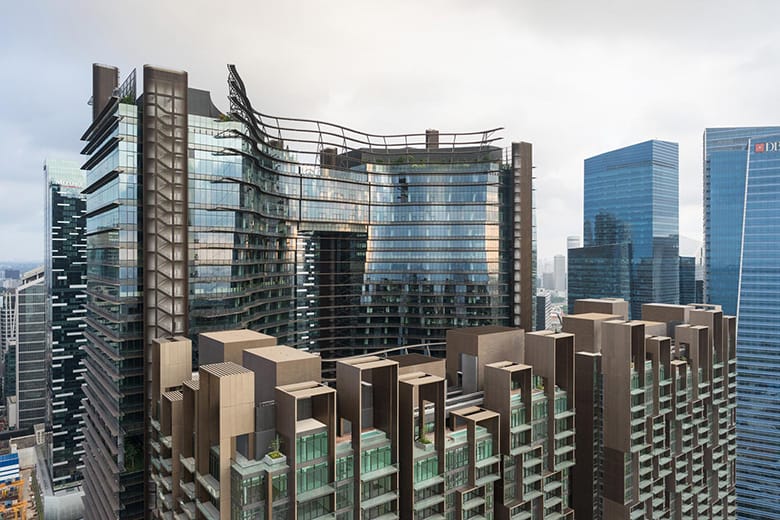
Marina One is home to Meta, Netflix and Grab (Image: Ingehoven Architects)
Singapore’s falling interest rates and rising office rents could be setting the stage for the city-state’s largest ever sale of a single property, with a joint venture between Malaysia’s Khazanah Nasional and Temasek Holdings having put the Marina One complex on the market.

M+S Pte Ltd, which is 60 percent owned by the Malaysian sovereign fund with Temasek holding the remaining equity, has engaged JLL and Eastdil to market the office and retail complex in the Marina Bay area for up to S$6 billion ($4.8 billion), according to market sources who spoke with Mingtiandi.
 

3 Singapore Blue-Chip Dividend Stocks That Could Benefit from Rising Tourism​

Transportation stocks may gain as part of a broader recovery taking shape across Asia's tourism markets.
Chin Hui Leong
By Chin Hui LeongJanuary 29, 20264 Mins Read

SIA
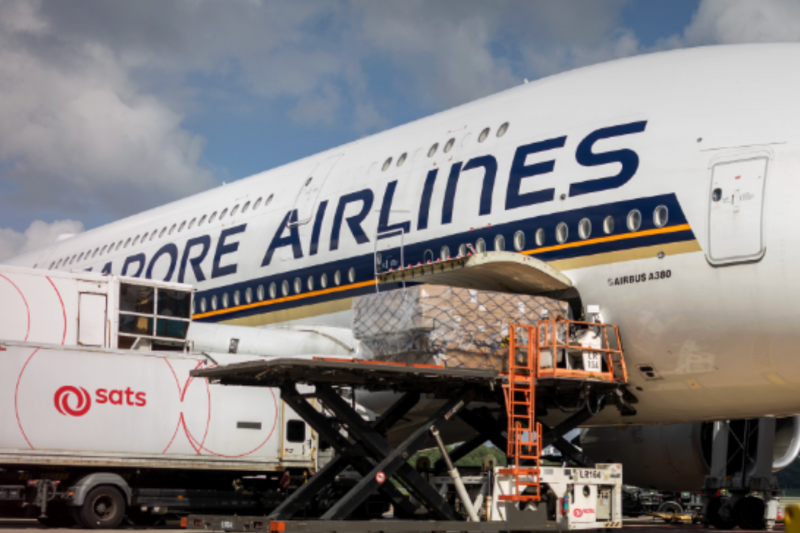
Image credit: www.sats.com.sg
Tourism in Singapore has rebounded strongly.

Hotels are filling up, planes are filling up, and airlines are seeing profits surpass pre-pandemic levels.

What’s happening now is not just a short burst of travel demand but part of a broader recovery taking shape across Asia’s tourism markets.

As more visitors return and airlines restore their networks, several of Singapore’s well-known listed companies are set to gain.

Among them are Singapore Airlines (SGX: C6L),SATS Ltd (SGX: S58), and ComfortDelGro Corporation (SGX: C52), offering investors exposure to the tourism recovery along with reliable dividend income.
 

Singapore Art Week 2026 proves that where capital flows, culture follows​

This year’s Art SG fair made a compelling case that you don’t have to wait for an art scene to ‘happen’ – it can be cultivated through time, intention and resources.

WRITER
SHARE
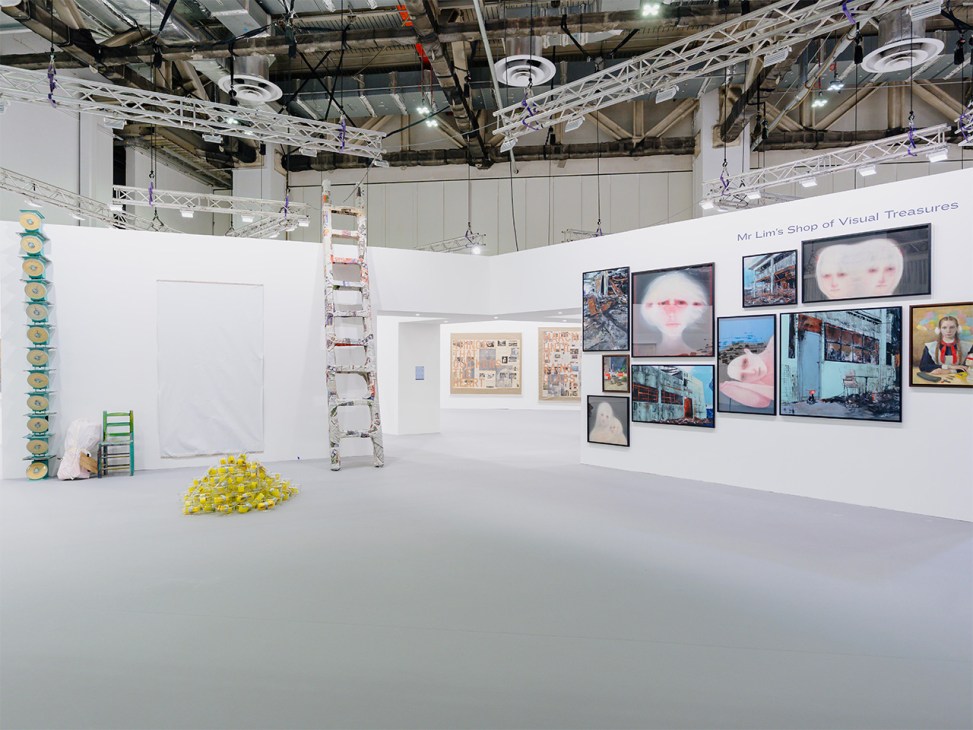
Art SG, Southeast Asia’s global contemporary-art fair, has transitioned from a speculative venture into a structural anchor. The fair, which wrapped on Sunday 25 January and coincides with Singapore Art Week, no longer needs to outshout Hong Kong or Paris. It simply needs to continue doing what it does best: organising space, time and money well enough for an art scene to grow.

Installation-View-S.E.A.-Focus-2026.-Courtesy-of-S.E.A10_CROP.jpg
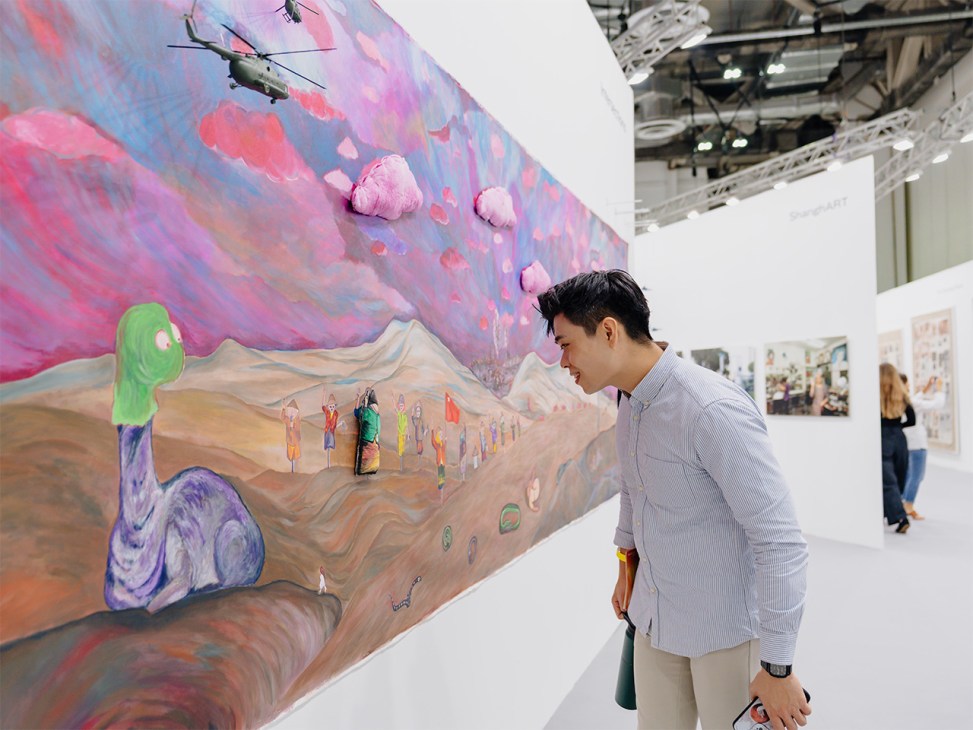
Land of plenty: SEA Focus 2026 (Image: Courtesy of SEA Focus)
Singapore is frequently called the “Switzerland of Asia” and the label is increasingly apt. The city-state has successfully absorbed a massive migration of capital, now hosting roughly 2,000 single-family offices – a nearly 4 per cent increase since 2020. For this time-poor, globally mobile elite, the art market is not a bohemian pursuit but a sophisticated asset class. It requires the same stability, logistical excellence and transparent governance that Singapore provides in spades.

While older European fairs rely on legacy and bravura, Art SG succeeds through a distinctively Singaporean infrastructural confidence. The strategic consolidation of the 2026 edition – folding contemporary-art platform SEA Focus into the fair floor at Marina Bay Sands – was a masterstroke of efficiency. It offers a streamlined, high-density environment that is precisely calibrated for a demographic that values summit-like experiences over the sprawling, exhausting festival models.

Installation-View-S.E.A.-Focus-2026.-Courtesy-of-S.E.A_CROP.jpg
Wall to wall: SEA Focus showcases a range of talent (Image: Courtesy of SEA Focus)
Crucially, 2026 marks the moment that this wealth has moved beyond mere transaction. We are witnessing a rare synergy: a contribution from both established regional dynasties and committed global expats to build a civic legacy. This is evidenced by the inauguration of the Tanoto Art Foundation at New Bahru, alongside the expansion of the Pierre Lorinet-backed Sam Art SG Fund to S$250,000 (€166,000). These are not the consequences of “hot money” looking for a quick exit; they are the anchors of a city moving beyond offshore insulation.

Critics might argue that Singapore lacks the gritty soul of established art capitals but they’re missing the point. In an increasingly volatile global landscape, the ability to provide a secure harbour for both assets and ideas is the most radical cultural act of all. By remaining the world’s most efficient hinge between Southeast Asian growth and global capital, Singapore proves that where capital flows, culture does more than follow – it settles.
 

Singapore keeps monetary settings unchanged, flags firm growth​

By Xinghui Kok and Jun Yuan Yong
January 29, 20263:00 PM GMT+8Updated 3 hours ago


File photo of the logo of the Monetary Authority of Singapore at its building in Singapore

The logo of the Monetary Authority of Singapore (MAS) is pictured at its building in Singapore in this February 21, 2013 file photo. REUTERS/Edgar Su/File Photo Purchase Licensing Rights, opens new tab
  • Summary
  • MAS maintains policy settings amid resilient growth
  • Analysts expect MAS tightening later in the year
  • Singapore's GDP growth exceeds government forecast at 4.8% in 2025
  • Core and headline inflation forecasts for 2026 raised to 1.0%-2.0%, from 0.5%-1.5%
SINGAPORE, Jan 29 (Reuters) - Singapore's central bank kept its monetary policy settings unchanged on Thursday and flagged upside risks to inflation and demand as the outlook for the city-state's economy remained resilient.
The Monetary Authority of Singapore (MAS) said it will maintain the prevailing rate of appreciation in its exchange rate-based policy band.
 

Tech sector may account for larger share of Singapore’s GDP growth in 2026: MAS​

Get ST's newsletters delivered to your inbox
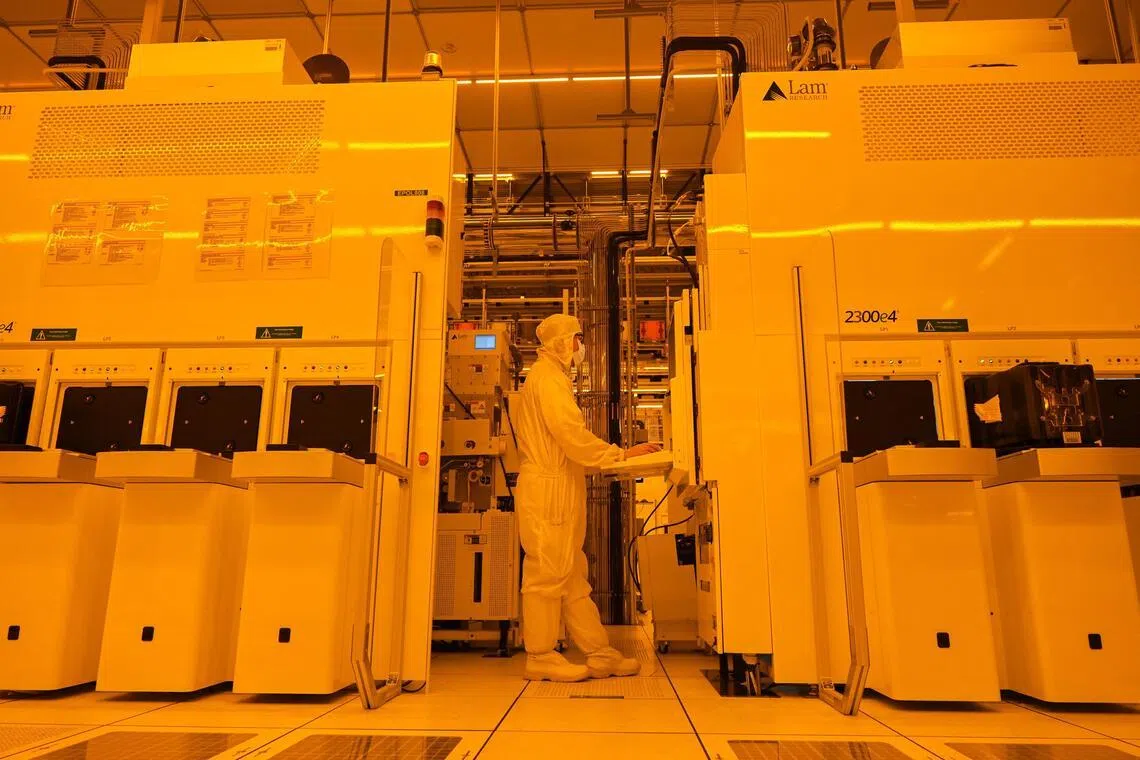
A staff member in hazesuit works in the cleanroom of a wafer fab manufacturing facility at Singapore GlobalFoundries in Singapore on September 12, 2023. The world's third-largest contract chipmaker GlobalFoundries opened a $4 billion manufacturing plant in Singapore on Tuesday as part of a global expansion to help ease an industry supply crunch. (Photo by Roslan RAHMAN / AFP)

Singapore is a destination for large semiconductor firms such as Micron.

PHOTO: AFP

Google Preferred Source badge

Summary
  • Singapore's technology sector, boosted by AI demand, set to have larger contribution to 2026 GDP growth, surpassing 2025 levels.
  • Non-tech sectors like aerospace and finance/insurance will also support growth.
  • MAS highlights potential risks: AI investment correction due to unrealised gains or geopolitical events, which could significantly impact real economy growth.
AI generated


Published Jan 29, 2026, 03:00 PM
Updated Jan 29, 2026, 06:24 PM

SINGAPORE - Technology-related activities, like the manufacturing of electronics and IT equipment, could account for a greater share of Singapore’s economic growth in 2026 than in 2025, as demand soars for artificial intelligence (AI) chips used in data centres.

Non-technology segments of the economy, such as the aerospace and finance and insurance sectors, will also contribute materially to gross domestic product (GDP), the Monetary Authority of Singapore (MAS) said in its macroeconomic review released on Jan 29.

The central bank said: “Global AI tailwinds are expected to provide near-term support for Singapore’s trade-related sectors.
 
Samsters buying Gold?

Gold demand in Singapore jumps 48% to a record 9.6 tonnes in 2025​

Appetite for the metal grew the fastest in the city-state among South-east Asian countries, finds report

Summarise


Benicia Tan

Published Thu, Jan 29, 2026 · 04:58 PM
阅读简体中文版 (beta)

  • The growth in Singapore was buoyed by geopolitical risks and the gold price rally, among other factors.

  • The growth in Singapore was buoyed by geopolitical risks and the gold price rally, among other factors.

  • The growth in Singapore was buoyed by geopolitical risks and the gold price rally, among other factors.

  • The growth in Singapore was buoyed by geopolitical risks and the gold price rally, among other factors.

  • The growth in Singapore was buoyed by geopolitical risks and the gold price rally, among other factors.
  • The growth in Singapore was buoyed by geopolitical risks and the gold price rally, among other factors. PHOTO: YEN MENG JIIN, BT
  • The growth in Singapore was buoyed by geopolitical risks and the gold price rally, among other factors. PHOTO: YEN MENG JIIN, BT
  • The growth in Singapore was buoyed by geopolitical risks and the gold price rally, among other factors. PHOTO: YEN MENG JIIN, BT
  • The growth in Singapore was buoyed by geopolitical risks and the gold price rally, among other factors. PHOTO: YEN MENG JIIN, BT
  • The growth in Singapore was buoyed by geopolitical risks and the gold price rally, among other factors. PHOTO: YEN MENG JIIN, BT
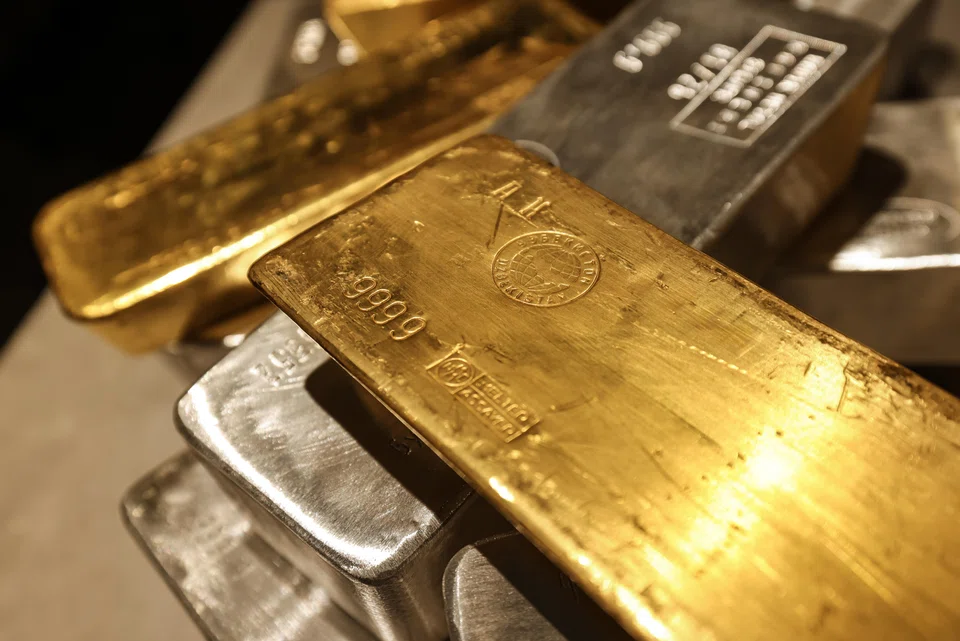
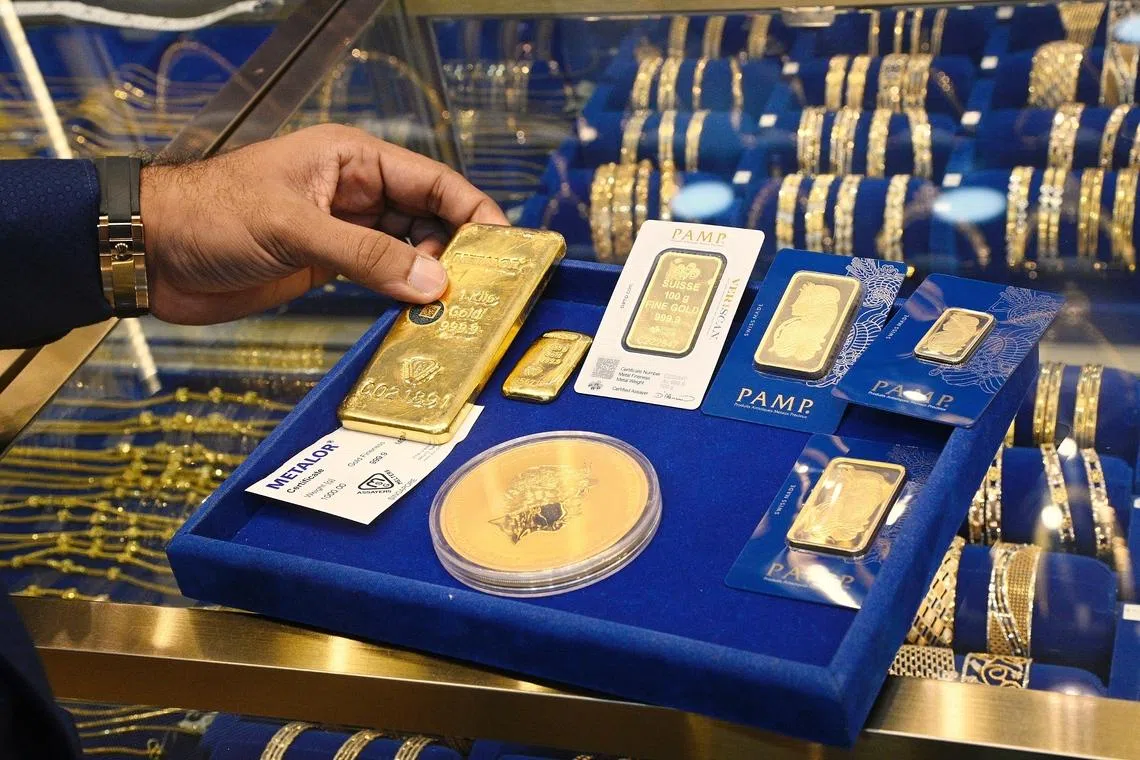
[SINGAPORE] Investors in Singapore seeking safe-haven assets and portfolio diversification piled into gold in 2025, with demand rising 48 per cent year on year to 9.6 tonnes – the highest level on record.

This comes as global investment demand climbed 84 per cent to 2,175.3 tonnes in 2025, from 1,185.4 tonnes in 2024, based on data from the World Gold Council’s Gold Demand Trends report for 2025.

The growth in Singapore – the fastest among South-east Asian countries – was buoyed by geopolitical risks and the gold price rally, among other factors, said the report on Thursday (Jan 29).
 
Even Zaka Zulu also want to trade with SG

RWANDA AND SINGAPORE EXPLORE DEEPER TRADE AND INVESTMENT COOPERATION​

Jan 29, 2026 | Africa, Indiplomacy News, Rwanda
image-100-edited.png
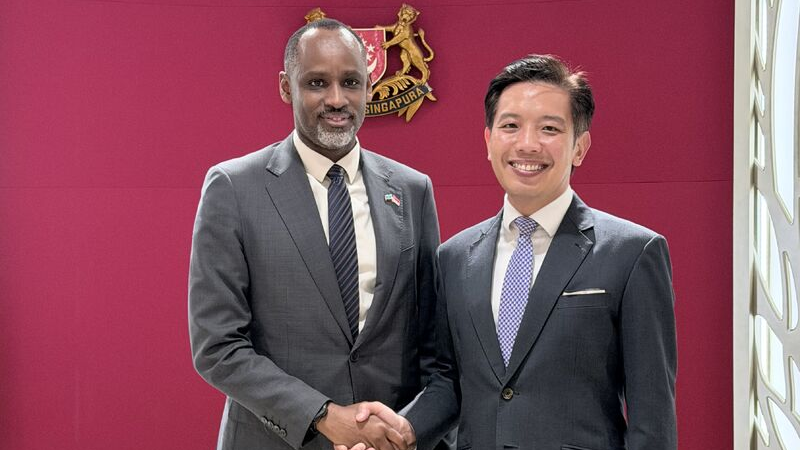
Image by Rwanda High Commission in Singapore

RWANDA AND SINGAPORE REAFFIRMED THEIR COMMITMENT TO STRENGTHENING BILATERAL ECONOMIC TIES DURING A MEETING FOCUSED ON TRADE, INVESTMENT, AND BROADER COOPERATION BETWEEN THE EAC AND ASEAN

H.E. Innocent B. Muhizi, High Commissioner of Rwanda to Singapore, met with Alvin Tan, Minister of State for National Development and Minister of State for Trade and Industry of Singapore, to discuss avenues for enhancing bilateral cooperation. The meeting underscored a shared interest in deepening economic engagement between Rwanda and Singapore, while also strengthening links between the East African Community (EAC) and the Association of Southeast Asian Nations (ASEAN).

Discussions centred on practical strategies to boost trade and investment flows, positioning both countries as strategic gateways to their respective regions. Reflecting on the engagement, Mr Tan described the exchange as productive, noting that it was a continuation of earlier discussions held in Kigali and during the Future of Investment and Trade (FIT) Partnership. “It is a pleasure to continue our momentum here,” he said.

Among the key areas highlighted was progress towards potential negotiations for an EAC–Singapore Free Trade Agreement, aimed at expanding market access and facilitating closer economic integration. The two sides also discussed operationalising their implementation agreement on carbon credits, with a view to enabling greater private sector participation in emerging carbon markets.

Digital cooperation featured prominently in the discussions, with both parties recognising opportunities to advance paperless trade and strengthen linkages between their respective startup ecosystems. Mr Tan emphasised that there is “There is significant potential for our companies to tap into these respective markets through upcoming business missions and exchanges,” underscoring the importance of sustained engagement.

The meeting reflected a shared commitment to building forward-looking partnerships that leverage Singapore’s role as a gateway to Asia and Rwanda’s position within Africa. Both sides expressed optimism about maintaining the positive momentum at the start of the year and translating discussions into tangible outcomes.
 

Great Eastern debuts Singapore first physical gold ILP fund​

It becomes the first local provider to embed physical gold bars into insurance policies.

Great Eastern has unveiled a physical gold investment-linked policy (ILP) fund which offers a secure way to gain exposure to gold as part of a customer’s long-term financial planning.

The company said this marks the first time a financial services provider in Singapore has offered physical gold as an asset class within an insurance-linked policy.

The fund allows customers to gain exposure to physical gold bars that are vaulted in Singapore and insured up to their full value, with standard exclusions.

This offering is intended to provide an additional option for customers seeking to diversify their portfolios and protect against inflation.

Great Eastern Group CEO Greg Hingston stated that this initiative gives wealth-planning customers an additional way to strengthen the resilience of their portfolios in an uncertain environment.

This product was developed through a collaboration between Great Eastern and Lion Global Investors, both of which are part of the OCBC Group.
 

Singapore investor demand for gold hits record high in 2025​

Get ST's newsletters delivered to your inbox
Gold investment demand is expected to remain strong.

Gold investment demand is expected to remain strong.

PHOTO: ST FILE

Google Preferred Source badge

Summary
  • Singapore's gold investment demand hit an all-time high in 2025 due to geopolitical risks and price rallies, says the World Gold Council.
  • Global gold demand reached 5,002 tonnes in 2025, driven by investment; however, jewellery demand fell due to high prices.
  • Experts predict continued strong gold demand in 2026, citing instability; gold is seen as a strategic hedge against risk.
AI generated


Published Jan 29, 2026, 05:41 PM
Updated Jan 29, 2026, 06:09 PM

SINGAPORE - Gold investment demand in Singapore surged to an all-time high in 2025 despite record prices, the World Gold Council said in its flagship report.

Demand for gold investment products such as gold bars and gold coins here was robust, supported by rising global geopolitical and trade risks as well as

the gold price rally,

the report said.


The demand jumped 48 per cent in 2025 from 2024, to 9.6 tonnes despite record high prices.
 

Biggest Indonesia Stock Crash Since 1998 Spurs Promise of Reform​


By Prima Wirayani
January 29, 2026 at 5:53 AM GMT+8
Updated on
January 29, 2026 at 5:39 PM GMT+8
Save
Translate

Fears sparked by a MSCI Inc. warning of a possible market downgrade rippled through Indonesia’s markets on Thursday, driving benchmark stocks to their worst two-day rout in nearly three decades before regulators stepped in.

The benchmark Jakarta Composite Index tumbled as much as 10%, triggering a circuit breaker for a second day, as selling pressure from the previous day spilled over. The decline, which came as analysts cut their ratings, followed the index compiler’s caution over transparency and the limited amount of stock available for trading in listed companies.

 
banner-0128.png.webp

Photo from press release

HDB resales sink 27.2% in Q4 as buyers switch to new flats​

Quarterly transactions hit lowest level since 2020 amid year-end slowdown

Singapore HDB resale transactions fell sharply in the fourth quarter (Q4) of 2025, with volumes declining 27.2% quarter-on-quarter (QoQ) to 5,256 units, according to OrangeTee, a member of Realion Group.

This marked the lowest quarterly resale volume since second quarter of 2020, when transactions were disrupted by pandemic-related restrictions.

The decline also represented an 18.2% year-on-year (YoY) drop compared with 6,424 units in Q4 2024. For the full year, 26,169 resale flats were transacted in 2025, down 9.7% from 2024 and 2.1% below 2023 levels, reflecting a broader slowdown in market activity.

OrangeTee attributed the weaker resale performance to a shift in buyer demand towards Build-To-Order (BTO) and Sale of Balance Flats exercises, which drew over 110,000 applicants across three sales launches in 2025, a three-year high.

Increased new flat supply and shorter waiting times reduced the urgency for buyers to enter the resale market.

The research also noted widening price expectations between buyers and sellers, with resistance to higher asking prices contributing to longer transaction timelines and fewer completed deals. Seasonal factors further weighed on activity, as resale transactions typically slow during the year-end holiday period.
 
image001-2.png.webp

Photo from Savills.

Property investment surges 27% to $34.12b in 2025​

This marks the highest annual total since 2017’s $35.16b sales.

Singapore’s real estate investment marketreached $34.12b in 2025, up 27% from the previous year, according to Savills Singapore.

This marks the highest annual total since 2017, when investment sales hit $35.16b.

Growth was broad-based across both public and private sectors. Public sector investment rose 32.3% to $11.60b, driven by an increase in Government Land Sales (GLS) sites from 20 in 2024 to 30 in 2025.

Private sector sales climbed 24.3% to $22.52b, supported by activity in high-end residential properties, several large transactions, and S-REIT listings.

In the final quarter, total investment sales amounted to $10.97b. Whilst this represented a 3.3% drop from $11.35b in Q3, it was a 44.4% increase from $7.60b in Q4 2024.

Private sector sales rose 4.5% quarter-on-quarter to $7.53b, despite a slight decline in the number of deals from 120 to 106.

Investment from S-REITs, institutional investors, and high-net-worth individuals remained active, helped by lower financing costs. The impact of US tariffs proved smaller than expected.

The residential sector accounted for 40.3% of Q4 sales, though values fell 13.7% from the previous quarter to $4.42b, reflecting a slowdown in luxury home transactions.

High-end landed properties remained strong compared with the first half of 2025, supported by lower borrowing costs.

Ten Good Class Bungalows (GCB) were sold in Q4, including one on Peirce Road for $148m. Full-year GCB transactions totalled 25, valued at $1.12b, roughly on par with 2024.

Commercial property sales reached $3.45b in Q4, up 31.1% from Q3, and made up 31.5% of total quarterly investment.

Major deals included Keppel REIT’s purchase of a one-third stake in Marina Bay Financial Centre (MBFC) Tower 3 for $1.45b and the $809m sale of The Clementi Mall.

Industrial sales accounted for 19.4% of Q4 investment at $2.13b, nearly double Q3’s $1.07b. Industrial REITs were active in acquisitions and divestments, representing almost 60% of the sector’s transactions.

The largest deal was CapitaLand Ascendas REIT’s purchase of three properties for $532.6m, excluding additional premiums.

Looking ahead, Savills expects 2026 investment sales to remain around $34b.

Sectors likely to outperform include office, retail, and properties with redevelopment potential, driven by low financing costs, adjusted pricing, and opportunities to reposition assets.
 
Back
Top