

- Joined
- Jun 17, 2020
- Messages
- 17,310
- Points
- 113
TRUMP LIED. THE STRAIT OF HORMUZ IS NOT FREE.
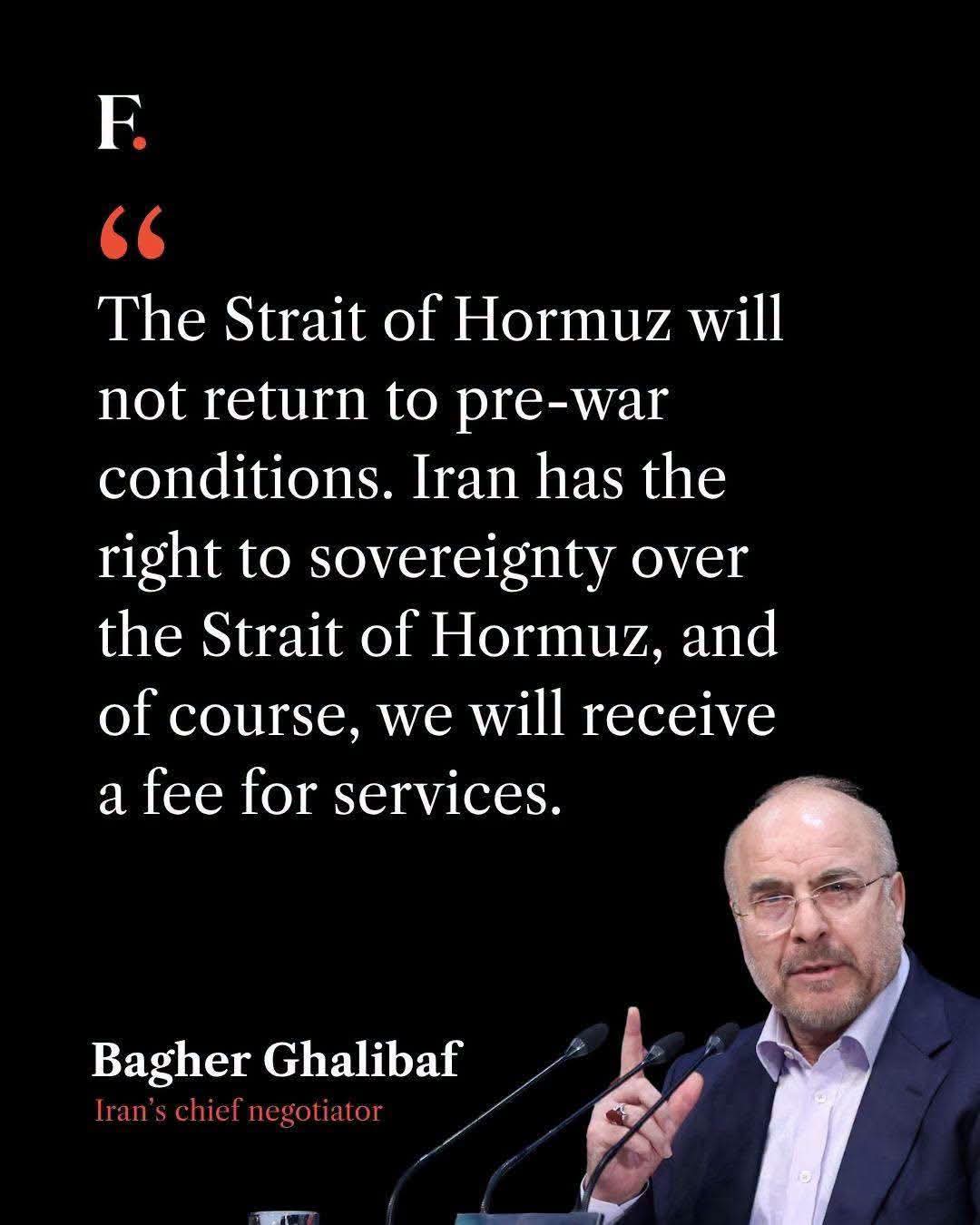
Iran’s chief negotiator and Parliamentary Speaker, Mohammad Bagher Ghalibaf, has just confirmed on Iranian state television what I told you weeks ago:
“The Strait of Hormuz will not return to pre-war conditions. Iran has the right to sovereignty over the Strait, and we will receive a fee for services.”
Trump strutted before the cameras and declared the Strait of Hormuz would be free for all nations. It was a lie — or at best, a deliberate deception.
The 60-day “fee-free” window written into the US-Iran MOU was never a concession. It was a face-saving device. A fig leaf for domestic American consumption.
After 60 days, Iran begins charging vessels crossing the Strait. That is not freedom of navigation. That is toll sovereignty — Iran extracting a permanent economic premium from the world’s most critical oil chokepoint.
Roughly 25% of global oil supply transits the Strait of Hormuz. Every tanker, every cargo vessel, every nation that depends on that passage will now pay Tehran.
This is the strategic reality the MOU quietly conceded while Trump was busy taking his victory lap.
Iran did not lose. Iran won — and locked its gains into writing.
The Great Game never stops. The score just became clearer.
Iran’s chief negotiator and Parliamentary Speaker, Mohammad Bagher Ghalibaf, has just confirmed on Iranian state television what I told you weeks ago:
“The Strait of Hormuz will not return to pre-war conditions. Iran has the right to sovereignty over the Strait, and we will receive a fee for services.”
Trump strutted before the cameras and declared the Strait of Hormuz would be free for all nations. It was a lie — or at best, a deliberate deception.
The 60-day “fee-free” window written into the US-Iran MOU was never a concession. It was a face-saving device. A fig leaf for domestic American consumption.
After 60 days, Iran begins charging vessels crossing the Strait. That is not freedom of navigation. That is toll sovereignty — Iran extracting a permanent economic premium from the world’s most critical oil chokepoint.
Roughly 25% of global oil supply transits the Strait of Hormuz. Every tanker, every cargo vessel, every nation that depends on that passage will now pay Tehran.
This is the strategic reality the MOU quietly conceded while Trump was busy taking his victory lap.
Iran did not lose. Iran won — and locked its gains into writing.
The Great Game never stops. The score just became clearer.


