- Joined
- May 16, 2023
- Messages
- 48,273
- Points
- 113
Singapore’s Car Tax Revenue Now So High It Exceeds Fiji’s GDP
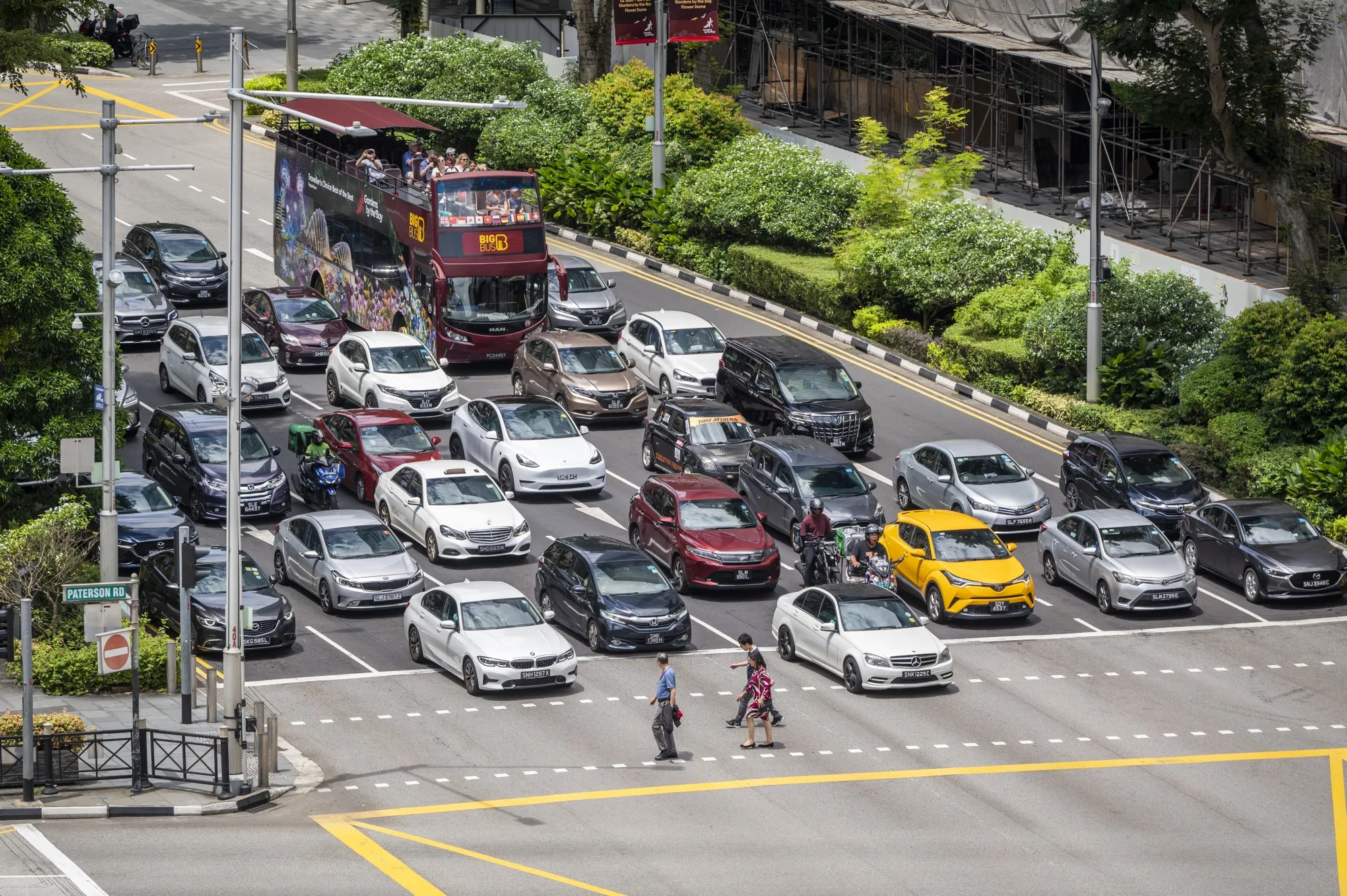
Traffic at Orchard Rooad junction in Singapore.
Photographer: Edwin Koo/Bloomberg
By Audrey Wan and David Ramli
February 13, 2026 at 4:21 PM GMT+8
Save
Translate
1:38
Takeaways by Bloomberg AI
- The Singapore government raised S$8.66 billion in vehicle quota premiums in the year ending March 2026, about 31% more than initially estimated.
- The total amount raised from vehicle quota premiums and motor vehicle taxes is S$11.05 billion, which is greater than the annual gross domestic product of Fiji.
- The government projects that vehicle quota premiums and motor vehicle taxes will raise a combined S$12.22 billion in the year ending March 2027.
The Singapore government reaped billions of dollars more in vehicle quota premiums and car taxes than it projected as the cost of driving reached record highs in the city-state.
Vehicle quota premiums raised S$8.66 billion ($6.9 billion) in the year ending March 2026, about 31% more than the government initially estimated a year ago. When combined with motor vehicle taxes, it brings the total to S$11.05 billion — an amount greater than the annual gross domestic product of Fiji.
Singapore has a unique system for allowing cars to stay on the road. Every vehicle must be granted a Certificate of Entitlement as part of a bidding process, which grants permission for it to be driven for a maximum of 10 years.
Singapore's Car-Related Levies Often Exceed Estimates
Car taxes include vehicle quota premiums and motor vehicle taxesSource: Singapore Ministry of Finance
Current COE prices for even the most basic passenger car now start at S$106,320, which means a new Toyota Camry costs S$266,888 — more than the price of a Porsche 911 in Miami, Florida.
BloombergGreen
- California Storm Set to Relieve Winter Snow Drought Woes
- Used EVS Under $25,000 Propel Sales Even as New Models Languish
- The Pulitzer-Winning Musician Telling the World to ‘Fix It’
- Cost of Trump's Coal Push Plays Out in Dollars, Noise and Health
The latest budget marks the fourth time in the past six years that Singapore’s vehicle-specific levies have generated more money than the government originally expected. This has helped propel the country into a budget surplus, in conjunction with other boons such as rising corporate income tax revenue.
And it’s only set to rise, with the government projecting vehicle quota premiums and motor vehicle taxes will raise a combined S$12.22 billion in the year ending March 2027, in part due to “an expected increase in Certificate of Entitlement quota.”