
-
IP addresses are NOT logged in this forum so there's no point asking. Please note that this forum is full of homophobes, racists, lunatics, schizophrenics & absolute nut jobs with a smattering of geniuses, Chinese chauvinists, Moderate Muslims and last but not least a couple of "know-it-alls" constantly sprouting their dubious wisdom. If you believe that content generated by unsavory characters might cause you offense PLEASE LEAVE NOW! Sammyboy Admin and Staff are not responsible for your hurt feelings should you choose to read any of the content here. The OTHER forum is HERE so please stop asking.
You are using an out of date browser. It may not display this or other websites correctly.
You should upgrade or use an alternative browser.
You should upgrade or use an alternative browser.
Viet Gong say Sinki is eating lousy rejected durian from Tiongkok, like that Sia suay or not?
- Thread starter k1976
- Start date


- Joined
- Nov 24, 2008
- Messages
- 25,138
- Points
- 113
How come from durian can shift to this topic? Are you a fucking mental retard?Villagers shiver in China’s north as government gas subsidies shrink
Get insights on Asia's fast-moving developments
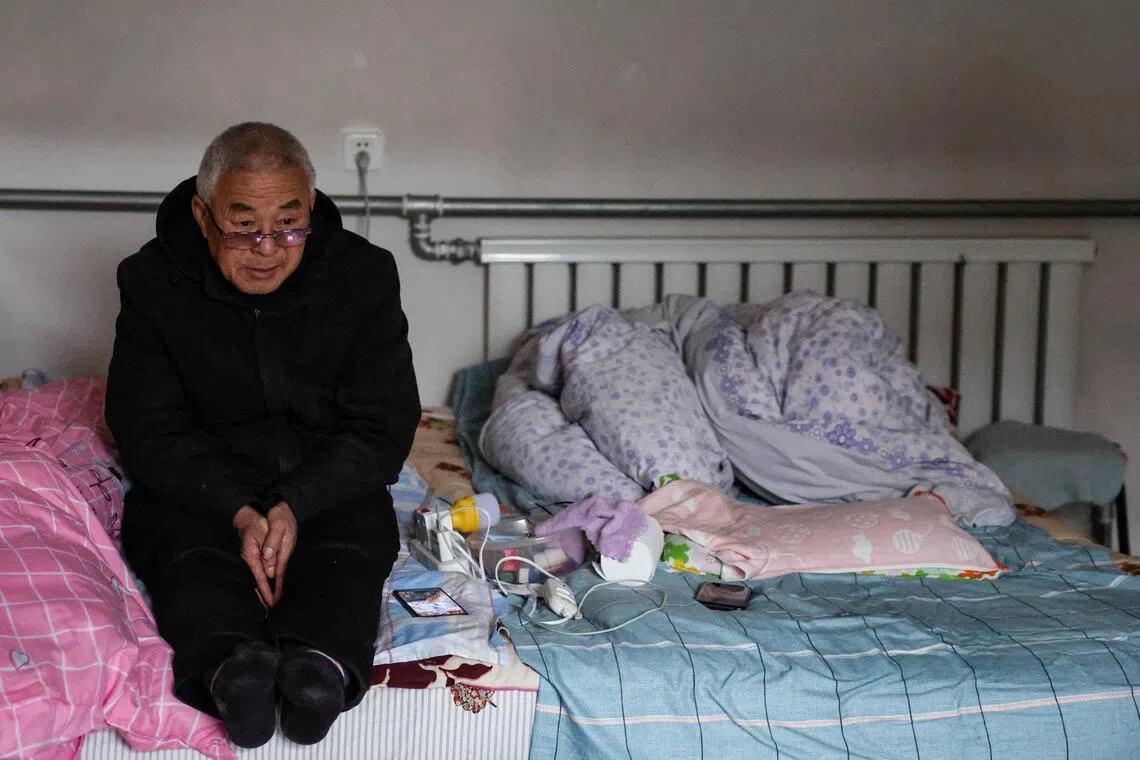
Impoverished local governments, energy market reforms and a stalling economy - these are forcing many in rural China to make hard choices about necessities like heating.
PHOTO: REUTERS
Follow topic:
China
Published Jan 15, 2026, 05:00 PM
Updated Jan 15, 2026, 05:12 PM
BAODING, China - As the dry, freezing winter air envelops his home, 72-year-old farmer He Wenxiang sits on a bed wearing several layers of clothing including a black fur-collared jacket and a cap.
He takes a thermometer off the wall that reads about 14 deg C.
Despite outside temperatures of minus 1 deg C, Mr He runs his gas boiler only occasionally to warm up the radiator in his bedroom.
“Life isn’t easy,” he said. “If any colder, you couldn’t take it.”
Mr He is one of several people in his village outside the city of Baoding, in China’s Hebei province south of Beijing, choosing to barely heat their homes because of rising natural gas prices after cash-strapped
governments scaled back subsidies
designed to drive a transition to clean energy.
In another village nearby, a woman who only gave her surname Song stands in the sun in an alleyway selling used electronics.
She said her family pays 8,000 yuan ($1,478) to heat their home for a winter.

- Joined
- Sep 22, 2008
- Messages
- 98,573
- Points
- 113
I can attest that a cloned musang king is still a good durian. Nowadays they can. Pack 55 trees in one acre. Just take it as scoot of durian. The higher end musang king you leave it to china.
But sometimes kampung durian is also good. Some very bitter. Some sweet. Malays anyhow throw seed and just let it grow. Problem is consistency. Some very little flesh big seed.
But sometimes kampung durian is also good. Some very bitter. Some sweet. Malays anyhow throw seed and just let it grow. Problem is consistency. Some very little flesh big seed.

- Joined
- Aug 10, 2008
- Messages
- 13,722
- Points
- 113
Is there still middle class in china ?Changing tastes: China’s new affluent consumers seek quality not extravagance
Rise of upper middle class reshapes China’s retail market, driving demand for quality goods and creating a battleground for global brands

Chen Hong
Published: 11:30am, 11 Jan 2026
In a premium supermarket in Shanghai one recent weekend, 33-year-old information technology specialist Zhao Wenyu paused in front of the health food aisle, comparing protein content and ingredient lists on imported granola and organic milk – rather than checking discounts.
Zhao now spends around 3,000 yuan (US$420) a month on organic food, nutritional supplements and functional beverages, up from about 1,200 yuan three years ago. “I don’t mind paying more if I am satisfied with the product’s quality,” she said, adding that health and long-term value had become bigger priorities than bargains.
The rise of the upper-middle-income population was fast becoming a pivotal force shaping China’s consumer landscape in 2026, even amid an economic slowdown, according to PwC China. This surge in demand offered significant opportunities for international brands known for their quality and value. However, experts said that winning over this new generation of affluent consumers posed a challenge.
“The Chinese government has identified expanding domestic demand as a top economic priority for 2026,’’ said Carrie Yu, consumer market industry leader at PwC China, adding that this focus was expected to support sectors such as retail, hospitality, and cultural and creative industries.
Oh I think China in their advertising for their Hainan free port has said that they have 400million middle class.
I for one moment don't believe they have any middle class left china.
Similar threads

- Replies
- 6
- Views
- 402
- Replies
- 15
- Views
- 370


- Replies
- 30
- Views
- 712
- Replies
- 0
- Views
- 954

