

- Joined
- Mar 11, 2013
- Messages
- 17,442
- Points
- 113
ress TV and Al Jazeera have reported that a joint naval exercise involving Iran, China, and Russia will be held in the coming days in the waters of the Gulf of Oman and the Strait of Hormuz.
The maneuver is widely seen as significant, taking place amid rising tensions between Iran and Washington and renewed speculation about a potential U.S. military strike on Iran.
Roughly three weeks ago (January 9–16, 2026), the multinational naval exercise “Exercise of Peace Will 2026” was conducted under South African hostship in waters and airspace near the country’s coast, with prominent participation by China, Russia, and Iran.
This exercise marked the first instance of defense cooperation within the BRICS framework. It focused on scenarios such as maritime attacks, helicopter deck landings from one vessel to another, rescue of hijacked ships, communications drills, tactical fleet formations, and helicopter-based medical evacuation.
The significance of coming naval drill can be analyzed on several levels:
The exercise is a clear indication of deepening security and military cooperation among Iran, Russia, and China, demonstrating that their relations have moved beyond political and economic coordination to the level of operational alignment at sea.
The continuity of such drills since 2019 has transformed this cooperation from an ad hoc initiative into a relatively stable pattern within the security architecture of the Indian Ocean and its surrounding regions.
Conducting a joint exercise in sensitive maritime environments—from the Indian Ocean to areas adjacent to routes leading to the Strait of Hormuz—conveys a clear political signal regarding the three countries’ ability to synergize in the face of Western pressure and military presence.
These drills, particularly within alternative frameworks such as BRICS and the “Maritime Security Belt,” symbolically represent an effort to balance against the U.S.-led maritime order.
A central focus of the exercise is the protection of critical sea lines of communication and maritime economic activities, signaling an attempt by the three countries to position themselves as providers of security for energy and trade routes in the face of “threats” and sanctions.
For China, safeguarding energy transit routes from the Persian Gulf and across the Indian Ocean is vital; for Iran and Russia, demonstrating the capability to protect energy exports serves both deterrent purposes and as a means of countering Western pressure.
From a military standpoint, drills centered on maritime security operations, counter-maritime threats, search and rescue, and combined maneuvers enhance operational interoperability among the three navies and increase their capacity for planning future joint operations.
These exercises also provide opportunities for experience-sharing, testing tactics, and assessing the effectiveness of weapons and communications systems in a multinational operational environment.
Held in continuity with “Exercise of Peace Will 2026” and as the first serious defense cooperation initiative under the BRICS/BRICS+ umbrella, this maneuver suggests that the bloc is evolving from a purely economic platform toward a security and defense actor.
Symbolically, these drills form part of a broader effort to construct an alternative security architecture in the Global South—one that challenges Western legitimacy and initiative in managing maritime security.
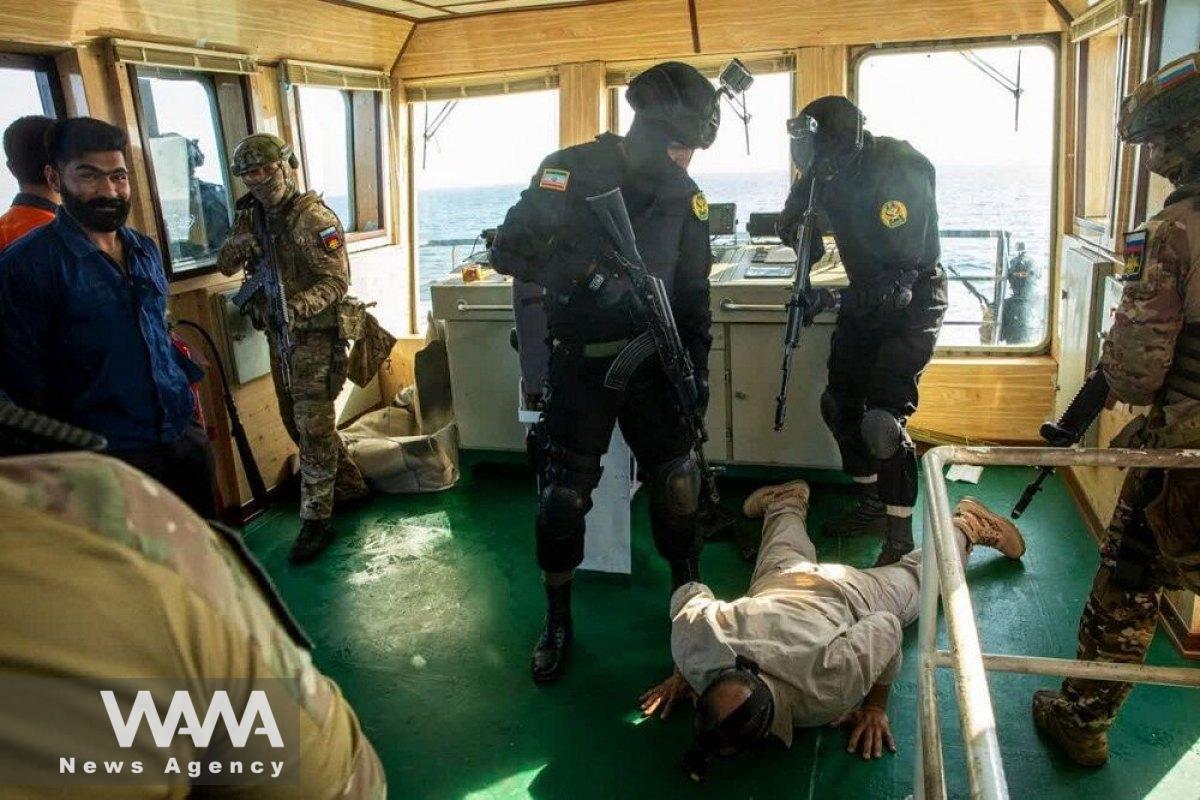
Special operations teams from Iran, China, and Russia rehearsed a scenario involving the liberation of a hijacked vessel in the joint naval drill. Social media/ WANA News Agency
The maneuver is widely seen as significant, taking place amid rising tensions between Iran and Washington and renewed speculation about a potential U.S. military strike on Iran.
Roughly three weeks ago (January 9–16, 2026), the multinational naval exercise “Exercise of Peace Will 2026” was conducted under South African hostship in waters and airspace near the country’s coast, with prominent participation by China, Russia, and Iran.
This exercise marked the first instance of defense cooperation within the BRICS framework. It focused on scenarios such as maritime attacks, helicopter deck landings from one vessel to another, rescue of hijacked ships, communications drills, tactical fleet formations, and helicopter-based medical evacuation.
The significance of coming naval drill can be analyzed on several levels:
- Deepening Trilateral Strategic Convergence
The exercise is a clear indication of deepening security and military cooperation among Iran, Russia, and China, demonstrating that their relations have moved beyond political and economic coordination to the level of operational alignment at sea.
The continuity of such drills since 2019 has transformed this cooperation from an ad hoc initiative into a relatively stable pattern within the security architecture of the Indian Ocean and its surrounding regions.
- A Message to the United States and the West
Conducting a joint exercise in sensitive maritime environments—from the Indian Ocean to areas adjacent to routes leading to the Strait of Hormuz—conveys a clear political signal regarding the three countries’ ability to synergize in the face of Western pressure and military presence.
These drills, particularly within alternative frameworks such as BRICS and the “Maritime Security Belt,” symbolically represent an effort to balance against the U.S.-led maritime order.
- Geo-economic Dimensions and Maritime Security
A central focus of the exercise is the protection of critical sea lines of communication and maritime economic activities, signaling an attempt by the three countries to position themselves as providers of security for energy and trade routes in the face of “threats” and sanctions.
For China, safeguarding energy transit routes from the Persian Gulf and across the Indian Ocean is vital; for Iran and Russia, demonstrating the capability to protect energy exports serves both deterrent purposes and as a means of countering Western pressure.
- Enhancing Operational Capability and Naval Interoperability
From a military standpoint, drills centered on maritime security operations, counter-maritime threats, search and rescue, and combined maneuvers enhance operational interoperability among the three navies and increase their capacity for planning future joint operations.
These exercises also provide opportunities for experience-sharing, testing tactics, and assessing the effectiveness of weapons and communications systems in a multinational operational environment.
- Symbolic Signaling within BRICS and the Multipolar Order
Held in continuity with “Exercise of Peace Will 2026” and as the first serious defense cooperation initiative under the BRICS/BRICS+ umbrella, this maneuver suggests that the bloc is evolving from a purely economic platform toward a security and defense actor.
Symbolically, these drills form part of a broader effort to construct an alternative security architecture in the Global South—one that challenges Western legitimacy and initiative in managing maritime security.
Special operations teams from Iran, China, and Russia rehearsed a scenario involving the liberation of a hijacked vessel in the joint naval drill. Social media/ WANA News Agency


