• IP addresses are NOT logged in this forum so there's no point asking. Please note that this forum is full of homophobes, racists, lunatics, schizophrenics & absolute nut jobs with a smattering of geniuses, Chinese chauvinists, Moderate Muslims and last but not least a couple of "know-it-alls" constantly sprouting their dubious wisdom. If you believe that content generated by unsavory characters might cause you offense PLEASE LEAVE NOW! Sammyboy Admin and Staff are not responsible for your hurt feelings should you choose to read any of the content here.

    The OTHER forum is HERE so please stop asking.

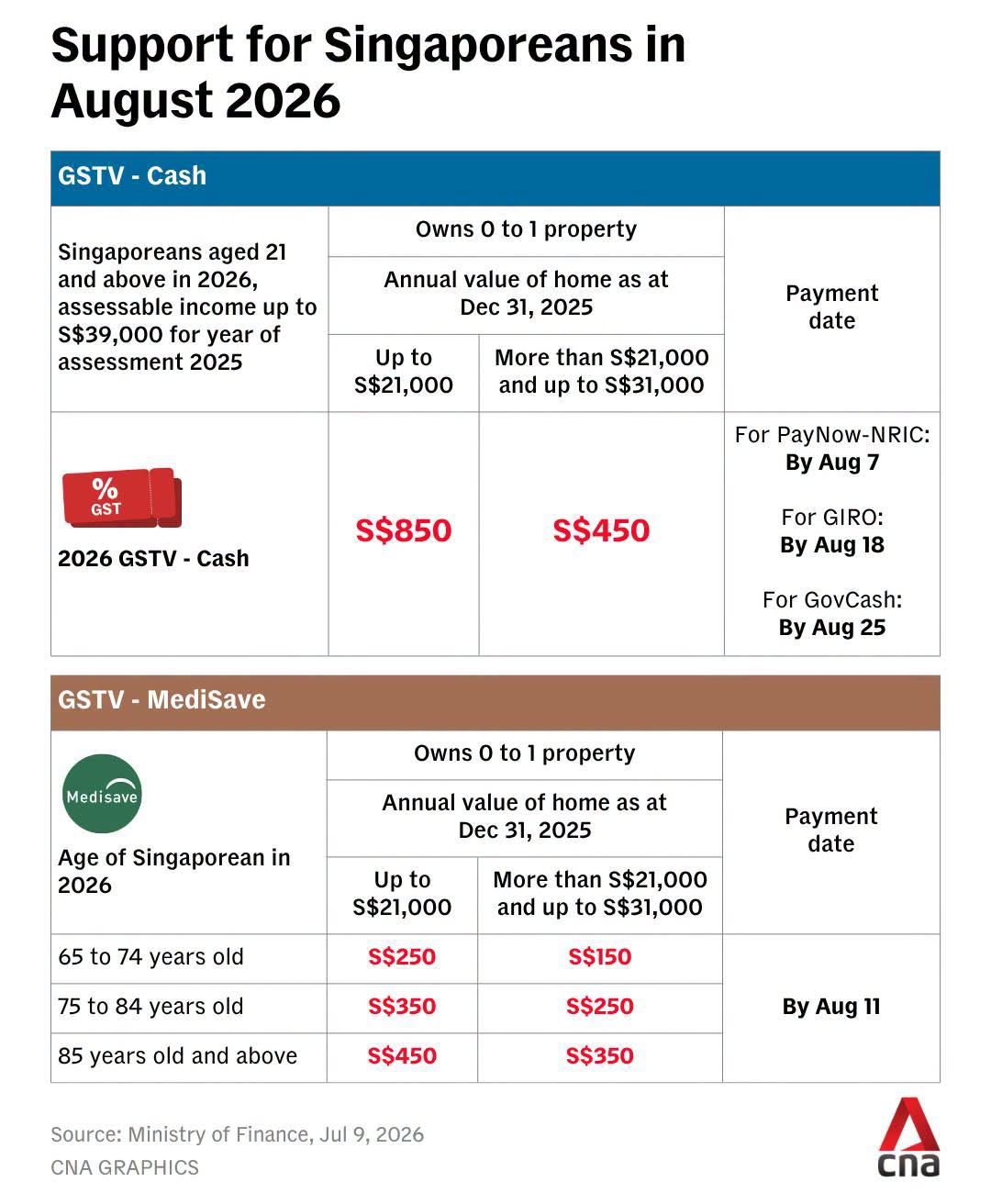
Sinkies will get more Cash Payouts in Aug 2026! Steamed!

Pinkieslut

Alfrescian
Loyal
Joined
Apr 14, 2011
Messages
21,849
Points
113
Many Sinkies will be happy like fuck lanjiao steamed.

1783578081567.png
 
The more they give, the more the prices will skyrocket.

Enjoy drinking the sea water to 'quench' your thirst. :sneaky:
 
The more they give, the more the prices will skyrocket.

Enjoy drinking the sea water to 'quench' your thirst. :sneaky:
Then good mah, soon all will up the big lorry and move to a better place ler

This will make way for much needed talents
 

AI and the Singaporean worker​

Summarise


Add BT as a preferred source

Claressa Monteiro

Published Thu, Jul 9, 2026 · 05:00 AM

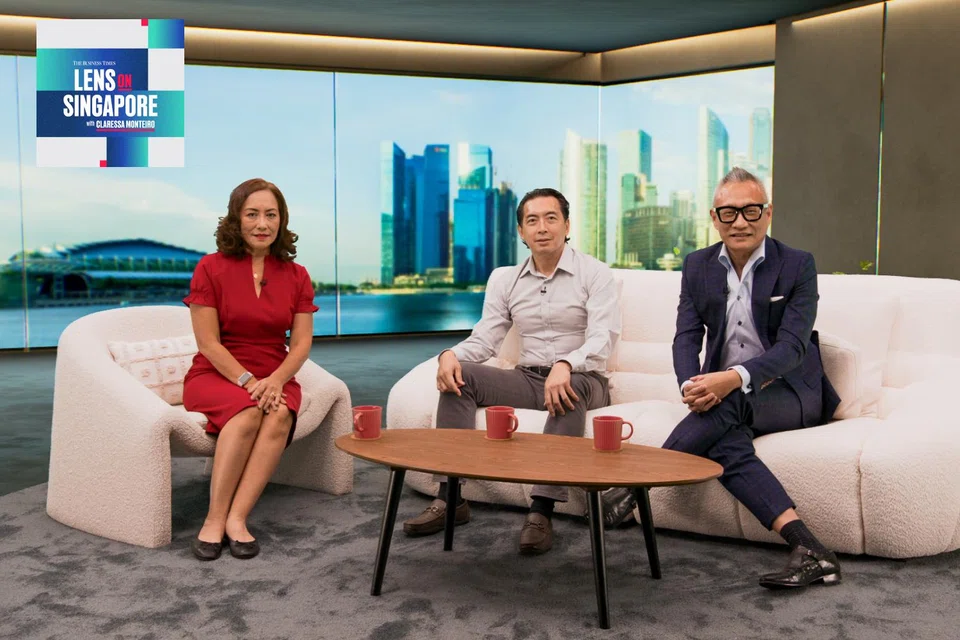
  • (From right) David Leong, Dr Christopher Cheok and host Claressa Monteiro.
  • (From right) David Leong, Dr Christopher Cheok and host Claressa Monteiro. PHOTO: STUDIO +65


Singapore is one of the world’s most AI-ready economies. The infrastructure is being built, the policies are in place and the investment is real. But there is another conversation happening much more quietly, in consulting rooms, in HR offices and in the minds of working people who are not sure where they fit into what comes next.

In this episode of Lens on Singapore, a video podcast from The Business Times, we spoke with Dr Christopher Cheok, assistant chairman of the Medical Board for Digital Health at the Institute of Mental Health, and David Leong, managing director of PeopleWorldwide Consulting. One sees the anxiety up close in clinical settings. The other advises organisations navigating workforce transformation. Between them they gave us a picture of what this moment actually feels like for the people living through it.
 

AI failures put 86% of Singapore CEOs' jobs at risk​

CEOs are still cautious about allowing AI to make decisions without human approval.

More than eight in 10 Singapore CEOs believe their jobs are on the line if their artificial intelligence (AI) strategies fail, as executives face mounting pressure to deliver measurable returns from AI investments, according to a new global study by Dataiku.

The Global AI Confessions Report: CEO Edition 2026, based on a Harris Poll survey of 900 CEOs, found that 86% of Singapore CEOs believe their role is at risk if they fail to deliver business gains from AI by the end of 2026, compared with 80% globally. Meanwhile, 83% expect a fellow CEO to lose their job due to a failed AI strategy or AI-related crisis.

The findings suggest AI has become a board-level accountability issue rather than simply a technology initiative. Whilst 62% of Singapore CEOs ranked AI strategy as a high or top business priority, only 13% identified it as their single highest priority.

Despite the stakes, the report found that CEOs remain cautious about handing over decision-making to AI despite increasing adoption.Although 89% of Singapore CEOs said they would stake their job on the success of AI initiatives, one-third said they would not allow AI to make decisions without human approval.

Governance also remains a key concern. About 95% of Singapore CEOs believe employees are using generative AI tools without approval, whilst 78% expressed concerns that AI agents could create legal risks. Another 59% warned that poor explainability could trigger a customer trust or brand crisis.

Executive oversight of AI has also intensified. Around 78% of Singapore CEOs said their involvement in AI-related decisions has increased, whilst 59% participate in most AI decisions. However, nearly two-thirds said they challenged AI vendor or platform decisions made by their CIO or other executives over the past year, highlighting the growing scrutiny of enterprise AI investments.
 
Back
Top