

- Joined
- May 16, 2023
- Messages
- 48,464
- Points
- 113
Singapore manufacturing growth to moderate in 2026 but AI boom, tariff exemptions are bright spots
The lynchpin electronics sector should still lead growthSummarise

Elysia Tan
Published Thu, Jan 8, 2026 · 07:00 AM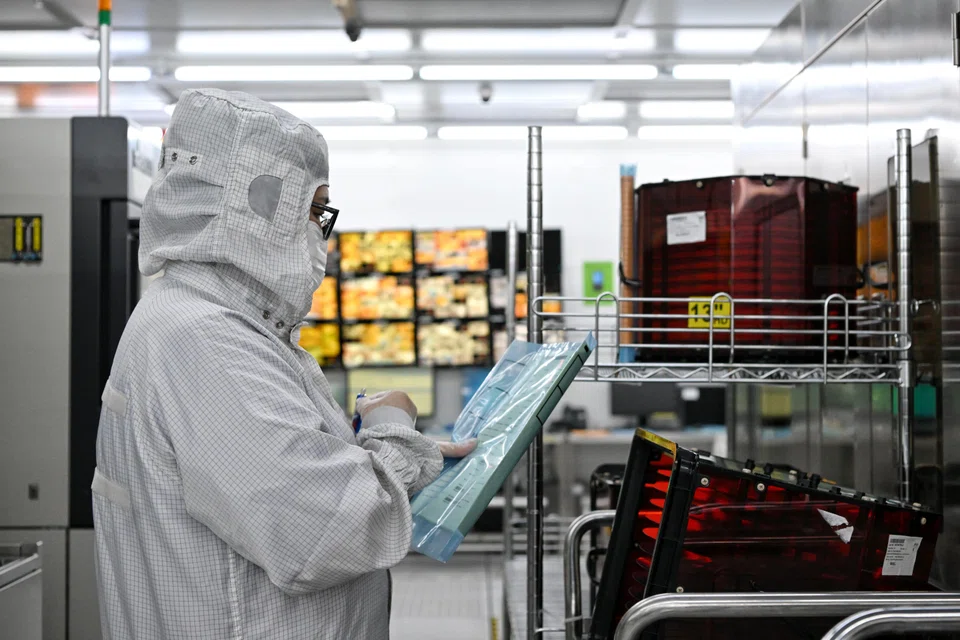
- Singapore’s industrial production growth averaged 8.2% in the first 11 months of 2025. PHOTO: BT FILE
- Singapore’s industrial production growth averaged 8.2% in the first 11 months of 2025. PHOTO: BT FILE
- Singapore’s industrial production growth averaged 8.2% in the first 11 months of 2025. PHOTO: BT FILE
- Singapore’s industrial production growth averaged 8.2% in the first 11 months of 2025. PHOTO: BT FILE
- Singapore’s industrial production growth averaged 8.2% in the first 11 months of 2025. PHOTO: BT FILE
The manufacturing sector performed beyond expectations in 2025, in spite of – or perhaps due to – global tariff disruptions.
There was a lot of uncertainty with the introduction of last April’s “Liberation Day” tariffs and the subsequent 90-day truce, said Singapore Manufacturing Federation (SMF) president Lennon Tan, noting the front-loading activity that followed.
Singapore’s industrial production growth averaged 8.2 per cent in the first 11 months of 2025.
This was partly due to diversification, said HSBC Asean economist Yun Liu, noting strong growth in volatile pharmaceutical production and outperformance in precision and transport engineering.
Electronics remained the standout performer.
 Ad
AdiPhone Owners, Remember to Block Ads Before Fridaylifestyletechtips.com
Sustained elevated AI-driven demand lifted trade growth in tech-exposed economies, including Singapore, Liu said.
RHB group chief economist Barnabas Gan highlighted strong demand for AI-related semiconductors, servers and advanced components. Last year’s manufacturing growth was underpinned by the global semiconductor upcycle and steady industrial investment, he said.
In 2026, high base effects will come into play, and front-loading will also need to be paid back. The uncertainty that lingers from the start-stop nature of US-led trade disruptions are also expected to carry into the new year, observers said.


