
- Joined
- Apr 14, 2011
- Messages
- 21,740
- Points
- 113
The billion-dollar question Singapore Airlines shareholders should ask at its AGM
More clarity on the board’s approach to the investment in Air India would be welcomeSummarise

Tay Peck Gek
Published Wed, Jul 1, 2026 · 10:42 AM阅读简体中文版 (beta)
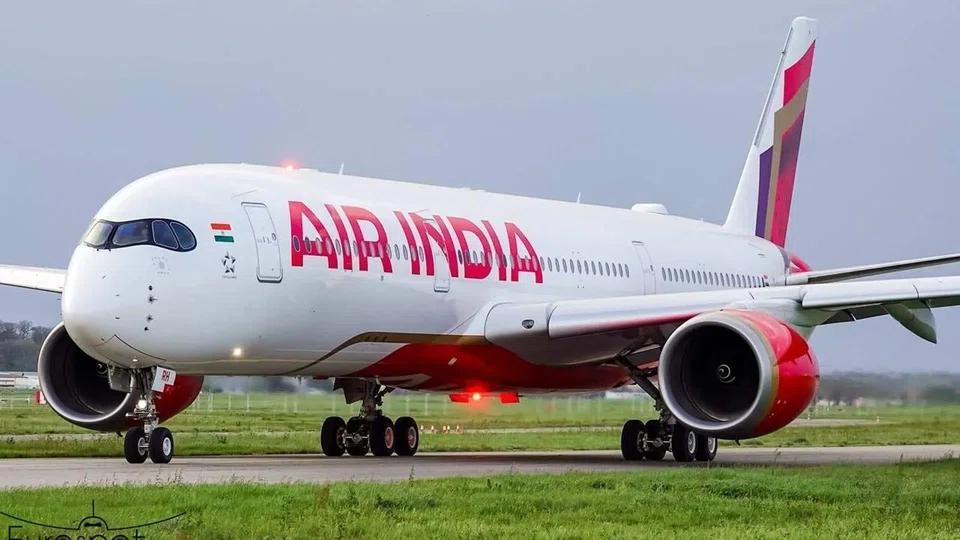
- Air India has presented both challenges and potential opportunities to Singapore Airlines, but its investment outcome is still uncertain. PHOTO: BT FILE
If there is only one question shareholders must ask, it should be about the group’s billion-dollar investment.
The national carrier owns a 25.1 per cent stake in the enlarged Air India following the merger with its former associate Vistara in November 2024.
SIA CEO Goh Choon Phong has provided the rationale of the investment in both Indian airlines: India is a tremendous market with a rising middle class, and the ventures fit into SIA’s multi-hub strategy to compensate for the lack of a domestic market.
The Indian market’s vast potential is particularly appealing, especially to an airline without a hinterland, but it is also admittedly a hard one to crack.
Being attractive does not assure profitability.
Asean Intelligence
Get insights into businesses across South-east AsiaGet the free report
Vistara had long been on an elusive quest for profitability, never having turned in a full-year profit from 2015 to 2024 – although it did manage to do so just for a quarter.
SIA’s billion-dollar investment in Vistara was eventually decimated and written down to zero as at end-September 2022.
Equally challenging was its investment in Air India.
SEE ALSO

Air India weighs cost cuts, flight reductions as Iran war worsens financial struggles
Singapore Airlines faces a tough test over Air India’s record losses
When quizzed about the Air India investment, Goh cited SIA’s investment in Vistara to say that it will also be a “long game” – probably about 10 years – as he reiterated a commitment to the new joint venture with India’s Tata Sons.
SIA’s share of Air India’s losses amounted to S$945.2 million for the financial year to March in the first year of integration with Vistara; the Indian carrier posted a loss of S$3.8 billion in total.
As at Mar 31, the Singapore group’s carrying amount in Air India was only S$1.1 billion, versus a total cost of S$2.1 billion.
What is the maximum that SIA is willing to pump into Air India? What is the accumulated loss that will make SIA decide to call it a day with its investment in the Indian carrier?
Goh declined to respond to both questions when they were raised at SIA’s earnings briefing in November 2025, saying that these would involve projections.
However, in finance, investment entails projections. Investors consider, among others, the net present value and the internal rate of return of a potential investment. Specifically, are these projections high enough to clear the threshold of investing?
Since SIA has already invested in Air India, shareholders should press the board of directors to disclose any stop-loss figure for the investment, the expected time for Air India to break even, and specific performance milestones for Air India to achieve.
This may be confidential information, but investors would welcome more clarity on the board’s approach to the investment.
Board renewal and succession plans
The other question shareholders might have is on SIA’s plans for board renewal and CEO succession.Dominic Ho Chiu Fai and Simon Cheong Sae Peng, who are independent and non-executive directors, will be re-designated as non-independent and non-executive directors if they are re-elected at the upcoming AGM.
Their status will change because they would have served continuously for more than nine years.
Chairman Peter Seah was redesignated as a non-independent director at SIA’s last AGM.
One other director, David John Gledhill, will reach the nine-year milestone next year, which means he could also be redesignated as a non-independent and non-executive director, unless he opts not to stand for re-election.
With these upcoming moves, SIA shareholders will be closely watching how the board’s composition changes, with a focus on whether there are sufficient independent directors.
Shareholders should therefore be interested to know the group’s board succession plans, especially for the chairman’s position.
Also, Goh, who turns 63 this year, has narrowly missed the statutory retirement age, which was raised to 64 on Wednesday (Jul 1).
Shareholders may find the AGM an opportune time to raise the issue of CEO succession, too, given that Goh has been at the helm since 2011


