

- Joined
- Aug 20, 2022
- Messages
- 32,729
- Points
- 113
Ringgit nears RM3 per Singapore dollar, but cross-border spending by Singaporeans holds steady
From a high of RM3.55 to RM3.10 against the Singapore dollar, the ringgit's rally has been swift – and analysts say it may not be done.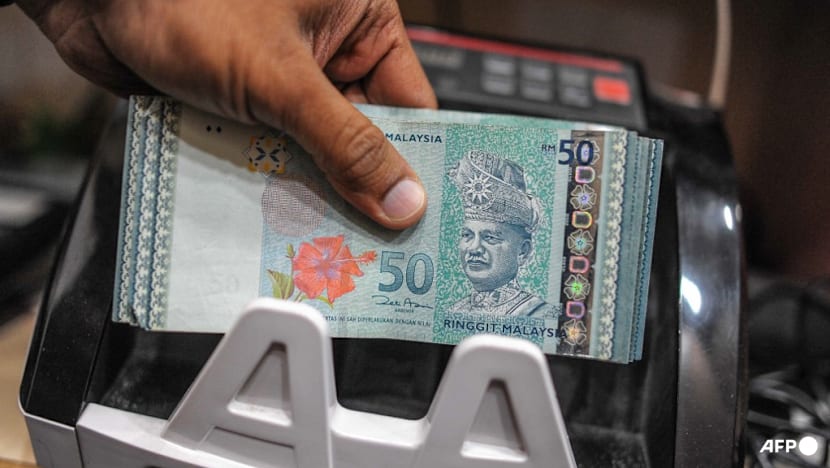
A money changer counts Malaysian ringgit banknotes for customers in Kuala Lumpur. (File photo: AFP/Mohd Rasfan)
Abigail Ng
09 Mar 2026 06:00AM (Updated: 09 Mar 2026 07:50AM)
SINGAPORE: When Ms Niki Lee and her boyfriend decided to rent an apartment in Johor Bahru in October 2023, a Singapore dollar could buy them RM3.45. At its peak, this stretched to RM3.55.
Today, it buys around RM3.10, and some analysts say the rate could reach RM3 per Singapore dollar.
For Singaporeans who live, work or spend regularly across the Causeway, the shift has been gradual but real. Yet most say the impact on their daily lives remains manageable, and data suggests they have not changed their spending habits.
Ms Lee, a 31-year-old financial adviser, told CNA that the stronger ringgit has added roughly S$200 (US$160) a month to what she and her boyfriend spend on rent, a car loan and daily expenses in Johor – which now total about RM5,700, or around S$1,860.
She was disappointed when the ringgit began appreciating, but said she is not overly concerned. The Singapore dollar remains strong, and adjustments to spending have been more about budgeting than the exchange rate.
Scroll to continue with content
Education consultant Samuel Ho, 30, visits Johor Bahru roughly once a month and spends RM600 each time on transport, food, karaoke and massages for him and his girlfriend.
He estimated that the stronger ringgit has added about S$12 to each outing – not too much but enough to cover two Grab rides in Malaysia, he said.
SPENDING HOLDS STEADY
Data from multi-currency e-wallet providers suggests that cross-border spending has not slowed.Revolut said conversions from Singapore dollars to ringgit climbed steadily throughout 2025, with January 2026 recording a nearly 42 per cent increase from a year earlier.
“Our data does not show evidence so far of Singapore consumers materially pulling back on ringgit-related spending following the currency’s appreciation," a spokesperson said.
"Cross-border activity has remained resilient, with users continuing to convert funds for travel and purchases in Malaysia.”
YouTrip chief operating officer Kelvin Lam said transaction volumes and average transaction amounts have both risen compared to previous years. He noted that RM3.30 per Singapore dollar appears to be the "magic number" – a point at which Singaporean users move quickly to lock in the rate.
“The data shows that the stronger ringgit hasn't stopped Singaporeans from heading across the Causeway, it has simply made them strategic,” he said.
Some users appear to be converting even when rates are not in their favour, driven by concern that the exchange rate could worsen before their next trip.
“In a classic display of ‘fear of missing out’, users are locking in current rates – even if they seem lousy – because they fear even lousier rates by the time they actually travel,” said Mr Lam.
“While the MYR is stronger, Singaporeans are still drawn to Malaysia,” he added.
WHAT'S DRIVING THE RINGGIT
Analysts said the currency could appreciate further against the Singapore dollar, but added that it reflects global forces more than any outperformance by the Malaysian economy relative to Singapore.“MYR-SGD is driven more by the US interest rate outlook, rather than divergent Singapore (versus) Malaysia fundamentals,” said Mr Philip Wee, a senior currency economist at DBS.
He said the US dollar and Singapore dollar moved broadly in tandem in the initial aftermath of the pandemic, but began diverging from 2021 as markets began pricing in US interest rate hikes.
The Singapore dollar's relative stability during volatile periods has reinforced its role as a regional safe haven, Mr Wee said.
The ringgit, by contrast, responds more sharply to shifts in global risk sentiment, the US dollar and the Chinese yuan, said Mr Christopher Wong, a foreign exchange and rates strategist at OCBC. It also had more room to rebound, having been more deeply undervalued previously.
Domestic factors have also played a role. Mr Saktiandi Supaat, head of FX research at Maybank, cited strong local demand, AI-driven investments, positive economic data and an improving fiscal outlook as contributing factors.
But analysts cautioned that the same dynamics driving the ringgit higher could reverse quickly. "If global conditions turn more cautious, then MYR's higher beta profile could just as quickly work in the opposite direction," said Mr Wong.
OUTLOOK FOR THE RINGGIT
Maybank expects that the ringgit will strengthen to 3.80 against the US dollar by mid-2026, before moderating to around RM3.90 to RM3.95, said Mr Saktiandi, who is also an MP and chair of the government parliamentary committee for finance, trade and industry.On that basis, he projects the SGD-MYR rate at roughly RM3.00 to RM3.05 around mid-year, and end the year at around RM3.16.
“There is some possibility that SGD-MYR could move towards 3.00 if MYR strengthens more than we expected towards 3.80 and below against the USD," he said, pointing to US dollar weakness and continued positive sentiment on Malaysia as potential catalysts.
OCBC’s Mr Wong agreed the level was within reach, but said it would require another sustained leg of strength in the Chinese yuan, a weaker US dollar or continued capital inflows into Malaysia.
For Singaporeans like Ms Lee, the forecasts are not cause for alarm. She and her boyfriend have already adjusted their mental accounting, rounding down and planning ahead. Whether the rate hits RM3.07 or RM3.00, the arithmetic, she said, stays roughly the same.
“We generally just divide by three anyway, to be more conservative,” she said. “We don’t bother much with the extra decimals.”


