The moment war starts, malays will Retake the 4 southern province of yala, narathiwat, pattani and satun.
Malaysia–Thailand border
The Malaysia–Thailand border divides the sovereign states of Malaysia and Thailand and consists of a land boundary running for 595 km (370 mi) across the Malay Peninsula and maritime boundaries in the Straits of Malacca and the Gulf of Thailand/South China Sea. The Golok River forms the easternmost 95 km stretch of the land border.
[th width="376px"]
Malaysia–Thailand border
[/th]
[td width="376px"]

The border wall between Malaysia and Thailand near Padang Besar checkpoint.
[/td]
[th width="376px"]
Characteristics
[/th]
[th width="376px"]
History
[/th]
The land border is based on the 1909 treaty between Thailand (then known as Siam) and the British which had started to exert their influence over the northern Malay states of
Kedah,
Kelantan,
Perlis, and
Terengganu in the early 20th century, states which were previously under Siamese control. Currently, the bilateral border passes through four Malaysian states (
Kedah,
Kelantan,
Perak, and
Perlis) and four Thai provinces (
Narathiwat,
Satun,
Songkhla, and
Yala).
 Map of the Malaysia-Thailand border
Malaysia and Thailand have territorial sea and continental shelf boundary agreements for the Straits of Malacca which were signed in 1979 and 1971, respectively. The 1979 agreement also included Indonesia as a signatory as it also determined the common continental shelf border tripoint for the three countries. The 1979 agreement also established the territorial sea boundary in the Gulf of Thailand while a separate memorandum of understanding signed in 1979 established a short continental shelf boundary in the area. The boundary beyond that agreed is disputed because of overlapping claims over the seabed. The overlapping claims led to the establishment of a joint development area in 1990 where both countries agreed to share mineral resources in a 7,250 square km wedge-shaped area.
Map of the Malaysia-Thailand border
Malaysia and Thailand have territorial sea and continental shelf boundary agreements for the Straits of Malacca which were signed in 1979 and 1971, respectively. The 1979 agreement also included Indonesia as a signatory as it also determined the common continental shelf border tripoint for the three countries. The 1979 agreement also established the territorial sea boundary in the Gulf of Thailand while a separate memorandum of understanding signed in 1979 established a short continental shelf boundary in the area. The boundary beyond that agreed is disputed because of overlapping claims over the seabed. The overlapping claims led to the establishment of a joint development area in 1990 where both countries agreed to share mineral resources in a 7,250 square km wedge-shaped area.
The border between Thailand or
Siam and the sultanates of the Malay Peninsula (
Peninsular Malaysia today) has varied throughout history. The southern part of today Thailand has always been populated by Malays and traditional Malay sultanates of
Kedah (of which
Perlis, Setul was part),
Kelantan,
Pattani (which consist of the areas of Singgora, Yala, Ligor) and
Terengganu came under Siamese influence in the 19th century. The Malay states immediately to the south, namely Perak and Pahang were independent sultanates until the British started asserting influence over them in the late 1800s.
In 1785, the British obtained the island of
Penangfrom the Sultan of
Kedah. The channel between the island and the mainland of peninsular Malaysia became the border between British territory and Kedah.
On 6 May 1869, the United Kingdom and Siam signed an agreement known as the Bangkok Treaty of 1869 where Siam ceded a piece of territory on the mainland opposite Penang to the United Kingdom. The territory became known as Province Wellesley (known as
Seberang Perai today). The treaty also defined the border between British and Siamese territory and this border remains the boundary line between Penang and Kedah today, although both are now constituent states of
Malaysia.
On 9 July 1909, the United Kingdom and Siam signed another agreement in Bangkok. Known as the
Anglo-Siamese Treaty of 1909, the agreement stated the states of Kedah, Kelantan, and Terengganu belong to the United Kingdom while Pattani fell into Siamese hands. The treaty, in one of its four annexes, defined the border between British and Siamese territories. This border ultimately became today's border between Malaysia and Thailand.
Thailand regained influences of the Kedah, Kelantan, and Terengganu during World War II when the Japanese handed them over to the kingdom, thus moving the Malay States-Siamese border southwards again. The states were returned to the British at the end of the war.<a href="
https://en.wikipedia.org/wiki/Malaysia–Thailand_border#cite_note-10"><span><span>[</span>10<span>]</span></span></a>




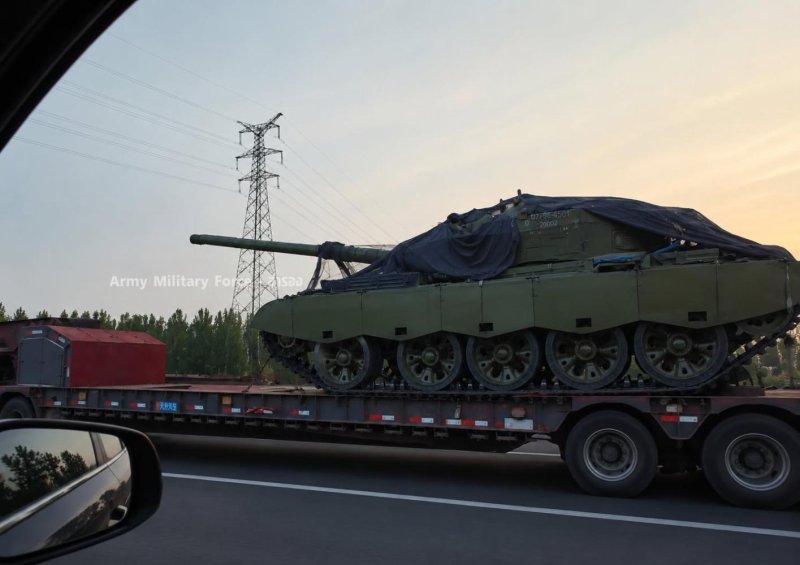 A picture purported to show a Chinese-made battle tank being delivered through Guangdong province to Zhanjiang port, before being shipped by sea to Sihanoukville port in Cambodia. (Photo: Army Military Force X Account)


