

- Joined
- Jun 17, 2020
- Messages
- 17,424
- Points
- 113
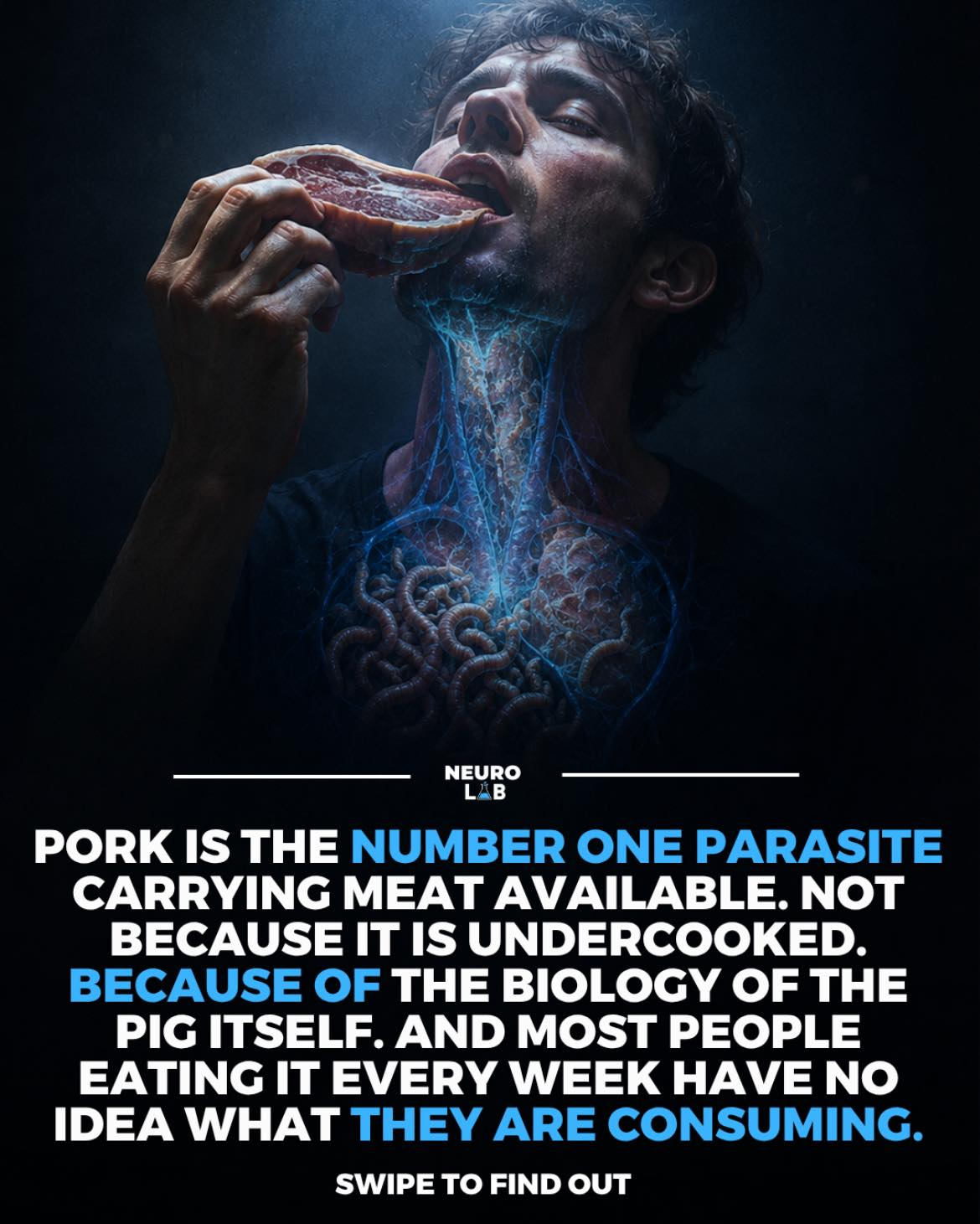
Pork is the number one parasite carrying meat available. Not because it is undercooked. Because of the biology of the pig itself. And most people eating it every week have no idea what they are consuming.
Pigs have relatively weak gastric acid compared to most animals. In most animals strong stomach acid kills parasites before they progress further. In pigs this defence is weaker. Parasites survive the stomach and embed directly into the muscle tissue and fat you eat.
Pigs are scavengers. They eat almost anything. Rodents. Decaying matter. Faeces. This diet exposes them to a wide range of parasitic organisms that colonise the pig and embed in the tissue.
The primary parasite is Trichinella spiralis. A roundworm that embeds larvae directly into muscle tissue forming protective cysts. These cysts can survive standard cooking if the meat is not cooked evenly and some curing and smoking methods.
Modern commercial farming has dramatically reduced Trichinella prevalence in regulated pork. But not eliminated it. Wild boar and unregulated sources carry significantly higher risk.
Cook pork to at least 71 degrees Celsius. Avoid raw or undercooked pork. Buy from regulated commercial sources. Some traditional curing and smoking methods do not reliably eliminate parasite risk.
The biology of the pig has made it the highest parasite risk meat in human history. Modern farming has reduced that risk. But it has not eliminated it. Information not fear is what allows you to make genuinely informed choices.
Follow us for more research backed content on nutrition food safety and the health facts most people have never been told.
REFERENCES
Gottstein, B., et al. (2009). Clinical Microbiology Reviews, 22(1), 127 145.
Garcia, H. H., et al. (2003). Lancet, 362(9383), 547 556.
DISCLAIMER
For educational purposes only. Not medical advice. Consult a qualified healthcare professional or food safety authority for specific guidance on safe food preparation particularly if you have existing health conditions or are immunocompromised.
Pigs have relatively weak gastric acid compared to most animals. In most animals strong stomach acid kills parasites before they progress further. In pigs this defence is weaker. Parasites survive the stomach and embed directly into the muscle tissue and fat you eat.
Pigs are scavengers. They eat almost anything. Rodents. Decaying matter. Faeces. This diet exposes them to a wide range of parasitic organisms that colonise the pig and embed in the tissue.
The primary parasite is Trichinella spiralis. A roundworm that embeds larvae directly into muscle tissue forming protective cysts. These cysts can survive standard cooking if the meat is not cooked evenly and some curing and smoking methods.
Modern commercial farming has dramatically reduced Trichinella prevalence in regulated pork. But not eliminated it. Wild boar and unregulated sources carry significantly higher risk.
Cook pork to at least 71 degrees Celsius. Avoid raw or undercooked pork. Buy from regulated commercial sources. Some traditional curing and smoking methods do not reliably eliminate parasite risk.
The biology of the pig has made it the highest parasite risk meat in human history. Modern farming has reduced that risk. But it has not eliminated it. Information not fear is what allows you to make genuinely informed choices.
Follow us for more research backed content on nutrition food safety and the health facts most people have never been told.
REFERENCES
Gottstein, B., et al. (2009). Clinical Microbiology Reviews, 22(1), 127 145.
Garcia, H. H., et al. (2003). Lancet, 362(9383), 547 556.
DISCLAIMER
For educational purposes only. Not medical advice. Consult a qualified healthcare professional or food safety authority for specific guidance on safe food preparation particularly if you have existing health conditions or are immunocompromised.


