
- Joined
- Apr 14, 2011
- Messages
- 21,688
- Points
- 113
SAMSTERS BUYING JOLLIBEE FOR YOUR PINAY F-BUDDIES?
The Philippines loves Jollibee. Overseas Filipinos love it even more
Forget KFC. For Filipinos abroad, Jollibee serves up cultural pride with a side of nostalgia – and the best fried chicken in America
4-MIN READ0
Discover MORE stories on
The Philippines
now and stay updated with
Asian Angle |
Malaysian politicians rebuff Sabah oil fix for Philippine energy crisis
Burning daylight: Iran war energy shock revives Asean’s power grid plans
Before you go
scmp poll
Sam Beltran
Published: 1:00pm, 29 Mar 2026
No fast-food chain has ever meant quite what Jollibee means to Filipinos.
Forget McDonald’s and KFC, Jollibee – with its sweet spaghetti and crispy Chickenjoy – is something else entirely: a cultural anchor for a diaspora scattered across every continent on Earth.
With more than a million Filipinos leaving the Philippines every year in search of greener pastures abroad, the chain has followed them almost everywhere they have gone, building a brand that taps into deep emotions by offering a taste of home.
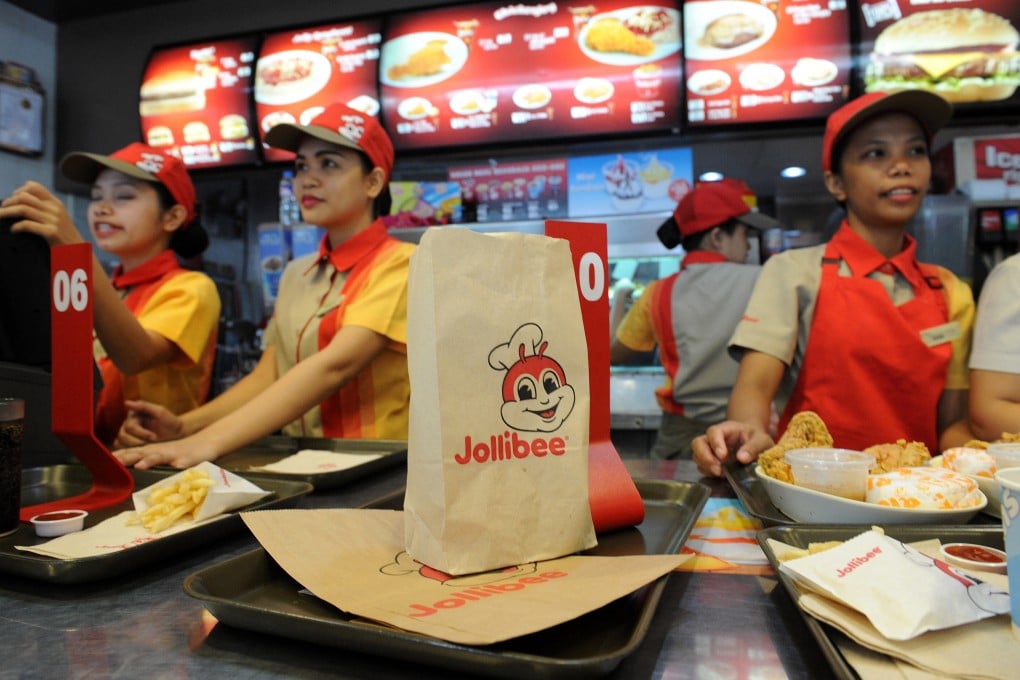
In the Philippines, where Jollibee operates over 1,000 outlets and is the dominant fast-food chain, it is simply part of the furniture. Overseas, it is something closer to a lifeline.
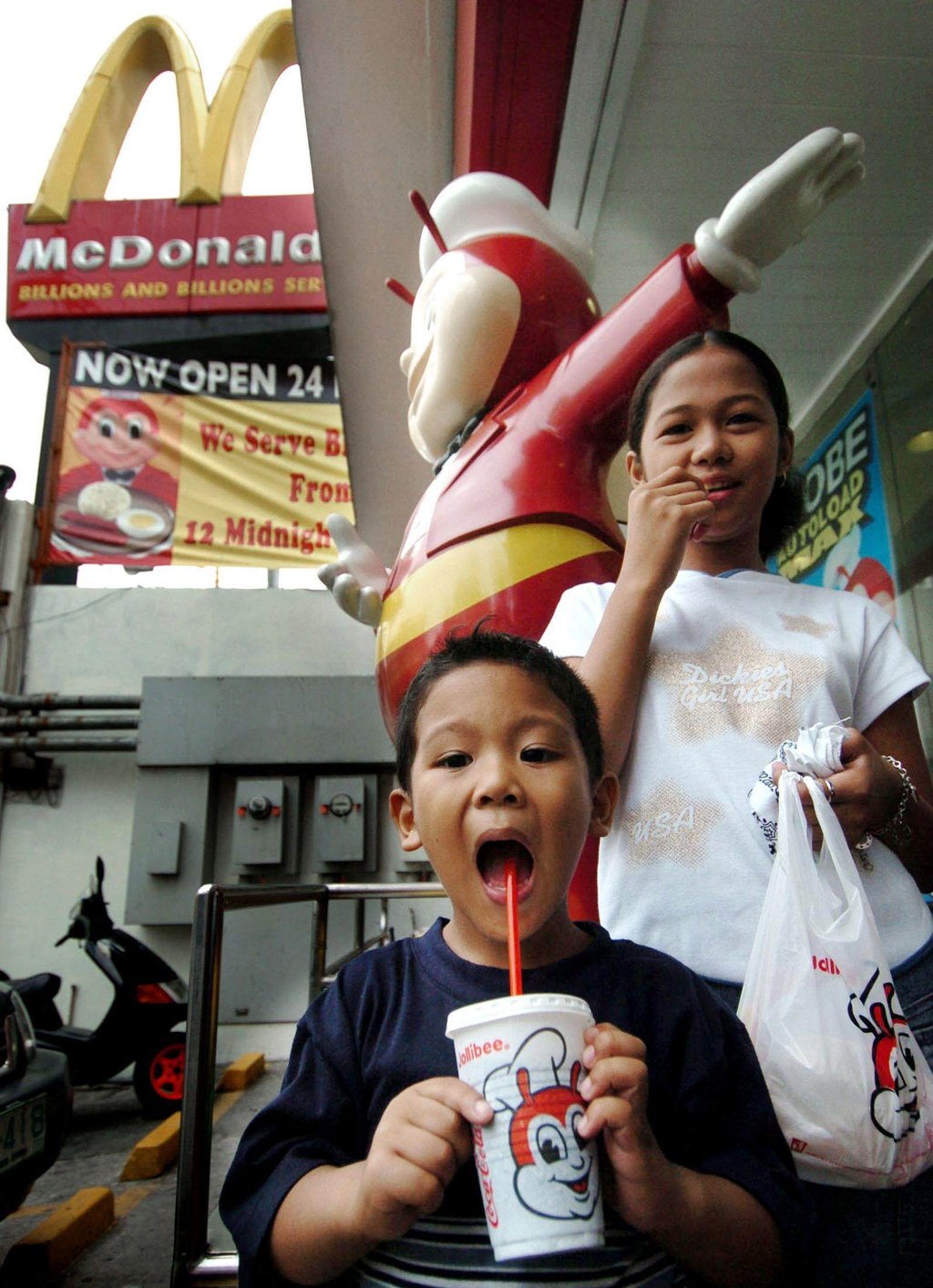
Children enjoy Jollibee snacks outside an outlet in Manila with a McDonald's logo in the background. Photo: AFP
Pia Lingasin knows that feeling well. She was only 16 when her family traded Manila for California, but in the decades since Jollibee has been a constant reminder of home, offering a taste of the life she left behind.
“I didn’t eat a lot of Jollibee growing up,” she said. “But when we migrated, we definitely caught up to the years of not having it.”
Now 37, an accountant and a mother of two, Lingasin visits her local Jollibee at least twice a month. The order never changes much: Chickenjoy, Jolly Spaghetti, a pineapple quencher, a peach mango pie. But the ritual has taken on new meaning as her children – aged six and eight, both born and raised in the United States – have come to see the chain as their own entry point into a culture they know mostly through stories.
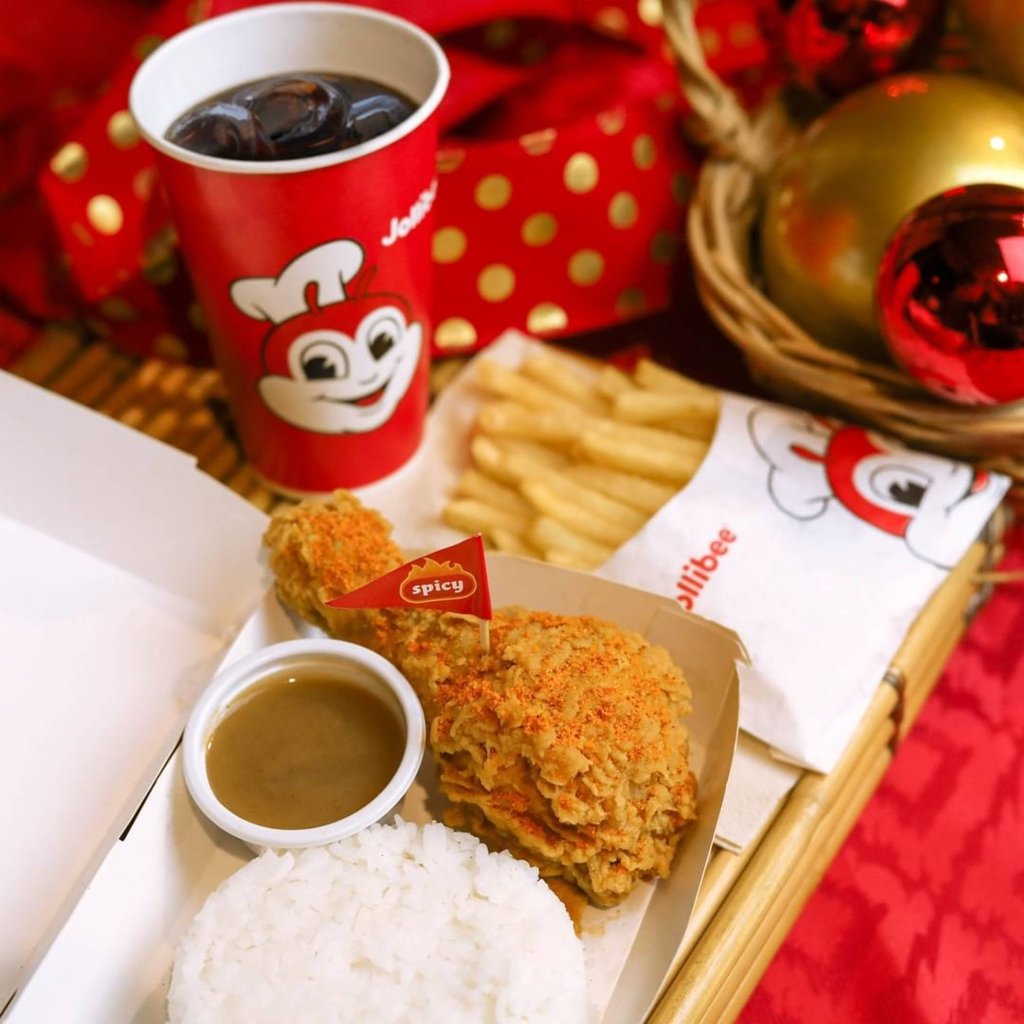
Jollibee, with its crispy Chickenjoy and sweet spaghetti, has become a cultural anchor for many Filipinos overseas. Photo: Instagram/jollibee
“It was something they learned early on that was distinctly Filipino,” Lingasin said. “When we mention we want ‘Filipino food’, they’d sometimes mention Jollibee as the answer! They know that their non-Filipino friends may not have any idea what Jollibee is, so they talk to them about it.”
For her children, she added, the fast-food brand had become “their Filipino story to share while they themselves are learning about their own culture”.
It is a sentiment shared by many Filipinos living overseas, who number more than 4 million in the US alone. For them, Jollibee is part eatery, part cultural embassy and part time machine.
Childhood on a tray
Danica Wilson, 41, grew up in Isabela, a province in northern Luzon so far from Manila that Jollibee was a treat reserved for the rare 10-hour road trip to the capital.“We didn’t have Jollibee in Isabela then,” she recalled. But when she emigrated to the US as a teenager, she found the chain waiting for her.
“It’s like going back to my childhood when I would attend birthday parties,” Wilson said. “The perfect combination.”
Her half-Filipino daughter, Alex, has grown up with Jollibee as a staple of her cultural inheritance, coming a little closer to her heritage with every bucket meal and weekend visit.
It’s like going back to my childhood
Danica Wilson, Filipino-American
What has surprised Wilson most, though, is how far the brand’s pull now extends beyond Filipino households. “I have non-Filipino friends whose children are fans of Jollibee,” she said.
Non-Filipino colleagues ask her why the spaghetti is sweet and why it comes with sliced hot dogs. She finds herself explaining the quirks to them, and discovering a little something in the process.
“It has become a point of pride that a Filipino fast food chain has made it here,” the California resident said.
There are now more than 80 Jollibee outlets across the US, with the very first opening in Daly City, California, in 1998.
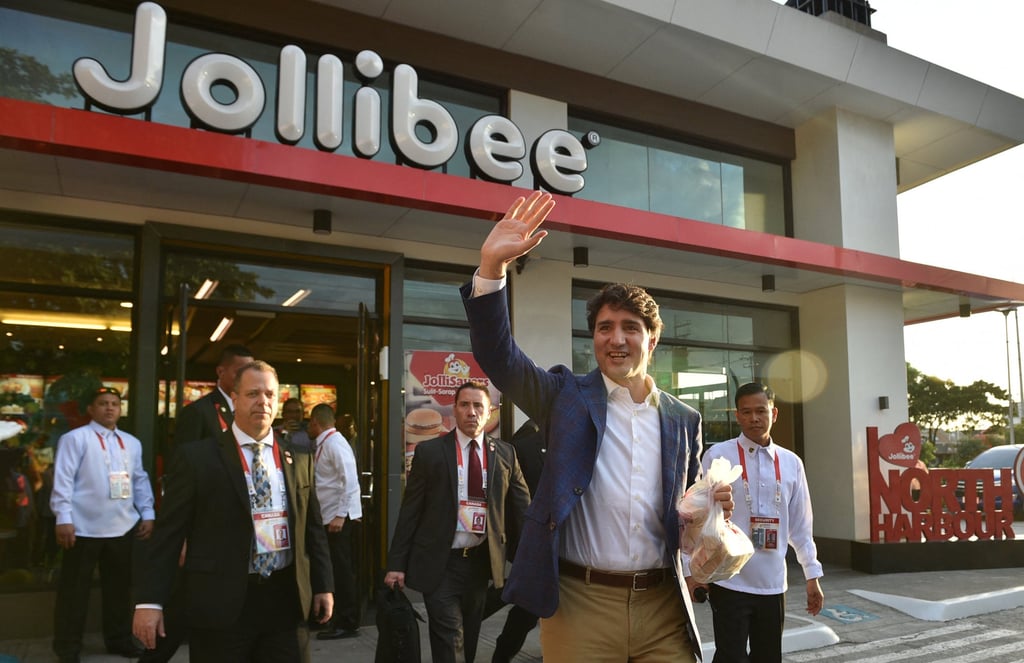
Canada’s then-prime minister Justin Trudeau (centre) waves after visiting a Jollibee in Manila in 2017. Photo: AFP
Worldwide, Jollibee operates over 1,600 stores in 17 countries – and its parent group runs more than 10,000 outlets in 33 countries through acquisitions including Tim Ho Wan, Smashburger and The Coffee Bean & Tea Leaf.
Brand Finance, a London-based brand valuation and strategy consultancy, has ranked Jollibee among the top five strongest restaurant brands in the world – the only Southeast Asian chain on that list.
None of it was inevitable. The company’s origins are almost improbably modest. Founder Tony Tan Caktiong was born to a family that had emigrated from Fujian province in China to the Philippines, eventually settling in Davao in the south.
He trained as a chemical engineer, but a visit to an ice cream factory at 22 changed everything. Using 350,000 Philippine pesos of family savings – roughly equivalent to around US$300,000 today, adjusted for inflation – he franchised two ice cream parlours.

Jollibee founder Tony Tan Caktiong speaks to shareholders in Manila in 2013. Photo: AFP
It turned out his customers wanted more than just desserts, however. Demand for savoury food pushed Tan Caktiong to add hamburgers and sandwiches to the menu and those items soon outshone the ice cream that had started it all.
By 1978, that fast-food concept had become Jollibee – initially spelled “Jolibe” but later changed to more easily evoke the words “jolly” and “bee”.
Within a decade, the menu that millions now know by heart was in place: the Chickenjoy, the Jolly Spaghetti, the Yumburger.
The Jollibee Group cemented its global ambitions in January by announcing plans to split its domestic and foreign operations, with the international business expected to list separately on a US stock exchange by late 2027.
In the meantime, USA Today has named Jollibee the best fast-food fried chicken in America – not bad for a chain born in a Philippine ice cream shop.
A ‘third space’
What explains the hold Jollibee has on Filipinos abroad?James Zarsadiaz, an associate professor of history and director of the University of San Francisco’s Yuchengco Philippine Studies Programme, argues that the brand’s genius lies partly in what it is not.
“Most things they are selling are not traditional Filipino dishes like dinuguan or menudo,” he said, referring to two types of savoury stew. Nor does Jollibee typically serve portable street staples like lumpia (spring rolls) or kamote cue (deep-fried sweet potatoes).
Instead, the menu – fried chicken, spaghetti, burgers – is built around Westernised comfort food given a distinctly Filipino twist. That sweeter, stickier quality may be the key to its crossover appeal.
It’s a nostalgic, ‘fun’ brand that cuts across generations and economic backgrounds
James Zarsadiaz, cultural historian
“Jollibee resonates with the Filipino diaspora in the United States because it’s a nostalgic, ‘fun’ brand that cuts across generations and economic backgrounds,” Zarsadiaz said.
More than that, it functions as what sociologists call a “third space”: somewhere between home and work, between the Philippines and wherever life has taken you.
“Particularly for Filipino immigrants in the last three decades, Jollibee has been the go-to place for comfort food while also functioning as a third space to gather with family or friends at pretty much all hours of the day,” Zarsadiaz said, from children’s birthday parties to quick weekday lunches to early-morning meals after a night of drinking.
He traces the chain’s overseas expansion strategy directly to the diaspora, with its earliest international locations planted in communities with established Filipino populations: California, Hong Kong and Dubai.
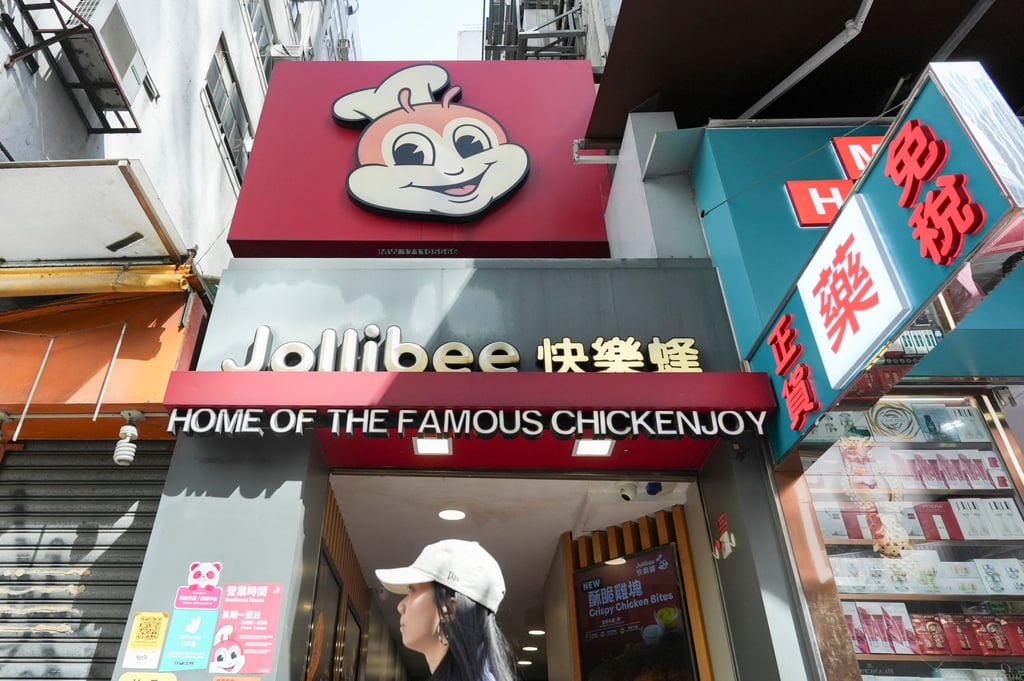
A Jollibee outlet in Tsim Sha Tsui, Hong Kong. The brand has more than 1,600 locations in 17 countries. Photo: Eugene Lee
Over time, as those communities grew and Jollibee’s visibility increased, it drew in non-Filipino customers as well. “It entered the ‘mainstream’ market,” Zarsadiaz said. “Catering to a broader clientele beyond its base of Filipino consumers.”
For Lingasin, the economics and the accolades are beside the point. What matters is simpler: a booth, a bucket of Chickenjoy and her children arguing over the last slice of peach mango pie.
“There is some cultural pride in Jollibee for me,” she said. “It’s nice to see it being accepted around the world.”


