

- Joined
- Aug 20, 2022
- Messages
- 31,966
- Points
- 113
Over 1 in 3 S’pore seniors have undiagnosed eye disease; 1 in 5 has significant hearing loss: Study
Published Feb 23, 2026, 05:00 AMUpdated Feb 23, 2026, 09:00 AM
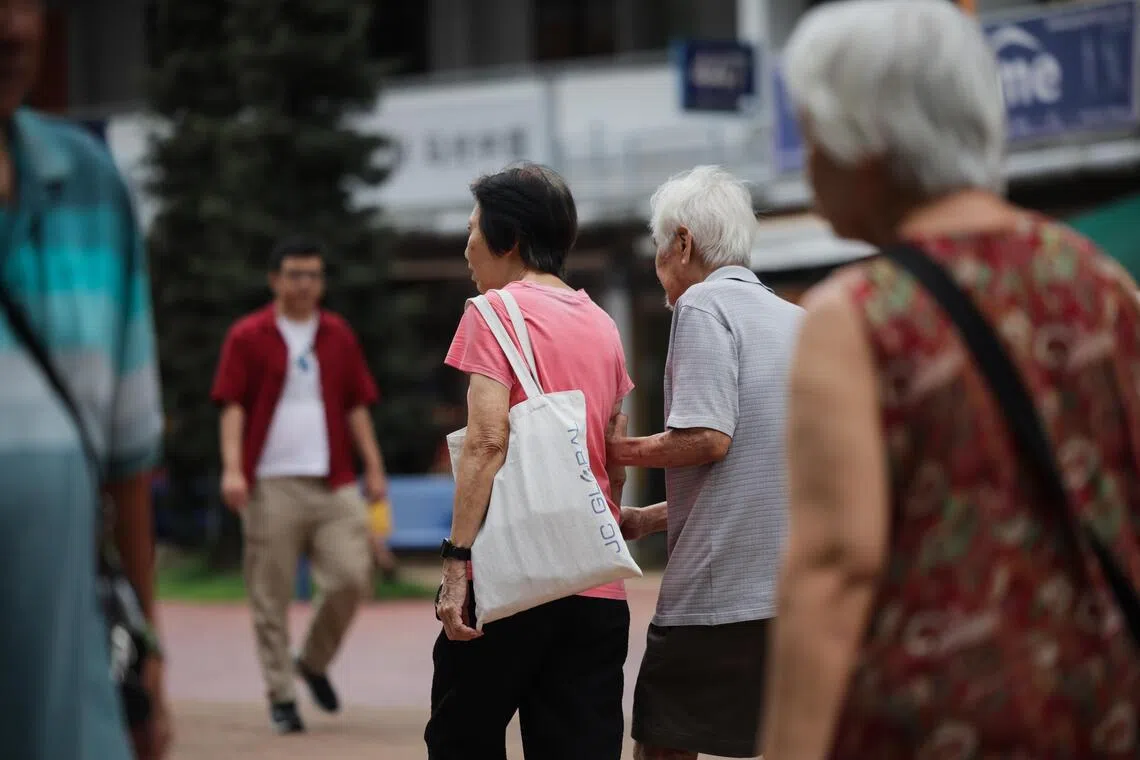
One in five seniors has some form of triple sensory loss (vision, hearing, and smell) and is found to be three times more likely to have trouble with daily functioning.
ST PHOTO: GIN TAY

Joyce Teo
www.straitstimes.com
SINGAPORE – More than one-third of older adults in Singapore are unaware that they have at least one eye disease, while one in five has significant hearing loss, but most are not
wearing hearing aids
, a population-based study has found.
The study by the Singapore Eye Research Institute (SERI) found that sensory impairment – in vision, hearing or smell – is widespread among older adults.
One in five seniors has some form of triple sensory loss (vision, hearing, and smell) and was found to be three times more likely to have trouble with daily functioning, while their healthcare costs were four to six times higher.
These findings are from SERI’s Population Health And Age-related Sensory Decline Profile, or Pioneer, study, which tracked 2,636 Chinese, Malay and Indian adults in Singapore aged 60 to 102 from around December 2017 to October 2022.
The researchers have published 17 papers from the study in the past 2½ years, with the latest paper on the prevalence and risk factors of hearing impairment expected to be published soon.
SERI is the research arm of the Singapore National Eye Centre. Professor Ecosse Lamoureux, who leads population health research at SERI, said that with Singapore ageing rapidly, the team wanted to use the Pioneer study to find out how age-related sensory impairments are linked to key health outcomes, such as cognitive decline, brain health and sarcopenia in older people here.
“As you age, the multiple systems that we have in our body, whether cardiovascular, respiratory, muscular, brain and, in our case, sensory, they all age at the same time,” said Prof Lamoureux, the study’s principal investigator.
A holistic and comprehensive approach that accounts for these interconnected declines is thus essential to help seniors in Singapore spend more years in good health, he said.
For instance, sensory impairments have been linked to cognitive decline, and scientists in Singapore are now looking at whether treating these impairments can help arrest the decline in a separate study.
Prof Lamoureux and Dr Preeti Gupta, a clinician-scientist at SERI and the study’s co-investigator, told The Straits Times that they were surprised by the magnitude of the impairments and the significant gaps in sensory care among elderly people.
“About 70 per cent of our older population have some form of hearing impairment, including significant hearing loss, and we were surprised to find that less than 1 per cent of them were using hearing aids,” said Dr Preeti.
Around 43 per cent have visual impairment, including cases caused by cataracts and undercorrected refractive error, even though these are easily correctable, and 27 per cent of them have some form of smell impairment, she said.
In particular, two chronic degenerative eye diseases that threaten sight – age-related macular degeneration and diabetic retinopathy – were found to be alarmingly underdiagnosed. Around 90 per cent of the older adults in the study who had either disease were unaware of their condition.
“In terms of their body composition and muscle health, our elderly are not doing as great as we thought they were... (For instance) about 65 per cent of them were overweight or obese, and 40 per cent of them had muscle loss or muscle-wasting sarcopenia,” said Dr Preeti.
Furthermore, the study found that almost 90 per cent of older adults in Singapore across the three ethnic groups have poor muscle health, meaning they have low grip strength, low muscle mass, slow walking speed, or a combination of the three, she said.
The effects are not uniform across the three ethnic groups studied. For instance, the prevalence of undiagnosed eye diseases, specifically cataract and glaucoma, was higher among Malays and Indians compared with Chinese.
When the researchers scanned the participants to check on their muscle health, they learnt that Chinese had a higher prevalence of pre-sarcopenia than Malays or Indians.
This is the initial stage of sarcopenia, which is easily reversed with proper nutrition and resistance training, said Dr Preeti.
Prof Lamoureux said one critical question is the level of awareness and engagement among the different ethnic groups, highlighting the need to focus educational and awareness efforts more effectively.
By the start of 2027, the researchers expect to complete collecting follow-up data from the study cohort to determine if sensory impairments are the cause of their health issues such as frailty.


