- Joined
- Nov 29, 2016
- Messages
- 5,674
- Points
- 63
https://www.cbsnews.com/news/u-s-mi...ps-lose-war-with-china-or-russia-report-says/
U.S. military might "struggle to win, or perhaps lose" war with China or Russia, report says
Last Updated Nov 14, 2018 10:48 PM EST
America's military edge is diminished, and in some cases erased – just as rival countries are getting savvier, stronger and more aggressive, according to a new analysis by a panel of former security officials and military experts. The stark conclusion: America could lose the next war it fights.
"America's ability to defend its allies, its partners and its own vital interests is increasingly in doubt," the report's authors wrote. "It might struggle to win, or perhaps lose, a war against China or Russia."
The panel is called the National Defense Strategy Commission, and is made up of 12 former national security officials and experts. It was tasked one year ago with evaluating the nation's defenses, and reviewing the National Defense Strategy, a comprehensive planning document by the Defense Department that lays out military objectives.
Listen to this episode on Stitcher
"Russia and China are challenging the United States, its allies and its partners on a far greater scale than has any adversary since the Cold War's end," the authors wrote. "If the United States had to fight Russia in a Baltic contingency or China in a war over Taiwan," the report warned.
"Americans could face a decisive military defeat."
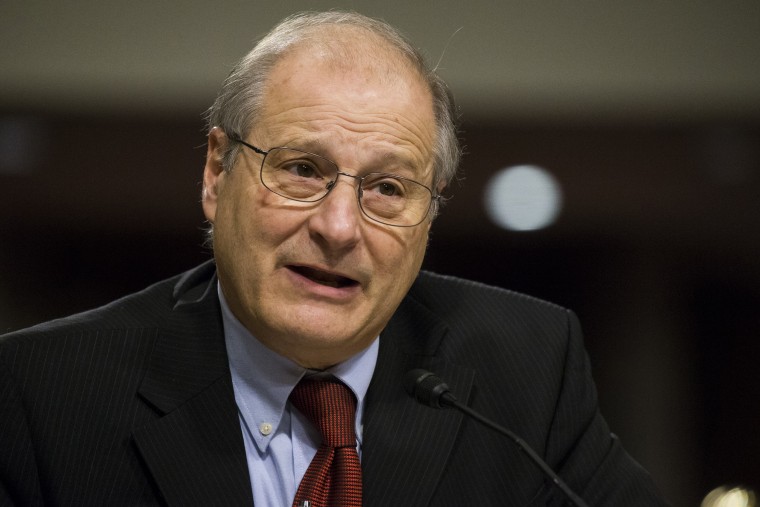
Adversaries have studied U.S. military strategies post-9/11 – and learned how to counter them, said commission co-chair Eric Edelman, in an interview with Intelligence Matters host and CBS News senior national security contributor Michael Morell, who is also among the members of the commission and who helped write its report.
"They've learned from what we've done. They've learned from our success," said Edelman, former Under Secretary of Defense for Policy. "And while we've been off doing a different kind of warfare, they've been prepared for a kind of warfare at the high end that we really haven't engaged in for a very long time. What that means is that we can't fight traditionally, the way we have fought," he said.
The commission identified a set of six trends it said had fundamentally altered the strategic environment now facing the United States:
The commission called for an increase in the defense budget of between 3-5 percent above inflation, or else "DOD should alter the expectations of the strategy and America's global strategic objectives."
The report also recommended an independent commission be appointed to review U.S. cyber policy. "It is painfully clear that America is not competing or deterring its adversaries as effectively as it should in cyberspace," the report said.
"We've got to match the kind of intellectual firepower they're bringing to the problem with that kind of firepower of our own," Edelman told Morell.
Previous defense strategy reviews had already issued warnings that America was risking national security crises if it did not better maintain or, in some cases, immediately bolster its military and operational capabilities.
The 2018 commission said, however, that it believed America had already "reached the point of a full-blown national security crisis."
"In this report," Edelman said, "I think what we had to wrestle with was the consequences of all those warnings having been ignored."
The Defense Department said in a statement that it welcomed the release of the report and said it had "engaged extensively with the Commission throughout its deliberations." It said that the report's description of the security environment faced by the U.S. is "a stark reminder of the gravity of these issues, and a call to action." The Defense Department's statement went on to say it would "carefully consider each of the recommendations put forward by the Commission as part of continuing efforts to strengthen our nation's defense.
The commission's co-chairs will testify about their findings before the Senate and House Armed Services Committees about the report's contents later this month.
© 2018 CBS Interactive Inc. All Rights Reserved.
https://tw.news.yahoo.com/美國防報告指-美在台海戰爭恐輸陸-關鍵原因曝光-010500115.html
美國防報告指「美在台海戰爭恐輸陸」關鍵原因曝光

EBC東森新聞
4.6k 人追蹤
東森新聞
2018年11月15日 上午9:05

檢視相片
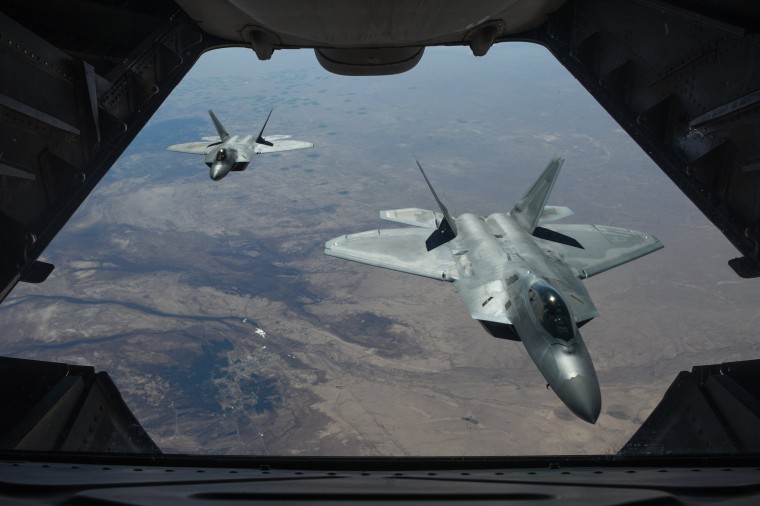
▲美國防報告指出,美國的軍事優勢正在逐漸流失。(圖/維基百科)
美國國防戰略委員會(National Defense Strategy Commission)14日發佈最新報告指出,美國的軍事優勢正在逐漸流失,如果美國不得不在波羅的海迎戰俄羅斯,或是在台灣問題上與中國大陸交戰,美國可能面臨決定性的軍事失敗。報告中提到,美國的敵人都正在集中增強軍事實力,華府應該增加國防預算,加以對抗。
國防戰略委員會提出的最新報告中指出,中俄對美國及美國盟友的挑戰來到冷戰結束後最嚴厲狀態,「若美國不得不在波羅的海迎戰俄羅斯或是在台灣問題上與中國大陸交戰,美國可能面臨決定性的軍事失敗。」
報告指出,俄羅斯、中國大陸對美國及其盟國和夥伴的挑戰要比冷戰結束以來任何一個對手的挑戰更大。中國大陸和俄羅斯,目前都在尋求區域霸權,並積極擴張全球勢力,兩國致力於軍力建設,目標是抵消美軍的力量。

檢視相片
▲美國防報告指出,俄羅斯、中國大陸對美國及其盟國和夥伴的挑戰要比冷戰結束以來任何一個對手的挑戰更大。 (示意圖/翻攝自USS Carl Vinson (CVN 70))
而為何美軍漸失戰略優勢?報告中指出,美國近年來關注反恐、反激進主義,但是中國大陸、俄羅斯卻在集中精力研發新武器以擊敗美軍。美軍在關鍵的領域正逐漸失去原有的優勢,這些領域包括力量投射、空中和飛彈防禦、網路、太空、反水面和反潛戰爭、遠端地面火力以及電子戰等,而相反地,美國的敵人正在集中火力尋找打敗美軍的方法。
這一份報告由12名前美國安全官員或是安全專家所共同撰寫分析,國防戰略委員會還呼籲,華府應該增加3到5%的國防預算,或是修改全球戰略目標,以及對戰略的預期,呼籲美國必須擴大新式核武器開發。
更多東森新聞報導
https://www.thedailybeast.com/us-military-could-lose-war-to-russia-or-china-report-to-congress-warns
Follow
https://www.thedailybeast.com/
JOIN
Cheat SheetPoliticsEntertainmentWorld NewsHalf FullArts and CultureU.S. NewsTechHunt for the CureScienceScoutedTravel
VULNERABLE
a day ago
U.S. Military Could Lose War to Russia or China, Report to Congress Warns

Reuters / Alaa Al-Marjani
The U.S. military is losing its edge over its rivals and could lose a war against Russia or China, a new study written for Congress reports. The National Defense Strategy Commission, made up of former top Republican and Democratic officials, warns the Trump administration isn’t investing enough money into keeping up with the Chinese or Russian military and says the U.S. could be “overwhelmed” in a conflict. “There is a strong fear of complacency, that people have become so used to the United States achieving what it wants in the world, to include militarily, that it isn’t heeding the warning signs,” said Kathleen Hicks, a Pentagon official during the Obama administration. The report laid out a stark warning. “The U.S. military could suffer unacceptably high casualties and loss of major capital assets in its next conflict. It might struggle to win, or perhaps lose, a war against China or Russia,” it said, adding: “The United States is particularly at risk of being overwhelmed should its military be forced to fight on two or more fronts simultaneously.”
https://www.washingtonpost.com/worl...ory.html?noredirect=on&utm_term=.07fcabc69090
U.S. military edge has eroded to ‘a dangerous degree,’ study for Congress finds
China is rapidly modernizing its forces in an attempt to match the U.S. might in Asia. (Jason Aldag/The Washington Post)
By Paul Sonne and
Shane Harris
November 14 at 11:43 AM
The United States has lost its military edge to a dangerous degree and could potentially lose a war against China or Russia, according to a report released Wednesday by a bipartisan commission that Congress created to evaluate the Trump administration’s defense strategy.
The National Defense Strategy Commission, made up of former top Republican and Democratic officials selected by Congress, evaluated the Trump administration’s 2018 National Defense Strategy, which ordered a vast reshaping of the U.S. military to compete with Beijing and Moscow in an era of renewed great-power competition.
While endorsing the strategy’s aims, the commission warned that Washington isn’t moving fast enough or investing sufficiently to put the vision into practice, risking a further erosion of American military dominance that could become a national security emergency.
At the same time, according to the commission, China and Russia are seeking dominance in their regions and the ability to project military power globally, as their authoritarian governments pursue defense buildups aimed squarely at the United States.
“There is a strong fear of complacency, that people have become so used to the United States achieving what it wants in the world, to include militarily, that it isn’t heeding the warning signs,” said Kathleen H. Hicks, a former top Pentagon official during the Obama administration and one of the commissioners. “It’s the flashing red that we are trying to relay.”
The picture of the national security landscape that the 12-person commission sketched is a bleak one, in which an American military that has enjoyed undisputed dominance for decades is failing to receive the resources, innovation and prioritization its leaders need to outmuscle China and Russia in a race for military might reminiscent of the Cold War.
Moscow holds historic military parade on Red Square
Russian servicemen marched through Moscow's Red Square Nov. 7 for the 77th anniversary of the parade when Soviet soldiers left for World War II front lines. (Reuters)
The military balance has shifted adversely for the United States in Europe, Asia and the Middle East, undermining the confidence of American allies and increasing the likelihood of military conflict, the commission found after reviewing classified documents, receiving Pentagon briefings and interviewing top defense officials.
“The U.S. military could suffer unacceptably high casualties and loss of major capital assets in its next conflict. It might struggle to win, or perhaps lose, a war against China or Russia,” the report said. “The United States is particularly at risk of being overwhelmed should its military be forced to fight on two or more fronts simultaneously.”
In its list of 32 recommendations, the commission urged the Pentagon to explain more clearly how it intends to defeat major-power rivals in competition and war. It assailed the strategy for relying at times on “questionable assumptions and weak analysis” and leaving “unanswered critical questions.”
Eric Edelman, a top Pentagon official during the Bush administration, who co-chaired the commission along with retired Admiral Gary Roughead, said the report wrestled with the consequences of years of ignored warnings about the erosion of American military might.
Russia and China have “learned from what we’ve done. They’ve learned from our success. And while we’ve been off doing a different kind of warfare, they’ve been prepared for a kind of warfare at the high end that we really haven’t engaged in for a very long time,” Edelman told Michael Morell, the former acting director of the CIA and a fellow member of the commission, during an episode of Morell’s podcast, “Intelligence Matters.”
Edelman said people had lost sight of how complicated the international security environment had become for the United States, and argued that for a lot of reasons the American public and Congress haven’t been as attentive to the urgency of the situation as they should be.
The commission said that despite a $716 billion American defense budget this year, which is four times the size of China’s and more than 10 times that of Russia, the effort to reshape the U.S. defense establishment to counter current threats is under-resourced. It recommended that Congress lift budget caps on defense spending in the next two years that in the past have hobbled the military’s ability to plan for the long term.
“It is beyond the scope of our work to identify the exact dollar amount required to fully fund the military’s needs,” the report concluded. “Yet available resources are clearly insufficient to fulfill the strategy’s ambitious goals, including that of ensuring that (the Defense Department) can defeat a major-power adversary while deterring other enemies simultaneously.”
The call for even more robust defense spending comes as the Democrats take over the House and seek rollbacks of key Pentagon programs. It also comes after the White House instructed the Pentagon to pare back its planned budget for the coming year by about 4.5 percent, or approximately $33 billion, after the federal deficit increased sharply following last year’s tax cut.
White House national security adviser John Bolton recently said he expected the defense budget to remain relatively flat in the coming years as the administration seeks to cut discretionary spending, and suggested the Pentagon would need to reshape the military with funds derived from cuts to other areas. It promises to be a dramatic shift after two years of increased defense spending and repeated statements by President Trump that he is rebuilding the American military like never before.
Money saved from planned Pentagon changes will prove insufficient to make the kind of investment the military needs to execute the new national defense strategy, the commission found. It also said Congress should look at the entire federal budget, including entitlement spending and tax revenue, to put the nation on more stable financial footing, rather than slash defense spending.
Critics of the report’s findings said the commission recommends catchall defense funding that is unrealistic given the current environment. One of the commission’s members, retired Army officer Andrew Krepinevich, wrote a dissent to the findings arguing that the commission failed to apply analytic rigor to its own recommendations even as it accused the Pentagon strategy of lacking analytic rigor.
“The commission rightly calls attention to the erosion of the American military’s conventional edge and the necessity for the country to understand the urgency of the problem,” said Elbridge Colby, a former Pentagon official under Defense Secretary Jim Mattis and who oversaw the strategy’s development. “But it doesn’t give due support and credit to the hard choices that Secretary Mattis made, which are crucial to solving this problem.”
To counter Russia and China, the commission said the Navy should expand its submarine fleet and sealift forces; the Air Force should introduce more reconnaissance platforms and stealth long-range fighters and bombers; and the Army should pursue more armor, long-range precision missiles and air-defense and logistical forces.
In its recommendations, the report advocated seeing through the modernization of the U.S. nuclear arsenal and putting a top Pentagon official in charge of developing additional air and missile defenses.
Another area of focus for the commission was innovation.
It described Pentagon acquisition programs as too risk-averse, and urged the Defense Department and Congress to create a new category of pilot programs aimed at “leap-ahead” technologies that could serve as breakthroughs to help retain American military dominance.
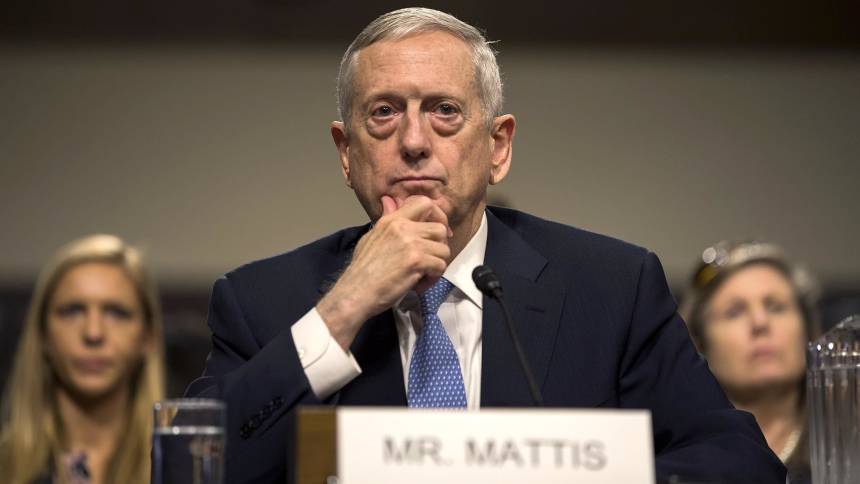
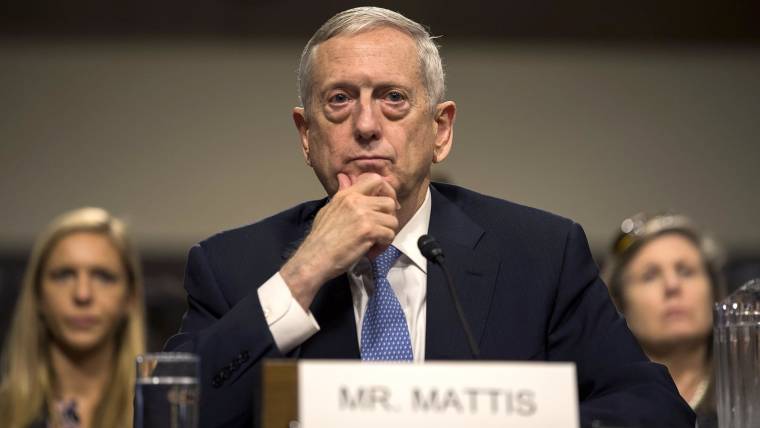
The report also resurfaced questions about the civilian-military divide that arose after Mattis, a retired Marine Corps general, took over as defense secretary, thanks to a vote in Congress that waived a requirement for military officers to be out of uniform for 10 years before serving in that role.
In his nearly two years as secretary, Mattis has relied more on current and former military officers for expertise than his recent predecessors have.
Without singling out Mattis, the commission warned that “responsibility on key strategic and policy issues has increasingly migrated to the military,” and urged Congress to exercise oversight to “reverse the unhealthy trend in which decision-making is drifting increasingly toward the military on issues of national importance.”
1.8k
Comments
U.S. military might "struggle to win, or perhaps lose" war with China or Russia, report says
Last Updated Nov 14, 2018 10:48 PM EST
America's military edge is diminished, and in some cases erased – just as rival countries are getting savvier, stronger and more aggressive, according to a new analysis by a panel of former security officials and military experts. The stark conclusion: America could lose the next war it fights.
"America's ability to defend its allies, its partners and its own vital interests is increasingly in doubt," the report's authors wrote. "It might struggle to win, or perhaps lose, a war against China or Russia."
The panel is called the National Defense Strategy Commission, and is made up of 12 former national security officials and experts. It was tasked one year ago with evaluating the nation's defenses, and reviewing the National Defense Strategy, a comprehensive planning document by the Defense Department that lays out military objectives.
Listen to this episode on Stitcher
"Russia and China are challenging the United States, its allies and its partners on a far greater scale than has any adversary since the Cold War's end," the authors wrote. "If the United States had to fight Russia in a Baltic contingency or China in a war over Taiwan," the report warned.
"Americans could face a decisive military defeat."
Adversaries have studied U.S. military strategies post-9/11 – and learned how to counter them, said commission co-chair Eric Edelman, in an interview with Intelligence Matters host and CBS News senior national security contributor Michael Morell, who is also among the members of the commission and who helped write its report.
"They've learned from what we've done. They've learned from our success," said Edelman, former Under Secretary of Defense for Policy. "And while we've been off doing a different kind of warfare, they've been prepared for a kind of warfare at the high end that we really haven't engaged in for a very long time. What that means is that we can't fight traditionally, the way we have fought," he said.
The commission identified a set of six trends it said had fundamentally altered the strategic environment now facing the United States:
- The return of major-power competition from authoritarian powers like Russia and China;
- The rise and expanded military capabilities of aggressive regional challengers like Iran and North Korea;
- Evolving and intensifying threats from jihadist groups;
- Rising "gray-zone" aggression, which includes strong-arm diplomacy and economic coercion, media manipulation and cyberattacks, paramilitary and proxy forces;
- Proliferation of advanced technology – hypersonics and AI, for instance – that is eroding U.S. advantages and creating new vulnerabilities;
- And political dysfunction – budgetary instability and reduced defense investment.
The commission called for an increase in the defense budget of between 3-5 percent above inflation, or else "DOD should alter the expectations of the strategy and America's global strategic objectives."
The report also recommended an independent commission be appointed to review U.S. cyber policy. "It is painfully clear that America is not competing or deterring its adversaries as effectively as it should in cyberspace," the report said.
"We've got to match the kind of intellectual firepower they're bringing to the problem with that kind of firepower of our own," Edelman told Morell.
Previous defense strategy reviews had already issued warnings that America was risking national security crises if it did not better maintain or, in some cases, immediately bolster its military and operational capabilities.
The 2018 commission said, however, that it believed America had already "reached the point of a full-blown national security crisis."
"In this report," Edelman said, "I think what we had to wrestle with was the consequences of all those warnings having been ignored."
The Defense Department said in a statement that it welcomed the release of the report and said it had "engaged extensively with the Commission throughout its deliberations." It said that the report's description of the security environment faced by the U.S. is "a stark reminder of the gravity of these issues, and a call to action." The Defense Department's statement went on to say it would "carefully consider each of the recommendations put forward by the Commission as part of continuing efforts to strengthen our nation's defense.
The commission's co-chairs will testify about their findings before the Senate and House Armed Services Committees about the report's contents later this month.
© 2018 CBS Interactive Inc. All Rights Reserved.
https://tw.news.yahoo.com/美國防報告指-美在台海戰爭恐輸陸-關鍵原因曝光-010500115.html
美國防報告指「美在台海戰爭恐輸陸」關鍵原因曝光
EBC東森新聞
4.6k 人追蹤
東森新聞
2018年11月15日 上午9:05
檢視相片
▲美國防報告指出,美國的軍事優勢正在逐漸流失。(圖/維基百科)
美國國防戰略委員會(National Defense Strategy Commission)14日發佈最新報告指出,美國的軍事優勢正在逐漸流失,如果美國不得不在波羅的海迎戰俄羅斯,或是在台灣問題上與中國大陸交戰,美國可能面臨決定性的軍事失敗。報告中提到,美國的敵人都正在集中增強軍事實力,華府應該增加國防預算,加以對抗。
國防戰略委員會提出的最新報告中指出,中俄對美國及美國盟友的挑戰來到冷戰結束後最嚴厲狀態,「若美國不得不在波羅的海迎戰俄羅斯或是在台灣問題上與中國大陸交戰,美國可能面臨決定性的軍事失敗。」
報告指出,俄羅斯、中國大陸對美國及其盟國和夥伴的挑戰要比冷戰結束以來任何一個對手的挑戰更大。中國大陸和俄羅斯,目前都在尋求區域霸權,並積極擴張全球勢力,兩國致力於軍力建設,目標是抵消美軍的力量。
檢視相片
▲美國防報告指出,俄羅斯、中國大陸對美國及其盟國和夥伴的挑戰要比冷戰結束以來任何一個對手的挑戰更大。 (示意圖/翻攝自USS Carl Vinson (CVN 70))
而為何美軍漸失戰略優勢?報告中指出,美國近年來關注反恐、反激進主義,但是中國大陸、俄羅斯卻在集中精力研發新武器以擊敗美軍。美軍在關鍵的領域正逐漸失去原有的優勢,這些領域包括力量投射、空中和飛彈防禦、網路、太空、反水面和反潛戰爭、遠端地面火力以及電子戰等,而相反地,美國的敵人正在集中火力尋找打敗美軍的方法。
這一份報告由12名前美國安全官員或是安全專家所共同撰寫分析,國防戰略委員會還呼籲,華府應該增加3到5%的國防預算,或是修改全球戰略目標,以及對戰略的預期,呼籲美國必須擴大新式核武器開發。
更多東森新聞報導
https://www.thedailybeast.com/us-military-could-lose-war-to-russia-or-china-report-to-congress-warns
Follow
https://www.thedailybeast.com/
JOIN
Cheat SheetPoliticsEntertainmentWorld NewsHalf FullArts and CultureU.S. NewsTechHunt for the CureScienceScoutedTravel
VULNERABLE
a day ago
U.S. Military Could Lose War to Russia or China, Report to Congress Warns
Reuters / Alaa Al-Marjani
The U.S. military is losing its edge over its rivals and could lose a war against Russia or China, a new study written for Congress reports. The National Defense Strategy Commission, made up of former top Republican and Democratic officials, warns the Trump administration isn’t investing enough money into keeping up with the Chinese or Russian military and says the U.S. could be “overwhelmed” in a conflict. “There is a strong fear of complacency, that people have become so used to the United States achieving what it wants in the world, to include militarily, that it isn’t heeding the warning signs,” said Kathleen Hicks, a Pentagon official during the Obama administration. The report laid out a stark warning. “The U.S. military could suffer unacceptably high casualties and loss of major capital assets in its next conflict. It might struggle to win, or perhaps lose, a war against China or Russia,” it said, adding: “The United States is particularly at risk of being overwhelmed should its military be forced to fight on two or more fronts simultaneously.”
https://www.washingtonpost.com/worl...ory.html?noredirect=on&utm_term=.07fcabc69090
U.S. military edge has eroded to ‘a dangerous degree,’ study for Congress finds
China is rapidly modernizing its forces in an attempt to match the U.S. might in Asia. (Jason Aldag/The Washington Post)
By Paul Sonne and
Shane Harris
November 14 at 11:43 AM
The United States has lost its military edge to a dangerous degree and could potentially lose a war against China or Russia, according to a report released Wednesday by a bipartisan commission that Congress created to evaluate the Trump administration’s defense strategy.
The National Defense Strategy Commission, made up of former top Republican and Democratic officials selected by Congress, evaluated the Trump administration’s 2018 National Defense Strategy, which ordered a vast reshaping of the U.S. military to compete with Beijing and Moscow in an era of renewed great-power competition.
While endorsing the strategy’s aims, the commission warned that Washington isn’t moving fast enough or investing sufficiently to put the vision into practice, risking a further erosion of American military dominance that could become a national security emergency.
At the same time, according to the commission, China and Russia are seeking dominance in their regions and the ability to project military power globally, as their authoritarian governments pursue defense buildups aimed squarely at the United States.
“There is a strong fear of complacency, that people have become so used to the United States achieving what it wants in the world, to include militarily, that it isn’t heeding the warning signs,” said Kathleen H. Hicks, a former top Pentagon official during the Obama administration and one of the commissioners. “It’s the flashing red that we are trying to relay.”
The picture of the national security landscape that the 12-person commission sketched is a bleak one, in which an American military that has enjoyed undisputed dominance for decades is failing to receive the resources, innovation and prioritization its leaders need to outmuscle China and Russia in a race for military might reminiscent of the Cold War.
Moscow holds historic military parade on Red Square
Russian servicemen marched through Moscow's Red Square Nov. 7 for the 77th anniversary of the parade when Soviet soldiers left for World War II front lines. (Reuters)
The military balance has shifted adversely for the United States in Europe, Asia and the Middle East, undermining the confidence of American allies and increasing the likelihood of military conflict, the commission found after reviewing classified documents, receiving Pentagon briefings and interviewing top defense officials.
“The U.S. military could suffer unacceptably high casualties and loss of major capital assets in its next conflict. It might struggle to win, or perhaps lose, a war against China or Russia,” the report said. “The United States is particularly at risk of being overwhelmed should its military be forced to fight on two or more fronts simultaneously.”
In its list of 32 recommendations, the commission urged the Pentagon to explain more clearly how it intends to defeat major-power rivals in competition and war. It assailed the strategy for relying at times on “questionable assumptions and weak analysis” and leaving “unanswered critical questions.”
Eric Edelman, a top Pentagon official during the Bush administration, who co-chaired the commission along with retired Admiral Gary Roughead, said the report wrestled with the consequences of years of ignored warnings about the erosion of American military might.
Russia and China have “learned from what we’ve done. They’ve learned from our success. And while we’ve been off doing a different kind of warfare, they’ve been prepared for a kind of warfare at the high end that we really haven’t engaged in for a very long time,” Edelman told Michael Morell, the former acting director of the CIA and a fellow member of the commission, during an episode of Morell’s podcast, “Intelligence Matters.”
Edelman said people had lost sight of how complicated the international security environment had become for the United States, and argued that for a lot of reasons the American public and Congress haven’t been as attentive to the urgency of the situation as they should be.
The commission said that despite a $716 billion American defense budget this year, which is four times the size of China’s and more than 10 times that of Russia, the effort to reshape the U.S. defense establishment to counter current threats is under-resourced. It recommended that Congress lift budget caps on defense spending in the next two years that in the past have hobbled the military’s ability to plan for the long term.
“It is beyond the scope of our work to identify the exact dollar amount required to fully fund the military’s needs,” the report concluded. “Yet available resources are clearly insufficient to fulfill the strategy’s ambitious goals, including that of ensuring that (the Defense Department) can defeat a major-power adversary while deterring other enemies simultaneously.”
The call for even more robust defense spending comes as the Democrats take over the House and seek rollbacks of key Pentagon programs. It also comes after the White House instructed the Pentagon to pare back its planned budget for the coming year by about 4.5 percent, or approximately $33 billion, after the federal deficit increased sharply following last year’s tax cut.
White House national security adviser John Bolton recently said he expected the defense budget to remain relatively flat in the coming years as the administration seeks to cut discretionary spending, and suggested the Pentagon would need to reshape the military with funds derived from cuts to other areas. It promises to be a dramatic shift after two years of increased defense spending and repeated statements by President Trump that he is rebuilding the American military like never before.
Money saved from planned Pentagon changes will prove insufficient to make the kind of investment the military needs to execute the new national defense strategy, the commission found. It also said Congress should look at the entire federal budget, including entitlement spending and tax revenue, to put the nation on more stable financial footing, rather than slash defense spending.
Critics of the report’s findings said the commission recommends catchall defense funding that is unrealistic given the current environment. One of the commission’s members, retired Army officer Andrew Krepinevich, wrote a dissent to the findings arguing that the commission failed to apply analytic rigor to its own recommendations even as it accused the Pentagon strategy of lacking analytic rigor.
“The commission rightly calls attention to the erosion of the American military’s conventional edge and the necessity for the country to understand the urgency of the problem,” said Elbridge Colby, a former Pentagon official under Defense Secretary Jim Mattis and who oversaw the strategy’s development. “But it doesn’t give due support and credit to the hard choices that Secretary Mattis made, which are crucial to solving this problem.”
To counter Russia and China, the commission said the Navy should expand its submarine fleet and sealift forces; the Air Force should introduce more reconnaissance platforms and stealth long-range fighters and bombers; and the Army should pursue more armor, long-range precision missiles and air-defense and logistical forces.
In its recommendations, the report advocated seeing through the modernization of the U.S. nuclear arsenal and putting a top Pentagon official in charge of developing additional air and missile defenses.
Another area of focus for the commission was innovation.
It described Pentagon acquisition programs as too risk-averse, and urged the Defense Department and Congress to create a new category of pilot programs aimed at “leap-ahead” technologies that could serve as breakthroughs to help retain American military dominance.
The report also resurfaced questions about the civilian-military divide that arose after Mattis, a retired Marine Corps general, took over as defense secretary, thanks to a vote in Congress that waived a requirement for military officers to be out of uniform for 10 years before serving in that role.
In his nearly two years as secretary, Mattis has relied more on current and former military officers for expertise than his recent predecessors have.
Without singling out Mattis, the commission warned that “responsibility on key strategic and policy issues has increasingly migrated to the military,” and urged Congress to exercise oversight to “reverse the unhealthy trend in which decision-making is drifting increasingly toward the military on issues of national importance.”
1.8k
Comments