• IP addresses are NOT logged in this forum so there's no point asking. Please note that this forum is full of homophobes, racists, lunatics, schizophrenics & absolute nut jobs with a smattering of geniuses, Chinese chauvinists, Moderate Muslims and last but not least a couple of "know-it-alls" constantly sprouting their dubious wisdom. If you believe that content generated by unsavory characters might cause you offense PLEASE LEAVE NOW! Sammyboy Admin and Staff are not responsible for your hurt feelings should you choose to read any of the content here.

    The OTHER forum is HERE so please stop asking.

Nipah virus: Singapore

rocket

Colonel
Loyal
Joined
Oct 5, 2012
Messages
21,494
Points
113

Nipah virus: Singapore to conduct temperature screening at airport for flights from affected areas


The Manpower Ministry is also stepping up surveillance of newly arrived migrant workers from South Asia as part of the country's initial response to the Nipah virus outbreak in West Bengal.
Nipah virus: Singapore to conduct temperature screening at airport for flights from affected areas

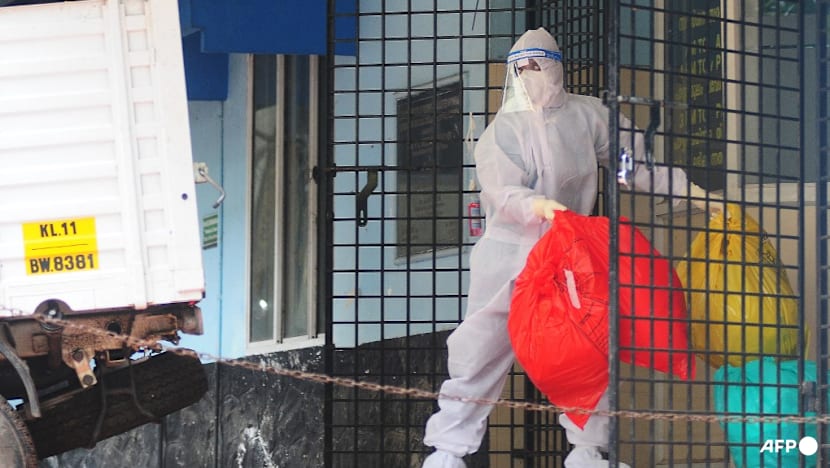
A health worker wearing protective gear disposes of biohazardous waste from a Nipah virus isolation centre at a government hospital in Kozikode, in India's southern state of Kerala, on Sep 16, 2023. (File photo: AFP)
Listen
5 min
Darcel Al Anthony
Darcel Al Anthony
28 Jan 2026 05:00PM (Updated: 28 Jan 2026 05:44PM)


Add CNA as a trusted source to help Google better unerstand
FAST
SINGAPORE: Singapore will conduct temperature screening for travellers arriving on flights from areas where Nipah virus outbreaks have been reported, the Communicable Diseases Agency (CDA) said on Wednesday (Jan 28).
This is one of six measures that will be implemented in the country as part of its initial response to the Nipah virus outbreak in West Bengal.
ADVERTISEMENT
Singapore is closely monitoring the outbreak, which is the seventh in India since 2001, CDA said in a media release.
The transmission of the Nipah virus is mainly through exposure to bats and consumption of date palm sap or fruits contaminated by bats.
CDA said that ongoing bio-surveillance programmes, which have been monitoring Singapore's bat populations since 2011, have not detected the virus in the country.
"The outbreak in West Bengal, however, is reportedly between humans, with two cases so far," said CDA.
"Human-to-human transmission is rare but does occur," CDA added.
In the current outbreak, transmission was reported to be within hospitals. No sustained community transmission is currently reported.
In addition to the temperature screening, Singapore will also require medical practitioners and laboratories to notify CDA immediately of all confirmed and suspected cases of the virus.
ADVERTISEMENT
CDA has also alerted hospitals and emergency departments to be vigilant for Nipah virus infections in patients with compatible symptoms and recent travel history to West Bengal, the agency said.
Health advisories will also be disseminated to travellers at points of entry to Singapore. They will instruct inbound travellers to seek medical attention if they are unwell after travel, and provide outbound travellers with health precautions they can take.
The Ministry of Manpower (MOM), meanwhile, will step up surveillance of newly arrived migrant workers from South Asia and engage MOM primary care providers to increase vigilance.
Finally, CDA will reach out to their counterparts in South Asia to better understand the situation.
"Work is ongoing to establish a global platform for countries to report genome sequencing of detected cases," CDA added.
ADVERTISEMENT
CDA said that it "stands ready to introduce additional public health measures" should new information emerge that indicates the outbreak poses an increased public health risk to Singapore.

Related:


India confirms two Nipah virus cases, but situation contained



Nipah virus: What to know about the disease and the outbreak in India

CDA also advised individuals travelling to areas where Nipah virus outbreaks have been reported to maintain vigilance and adopt the following health precautions:

  • Avoid food and drinks potentially contaminated by bats, such as raw date palm sap, and fruit found on the ground
  • Avoid direct contact with unwell individuals
  • Avoid direct contact with animals, especially bats and pigs, and bat roosting areas
  • Consume fully cooked food and fruits that can be washed and peeled
  • Maintain good personal hygiene
ADVERTISEMENT
Travellers who develop Nipah virus symptoms during or after travel should seek prompt medical attention and inform their doctors of their recent travel and any potential exposure to raw date palm sap, bats or unwell individuals, CDA added.
Sharing CDA's media release in a Facebook post, Health Minister Ong Ye Kung said: "We need to be on alert all the time, as deadly outbreaks will happen from time to time, in different parts of the world.
"The key thing we need to watch out for in such outbreaks is sustained human-to-human transmission. If transmission is only between animals to humans, or human to human in a very close setting after contacting human fluids, there is much less worry because the virus will not spread far and wide, like SARS or COVID-19."
Two Nipah virus cases have been confirmed in India since December.
The virus has an estimated fatality rate of 40 per cent to 75 per cent, and can cause illnesses ranging from respiratory distress to brain inflammation.
ADVERTISEMENT
The first symptoms are usually a sudden flu-like illness, headache or fever. Others include sore throat, muscle ache, vomiting, dizziness and drowsiness. Pneumonia and other respiratory problems may also occur.
Several other countries have also implemented measures to respond to the outbreak.
Thailand began screening passengers on Sunday at three airports that receive direct flights from West Bengal – Suvarnabhumi and Don Mueang airports in Bangkok, and Phuket airport.
Cambodia, Indonesia and Nepal are also screening for the virus.
Malaysia's Health Minister Dzulkefly Ahmad said on Tuesday that the country's health security system is "robust, tested and ready".
"We are scaling our response proportionately to keep you safe," he added.
ADVERTISEMENT
Vietnam's Health Ministry on Tuesday urged strict food safety practices and directed local authorities to strengthen monitoring at border crossings, health facilities and communities, while China said it was enhancing disease prevention measures in border areas
 
Nipah virus outbreak in India: What you need to know about the disease


Nipah virus outbreak in India: What you need to know about the disease​

Get ST's newsletters delivered to your inbox
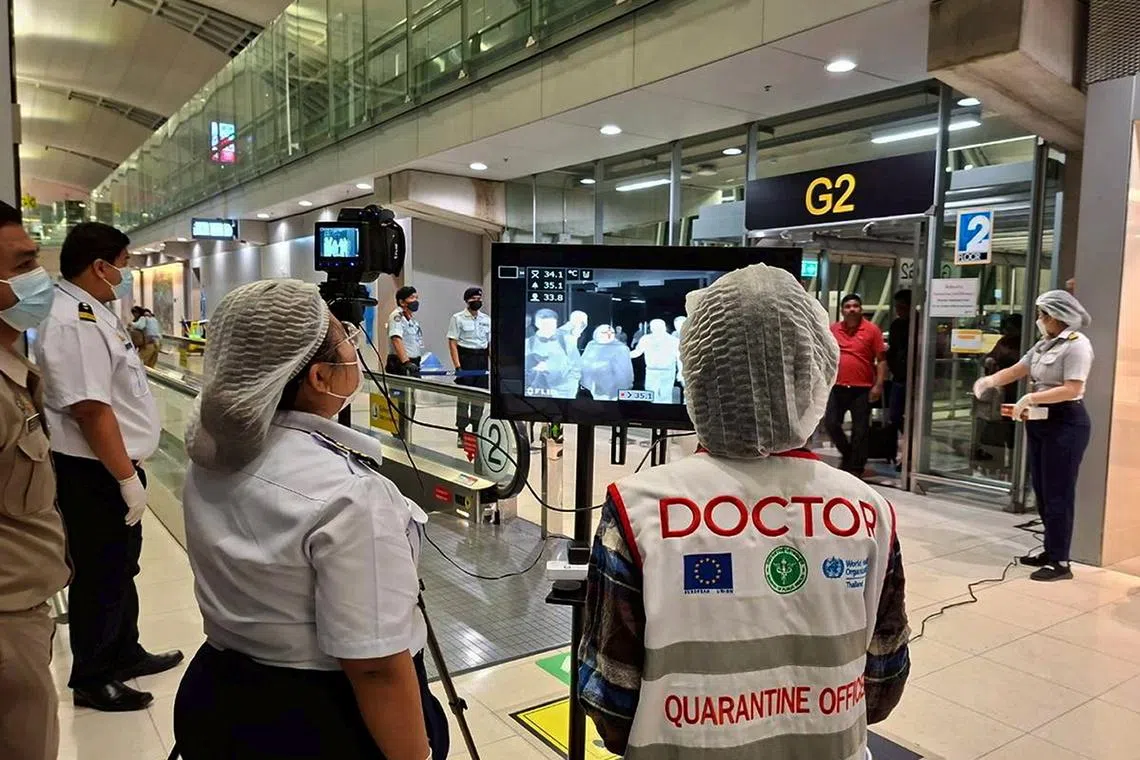
Thai health officials monitoring passengers from international flights arriving at Suvarnabhumi Airport on Jan 25.

Thai health officials monitoring passengers from international flights arriving at Suvarnabhumi Airport on Jan 25.


Published Jan 28, 2026, 12:38 PM
Updated Jan 28, 2026, 06:50 PM

SINGAPORE – In recent days, the authorities in countries such as Malaysia, Thailand and Vietnam have been on high alert after an outbreak of the deadly Nipah virus in the Indian state of West Bengal.

So far, no cases have been reported outside India, but

health authorities across Asia are stepping up precautions.


What is the Nipah virus?​

Nipah is a zoonotic virus, which means it can spread from animals to humans. It can also spread directly between humans or through contaminated food.


Symptoms of the virus range from mild to asymptomatic infections, to acute respiratory illness and fatal brain inflammation.

Fruit bats are natural hosts of the virus.

There have also been reports of the virus infecting other animals, such as pigs, cats, goats, horses and sheep.


Infectious diseases expert Leong Hoe Nam said the disease can spread from animals to humans through direct contact with an infected host animal and its fluids.

Nipah virus: Singapore airports to screen visitors from affected places; no cases detected here​


It can also be transmitted through close contact with an infected person or the person’s body fluids, he said.

Nipah was first identified between 1998 and 1999 during an outbreak among pig farmers in Malaysia and Singapore, which resulted in nearly 300 cases and more than 100 deaths.


How contagious is the virus?​

The Nipah virus is not very contagious, said Professor Paul Tambyah, former president of the Asia-Pacific Society of Clinical Microbiology and Infection.

He added that direct human transmission is rare and no instances of the virus spreading through casual contact have been documented.

Prof Tambyah said: “The official Indian Health Ministry statement about this current outbreak states that there are only two confirmed cases, despite their screening more than a hundred contacts of the index case.

“In the 1999 outbreak in Singapore and Malaysia, there was no significant human-to-human transmission. The West Bengal situation is a bit different, probably due to a combination of differences between the virus, as well as the resources available in the different settings.”

How is the virus treated?​

For now, there is no approved vaccine or cure for the virus.

Treatment is mainly limited to supportive care.

Supportive treatment, Prof Tambyah said, includes careful neurological observation so that complications such as seizures or coma can be monitored and treated to prevent premature death.

“There have been studies on antivirals, but they are hard to do as the virus has to be handled in high-containment laboratories for fear of a leak from a laboratory into the community,” he added.

Patients in Singapore during the 1999 outbreak “did very well as they were diagnosed early, monitored, and complications were avoided”, said Prof Tambyah.


More on this topic​

Nipah virus: Singapore airports to screen visitors from affected places; no cases detected here


Malaysia’s health ministry assessing situation after reports of Nipah virus infections in India


How can it be prevented from spreading?​

“The key is good surveillance,” Prof Tambyah said.

This means making sure that every case of severe encephalitis – or inflammation of the brain tissue – is thoroughly checked and that there is a diagnosis for each patient, he added.

So far, there have been no reports of the virus spreading outside rural areas in West Bengal. The two most recent cases in India are believed to be healthcare workers.

“Attention to infection control precautions, especially in intensive care units or in dealing with patients with severe unknown brain or chest infections, is important,” said Prof Tambyah.

The Communicable Diseases Agency (CDA) on Jan 28 advised those travelling to affected areas to maintain vigilance and adopt precautions such as avoiding direct contact with animals, especially bats and pigs, and bat roosting areas.

CDA also urged people to avoid food and drinks that could be potentially contaminated by bats, such as raw date palm sap, and fruit found on the ground.

Those travelling to affected areas were also advised to consume only fully cooked food and fruits that can be washed and peeled.

When to seek medical attention?​

Seek medical attention early if there are signs of brain infection or severe respiratory infection, experts said.

Some symptoms cannot be ignored and for which patients should seek medical help immediately.

“These would include severe headache, including ‘the worst headache of your life’, confusion and difficulty in breathing,” Prof Tambyah said.
 
If tio Nipah, can sue PAP government for negligence because they let the CECA people into Singapore?
 
Back
Top