

- Joined
- Jun 17, 2020
- Messages
- 17,221
- Points
- 113
Japan just decided to send robots six kilometers down into the Pacific to take back the one resource China thought it controlled forever.
This is rare earths — the metals inside every phone, EV motor, wind turbine and guided missile.
China supplied around 76% of Japan's rare earth imports this January, and then tightened its export controls.
So Japan looked down.
About 1,900 km southeast of Tokyo, in its own waters near Minamitorishima, the seabed holds more than 16 million tons of rare-earth oxides.
Enough yttrium, europium, terbium and dysprosium to supply the world for centuries — researchers from the University of Tokyo and Waseda called it a "semi-infinite" source.
The catch: it sits 6,000 meters down, in pitch-black crushing pressure.
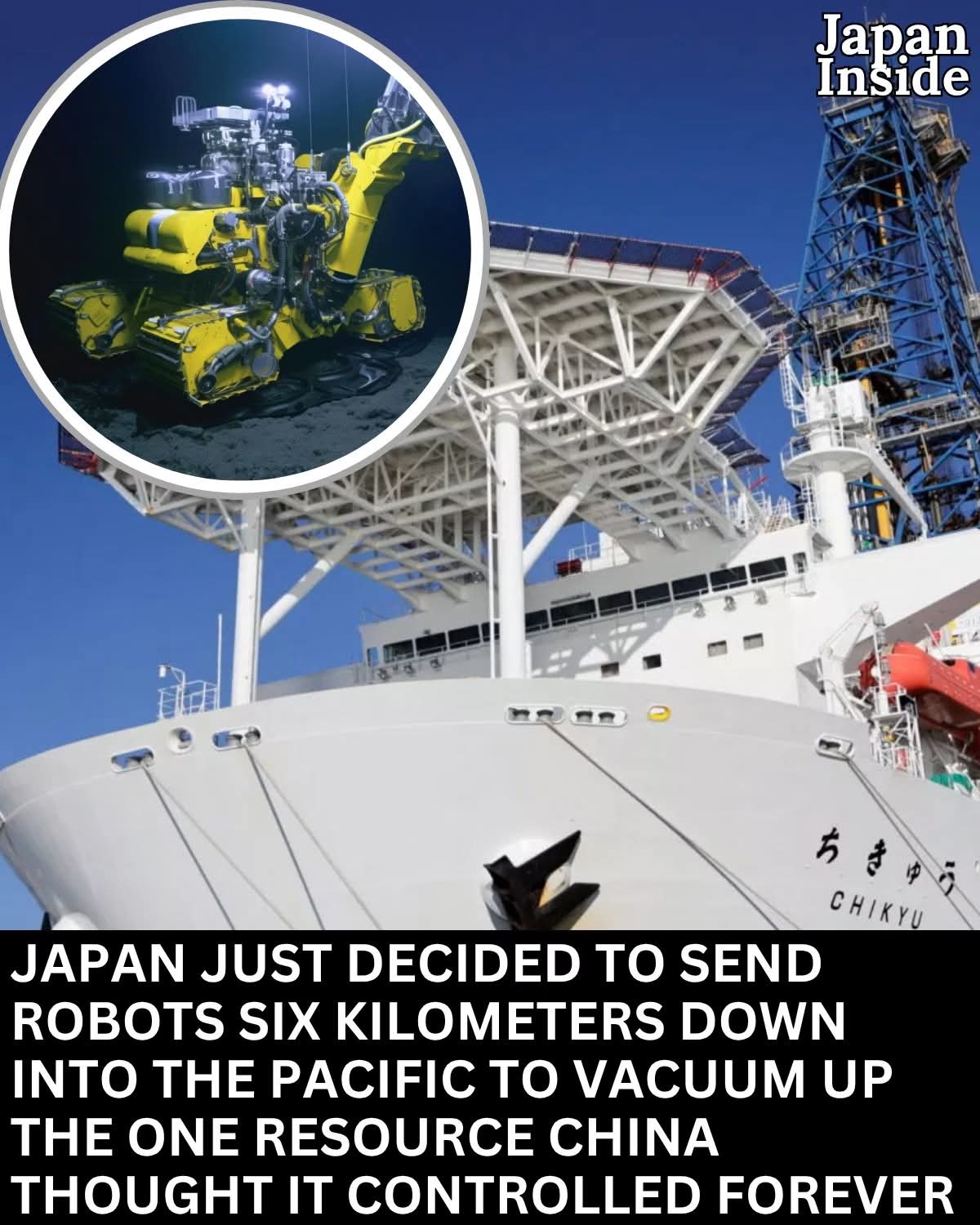
So JAMSTEC, Japan's marine agency, is building a more efficient autonomous underwater robot by 2028 to scout and map those deposits.
In February, the drilling vessel Chikyu already pulled rare-earth m&d up from 6,000 meters in a world first — connecting roughly 600 pipes to the ocean floor.
A full mining trial to lift around 350 tons of m&d a day is planned for 2027.
A nation with almost no land minerals is about to mine the deep ocean to break a superpower's monopoly.
This is rare earths — the metals inside every phone, EV motor, wind turbine and guided missile.
China supplied around 76% of Japan's rare earth imports this January, and then tightened its export controls.
So Japan looked down.
About 1,900 km southeast of Tokyo, in its own waters near Minamitorishima, the seabed holds more than 16 million tons of rare-earth oxides.
Enough yttrium, europium, terbium and dysprosium to supply the world for centuries — researchers from the University of Tokyo and Waseda called it a "semi-infinite" source.
The catch: it sits 6,000 meters down, in pitch-black crushing pressure.
So JAMSTEC, Japan's marine agency, is building a more efficient autonomous underwater robot by 2028 to scout and map those deposits.
In February, the drilling vessel Chikyu already pulled rare-earth m&d up from 6,000 meters in a world first — connecting roughly 600 pipes to the ocean floor.
A full mining trial to lift around 350 tons of m&d a day is planned for 2027.
A nation with almost no land minerals is about to mine the deep ocean to break a superpower's monopoly.


