

- Joined
- Aug 20, 2022
- Messages
- 32,077
- Points
- 113
NParks mulls sterilisation to control otter population after they enter homes, eat koi
Some residents in the Lentor and Mayflower neighbourhoods have reported an otter breaking into homes and eating fish in private ponds.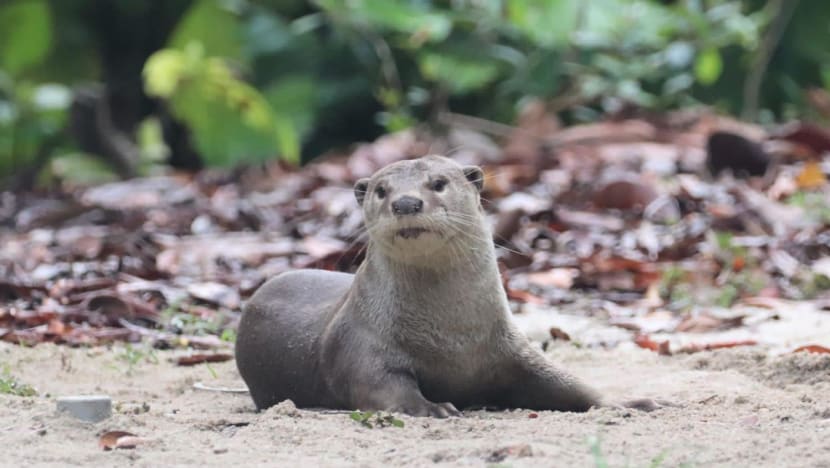
Otters are found in Singapore's waterways and reservoirs. (Photo: Facebook/Tan Kiat How/NParks)
Ivy Chok & Louisa Tang
13 Jan 2026 12:08PM (Updated: 13 Jan 2026 12:31PM)
SINGAPORE: Lentor resident Fiona Leung was home with her family watching television when she saw something dash past at a rapid pace.
Thinking it was a neighbour’s cat, she continued watching TV until she heard a splashing sound coming from the pond in her backyard.
The unwelcome visitor was an otter – and it was the second time that week it had visited.
“It heard me approach. It popped its head out from the water with a fish in its mouth … and then I shouted. My helper went to get the broom and that’s when it jumped out and it started dashing out,” Ms Leung recounted.
While all nine of her koi fish survived, some escaped with battle scars like missing fins and wounds. The fish have become more skittish since the incident, she added.
The lone otter had broken through a gap in Ms Leung’s landed home gate that was not covered by wire mesh, which the family installed after the animal’s first visit on Dec 29 last year.
As a nomadic animal, it was likely exploring new territory and foraging while passing through the area, said Ms Cyrena Lin, director of wildlife management and outreach at the National Parks Board (NParks).
MEASURES TO MITIGATE CONFLICT
There were almost 80 otters across Singapore in 2017, doubling to about 170 in 2021 due to families having multiple litters.NParks said it is exploring measures to reduce conflict, including translocation and longer-term population control measures such as sterilisation.
CNA understands such wildlife birth control methods could include surgery and contraceptives.
“When it comes to wildlife, there's no one-size-fits-all solution. There's also no silver bullet. So we do need to look at every single case on a case-by-case basis and adjust our mitigation measures accordingly,” noted Ms Lin.
For now, NParks has started conducting daily patrols at the affected estates since the start of January to look for signs of otter activity, including dung droppings.
If patrol teams spot otters, they will guide the animals away from residential zones and work with the community on keeping them out of certain areas, said Ms Lin.

“If an otter family with pups has established a holt within a residential area, there is concern for public safety, because otters tend to be a little bit more protective when they have pups, and that is when we will come in to relocate the family to a more natural habitat.”
Holts are burrows in which otters rest and sleep.
For example, in late 2022, a family of six smooth-coated otters were relocated from Seletar to an undisclosed area as a last resort due to the location of their burrow and the presence of pups.
This was after they had entered a private home and killed more than 50 fish in a pond.
Prevention measures would have sufficed if not for the pups, said experts then, as the otters would have left to find new food sources.
Reports of otters eating residents’ fish have surfaced over the past few years.
Last May, they entered a semi-detached home in Bright Hill and ate all eight of the homeowner’s koi in his pond.
CONCERN FOR OTHER RESIDENTS
Residents in Mayflower and nearby Lentor neighbourhoods said that while otters have been seen around the estates before, it was the first time they have seen the furry mammals entering their homes and feasting on their pet fish.Lentor homeowner Shirley Tan told CNA her neighbour’s six koi fish were eaten by an otter that squeezed past their gate and made its way to their pond.
As she also rears koi fishes at home, she has taken steps to prevent any break-ins. Her family has blocked openings in the gate wall with planter boxes, and also set up a mesh net around the pond.
"Our entry point for otters can be from the front as well as from the back gate, so we have a huge area to do netting, and also around the fish pond itself, in case the first entry point is breached,” she noted.
“So that will cost us at least a couple thousand dollars, I estimate … and it also impedes the whole aesthetic of the place. It doesn't look nice.”
Residents, however, expressed concern for not just their pets but their fellow residents.
“We are very concerned that the otter may strike anytime to enter a house, and since the otter is not even worried about or afraid of humans. We are in this area; there's a lot of dogs walking, kids walking around,” said Mrs Tan.
“As long as the otter is freely roaming, any of us walking along the street will be concerned that we may be attacked,” she added.
Experts have said that while otters rarely attack unless threatened, families with young pups tend to be more protective of their babies.
Mrs Tan said she hopes the authorities will take “firm action” and engage residents on how the otter population will be controlled.
Members of Parliament for the affected areas say they intend to raise the matter in parliament.
Yio Chu Kang MP Yip Hon Weng said he will seek greater clarity on the longer-term approach to otter population management, while Kebun Baru MP Henry Kwek said he is working with NParks to guide residents on better securing their homes.


