

- Joined
- Aug 20, 2022
- Messages
- 32,053
- Points
- 113
Iran to lose $150 million a day as US blockade ends $9 billion windfall
Tehran has about $15 billion worth of oil at sea

Jennifer Gnana
April 14, 2026
The blockade, which began at 10am EST (6pm UAE), ends a 40-day period in which Iran earned about $9 billion from crude exports, more a day than it was making before the start of the war on February 28.
Iran shipped about 1.85 million barrels per day of oil during the past seven weeks, above its prewar average of 1.75 million bpd, according to Homayoun Falakshahi, head of oil analytics at energy intelligence company Kpler.
With rival Gulf producers locked out of global markets, Tehran flipped the pricing of its sanctioned oil from a discount of more than $10 a barrel against benchmark Brent to a premium of $2 to $3 a barrel.
“The exports will fall to zero effectively,” Mr Falakshahi told The National.
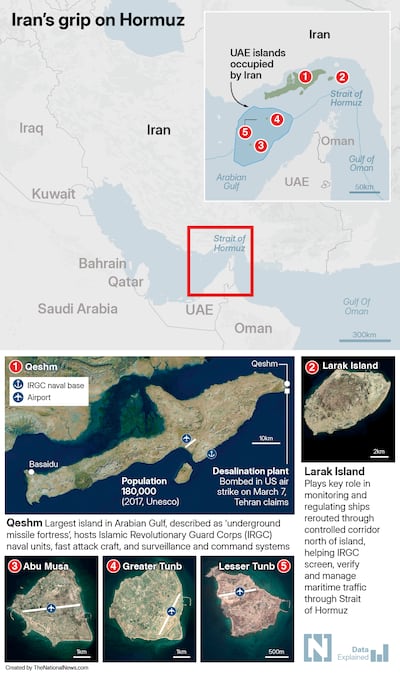
Iranian vessels capitalised on the country’s effective dominance of the strait throughout last month.
“Iran was the main oil exporter via Hormuz in March, at a time when giant oil producers and exporters like Iraq and Saudi Arabia faced constraints getting their crude out of the Gulf region via the Strait of Hormuz,” Noam Raydan, a senior fellow at The Washington Institute for Near East Policy, said. Iran-linked ships used the strait more than any other operator during the period.
The blockade, announced by US President Donald Trump after peace talks collapsed in Islamabad on Sunday, targets all vessels entering or leaving Iranian ports. The US Central Command said it would not stop ships from sailing to non-Iranian destinations.
Mr Falakshahi said that even Iran’s Jask terminal, built specifically to bypass Hormuz and located on the Gulf of Oman, falls within the blockade's enforcement zone.
“We should not expect an immediate impact,” Ms Raydan said.
Oil at sea
About 190 million barrels of Iranian crude are at sea, with about 50 million barrels west of Singapore and 140 million east of it, and most of it is destined for China, according to Mr Falakshahi. At Iran's realised price of about $80 to $85 a barrel, which is the rate paid by IRGC-linked middlemen who buy from the state-run National Iranian Oil Company before reselling, the floating inventory represents more than $15 billion in deferred revenue, he said.Iranian oil sales typically settle two months after discharge, meaning payments on already-shipped cargoes will continue to arrive for weeks after the blockade.
“Iran can survive another few months,” Mr Falakshahi noted.
The broader enforcement of the US blockade remains unclear.
“We still don't know how it will be implemented,” Ms Raydan said. “Will this be a pressure campaign similar to the Venezuelan operation, where the US military chased and seized vessels? If that's the case, the logistics remain opaque, especially in the Gulf region, which differs from Latin America, and we should expect Iranian retaliation, she said.
The US campaign in Venezuela required a sustained naval presence for months before exports collapsed. However, Iran's geography and military capabilities present a more complex challenge.
Once the floating inventory clears, however, Iran’s ability to stretch its exports becomes more challenging. Its domestic production has already fallen by about 700,000 to 800,000 bpd, equivalent to a 15 to 20 per cent decline due to war-related damage in southern gas and condensate fields, according to Mr Falakshahi. Non-oil export revenue is also under pressure as land and sea trade routes remain volatile.

No more waivers
Washington's blockade is also revealing of the Trump administration’s own mixed policy regarding Iranian oil exports. Last month, as Brent surged past $100, the US Treasury granted India a temporary 30-day waiver to purchase Iranian crude, the first such authorisation by the US Treasury Department in nearly seven years.About four million barrels have arrived in India, with a further four to six million barrels in transit and expected before the waiver expires on April 19, according to Sumit Ritolia, a lead research analyst at Kpler.
The waiver is unlikely to be extended, he added. “They haven't been very beneficial in my opinion, because we have only seen India willing to pick up Iranian cargo,” Ms Raydan said. “This is not surprising given the complexity of sanctions,” she added.
The blockade's effectiveness will ultimately depend on how long Washington can sustain enforcement. Mr Falakshahi said he expects the conflict to move towards resolution within about a month. He quoted Mr Trump's planned meeting with Chinese President Xi Jinping in Geneva in mid-May as a political deadline that would limit US appetite for a prolonged standoff in the Gulf.


