• IP addresses are NOT logged in this forum so there's no point asking. Please note that this forum is full of homophobes, racists, lunatics, schizophrenics & absolute nut jobs with a smattering of geniuses, Chinese chauvinists, Moderate Muslims and last but not least a couple of "know-it-alls" constantly sprouting their dubious wisdom. If you believe that content generated by unsavory characters might cause you offense PLEASE LEAVE NOW! Sammyboy Admin and Staff are not responsible for your hurt feelings should you choose to read any of the content here.

    The OTHER forum is HERE so please stop asking.

How GIC and Temasek are managing your money

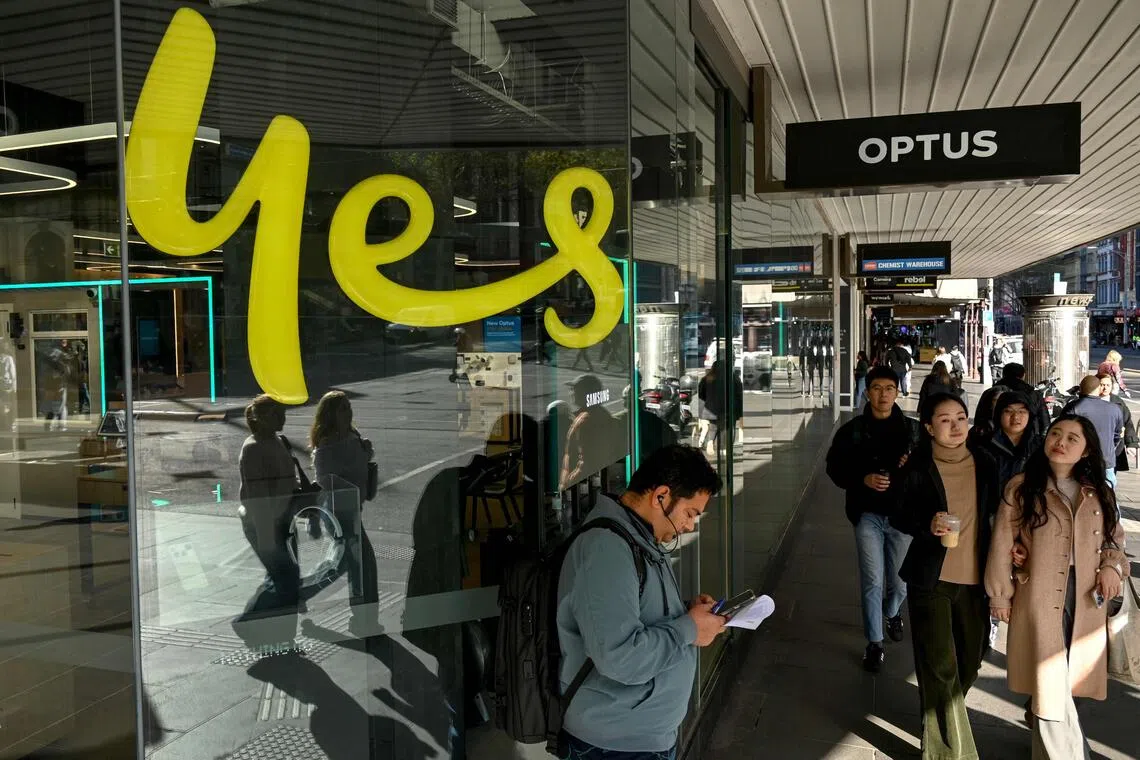
Singtel summoned by Australia as penalty over fatal Optus outage looms​

Australian Communications Minister has asked to speak to Singtel when a company delegation is in Australia next week, a fatal outage at its Optus.

The Australian Communications Minister has asked to speak to Singtel when a company delegation is in Australia next week.

Sep 25, 2025

SYDNEY - Australian Communications Minister Anika Wells summoned Singtel to a meeting following a fatal outage at its Optus division, warning that the blunder was likely to lead to major financial penalties.

Ms Wells said she has asked to speak to Singtel when a company delegation is in Australia next week.

“This remains a constant watch for me,” she told the Australian Broadcasting Corp on Sept 25. “Meeting with Singtel is an important step.”

In response to queries sent by The Straits Times, Singtel said its group chief executive Yuen Kuan Moon will be in Sydney next week for a meeting as a member of the Optus board, and as it supports management through the incident.

He is scheduled to meet Ms Wells together with Optus board chairman John Arthur and Optus CEO Stephen Rue.

The statement sent on Sept 25 said: “Singtel takes this matter seriously and will extend full cooperation to the Australian government and the authorities to address the Optus issue.”

Ms Wells’ demand ratchets up pressure on Singtel to take action after the Sept 18 emergency call outage led to four deaths.

The failure – the result of a botched network upgrade – has turned into a reputational crisis for Optus, which is struggling to contain the fallout from multiple missteps.

It came less than two years after a similar incident at Optus impacted millions of customers across Australia, leading to a fine of A$12 million (S$10 million) for the company.

The latest crisis has raised speculation that Optus and Singtel have failed to invest adequately in the Australian network.


It also suggests Optus has failed to implement recommendations that followed the 2023 incident, Ms Wells said, adding that the company “can expect more significant fines”.

Optus, Australia’s second-largest phone company, accounts for half of parent Singtel’s revenue.

Singtel said on Sept 24 that it has supported Optus by investing more than A$9.3 billion in the past five years, with a large proportion going towards building network infrastructure across Australia.

Ms Wells’ comments came after Australia’s Federal Court imposed a A$100 million penalty on Optus for unconscionable sales practices, including pressuring people with disabilities and limited financial literacy into buying products they did not need or could not afford.

Optus’ investigation​

Optus has attempted to manage the latest crisis with a steady feed of information, while its own investigation establishes what led to about 480 customers being unable to reach emergency services.

The company is trying to establish why so many callers were left stranded and whether there was a pattern to the failures, Mr Rue said on Sept 24.

A firewall upgrade program had been due to be completed over two nights, Mr Rue said.

But some normal steps were not followed, and calls were not diverted to a separate part of the network in the way they should have been, he said.

Optus has named long-time business executive Kerry Schott to lead an independent review into the outage to identify the causes of the failure.

Her review will also examine the operational management of Triple Zero calls on Optus’ network, and consider what the phone company did in response to the incident.

The review is expected to be completed before the year end, and Optus’ board will make the report public after considering the findings, the company said.

Singtel shares closed 0.23 per cent, or one cent, up at $4.27 on Sept 25. They were down 1.84 per cent for the week since Sept 18. BLOOMBERG
 

Optus suffers another outage that disrupted emergency calls ahead of Singtel visit​

The issue affected around 4,500 customers and calls made between 3am and 12.20pm, including some emergency calls.

A Singtel team, led by its CEO, is visiting Australia this week to meet its communications minister over fallout from earlier disruptions.

Sep 29, 2025

SYDNEY - Optus suffered another outage on Sept 28 that disrupted emergency calls, just as a delegation from parent company Singtel visits Australia this week to meet Communications Minister Anika Wells over the fallout from earlier disruptions.

Optus continues to investigate the cause of a now-resolved issue involving a mobile phone tower site in the Dapto area of New South Wales, a spokesperson said.

The issue affected around 4,500 customers and calls made between 3am and 12.20pm, including some emergency calls. Dapto is about 95km south of Sydney.

Optus has “confirmed with police, all callers who attempted to contact emergency services are OK”, the spokesperson said. “We sincerely apologise to any customers who were impacted.”

The snafu is the latest in a series of network issues that have outraged Australians – and become a reputational crisis for the country’s second-biggest phone company, which accounts for half of parent Singtel’s revenue. An Optus network outage on Sept 18 prevented customers from calling the emergency triple zero number, resulting in the deaths of four people and a warning that Optus likely faces major financial penalties.

Singtel said in a statement on Sept 29 that the latest issue was “totally unrelated to last week’s triple zero incident. It is a different type of outage which was limited to one cell site out of 3,140 in New South Wales”.

“Given the heightened sensitivity in Australia around triple zero calls, Optus communicated this incident to demonstrate full transparency of a type of outage that carriers around the world routinely encounter,” Singtel said. “This incident did not arise from any upgrade or maintenance action being conducted.”

Australia’s Finance Minister Katy Gallagher earlier told national broadcaster ABC that news of the Sept 28 outage was “more disappointing news off the back of the major disruption that happened the week before”.

“I think there’re questions that Optus is going to have to answer about what happened in the last fortnight and their response to it,” she said.

Singtel shares tumbled on Sept 29 after news of the latest outage, falling as much as 3.8 per cent to $4.10, the most since May 13.

At the midday trading break, the stock was down 2.8 per cent, or 12 cents, to $4.14. It was the most heavily traded counter by value, with 28.3 million shares changing hands.

Singtel Group chief executive officer Yuen Kuan Moon will attend this week’s meeting with Ms Wells in Sydney, alongside Optus CEO Stephen Rue and chairman John Arthur.

The Sept 18 Optus network outage came less than two years after a similar incident impacting millions of customers led to a A$12 million (S$10 million) fine and cost the job of Mr Rue’s predecessor, Ms Kelly Bayer Rosmarin.

Last week, Optus announced details of an independent review that will probe the series of events that took place and determine why emergency calls did not connect.

The firm was also fined A$66 million last week for selling products to vulnerable customers between 2019 and 2023 that they did not need or want, leaving many in debt.

Singtel said last week that it has supported Optus by investing more than A$9.3 billion in the past five years, with a large proportion going towards building network infrastructure across Australia. BLOOMBERG, AFP
 

India sees S’pore as valued partner as private sector makes foray into space with GIC, Temasek funding​

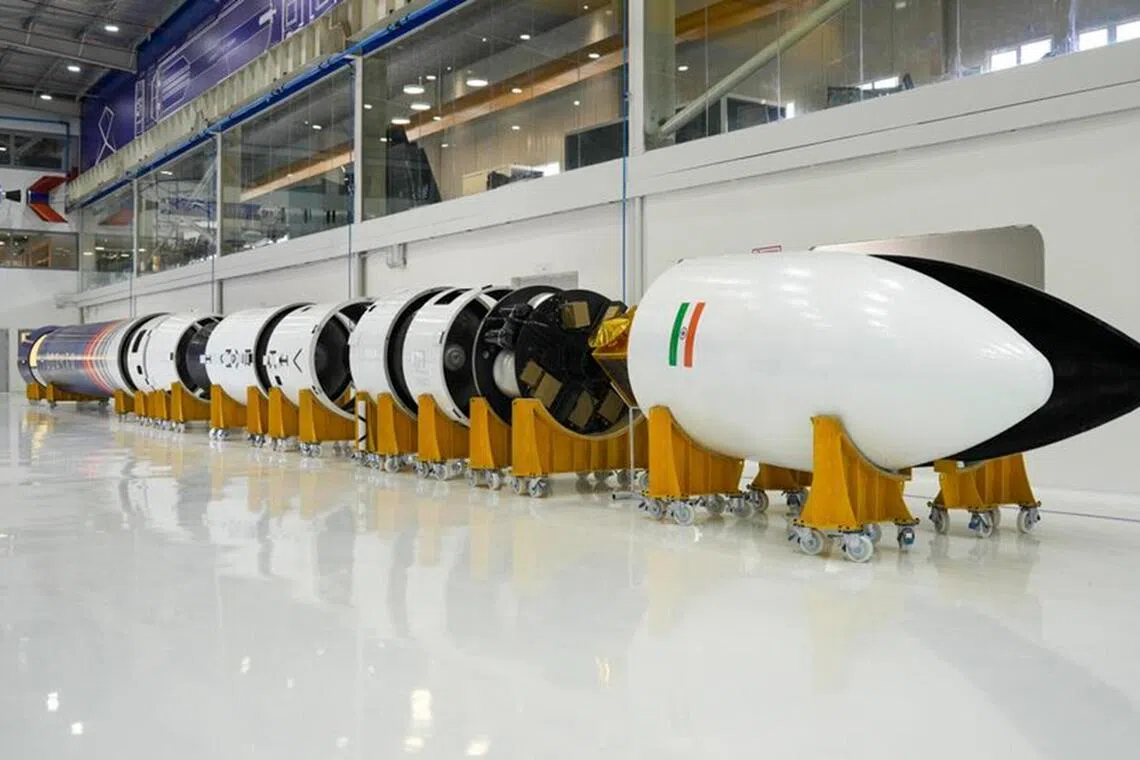
ngspace - Skyroot Aerospace's rocket being developed in their facility in the southern city of Hyderabad. Credit:  Skyroot Aerospace

Skyroot Aerospace's rocket being developed in their facility in the southern city of Hyderabad.

Summary
  • Skyroot Aerospace aims to be India's first private orbital launch with its Vikram-1 rocket, carrying domestic and foreign satellites. Singapore could be a future customer.
  • India and Singapore signed a space cooperation agreement in September 2025, covering joint work on policy, industry promotion, and research and development.
  • India's private space sector faces challenges like workforce shortages and supply chain issues but aims to grow to a US$44 billion economy by 2033.
AI generated

Sep 29, 2025

NEW DELHI – In a high-tech building in the southern Indian city of Hyderabad, engineers at Indian space firm Skyroot Aerospace are working tirelessly on a rocket, made of carbon fibre and powered by a 3D-printed engine, that could end up being the country’s first orbital launch by a private company.

The rocket is named Vikram 1 after Dr Vikram Sarabhai, who is considered the father of India’s space programme, and will carry a mix of domestic and foreign satellites. The launch date has not been made public.

If all goes according to plan, the launch will mark the beginning of a new era for India’s space programme, which has long been the preserve of the Indian Space Research Organisation (Isro), and could also kick-start a new wave of cooperation with Singapore.

Skyroot Aerospace, which has raised around US$95.5 million (S$123 million) since it was founded in 2018, is backed by weighty investors, including Singapore’s GIC and Temasek.

And Singapore, sources said, could become one of Skyroot Aerospace’s customers, with discussions under way to launch a Singaporean satellite on a future mission.

India has already launched more than 20 Singapore-made satellites over the past two decades through Isro.

But with New Delhi expanding the role of private players in India’s space sector in 2020, Singapore now sees opportunities to also work with a fast-emerging group of private companies that are supported by Isro.

“Working with Singapore will be beneficial for India too,” said Dr Pawan Goenka, chairman of the Indian National Space Promotion and Authorisation Centre (IN-SPACe), the country’s space regulator, in an interview with The Straits Times.

“India is fairly advanced in space technology and we want to be the regional integrator of all things space.”

Singapore joins India’s space race​

For Singapore, which set up its first satellite ground station on Sentosa in 1971 and launched its first communications satellite in 1998, the collaboration with India is replete with promise as it seeks to develop its own space industry.

India’s space programme is known for its frugality. Isro’s Mars mission in 2014 cost just around US$74 million, less than the budget of the 2013 Hollywood film Gravity. Its 2023 Chandrayaan-3 moon landing cost an estimated US$75 million.


That proven track record, which India’s private sector hopes to emulate, is appealing to the city-state as it seeks to widen the use of space technologies in areas such as weather forecasting.

India and Singapore signed a wide-ranging space cooperation agreement during the early September 2025 visit of Prime Minister Lawrence Wong to New Delhi.


The memorandum of understanding, underlining the level of trust built up over decades of close cooperation, inked between IN-SPACe and Singapore’s Office for Space Technology & Industry (OSTIn), covers joint work on space policy and law, industry promotion and research and development.

“These areas of collaboration align with Singapore’s interests in applying space technologies across key sectors, including aviation, maritime, info-communications and sustainability,” an OSTIn spokesman told ST.


The agreement will build on past space collaborations.

Among the more than 20 Singaporean satellites lofted into space is the 2023 launch of DS-SAR, a 352kg info-communications radar-imaging satellite developed by Singapore’s Defence Science and Technology Agency and ST Engineering.

Universities such as Nanyang Technological University have also sent payloads into space aboard Indian rockets.

In 2024, space technology company Dhruva Space partnered Singapore space semiconductor company Zero-Error Systems to integrate cutting-edge semiconductor technology into Dhruva Space’s OBC (on-board computer) sub-system, a critical component responsible for managing satellite operations and payload controls, said a press statement from Dhruva Space.

With Singapore’s gaze on it, the stakes are high for Skyroot Aerospace.

Mr Pawan Kumar Chandana, Skyroot’s co-founder, chief executive and a former Isro scientist, told ST he had received inquiries from Singapore, but was surprised that other foreign customers were also ready to take a “leap of faith” on a maiden launch.

“We have some customers who took that leap of faith, and they ended up putting the satellite along with us for the first launch,” said Mr Chandana, adding that the launch date and number of satellites would be announced at a later date.

“It’s a learning curve. We will focus on the first three launches. Actually, very few companies are able to consistently get success in the (first) three launches.”

Since 2018, the start-up has grown from a dozen employees to over 500, and it hopes to offer the kind of low-cost access to orbit that has become a hallmark of India’s space programme.

In August 2025, the start-up cleared a critical hurdle by conducting a successful ground test of its rocket motor.

This followed its breakthrough in 2022, when it became the first Indian private firm to carry out a suborbital launch.

“It (Skyroot’s launch) will be a very big milestone because that will be the first orbital launch. So, this will be the first time an (Indian) private sector-designed launch vehicle will leave Earth’s gravity and go into space,” said IN-SPACe’s Dr Goenka.

Apart from Skyroot Aerospace, another Indian start-up, Agnikul Cosmos, has also successfully completed a suborbital test of its launch vehicle and is also moving towards an orbital launch perhaps by 2026, said Dr Goenka.

The new space players​

About three dozen private firms operated as suppliers to Isro before India opened its space sector to private players five years ago.

Today, that number has swelled to about 350 start-ups, many of which are building satellites, rockets or space-based applications, albeit with full cooperation from Isro, which is providing everything from technical know-how to its testing facilities and launch pads.

This means India’s private sector does not have to start from scratch, much like how the National Aeronautics and Space Administration helped to develop the United States’ private sector. The evolution of the US space programme saw the emergence of SpaceX, which India hopes to emulate.

After opening space to the private sector, the government brought in policy reforms, including allowing foreign direct investment of between 49 per cent and 100 per cent, depending on the sensitivity of the area, and setting up IN-SPACe to regulate and promote the sector.

37e76bf5790fa59eb6c94ac43dc125d2247687182b4805ab636a8b122f9c9715

Skyroot Aerospace's rocket being developed in their facility in the southern city of Hyderabad.

PHOTO: SKYROOT AEROSPACE

Prime Minister Narendra Modi, a champion of India’s space efforts, has urged private companies to step forward to scale rocket launches from the current five to six a year to 50 and create five unicorn companies in the next five years.

The government has set a target of growing the country’s space economy from US$8.4 billion in 2022 to US$44 billion by 2033. Isro, meanwhile, is pressing ahead with plans for its first crewed mission in 2027 and a space station by 2035, in addition to continuing with satellite launches.

A key goal for the government is to attract small and nano-satellite launches to India, with a dedicated launchpad for Small Satellite Launch Vehicles being built at Kulasekarapattinam in Tamil Nadu’s Thoothukudi district, which is set to be ready by December 2026.

Signalling that India’s private sector has the full support of the government, a consortium led by Bengaluru-based space technology company Pixxel was selected by IN-SPACe in August 2025 to design, build, own and operate a 12-satellite constellation for climate monitoring, disaster management and national security over the next four to five years with an investment of over 12 billion rupees (S$176 million). This is under a Public-Private Partnership (PPP) framework.

State-owned aerospace giant Hindustan Aeronautics Limited (HAL) has also been awarded the rights to manufacture and market Isro’s Small Satellite Launch Vehicle – a first-of-its-kind technology transfer deal.

“Start-ups are doing things not attempted by Isro,” said Dr Goenka. “They are working on electric propulsion, semi-cryogenic engines, fully printed 3D-engines, and very high-end cameras for earth observation. Together, all of these developments are making the private sector bigger and bigger in space.”

Obstacles on the horizon​

But India’s private space race is not without its challenges. To compete globally, start-ups have to deliver on the technology before even focusing on providing cost-efficient services.

“The first thing for the private sector is that in terms of technology, they have to be up among the leaders. Otherwise, nobody will want to come to India to buy that. But having done that, they can offer frugality and capacity,” said Dr Goenka.

Workforce shortages also plague the sector. India produces over 1.5 million engineers a year, but private companies are finding it tough to find engineers with the required skills for the space industry.

Supply chains are also struggling to keep pace with demand, said Mr Awais Ahmed, chief executive and founder of Pixxel.

“What’s needed now is fast and focused execution. Plug-and-play infrastructure, dedicated subsidies for space-tech start-ups, faster clearances and greater investment in workforce development can create the conditions for globally competitive space companies to emerge from India,” he said.

He added that while IN-SPACe and Isro have made encouraging strides,there’s still a gap in ease of doing business regarding manufacturing, licensing and timelines that match private sector velocity”.

To plug some of these gaps, some Indian states have announced dedicated space policies, offering incentives such as cheaper land or tax cuts and subsidies, to position themselves to attract space firms.

c70b44ad65e8f024a19a5961fbe716f8c03fe40ae7ef16e21162fdc7b03cea6b

Skyroot Aerospace's rocket being developed in their facility in the southern city of Hyderabad.

Gujarat is building a space manufacturing park and a skills hub, Tamil Nadu is looking at dedicated space bays or space industry hubs, and Andhra Pradesh has announced plans for space cities, including in Tirupati, which houses a temple that is a major Hindu pilgrimage site.

Retired lieutenant-general A.K. Bhatt, the director-general of the Indian Space Association, a non-profit body that promotes the private space industry in India, said the competition among the states mirrored strategies seen in China and Australia, and reflected the growing search for “India’s Elon Musk”.

“States are now evangelising or supporting or pushing for the space sector to go (forward),” said Mr Bhatt.

The everyday impact of space​

While launches grab headlines, Singapore would also be likely watching the many Indian start-ups that are focused on how space can improve daily life after the satellites are operating in space. Of the 350 companies active in the sector, a large share is working on applications using satellite data in navigation, climate resilience, agriculture and defence.

One such firm is Suhora Technologies, a geospatial intelligence company that delivers high-resolution satellite data for defence, disaster management, insurance and environmental monitoring.

“If we can help a city prepare for a cyclone a few hours earlier or guide a state’s agricultural strategy with accurate land insights, then we’ve done our job,” said Suhora CEO and co-founder Krishanu Acharya. It is investing in multi-sensor fusion and artificial intelligence-driven analytics, combining thermal and hyperspectral data to provide deeper insights.

“Space is no longer about distant science,” he added. “It’s becoming a critical part of how we understand the world.”

From carrying rocket parts on bicycles in the 1960s to launching a moon mission for just US$75 million in 2024, India’s space journey has long been a story dotted with not just frugality but also ingenuity.

Now, as companies like Skyroot Aerospace, Dhruva, Pixxel and Suhora prepare to break new ground, the next chapter will test whether India’s private sector can scale those successes into a globally competitive industry.

“So the technology capability is there in India. But brains alone cannot make you conquer space. You need investment. This is where India is at this point,” said Mr Bhatt, underlining the need for continued investment going forward.

“Isro as a research organisation was not commercially backed. They were looking at more exploratory science. But now space has become an opportunity for business. That is why the private sector is important.”

 

Australian PM says Optus ‘let down the nation’ as Singtel blames outage on human error​

An initial investigation of the Sept 18 outage at Optus was due to a people issue, SingTel's chief executive said on Sept 30. PHOTO: BLOOMBERG

An initial investigation of the Sept 18 outage at Optus was "due to a people issue", SingTel's chief executive said on Sept 30.

Summary
  • Optus faced criticism after an outage on Sept 18, which impacted emergency services and has been linked to three deaths.
  • SingTel CEO Yuen Kuan Moon attributed the Sept 18 outage to human error. Optus chairman Arthur denied underinvestment was a cause.
  • Experts suggest cultural and process issues, not underinvestment, are behind Optus's failures, recommending better local control and government oversight of network reliability.
AI generated

Sep 30, 2025

SYDNEY – Australian Prime Minister Anthony Albanese said on Sept 30 that Singtel-owned Optus had “let down the nation” following a fatal outage of its emergency services calls on Sept 18, as Singtel chief executive Yuen Kuan Moon said the failure appeared to be due to human error.

On Sept 30, Mr Yuen, Optus chief executive Stephen Rue and chairman John Arthur met federal Communications Minister Anika Wells in Sydney to discuss the outage.

After the meeting, Ms Wells told reporters that the Sept 18 outage – which led to more than 600 people being unable to reach the police, the fire department and ambulance services and was linked to three deaths – must “never happen again”. She said Optus should employ external advisers to independently assess its network plans.


“We have made clear that Optus is accountable for what happened,” she said.

Mr Albanese told reporters that Optus’ outage was an “unacceptable failure”.

“We’re not satisfied with any of Optus’ behaviour,” he said during a visit to the United Arab Emirates. “Optus has let down its customers and has let down the nation.”

The public and political pressure on Optus has been particularly intense following the Sept 18 outage, which occurred during a network upgrade, and a further limited outage on Sept 28.

This is because the firm had already suffered a national phone and internet outage in November 2023 that affected consumers and businesses, as well as government, public health and safety infrastructure. The federal regulator later found that 2,145 people were unable to make calls to emergency services during that outage.

Mr Yuen told reporters the firm had brought in Mr Rue as chief executive to “really address the issues that we have had since 2022-23”.

“It is very early days. It takes time to transform a company,” he said.

“The initial investigation of the Sept 18 incident is (that it is) due to a people issue, and it takes time to transform, and change people.”

Mr Yuen said the causes of that outage were still being investigated but it appeared to be due to “a step that was missed by someone at Optus”.

“A process issue, a people issue,” he said. “They didn’t follow the proper steps, that resulted in the outage.”

The outages have dominated headlines in Australia and prompted some commentators to question whether Singtel had invested enough in Optus’ infrastructure, particularly after the 2023 outage.

Analysts told The Straits Times that the outages did not appear to be due to underinvestment, but to “cultural problems” that resulted in repeated failures by Optus to adequately detect and respond to network risks and faults.

Associate Professor Rob Nicholls, a telecommunications expert from Sydney University, said he did not believe a major operator such as Optus would underinvest in infrastructure because such a move would inevitably downgrade services and lead to fewer customers and reduced revenue.

But he said it is possible that Singtel needs to give greater control to local Optus management to oversee the network.

“Where there is an overseas carrier responsible and you manage things locally, you need to ensure the devolution of network responsibility goes to the country (where the services are),” he said.

“You want the people on the ground running the network to have responsibility for the network,” he added.
Mr Mark Stewart, a former telecommunications engineer and consultant who is now a lecturer at Adelaide University, told ST that the series of outages at Optus resulted from a “multitude of different failures”.

He said he did not believe the problem was underinvestment but that the firm was not “making sure people are following processes, identifying all likely faults and taking all steps to mitigate those”.

“There seems to be significant evidence of a culture of not paying enough attention to details that are required to get the network to adequate levels of reliability,” he added.

“It seems that Optus’ processes are not robust enough to deal with human error.”

Mr Stewart said the government and regulators need to play a “far greater role” in monitoring telecommunications firms and overseeing their network testing and risk-assessment processes.

“We have ample evidence that this is an area that companies will not usually address out of the goodness of their hearts,” he said.


Mr Arthur, Optus’ chairman, told reporters on Sept 30 that the firm was “committed to working with the government to do whatever needs to be done”.

“We are going to get all of the expertise and help that we need to make sure we make things right here,” he said.

But he added that the outage was not due to underinvestment in the network.

“People make mistakes,” he said. “It was not a question of money – it was not a question of investment.”

Prof Nicholls said it was “premature” to blame the Sept 18 outage on human error, noting that an independent investigation ordered by Optus was still under way.

“The system failed,” he said. “It might be people, it might be the network.”
 

Singtel says Optus CEO needs time to fix issues after emergency call outages in Australia​

Singtel CEO Yuen Kuan Moon was summoned from Singapore to meet with Australian authorities.

The recent outages have deepened Optus' reputational crisis and intensified scrutiny of its governance.

Sep 30, 2025

SYDNEY - Optus’ chief executive will need more time to get the house in order, the boss of parent Singtel said on Sept 30, after back-to-back outages of its emergency call services in Australia intensified scrutiny of the telecoms carrier’s governance.

The two outages that occurred less than a fortnight apart affected thousands of Australian customers and have been linked to four deaths.

The incidents deepen Optus’ reputational crisis following a 2022 cyber attack that compromised data on millions of customers, and a A$100 million (S$85 million) penalty imposed this year for sales misconduct.

Singtel boss Yuen Kuan Moon met Australian authorities on the morning of Sept 30, amid calls from some analysts and lawmakers for Optus CEO Stephen Rue to resign and Optus to be stripped of its operating licence.

Asked by journalists whether Mr Rue still had his support, Mr Yuen said it would take time to fix the problems at the No. 2 Australian telecoms firm.

“We brought in Stephen 11 months ago to transform Optus, to really address the issues that we had since 2022-23,” Mr Yuen told reporters in Sydney after a meeting with Communications Minister Anika Wells.

“It is very early days. It takes time to transform a company.”

Singtel, majority owned by Singapore state investor Temasek Holdings, saw its shares fall as much as 2 per cent in early trade.

The latest disruption on Sept 28, caused by a faulty tower south of Sydney, interrupted emergency calls and affected around 4,500 people.

Optus said in a statement late on Sept 30 that equipment made by Sweden’s Ericsson used in a cell tower south of Sydney “did not appear to operate as it should” on Sept 28 by failing to detect that 4G services were offline.

The statement added that both firms were working to understand the outage’s root cause, and a review of all Ericsson equipment used by Optus found “what has occurred on this cell site is an anomaly”.

The Sept 28 outage came just 10 days after a botched firewall upgrade triggered an outage lasting 13 hours that disrupted triple-zero emergency calls in two states and the Northern Territory and was linked to four deaths.

Optus chairman John Arthur said the failures were not caused by a lack of investment from owner Singtel. Mr Yuen said the deadly outage was due to a “people issue”.

“The (Sept 18) incident is due to a people issue and it takes time to transform and change the people,” he said.

Ms Wells, the communications minister, said there was a “very serious lack of confidence” in Optus to deliver triple-zero calls.

“The CEO of Optus now needs to work with their parent company Singtel on the systems and holistic change required within their own company to give that confidence back to Australians,” she said.

She called for an external party to review its systems “so Australians can take advice not just from Optus themselves”.

In a later statement, Optus said consulting firm Kearney had been appointed to immediately begin providing external oversight, quality assurance and verification of its mobile network.

Former Optus CEO Kelly Bayer Rosmarin was ousted over a nationwide outage of Optus services in 2023.

Mr Rue took the reins in November 2024 and was tasked with improving service standards for customers.
 

Singtel pledges support for troubled Optus, says transformation ‘will take time’​

On the financial front, Singtel has pumped billions of dollars into Optus.

On the financial front, Singtel has pumped billions of dollars into Optus since acquiring the Australian telco in 2001.

Oct 06, 2025

SINGAPORE – Amid widespread concern over a September emergency hotline outage at Optus that has been linked to three fatalities, Singtel has expressed its commitment to tackling the underlying problems at its wholly owned Australian subsidiary.

A key step is the appointment of global consulting firm Kearney to provide independent additional oversight of the Optus mobile network. This was announced on Sept 30 by Optus chairman John Arthur, following a meeting with Australian Communications Minister Anika Wells, Singtel Group chief executive officer Yuen Kuan Moon and Optus CEO Stephen Rue.

Mr Yuen told The Business Times: “We’ve always respected the laws and regulations of the jurisdictions we operate in, and will cooperate fully with the Australian authorities to improve. We will also fully assist and cooperate with the independent panel to find the root causes and rectify the issues.”

He added: “We will continue to fully support the Optus board and management as they work through this incident and accelerate the changes needed. We are committed to the continued transformation of Optus to improve the processes and resilience of the company, and improve the reliability of critical services.”

His comments came in the wake of an outage on Sept 18, during which users were unable to make Triple Zero or emergency calls. Some 600 people across South Australia, Western Australia and the Northern Territory were affected for more than 10 hours.

Another outage on Sept 28 was much smaller in scale, involving one out of more than 9,000 mobile cell sites or towers across Australia.

But there have been other high-profile incidents in recent years, including a mis-selling case involving vulnerable customers,a nationwide outage in 2023, and a data cyber attack in 2022.

These incidents have sparked harsh criticism of Singtel, including suggestions that it has underinvested in Optus and been hands-off in managing the subsidiary.

The telco’s shares have fallen since reaching a 2025 high of $4.41 in September. Singtel closed 0.94 per cent lower at $4.21 on Oct 6. In the year to date, the counter is up some 36 per cent.

Financial backing​

On the financial front, Singtel has pumped billions of dollars into Optus. Since acquiring it in 2001, the group has supported Optus in investing A$33 billion (S$28.1 billion) in capital expenditure and spectrum.

This figure includes A$9.3 billion in the past five years, much of which went to building network infrastructure, including the deployment of 5G networks in regional parts of Australia.

Customers in these areas are set to enjoy better coverage, following Optus’ recent network-sharing arrangement with fellow Australian telco TPG Telecom that will accelerate the 5G roll-out.

Singtel has not received dividends from Optus in the past five years, in yet another move to strengthen the subsidiary’s financial standing.

On Oct 2, The Sydney Morning Herald reported that Optus was among several large companies in Australia flagged for not paying corporate tax. But this is because Optus is loss-making at the net profit level due to infrastructure and operating expenses, despite accounting for a significant share of group revenue.

For the financial year ended March 31, Optus’ revenue of A$8.2 billion represented roughly half that of the Singtel Group. The subsidiary was last profitable in financial year 2020.

Management of Singtel’s overseas investments​

While Singtel is a fully committed shareholder, its approach has been one of empowering local management, said Mr Yuen.

Investee companies such as Optus have their own boards with independent directors, with management teams reporting directly to the boards.

“We are an active long-term shareholder and responsible steward, and our objective has always been to build a strong Australian company for Australians, run by Australians,” Mr Yuen said.

On Optus’ board of directors, for instance, five out of seven members are Australian and established business leaders in their own right. The remaining two are from Singapore: Mr Yuen and independent director Nicky Tan, who was on the Singtel board during the Optus acquisition.

Even before the recent outages, the board met some eight to 10 times a year.

While some critics attribute the unit’s problems to Singtel’s “remote control” approach, Mr Yuen said: “We meet regularly to discuss strategic imperatives, share best practices and, where we can, we collaborate and learn from each other. But execution, decision-making, how to compete, how to operate, should be at the local level.”

He added: “The local operating environment can be very different from country to country. Licensing, regulations and competition rules, they are all different. You can’t be making decisions in Singapore, 6,000km away.”

In earlier media reports, Mr Arthur had said: “After the previous crises, Singtel and Optus recognised that it was better not to have a divisionalised, highly matrix structure, where Optus was ultimately reporting into a Singapore structure.

“It was better for governance and the management responsible to be close together in Australia. Changing the operating model hasn’t fixed all the problems, but the transformation programme will do so.”

Long-time units of Singtel​

Just as Optus has been part of Singtel since 2001, the group’s stakes in other regional units were also acquired decades ago.

Singtel first invested in the Philippines’ Globe Telecom in 1993, helping to establish the country’s first mobile phone operator. In 1999 came AIS, now Thailand’s largest mobile operator. Stakes followed in India’s Airtel in 2000 and Indonesia’s Telkomsel in 2001.

Mr Yuen said: “We have been in our respective markets for some 20, almost 30 years, and we have stayed true to our investments. We believe in our markets and in supporting the communities where we operate. That’s why we stay invested, even though sometimes it’s challenging.”

Together with its local partner, Airtel has grown from just under one million subscribers to more than 300 million today.

These regional players started small, but now hold leading positions in their home markets.

“We have always adopted a long-term, strategic approach to all our investments across the Asia-Pacific,” said Mr Yuen. “Where required, we’ve provided strategic direction, financial support, technical know-how and best practices-sharing to all businesses.”

As a long-term shareholder, Singtel has seen its investee companies through the ups and downs of market cycles, providing strategic oversight to support their growth.

“We also encouraged diversification away from the core mobile business by going into new growth areas like fixed broadband, enterprise and digital infrastructure since the group’s strategic reset,” Mr Yuen added.

Singtel’s support extends to dipping into its pockets when associates require capital. In 2019, it participated in Airtel’s rights issue, contributing some $700 million. In 2022, it injected $200 million into Globe’s rights issuance.

It also supported Airtel during a challenging period in the late 2010s. Today, Airtel is still standing strong even as other competitors have faded from the scene, with the entry of Reliance Jio seeing the market consolidate to three players from 14 previously.

Fixing issues ‘will take time’​

After the Sept 18 incident, Mr Yuen said Singtel Group was deeply sorry, adding: “Our hearts go out to the families and friends of those who have passed away, and we know that Optus will get to the bottom of this matter.”

The CEO told BT: “Some have said that we expanded too fast. But with (Optus CEO Rue), he has put together a good team and a strategy, a five-year plan with various targets. It requires investment and we are fully committed to supporting the five-year plan.”


In 2024, Singtel provided A$2.5 billion to Optus to invest in network and services to enhance coverage as well as improve reliability.

Mr Rue has been on board as CEO only since November 2024. Prior to that, there was an interim CEO after Ms Kelly Bayer Rosmarin resigned from the top job in November 2023.

As former CEO of Australia’s government-owned National Broadband Network (NBN), Mr Rue possesses the requisite credentials, having led the nation’s broadband roll-out to completion, said Mr Yuen.

The management team has also been addressing the mis-selling. Mr Yuen noted that Mr Rue has focused on selling practices and taken back control of stores previously run by third parties.

Even as critics point fingers at underinvestment and the outsourcing of technical talent, Mr Yuen attributed the Sept 18 incident to “process lapses”, adding: “We await the findings of the independent panel and will address the issues expeditiously.”

Processes were allegedly not followed at a call centre in India during a network firewall upgrade.

Investigations are under way. Apart from appointing Kearney for independent oversight of the network, the Optus board commissioned former NBN director Kerry Schott to lead an independent review into the Sept 18 failure, with results expected before the end of 2025.

Mr Yuen added: “We are committed to earning trust back from customers and the Australian public. It will take time, but we are deeply committed to doing this.”

Meanwhile, a separate probe is being undertaken by the industry regulator, the Australian Communications and Media Authority.

As investigations continue, the question is whether consumers and other stakeholders in Australia will have the patience to wait for Optus’ transformation to succeed.
 

PM Lawrence Wong offers condolences to families of Optus outage victims​

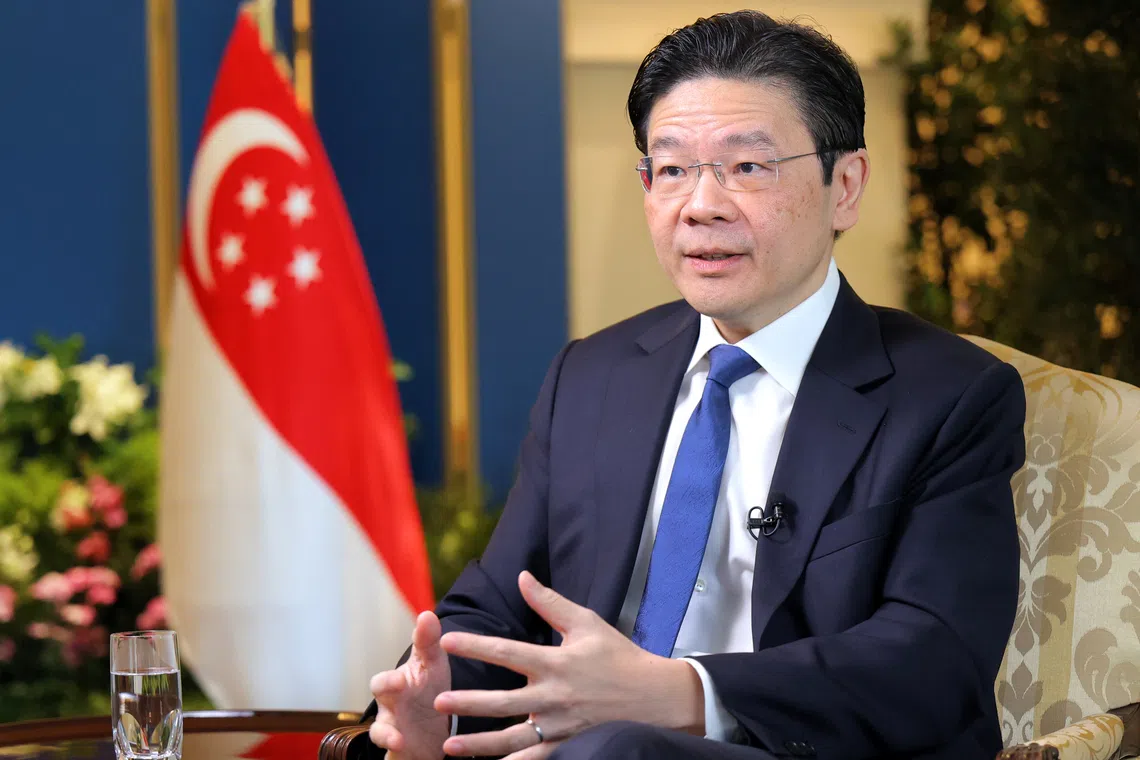
PM Lawrence Wong expressed his condolences during an interview with Australian broadcaster ABC.

PM Lawrence Wong expressed his condolences during an interview with Australian broadcaster ABC.

Oct 06, 2025

SINGAPORE – Prime Minister Lawrence Wong has expressed his condolences over the deaths of three people linked to an outage on Australian telco Optus, which is wholly owned by Singtel.

Emergency calls made through Optus’ network were disrupted for 13 or so hours on Sept 18, in the telco’s second major outage since 2023.

In an interview with Australian broadcaster ABC released on Oct 6, PM Wong said: “First of all, I can fully understand the anger, frustration and outrage by what happened.

“And I would like to extend my condolences to everyone who has been impacted by the outage, especially the families and loved ones of those who lost their lives.”

The Sept 18 outage affected around 600 emergency callers, with three people, all elderly, found dead from households that made calls.

Two of them were in Perth, and the other in Adelaide.

A fourth death, that of an eight-week-old boy from an Adelaide suburb, was initially linked to the outage, but this was subsequently deemed unlikely as his grandmother had immediately used another mobile phone to reach emergency services.

A smaller and unrelated outage took place in a suburb in New South Wales on Sept 28 just before a Singtel delegation led by chief executive Yuen Kuan Moon met Australian Communications Minister Anika Wells at the behest of the Australian government.

ABC global affairs editor Laura Tingle had, in the interview on Oct 2, asked PM Wong what actions he was personally taking to ensure a repeat would not occur, saying she was sure such service power outages to emergency calls would not be tolerated in Singapore.

PM Wong said: “As far as Singapore is concerned, while we may be shareholder through Temasek, we have always operated on a very clear cardinal principle that we do not get involved in commercial operations. We do not direct commercial matters.”

He added: “We want these companies to operate commercially, and when they do and when they expand overseas, we fully expect them and their subsidiaries to comply with domestic laws where they operate and to be responsible corporate citizens.”

PM Wong noted that Mr Yuen had been to Australia in the wake of the incident to respond to regulators.

“They (Singtel) will, I am sure, cooperate fully with the authorities, with the regulator, and work closely with Optus and whichever other independent parties that have been appointed to conduct a full investigation into what happened,” said PM Wong.

“And I hope they get to the bottom of it as soon as possible, identify the root causes, rectify the issue, and restore confidence and trust as soon as possible.”
 
Back
Top