

- Joined
- Aug 29, 2008
- Messages
- 27,587
- Points
- 113
Pig blood food products to return to Singapore markets after nearly three decades
Get ST's newsletters delivered to your inbox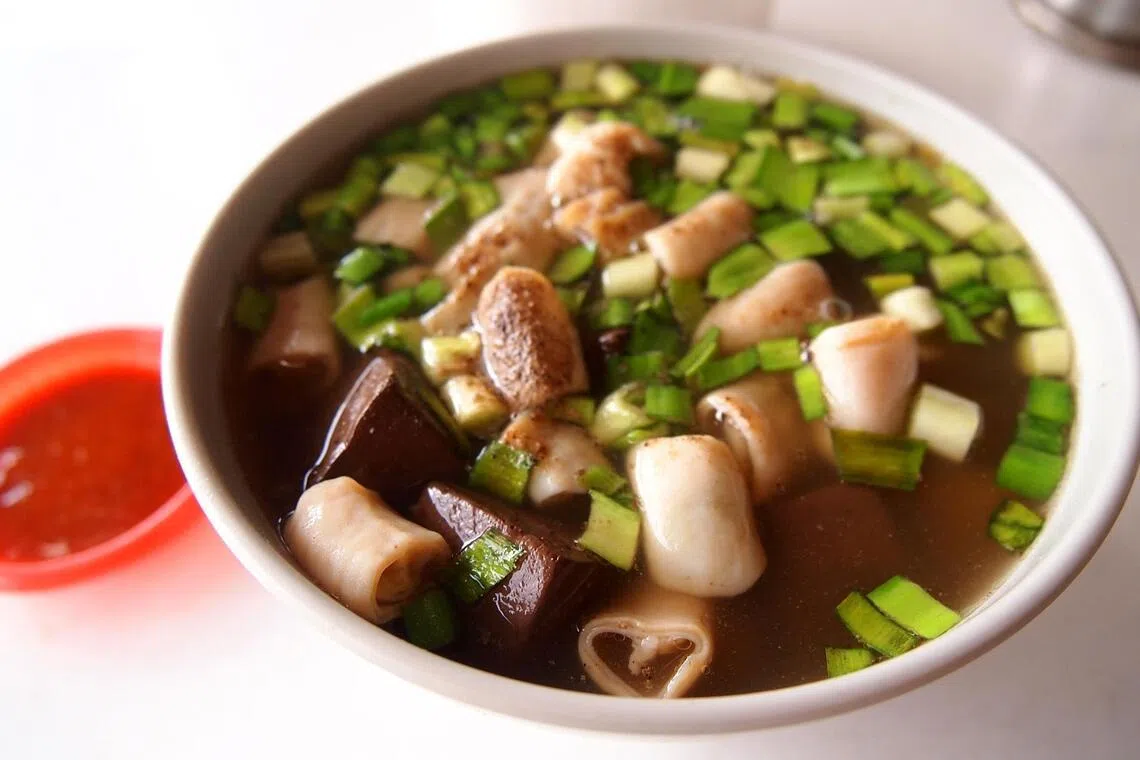
Veteran food critic K.F. Seetoh welcomed the return of pig blood food products, saying it would add to the authenticity of local dishes like Teochew-style pig organ soup (above).
PHOTO: ST FILE
Published Apr 02, 2026, 01:55 PM
Updated Apr 03, 2026, 06:30 PM
SINGAPORE – After more than 27 years, pig blood products will soon be available to consumers in Singapore.
In a circular on April 1, the Singapore Food Agency (SFA) said it had approved the import of heat-treated pork blood products from Thailand’s Bangkhla Pig Slaughterhouse after food safety assessments.
The slaughterhouse is the first and only official import application SFA has received since new requirements were established, the agency said on April 3, in response to queries.
In its circular, the agency said each consignment must be accompanied by an official health certificate issued by Thailand’s Department of Livestock Development to certify that the import complies with animal health and food safety requirements in Singapore.
“Traders are reminded that pork and pork products can be imported only from SFA-approved sources,” SFA added.
Animal blood food products, including pig blood and duck blood, had been prohibited in Singapore since the 1999 Nipah virus outbreak that killed an abattoir worker in the Republic. The outbreak also affected pig farmers in Malaysia, and resulted in more than 100 deaths there.
Nipah is a zoonotic virus, which means it can spread from animals to humans. It can also spread directly between humans or through contaminated food.
In 2022, a woman was fined $8,000 for the possession and sale of illegally imported pig blood curd.
SFA told The Straits Times there had been periodic interest since 1999 from industry stakeholders to resume pig blood product supply through imports.
The agency conducted a risk assessment in 2018 and established requirements for the safe collection and processing of blood for food purposes.
“SFA has assessed that the Thai establishment’s facilities, processes, and quality control systems meet our food safety requirements,” it said.
“This includes adherence to protocols for blood collection, processing, and storage, as well as ensuring that only blood from healthy animals is used, hygienic collection procedures and appropriate processing temperatures and methods,” it added.
In a media statement on April 2, CP Foods, which will import the products from Thailand, said it will be another one to two months before they will be available in Singapore.
“The pig’s blood undergoes high-temperature treatment and pasteurisation, and the packaging is similar to the boxed tofu commonly found in Singapore,” it said.
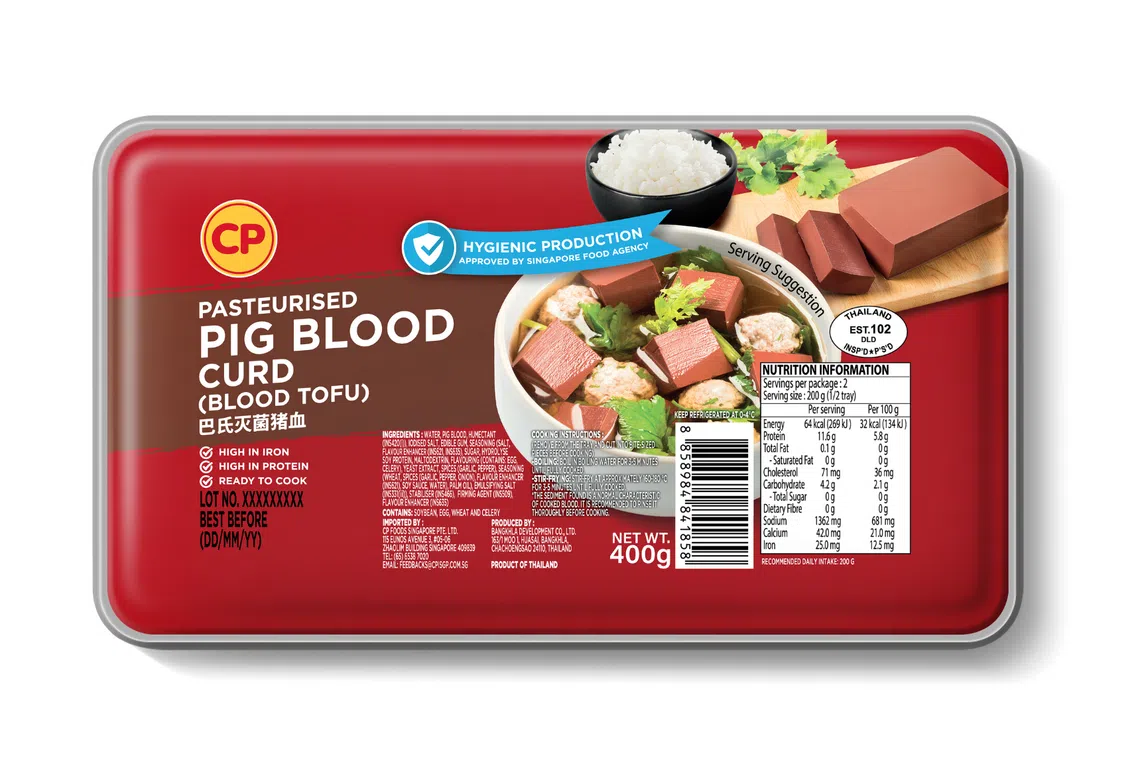
CP Foods, which will import the products from Thailand, said it will be another one to two months before they will be available in Singapore.
PHOTO: CP FOODS
When contacted, veteran food critic K.F. Seetoh said he welcomes the news “because some dishes can now go back to being authentic”. He cited the examples of Teochew-style pig organ soup – also known as ter huang kiam chye – as well as curry noodles and yong tau foo.
“Those CP blood curds are well made. I have them regularly whenever I am in Bangkok,” he said.
“At least a generation and a half will (be disgusted) as they never grew up with it, or were shielded from it when growing up.”
SFA urged consumers to buy food products only from licensed retailers and to cook them thoroughly. Food should also be prepared and stored safely to prevent contamination.


