• IP addresses are NOT logged in this forum so there's no point asking. Please note that this forum is full of homophobes, racists, lunatics, schizophrenics & absolute nut jobs with a smattering of geniuses, Chinese chauvinists, Moderate Muslims and last but not least a couple of "know-it-alls" constantly sprouting their dubious wisdom. If you believe that content generated by unsavory characters might cause you offense PLEASE LEAVE NOW! Sammyboy Admin and Staff are not responsible for your hurt feelings should you choose to read any of the content here.

    The OTHER forum is HERE so please stop asking.

Good Handsum Cik Back side pain no more after satik Sinki Doctor new treatment method…soon arse fuck w/o pain?

k1976

Alfrescian
Loyal
Joined
May 16, 2023
Messages
47,783
Points
113

Wired for relief: Man gets electrical pulses in spine to block pain from rare, debilitating condition​

Medical Mysteries is a series that spotlights rare diseases or unusual conditions.
Get ST's newsletters delivered to your inbox
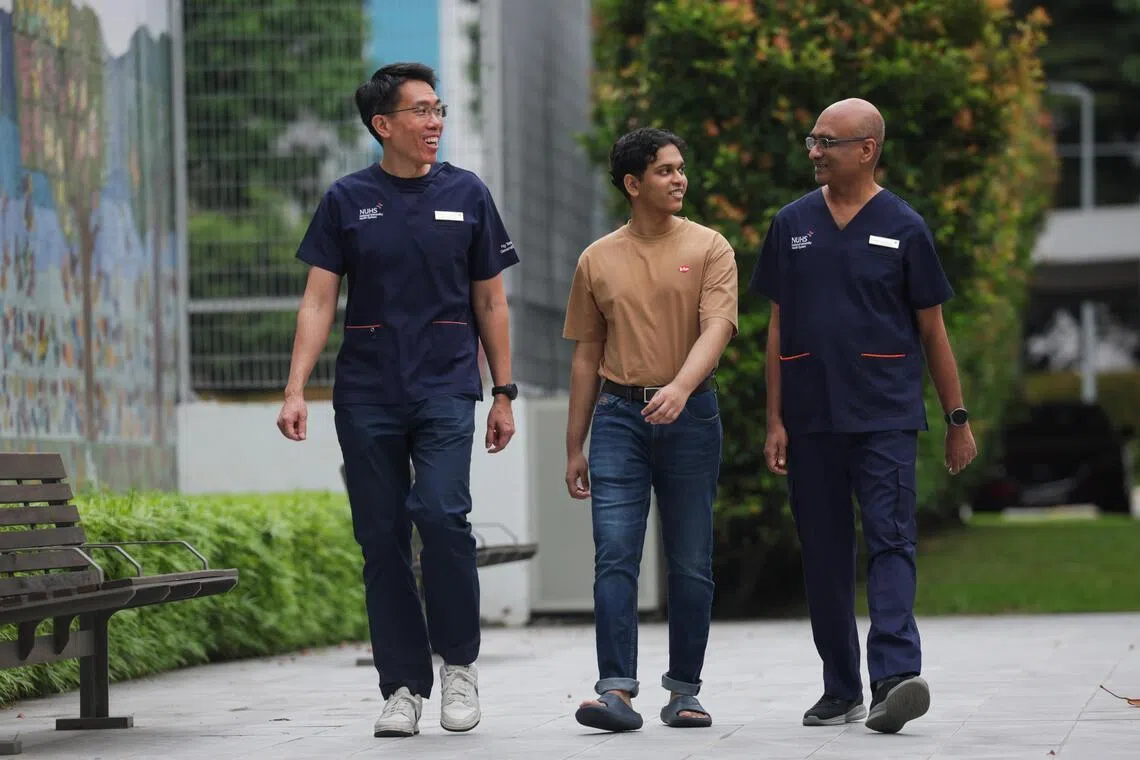
Strolling around the grounds of Ng Teng Fong General Hospital (NTFGH) with his doctors (left) Low Shiong Wen, who heads the Neurosurgery, and anesthetist Harinda Goonesekera (right). Slow walk was something Arshad could not do two years ago.

Muhammed Arshad Assainar (centre) with his doctors at Ng Teng Fong General Hospital, Low Shiong Wen (left) who heads neurosurgery, and anaesthetist Harinda Goonesekera.

ST PHOTO: GIN TAY

Google Preferred Source badge

Published Jun 20, 2026, 12:00 PM
Updated Jun 20, 2026, 06:10 PM

Listen
Summarise


SINGAPORE – Going for a slow walk was impossible for part-time administrative officer Muhammed Arshad Assainar just two years ago.

He could not even put his right foot on the ground, let alone wear his right shoe and sock.

“Even having a blanket touch my right foot at night would make me jump and writhe in pain,” the 22-year-old told The Straits Times.


Arshad’s ordeal started after he tripped and landed his full weight on his right leg.

“Initially, it wasn’t painful, so I thought it was fine. Then the pain and the swelling progressively got worse and I was hospitalised on Sept 30, 2024, for about two weeks.

“That was when the doctors ran tests: X-ray, MRIand bone scans. It was then that I was diagnosed with CRPS (complex regional pain syndrome),” he said.
 

Singapore team’s 68-second feat opens door to cyborg cockroaches in disaster relief​

Fast automated system shows the way to mass-produce remote-controlled cyborg roaches for future disaster search missions
Automated system devised by scientists at Singapore’s Nanyang Technological University can transform live insects into steerable biobots in just 68 seconds, which is 13 times faster than manual surgery. Photo: Shutterstock

Zhang Tong in Beijing
Published: 10:00am, 26 Aug 2025Updated: 5:10pm, 26 Aug 2025

Scientists in Singapore have industrialised the production of remote-controlled cyborg cockroaches that one day could form a tiny army suitable for disaster search missions.

Last month, researchers led by Hirotaka Sato at Nanyang Technological University published their previously preprinted study describing a system for the mass production of mechanical cockroaches.

The July 28 article in Nature Communications said the team had continued with their pioneering concept of an “insect robot factory”.

They had improved the control of the robotic cockroach, increasing its turning ability from 70 degrees to over 80 degrees, and also verified this precise control through a series of experiments, it said.
 

Neuralink competitor Paradromics just implanted its first brain-chip device. The next step is restoring speech.​

By Lloyd Lee Follow
Dr. Matthew Willsey secures the device after implantation.

A team of doctors from the University of Michigan implanted Paradromics' brain-chip device in a human patient for the first time in early June.University of Michigan and Paradromics
Jun 17, 2026, 9:00 PM SGT
Read in app

Paradromics, a competitor of Elon Musk's Neuralink, recently completed its first brain implant in a human patient, marking a major milestone in the startup's decadelong effort to use brain-computer interfaces (BCI) to restore lost human functions.

The startup announced Wednesday that its Connexus brain-chip was implanted in a Michigan woman who has difficulty speaking due to a motor neuron disease. The woman's identity has not yet been disclosed to protect patient privacy.

The procedure was part of an FDA-approved clinical study conducted at University of Michigan Health. The operation, which took place in early June, lasted about four hours, a representative for Michigan Medicine, the university's academic medical center, said.
 
So power supply is recharged by USB port installed at Kar Cheng?
 

Both U.S. and Chinese AI firms are setting up shop in Singapore. Can the country become Asia’s neutral AI hub?​

Angelica Ang
Updated Sat, 20 June 2026 at 5:00 AM SGT
6 min read
Add Yahoo as a preferred source to see more of our stories on Google.

Add Yahoo on Google

fc8127f8d445f4d725d3cb899c38ea4a

Singapore has spent decades selling the world on the promise that it can be trusted by all sides. For a new generation of AI companies, that pledge has never been more valuable.

OpenAI and Google DeepMind both established applied AI labs in the city-state over the past year, while Anthropic began advertising local positionsin finance, product support, and economic research. Chinese firms like Tencent have also deepened their investment in the country.

“All the AI companies I work with, whether they’re from China, Korea or Japan, all use Singapore as a hub,” Gunja Gargeshwari, the chief revenue officer of Israel-headquartered web scraping firm Bright Data, told Fortune on the sidelines of the SuperAI summit in Singapore. “It’s easiest to operate in the region if I have people in Singapore—it’s where conversations are happening, and where the innovation hubs for different providers are being set up.” Bright Data, for instance, has chosen to position Singapore as its APAC headquarters, even though 60% of its Asian customer base hails from China and India.
 
“We have the chance to stand out here,” said Nathan Xu, the CEO of San Francisco-based AI notetaker company Plaud. “Unlike many companies that originate entirely from the U.S., if Plaud can position ourselves aggressively in Singapore, then we’re a cool company to prospective users across the globe.”


Plaud hired its first Singapore-based employee in 2024. On June 10, the company said it would spend 10 million Singapore dollars ($7.8 million) to expand its local operations. It also plans to grow its headcount from 100 to 150 by the end of the year.

Singapore’s appeal to the AI industry is as much due to geopolitics as economics. The country markets itself as an economic safe haven, with a long track record of regulatory clarity and strong governance.

“Some say we are boring, and we will never have the same offerings as New York and Paris,” Singapore Prime Minister Lawrence Wong said during a policy conference last July. “But at the same time, we are stable, we are predictable. We are reliable and we are trusted, and these are intangible assets that others would die to have.”

ADVERTISEMENT

Founders like Xu also point to the country’s rigorous education system as an incubator for tech talent. “The biggest pain for me and the company is hiring the best engineers, and what’s interesting about Singapore is that it’s home to some of the best universities in the world,” Xu explains. (In this year’s QS World University Rankings, the National University of Singapore ranked #8, while the country’s Nanyang Technological University came in at #12.) “It’s a place which curates generations of talents around software engineering, computer science, AI, data science and operations.”
 

AI simplifies OCBC employees’ customer service tasks, increases productivity​

Get ST's newsletters delivered to your inbox
Nura Shereen Nordin (left) saves around 20 working hours each month through the use of AI tools.

Nura Shereen Nordin (left) saves around 20 working hours each month through the use of AI tools.

PHOTO: BERITA HARIAN
Amirul Ibrahim
Google Preferred Source badge

Published Jun 19, 2026, 06:36 PM
Updated Jun 19, 2026, 09:21 PM

Listen
SINGAPORE – As a service manager at the OCBC Customer Service Centre, Nura Shereen Nordin previously spent a significant amount of time reviewing trends in customer feedback received through e-mails and social media, while also handling customer calls.

But the introduction of artificial intelligence at the centre in late 2024 has significantly boosted her productivity.

As a result, the 44-year-old now saves around 20 working hours each month through the use of AI tools that can detect issues in real time and channel customer feedback to the relevant departments more quickly.
 

Singapore workers experiencing rising anxiety; signs of fallout from pressure to use AI​

Over a quarter of employees are considering leaving their jobs

Summarise


google-preferred-sourceAdd BT as a preferred source

Corinne Kerk

Published Wed, Jun 17, 2026 · 01:16 PM
阅读简体中文版 (beta)

  • Those whose employers actively discourage the use of AI at work have the lowest mental health score.
  • Those whose employers actively discourage the use of AI at work have the lowest mental health score. PHOTO: BT FILE
[SINGAPORE] Since peaking in June 2025, the mental health of Singapore workers has remained at persistently low levels, with the latest score showing rising anxiety, isolation and depression.

Meanwhile, those whose employers actively discourage the use of artificial intelligence at work have the lowest mental health score.

The findings are based on a study by health technology services provider Telus Health, which surveyed 1,000 people between Feb 25 and Mar 9.
 

SINGAPORE SOLIDIFIES ROLE AS NEUTRAL AI HUB WITH GLOBAL TECH PARTNERSHIPS​

Jun 19, 2026 | AI, Singapore
image-462-1620x1080.png
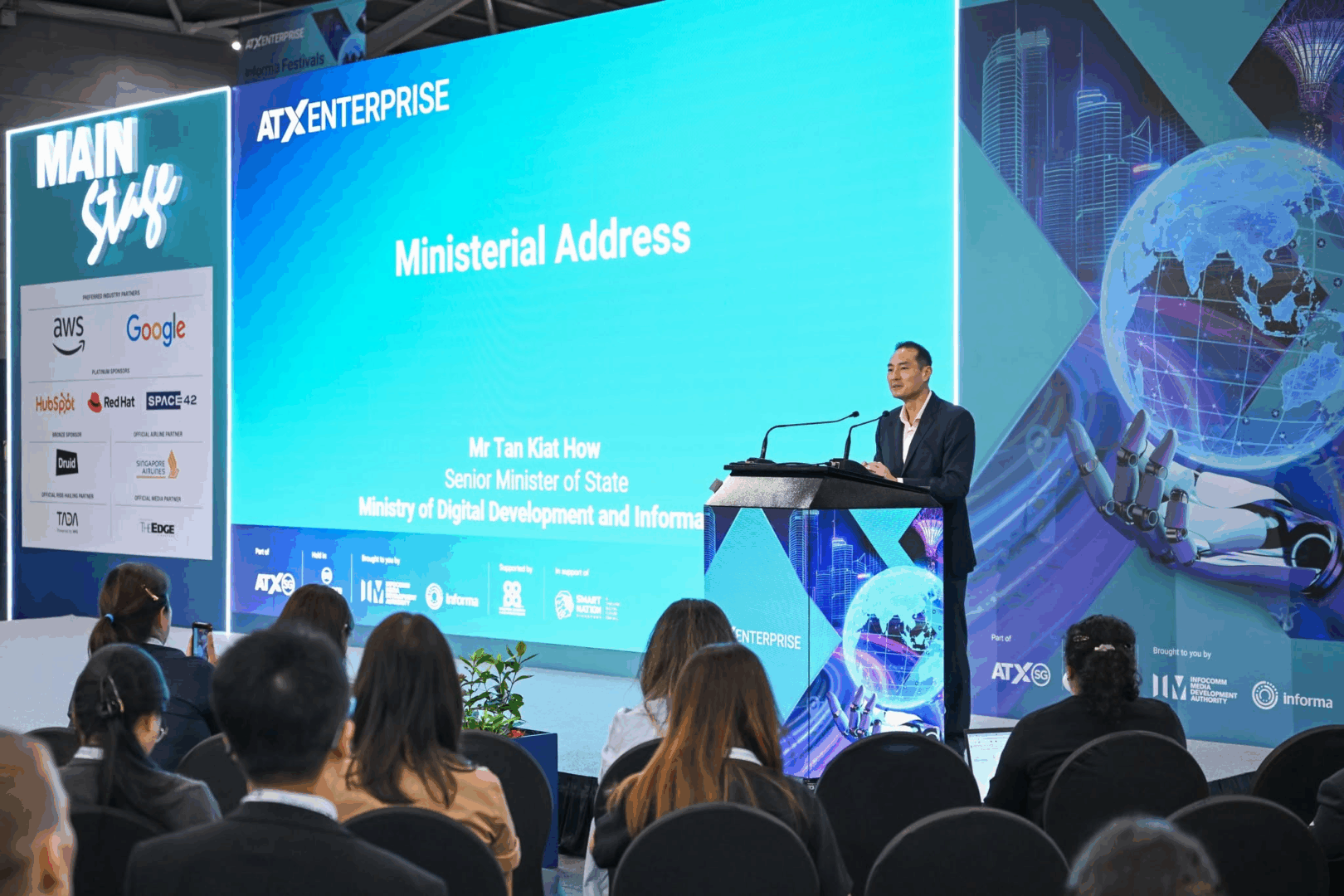
Singaporean Senior Minister of State Tan Kiat How speaks at ATxEnterprise 2026 in Singapore, where he announced new initiatives to support AI adoption and digital transformation among businesses and SMEs. (Credit: Asia Tech x Singapore)

SINGAPORE SOLIDIFIED ITS ROLE AS A NEUTRAL AI HUB IN 2026, WITH S$1 BILLION GOVERNMENT FUNDING, GOOGLE AND MICROSOFT INVESTMENTS, AND OPENAI’S ASIA-PACIFIC BASE.

Singapore deepened its artificial intelligence ecosystem through strategic partnerships with global technology leaders, reinforcing its position as a trusted AI hub for responsible AI deployment, according to the Infocomm Media Development Authority (IMDA). Major collaborations with OpenAI, NVIDIA and Google aimed to drive effective AI governance and real-world AI systems, marking a shift from exploration to building at scale.

The commitments were unveiled at the ATxSummit 2026, the flagship event of Asia Tech x Singapore. SG Minister for Digital Development and Information, Mrs Josephine Teo, announced the new partnerships. The Economic Development Board (EDB) of Singapore noted that Singapore set aside S$1 billion over five years to boost public AI research under its RIE2025 and RIE2030 plans, focusing on fundamental AI, applied AI and AI talent development in Singapore.

The Singaporean Ministry of Digital Development and Information (MDDI) and Google announced a new National AI Partnership on 20 May 2026, aiming to harness frontier AI for social good, according to the EDB. Google expanded its AI investment in Singapore on 10 February 2026, building on a US$5 billion commitment to technical infrastructure across four data centres and cloud regions. Microsoft chose Singapore as the home of Microsoft Research Asia’s first AI research lab in Southeast Asia. Dr Lidong Zhou, Corporate Vice President of Microsoft, said, “Singapore is widely recognised as a globally respected hub for sectors such as finance, healthcare, and advanced manufacturing.” He added that “a key differentiator is Singapore’s ‘full-stack’ AI talent pool.” Singapore’s Agency for Science, Technology and Research (A*STAR) and Microsoft signed a separate Memorandum of Understanding on 20 April 2026 to explore agentic AI solutions for manufacturing.

The EDB highlighted that more than 4,500 tech start-ups operate in Singapore. Since the launch of the National AI Strategy 2.0 in December 2023, Singapore has partnered with companies to set up more than 60 AI Centres of Excellence, according to a February 2026 speech by the Singaporean Minister of State Tan Kiat How. OpenAI chose the city-state as its Asia-Pacific base in October 2025, citing the welcoming government, tech-embracing companies and a large ChatGPT user base, as reported by the EDB. As IMDA stated, these efforts aim to build a trusted and responsible AI ecosystem, positioning Singapore as a leading hub for companies to deploy AI solutions at scale in Asia.

Source: Infocomm Media Development Authority (IMDA), Economic Development Board (EDB)
 

Why middle management isn’t ‘safe’ from AI displacement​

Across companies in Singapore and beyond, strong performers are being let go as their roles get absorbed

Summarise


google-preferred-sourceAdd BT as a preferred source
阅读简体中文版 (beta)

  • When a job is restructured out of existence, the worker loses the career infrastructure, professional identity and forward momentum that was built around the role.
  • When a job is restructured out of existence, the worker loses the career infrastructure, professional identity and forward momentum that was built around the role. PHOTO: BT FILE

Uma Thana Balasingam

Published Thu, Jun 18, 2026 · 07:00 AM
RECENTLY, a senior principal at a global advisory firm came to me after his role was eliminated. His company had just lost one big client, but his record was sound – he had also brought in two new projects that quarter.

A few months earlier, another acquaintance who had spent a decade building a new division watched her company hire someone else to lead the function she created.

Different industries, different high performers. Neither companies were struggling. In each case, the role itself had changed – completed, absorbed, or redesigned around the absence of the person who used to perform it.
 
Back
Top