

- Joined
- May 16, 2023
- Messages
- 48,552
- Points
- 113
Singapore studying ways to better support at-risk workers before job losses: Desmond Choo
Rather than helping workers recover after they have fallen out of employment, the focus should be on intervening earlier, said the National Trades Union Congress deputy secretary-general.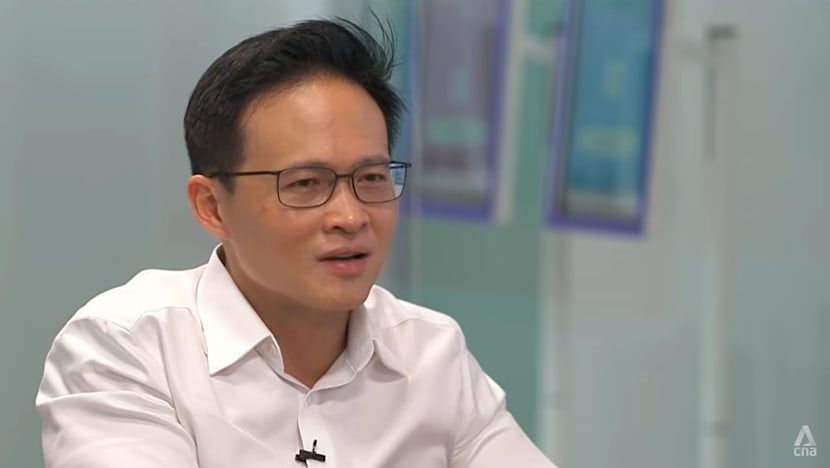
Listen
4 min



Ivy Chok , Sabrina Ng & Calvin Yang
02 Jun 2026 03:13PM
BookmarkShare
Set CNA as your preferred source on Google
Read a summary of this article on FAST.
FAST
SINGAPORE: Singapore is studying ways to identify workers at risk of displacement earlier and connect them with new opportunities before they lose their jobs, said Economic Strategy Review (ESR) committee co-chair Desmond Choo.
This would prepare them for a future marked by more frequent career transitions and reduce income losses during job switches, as artificial intelligence, automation and economic restructuring reshape the labour market.
“We're identifying them early, and then we're opening up the opportunities to help them to make the transition,” said the National Trades Union Congress (NTUC) deputy secretary-general.
“Because rather than them dropping off the workforce and bouncing back, we want to catch them before they even fall, so that they enter another growth space again.”
REDUCING THE PAIN OF JOB TRANSITIONS
Mr Choo was speaking to CNA following the release of recommendations from the five ESR committees last month on how Singapore can position its economy for the future.The review produced 32 recommendations aimed at strengthening Singapore's long-term growth prospects amid an uncertain global environment.
These proposals were shaped after nine months of deliberations involving more than 7,700 stakeholders, including businesses, unions and workers.
One recommendation is the creation of “career bridges” to connect workers in vulnerable sectors or at-risk roles with industries expected to see stronger long-term demand.
Singapore already has resilient sectors with strong growth prospects such as healthcare, which is expected to continue expanding as the population ages, noted Mr Choo, who co-chairs the ESR committee on managing the impact of restructuring.
The challenge is helping workers move from occupations threatened by disruption into industries that are better positioned for the future, he added.
This includes identifying transferable skills and providing support to help workers bridge any remaining gaps.
“We need to move into that, so that our people have more choices,” said Mr Choo.
Such efforts will require a detailed, sector-by-sector and occupation-by-occupation approach, he added.
“This is where we need to be, because if we don't involve ourselves that deeply, then our workers cannot get the confidence to make the transition.”
Another recommendation is to strengthen support schemes for professionals, managers and executives (PMEs) navigating career transitions.
Mr Choo said Singapore should build on initiatives such as the jobseeker support scheme by broadening and deepening assistance, “so that our workers have the confidence that as (they) transit to different things, (they) will not be left alone”.


