Singapore's public sector to reduce electricity consumption at government facilities amid Middle East crisis
Energy-saving measures include setting air-conditioning temperatures to 25°C or higher and turning off non-essential equipment and appliances when not in use.
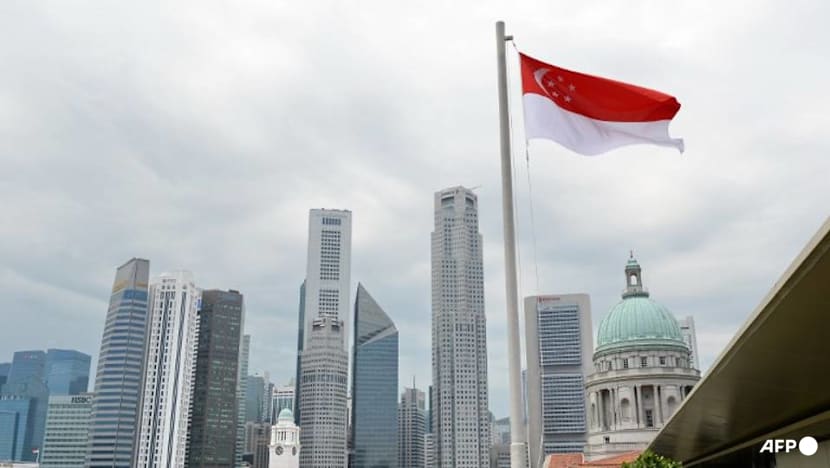
A Singapore flag in Singapore. (File photo: AFP/Roslan Rahman)
Listen
4 min
New: You can now listen to articles.
 Ng Hong Siang
08 Apr 2026 06:25PM (Updated: 08 Apr 2026 06:40PM)
BookmarkShare
Set CNA as your preferred source on Google
Read a summary of this article on FAST.
FAST
SINGAPORE: Singapore's public sector will take steps to reduce electricity consumption across government facilities to boost energy resilience amid the Middle East conflict, which has
affected global fuel supply chains.
All ministries, organs of state and statutory boards have been directed to adopt energy conservation measures where possible, while balancing operational needs, the Ministry of Sustainability and Environment (MSE) and the National Environment Agency (NEA) said in a joint media release on Wednesday (Apr 8).
These include immediate measures such as setting air-conditioning temperatures to 25°C or higher, managing the operating hours of air-conditioning, lighting and lifts, as well as unplugging or turning off non-essential equipment and appliances when not in use.
"Agencies will also accelerate the installation of energy-efficient systems such as LED lighting and smart sensors and replace electrical equipment with more energy-efficient alternatives, such as those with the highest tick ratings," said MSE and NEA.
Public officers are also advised to practise energy conservation habits.
These measures "demonstrate the government's commitment to lead by example in national energy conservation efforts", said MSE and NEA.