• IP addresses are NOT logged in this forum so there's no point asking. Please note that this forum is full of homophobes, racists, lunatics, schizophrenics & absolute nut jobs with a smattering of geniuses, Chinese chauvinists, Moderate Muslims and last but not least a couple of "know-it-alls" constantly sprouting their dubious wisdom. If you believe that content generated by unsavory characters might cause you offense PLEASE LEAVE NOW! Sammyboy Admin and Staff are not responsible for your hurt feelings should you choose to read any of the content here.

    The OTHER forum is HERE so please stop asking.

Fixing the opposition

WP leaders kept prior knowledge of former MP’s lie from party members: Judge​

Workers’ Party chief Pritam Singh speaking to the media after leaving the State Courts on Feb 17.

Workers’ Party chief Pritam Singh speaking to the media after leaving the State Courts on Feb 17.ST PHOTO: AZMI ATHNI
Christine Tan and Vanessa Paige Chelvan
Feb 18, 2025

SINGAPORE – Workers’ Party (WP) leaders knew former WP MP Raeesah Khan had lied in Parliament in August 2021, but they kept this from party members for months.

Deputy Principal District Judge Luke Tan, who on Feb 17 found WP chief Pritam Singh guilty of lying to the Committee of Privileges, said that Singh and WP chair Sylvia Lim also kept this knowledge from Mr Low Thia Khiang, the former secretary-general of the party and current central executive committee (CEC) member.

Mr Low found out only in August 2023, almost two years after Ms Lim and Singh sought his advice on how to deal with the untruth.

In a 150-page judgment, Judge Tan described as concerning the conduct of Singh, Ms Lim and WP co-chair Faisal Manap in not revealing to the CEC and other members their prior knowledge of the lie and that Singh was directly involved in guiding Ms Khan after discovering the untruth.

He pointed out conflict of interest issues as well, noting that the disciplinary panel (DP) formed in November 2021 to deal with Ms Khan comprised Ms Lim, Mr Faisal and Singh, the three leaders who had known for some months about the lie.

“Such behaviour suggested that these leaders, in particular the accused (Singh) who was the most senior leader and the one most involved in guiding Ms Khan on her behaviour after discovering her lie, were trying to cover up their own involvement in the matter, and doing so through their membership in, and management of, the DP,” said the judge.

Ms Khan had lied in Parliament on Aug 3, 2021, about accompanying a sexual assault victim to a police station, where she claimed the victim was treated insensitively.

She repeated the claim before the House on Oct 4 the same year, before admitting to her lie on Nov 1, 2021.

Judge Tan noted that Singh, Ms Lim and Mr Faisal had known as early as Aug 8, 2021, about the lie. They did not reveal this knowledge to the CEC, even when they recommended her expulsion in November that year.

The judge said the “lackadaisical attitude” of Singh towards Ms Khan’s lie in Parliament showed that he did not want the truth to come out after considering its ramifications.

“The potential grave and negative impact on the party of Ms Khan admitting that she had lied in Parliament... would not have been lost on political veterans like the accused, Ms Lim and Mr Faisal,” Judge Tan added.

The judge noted that after Ms Khan admitted to the other WP leaders that she had lied, there was no follow-up by Singh or by the other two WP leaders about what to do about the lie.

Judge Tan said nothing was done by Singh for almost two months to get her to reveal the truth, after Ms Khan met them on Aug 8, 2021.

“It can only be inferred that as at (Aug 8, 2021), the WP leaders still thought things would blow over, and that the truth may not be found out,” said Judge Tan, who added that there was no evidence that Singh discussed with his fellow leaders what to do about the lie, nor did he follow up with them after the meeting.

This must have been because he never wanted, or never expected, her to clarify the lie in Parliament, said Judge Tan.

“Hence, there would have been no embarrassing exposure, and no damaging impact for which his fellow WP leaders had to be concerned with or need to address,” said the judge.

Judge Tan said that as Singh was the highest-ranking WP member at the meeting, “one would have expected that he would be well placed to communicate to Ms Khan any instruction(s) to specifically address the lie if that was really his intention”.

The judge said it was Mr Low, who he described as a person trusted and respected by both prosecution and defence witnesses, who played a pivotal role in the ultimate decision for Ms Khan to confess to the lie in Parliament.

Singh was convicted of two counts of lying under oath to a parliamentary committee over his handling of Ms Khan’s lie, and fined a total of $14,000.

Parliament had indicated in 2022 that it will defer decisions on parliamentary sanctions on Mr Faisal and Ms Lim until the conclusion of criminal proceedings against Singh.
 

Pritam Singh found guilty: Five key points from the verdict​

Workers’ Party chief Pritam Singh arriving at the State Courts on Feb 17.

Workers’ Party chief Pritam Singh arriving at the State Courts on Feb 17.ST PHOTO: AZMI ATHNI
Wong Pei Ting
Feb 18, 2025

SINGAPORE – Workers’ Party (WP) chief Pritam Singh was convicted of two charges of lying under oath to a parliamentary committee.

Deputy Principal District Judge Luke Tan said the prosecution had proven its case beyond reasonable doubt, and fined Singh $14,000 in all – $7,000 for each charge.

The two charges had to do with lying to the Committee of Privileges (COP) about what transpired during meetings Singh had with former WP MP Raeesah Khan on Aug 8 and Oct 3 in 2021. The meetings had to do with an untruth that Ms Khan told in Parliament on Aug 3 that year.

Here are the key points from the judgment:

1. ‘Take it to the grave’ claim well backed by evidence​

Judge Tan said Ms Khan’s account of what was said at the Aug 8 meeting – that Singh told her “this would probably be something that we would have to take to the grave” – was supported by circumstantial and corroborative evidence.

This included a text message she had sent to her close confidants – former WP cadres Loh Pei Ying and Yudhishthra Nathan – right after the meeting, which stated that Singh and fellow WP leaders Sylvia Lim and Faisal Manap “agreed that the best thing to do is to take the information to the grave”.

In contrast, Singh’s version was that he had told Ms Khan to speak to her parents about her experience with sexual assault first, and they would then return to the issue. He said he did so while they were leaving his house after the meeting, with no one else in earshot.

The judge said it made no sense that Singh would give this instruction only when he was alone with Ms Khan, seeing as he was the one who asked her to attend the meeting with the WP leaders, and specifically prompted her to share with them what she had told him on Aug 7 about the anecdote being false.

This was especially as there was nothing secret about this instruction – to speak to her parents first – and he had already asked Ms Khan at the meeting if her parents knew about the assault.

More likely than not, any instruction would have been given in the presence of all three WP leaders so that they understood what Ms Khan was to do and there would be no disagreement with the approach, Judge Tan added.

The prosecution had also rightly pointed out that there were no minutes, e-mails, text messages, or any other form of written record of Singh’s version of what he claimed to have told Ms Khan, the judge said.

Given that Ms Khan’s untruth could potentially have a very negative impact on the WP, fellow party leaders would have needed a clear understanding of what Singh told her to do, and this would have led to some form of documentary proof of his instructions, said Judge Tan.

How Ms Khan was to have told her parents about her sexual assault also had nothing to do with how the party would have to work out something that would seriously affect its image, he added.

2. Lack of guidance showed Singh did not want untruth clarified​

Judge Tan said that even if he accepted that Singh had told Ms Khan to speak with her parents before clarifying her lie to Parliament, he found it difficult to accept that the WP chief expected her to know the whole host of things she had to do to clarify the lie when he did not discuss them with her.

The to-do list included talking to her parents, explaining the sexual assault to them, explaining to them why she lied, telling them that the fact she lied was going to become public, and coming back to Singh when she was ready to have the matter clarified in Parliament.

None of these things that Singh expected Ms Khan to do was expressly articulated by him at any time during the Aug 8 meeting.

“It is clear that throughout this time, his desired laundry list of actions for Ms Khan to carry out were in his mind but never out of his mouth,” said the judge.

Except for bare submissions from the defence, no actual evidence was provided that Ms Khan would or should do or know all those things.

Singh’s “total lack of interest and action” after the Aug 8 meeting was completely contrary to his “hitherto very proactive approach and attitude” towards Ms Khan immediately after she told the untruth on Aug 3, noted Judge Tan.

It was also damning that Singh could not provide any credible response for his Oct 3, 2021, instruction to Ms Khan to clarify the untruth only if the matter came up in Parliament the next day.

By then, his MP had told a lie and left it unclarified for about two months, and Singh himself had been aware of the lie since Aug 7, 2021.

The judge agreed with the prosecution that if Singh really wanted Ms Khan to tell the truth when Parliament sat on Oct 4, he could simply have told Ms Khan that she was to clarify the untruth regardless of whether the matter was raised.

3. WP disciplinary hearings were to distance Singh from his role in Ms Khan maintaining her untruth​

The judge said he found merit in the prosecution’s argument that the WP’s disciplinary panel (DP) proceedings which Singh initiated in November 2021 – shortly after Ms Khan confessed to Parliament that she had lied – were completely self-serving and calculated to distance WP leaders from Ms Khan’s conduct.

Not only was the DP made up of the same three leaders who had guided her since Aug 8, the leaders also did not call Ms Khan out on her untruth before the DP was convened or disclose it themselves. Instead, they kept it hidden from the rest of the WP, from Parliament and from the public.

No matter which way one looked at it, it was obvious that Singh, Ms Lim and Mr Faisal, who made up the DP, were in a position of real, or at least apparent, conflict of interest, said the judge.

“There would have been a real concern that they may not be seen to be able to act fairly or impartially when inquiring into Ms Khan’s behaviour, as their own conduct in the affair would also come under scrutiny,” he said.

“This would not have been lost on (Singh) or Ms Lim, who are both qualified lawyers.”

Questioned about the issue of conflict of interest given the composition of the DP panel, Singh made several flip-flops in his evidence, the judge noted.

“Suffice to say, the constant changing of the accused’s stance reflected an inability to give a coherent and believable account in relation to both of the charges faced by him,” he said.

Singh’s troubling insistence on sitting on the DP despite being well aware of his intimate role in guiding Ms Khan on what to do about the untruth since August 2021 strongly suggested an attempt to conceal his earlier involvement and knowledge, and lack of action that it be clarified, the judge added.


4. Ms Khan and ex-WP cadres were credible witnesses​

The defence had sought to paint Ms Khan as a habitual liar, and made several bids to impeach her credibility as a witness. Among other things, the defence said Ms Khan had provided three different accounts of the Aug 8 meeting.

But Judge Tan said careful analysis showed there was in fact no real discrepancy.

All three purportedly different accounts were consistent in conveying that all those present at the meeting did not clarify the untruth. They also did not tell Ms Khan to speak to her parents about her assault, and they would address the truth thereafter.

The defence also argued that Ms Loh and Mr Nathan’s evidence could not be believed, as the former WP cadres wanted to implicate Singh to provide cover for their own conduct, and that the prosecution’s case was “essentially that of a proven liar and her two friends”.

Judge Tan said this was “not a trial simply involving one person’s words against another”, but there were text records and testimonies from former WP chief Low Thia Khiang and the former cadres to corroborate Ms Khan’s account and provide a compelling case against Singh.

He found Ms Khan to be a credible witness, and that there was no reason for her to falsely implicate Singh as this brought no benefit to her, given that she was testifying in court more than three years after the event.

It was also clear from the testimonies of Ms Khan, Ms Loh and Mr Nathan that Ms Khan was prepared to shoulder the blame.

While she displayed “clear flaws” in lying to Parliament in the first place, and despite knowing the possibility of adverse consequences to herself, Ms Khan was forthright with the COP and in police investigations, said the judge.

There was also no plausible motive for Ms Loh and Mr Nathan to lie about Singh’s actions to falsely implicate the WP chief, said Judge Tan.

Singh himself had described Ms Loh and Mr Nathan during the COP hearings as very decent and good people who worked very hard for the WP.

“I saw nothing in their evidence to suggest that they had lied in this court at this trial, or that they had tried to conceal their personal actions or their advice to Ms Khan,” said the judge.

“Instead, they have been upfront in relation to their roles and shortcomings.”

0203db713ace7d4e72f1f1094208eea216ca69d56c9509442964cbd5d7483963

(From left) Former WP MP Raeesah Khan and former WP cadres Loh Pei Ying and Yudhishthra Nathan.ST PHOTOS: KELVIN CHNG

5. Defence made ‘backdoor attempt’ to get court to consider out-of-court evidence​

Judge Tan called out the defence for making “copious references” to what Ms Lim and Mr Faisal had said outside the court, and said this “backdoor attempt” to slip evidence through is clearly impermissible.

This was because the defence did not call Ms Lim or Mr Faisal to testify in the trial. What they had said before the court trial in relation to the case – particularly at the COP hearings – therefore constituted hearsay and was inadmissible as court evidence.

Singh was the only defence witness. In contrast, the prosecution called four witnesses – Ms Khan, Ms Loh, Mr Nathan and Mr Low – who testified under oath over the 13-day trial in October and November 2024.

The defence, in its closing submissions, referred to Ms Lim’s and Mr Faisal’s testimony to the COP as evidence corroborating Singh’s account in court that he had told Ms Khan she had to speak to her parents, among other things.

It made even more extensive and liberal references to Ms Lim’s and Mr Faisal’s words to the COP in its reply submissions to the prosecution, noted the judge.

The prosecution had said that Singh’s decision not to call Ms Lim and Mr Faisal to corroborate his version of events was “telling” of which version was more believable.

The defence obviously had the chance to call either or both Ms Lim and Mr Faisal as witnesses to bolster its case, and had made a “conscious decision” not to call either of them, said Judge Tan.

“To sum up, the accused’s bare account of events essentially remains uncorroborated and unsupported by any other evidence in the present trial,” he said.

 
Why does the PAP want absolute power when
it will inevitably lead to absolute corruption?


GOF1CTpXYAAjMf6.jpg:large
 
It is worrying when a political party wants absolute power to do absolutely as it pleases. There will be no difference between S'pore and North Korea or Russia when there is no more Opposition to be a check and balance. When a govt is its own check and balance, we essentially have a fox tasked to guard a chicken farm against predators.
 

Forum: Performance should be main yardstick for selection for sporting events​

Aug 26, 2025

The recent exclusion of Soh Rui Yong from the SEA Games squad raises questions about meritocracy and the future of Singapore sports (Young Lions and distance runner Soh Rui Yong left out of SEA Games contingent, Aug 6).

If meritocracy is the cornerstone of our sporting landscape, then performance should be the primary yardstick for selection. Soh has consistently delivered results at the highest level despite numerous challenges, and yet he remains sidelined.

This sends the wrong signal to aspiring athletes that talent and hard work alone may not be enough unless they conform to a certain standard of behaviour.

While Soh’s character and past actions have been questionable, such judgments are ultimately subjective and personal. Around the world, many top athletes are expressive, outspoken, and even controversial at times, yet they are celebrated for what truly matters: their performance and their ability to push the boundaries of their sport.

It is time for the Singapore National Olympic Council (SNOC) to move with the times. Being a “role model” should not be about fitting into a narrow mould of personality or public relations polish.

True sporting role models are defined by resilience, excellence, and the ability to inspire through performance. These are qualities Soh has demonstrated repeatedly despite all the adversity.

If SNOC believes athletes must also be “role models”, then it owes Singaporeans and the sporting community a clear and transparent definition of what that entails. Without such clarity, decisions risk being seen as arbitrary, undermining the trust athletes place in the system.

Singapore sports will grow only if we provide better, tailored support for our top athletes instead of adopting a one-size-fits-all approach. By continuing to exclude one of our most consistent performers, we risk stifling the very meritocracy that has been underpinning our country’s success.

Zhang Jinwei
 

Independent probe under way at Law Society following allegations of workplace bullying​

The investigation, which is being conducted by TSMP Law Corporation, was commissioned by the Law Society’s audit committee in September.


The investigation, which is being conducted by TSMP Law Corporation, was commissioned by the Law Society’s audit committee in September.

Summary
  • The Law Society of Singapore commissioned an independent investigation into claims of workplace bullying following an online post.
  • The investigation includes allegations of excessive spending on overseas trips.
  • Discontent arose after an unelected council member was chosen as president, leading to a proposed EGM
AI generated

Dec 16, 2025

SINGAPORE – An online post in September 2025, which made allegations of workplace bullying at the Law Society of Singapore, has sparked an ongoing probe at the organisation.

The Straits Times understands the allegations come in the wake of a spate of resignations at the Law Society in 2025, with about a third of more than 70 full-time employees leaving their jobs.

A chief executive had quit less than four months into the job. Separately, the departure of a long-time senior executive spurred further resignations.

At one point in time, the human resources department was unstaffed.

The investigation, which is being conducted by TSMP Law Corporation, was commissioned by the Law Society’s audit committee in September.

When asked about the probe, TSMP’s joint managing partner, Senior Counsel Thio Shen Yi, said a progress report has been submitted to the audit committee. He declined to give further details.

ST understands a number of former and current employees were interviewed between October and December.

A number of other issues were highlighted during the probe.

They include allegations of excessive spending during overseas trips, which had prompted several council members of the Law Society to raise concerns about the financial claims.

Under the organisation’s protocol, expenses below $50,000 do not have to be authorised by the council, which has 21 members.

Such claims need to be approved only by the executive committee, or Exco, a subgroup of the council comprising eight members.

The writer of the online post had also complained about how an allegation of sexual harassment was handled.

ST spoke to a number of former and current employees who said they were familiar with the issues raised in the online post.

One of them even prepared a statutory declaration before a Commissioner for Oaths to confirm the information that was provided to the TSMP team.

Several employees who spoke to ST asked to remain anonymous because they feared reprisal.

They described a work culture where they were expected to be available 24/7.

They said they were inundated with incessant text messages at all times of the day, including weekends and while they were on leave.

One showed ST a stack of printed-out WhatsApp chat messages.

Staff were also told to perform tasks outside their job scope, such as parking cars and dealing with flight bookings.

They said they were spoken to in condescending tones in front of other staff.

They said employees feared being sacked for not carrying out tasks swiftly or satisfactorily.

ST has contacted the Law Society for comment.

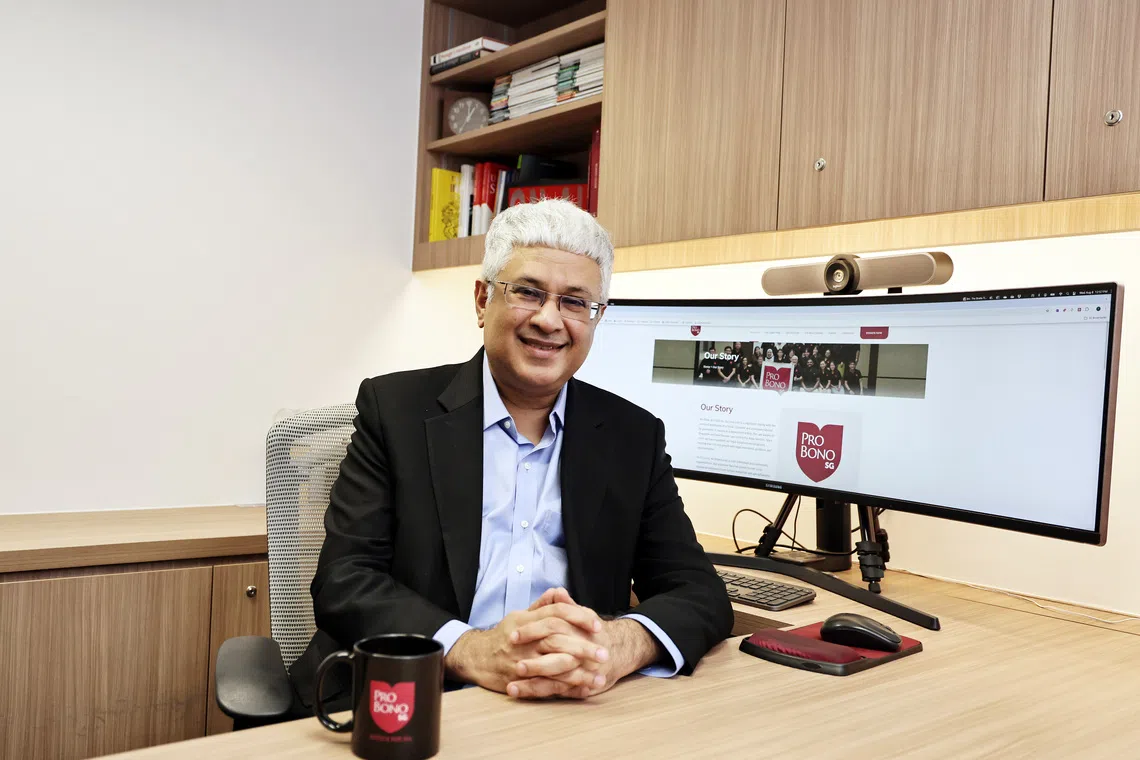
The professional body for lawyers was in the news recently following the appointment of Mr Dinesh Singh Dhillon, a ministerial appointee, as its new president.

Mr Dhillon was announced in November as president of the organisation for 2026.

2068fc6da1c6d2ea183d2aedc09357208cee810edd5a3b1dff1565aac41e0296


Mr Dinesh Singh Dhillon was announced in November as president of the organisation for 2026.


The current president, Ms Lisa Sam, will remain on the council.

Mr Samuel Chacko, who had lost the internal election to Mr Dhillon, will also be a council member.

The council typically comprises 15 elected members, three members appointed by the law minister, and another three co-opted by the council.

All council members serve a two-year term.

Internal voting for the four office-bearers – the president, two vice-presidents and treasurer – is held every year among the council members.

When Mr Dhillon put himself up for the post of president and eventually won the internal vote, it caused disquiet among some members of the society.


On Nov 24, a group of members, led by Mr Peter Cuthbert Low and Mr Chandra Mohan Nair, submitted a request to the Law Society to hold an extraordinary general meeting (EGM).

They proposed passing a resolution that the president of the body must be an elected member of the council.

On Dec 3, a meeting involving Law Minister Edwin Tong was held with three factions to resolve the unhappiness, Senior Counsel Jimmy Yim had earlier told ST.

The groups comprised two members of the current council including Ms Sam; the office-bearers of the incoming council including Mr Dhillon; and Mr Low and Mr Nair.

On Dec 5, Law Society members were invited to a tea session held on Dec 10 for both councils to address their queries and concerns.

No mention was made of the EGM request.

On Dec 9, Mr Low and Mr Nair told the Law Society that they would be holding the EGM because the council decided not to hold one.

The proposed resolution – worded differently from the original – seeks to place on record the view that only an elected council member should become president.

On Dec 10, criminal lawyer Sunil Sudheesan entered the fray.

He intends to seek a vote of no confidence at the EGM against members of the incoming council who had voted for a ministerial appointee to be president.

His intended motion also seeks the resignation of members of the current council who had decided not to call for an EGM.

On Dec 12, a third motion was added. Another lawyer, Mr Manimaran Arumugam, proposed a slight amendment to Mr Low and Mr Nair’s motion.
 

Outgoing Law Society president responds to report on ongoing probe at the professional body​

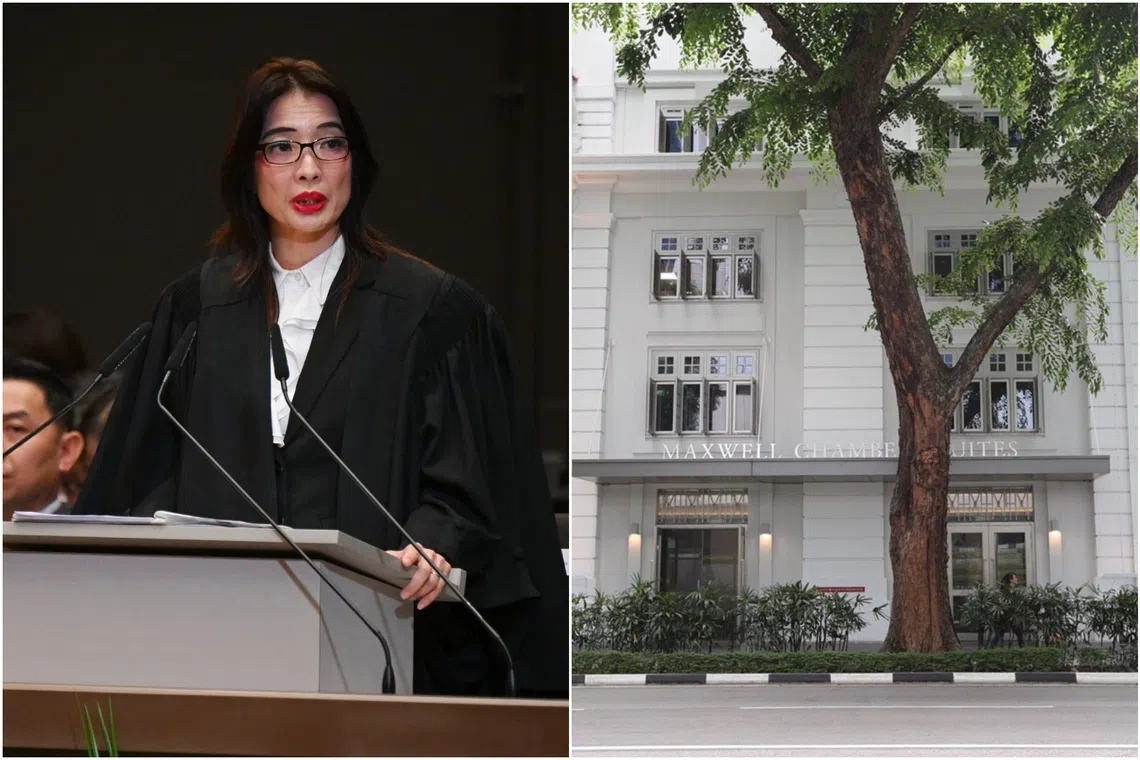
On Dec 17, Ms Lisa Sam Hui Min said in a LinkedIn post that she had repeatedly asked TSMP Law Corporation for written details of the allegations to no avail.


On Dec 17, Ms Lisa Sam Hui Min said in a LinkedIn post that she had repeatedly asked TSMP Law Corporation for written details of the allegations, but to no avail.

PHOTOS: KUA CHEE SIONG, ST FILE

Dec 17, 2025

SINGAPORE - The outgoing president of the Law Society of Singapore said details of an ongoing probe within the organisation were not made known to her, despite her having made multiple inquiries.

Ms Lisa Sam Hui Min, who will remain a council member of the professional body, said in a late-night LinkedIn post on Dec 16 that she had repeatedly asked TSMP Law Corp for written details of the allegations, but to no avail.

The Law Society did not earlier respond to queries from The Straits Times on the allegations and the probe.

ST had reported on Dec 16 that TSMP Law was commissioned by the Law Society’s audit committee in September to investigate allegations of workplace misconduct and excessive spending during overseas trips.

In her post, Ms Sam said: “(I’m) surprised and deeply troubled because details of what was supposed to be an independent, confidential process over anonymous reports and unsubstantiated assertions commissioned by the Law Society’s Audit Committee and delegated to TSMP Law Corporation, were somehow provided to the press, even before I was given the details.”

The allegations of workplace bullying had first emerged online in September. The online post sparked the internal investigation at the Law Society.

Ms Sam said she had asked TSMP for details of the actual allegations to be made available in writing so that she would be in a position to provide a useful written response.

“Those details were not forthcoming to me,” she added.

Ms Sam said: “It is extremely unfortunate that I had to learn from The Straits Times, what purportedly was being investigated.”

TSMP’s joint managing partner, Senior Counsel Thio Shen Yi, had confirmed with ST that there was an ongoing probe and said a progress report has been submitted to the audit committee.

He declined to give further details.

ST understands a number of former and current employees were interviewed by TSMP between October and December.

In her LinkedIn post, Ms Sam said some of the allegations, which were stated in anonymous complaints, occurred even before her time in office. She has been president of the organisation since 2024.

Ms Sam: “I am at a loss to understand what meaningful update on progress or interim report could have been provided. The review must still be ongoing and nowhere near complete, given that TSMP (has) yet to provide me with written details of the actual allegations.

“Needless to say, I am troubled that TSMP’s joint managing partner made statements to the press about a matter he must have known was confidential and the making of which could potentially be a breach of his duties to the Audit Committee and the Law Society of Singapore.”

Ms Sam will leave her post at the end of 2025, with Mr Dinesh Singh Dhillon, the president-elect, taking up the mantle as president in 2026.

ST has contacted the Law Society and Ms Sam for comments about the allegations, and the status of the probe.
 

Dinesh Singh Dhillon to step aside as incoming Law Society president at Dec 22 EGM​

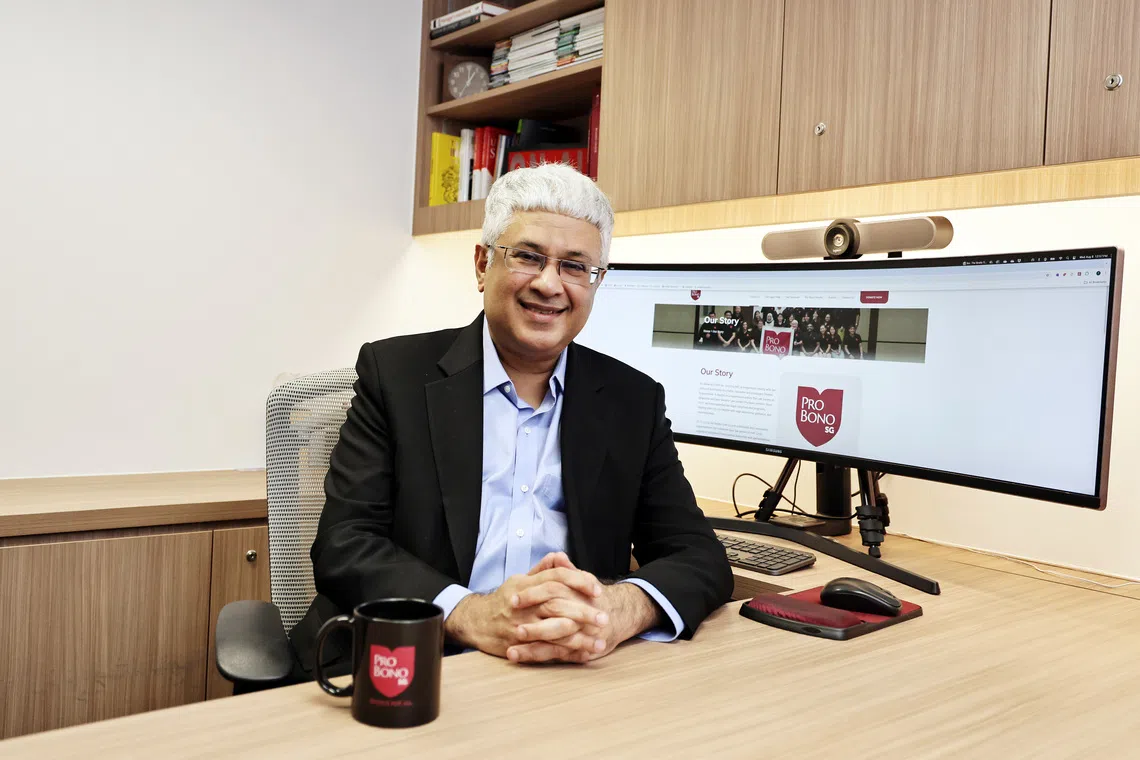
Mr Dinesh Singh Dhillon was elected by the majority of the 21-member Law Society council in November as the 30th president of the professional body for lawyers.


Mr Dinesh Singh Dhillon was elected by the majority of the 21-member Law Society council in November as the 30th president of the professional body for lawyers.

Summary
  • Dinesh Singh Dhillon is to step aside as Law Society president-elect after "legitimate concerns" were raised about his unelected status to the council.
  • Professor Tan Cheng Han will now be president; Mr Dinesh will be a vice-president.
  • The Law Society council will propose eligibility criteria for office bearers, including a minimum service period.
AI generated

Dec 18, 2025

SINGAPORE - President-elect of the Law Society of Singapore Dinesh Singh Dhillon has agreed to step aside after a meeting on Dec 17 with members.

Mr Dinesh was elected by the majority of the 21-member Law Society council in November as the 30th president of the professional body for lawyers.

He was slated to take over the helm from outgoing president Lisa Sam Hui Min in 2026, but his win at the election had caused some disquiet as he was an unelected member of the council.

A number of members had intended to introduce motions at an extraordinary general meeting (EGM) slated for Dec 22 to seek a vote of no confidence against some members of the 21-member council, among other things.

In a document seen by The Straits Times, the council said Mr Dinesh agreed to step aside as president of the Law Society, in the interest of preserving unity for the Bar and in the light of “legitimate concerns” raised by members.

The council for 2026 was reconstituted with vice-president Tan Cheng Han as president of the organisation.

7240f9a45b97266cda5dc61b965b8be124bff696ecad63a8dbce8c038d9d2d0d


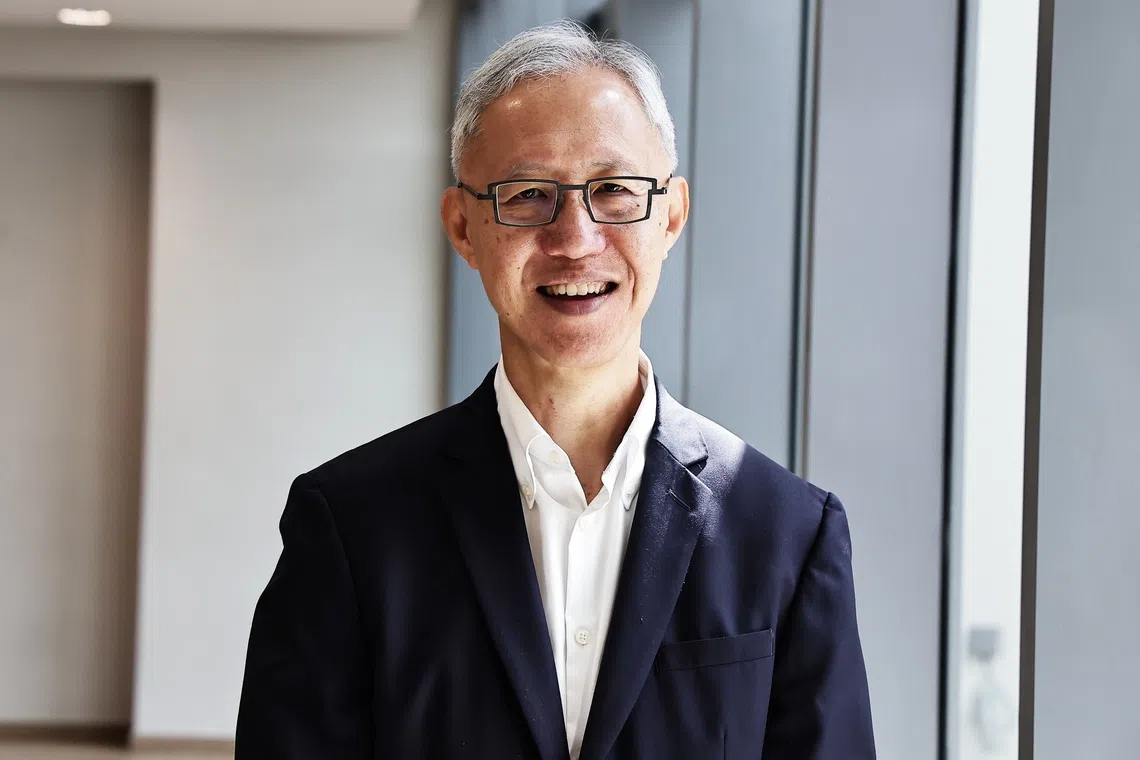
Professor Tan Cheng Han wears several hats, including senior consultant at Wong Partnership, and chief strategy officer at the NUS Law School.

Prof Tan wears several hats, including senior consultant at Wong Partnership, and chief strategy officer at the NUS Law School.

Mr Dinesh, the co-head of international arbitration practice at Allen and Gledhill, will be endorsed and approved by the council as vice-president.

The Law Society is a representative body for all lawyers in Singapore with about 6,400 members. Lawyers vote every October for a seat at the council, the highest body within the society responsible for managing its affairs.

The council typically comprises 15 elected members, three members appointed by the law minister, and another three co-opted by the council.

All council members serve a two-year term.

Under the Legal Profession Act, the law minister can appoint up to three members to sit on the council. Mr Dinesh was one of the three brought in this time.

Internal voting for the four office-bearers – the president, two vice-presidents and treasurer – is held every year among the council members.

In the document, the council said Mr Dinesh had contested for the position of president “in good faith and of his own desire, in an effort to contribute to the Bar”.

The council noted: “There is no issue as to the independence or competence of (Mr) Dinesh as president of the Law Society.

“In particular, his commitments to pro bono service and his efforts to serve the member of the Law Society are welcomed.”

The council said those who signed the document also acknowlege that Mr Dinesh was elected in accordance with established procedure and law under the Legal Profession Act.

The document was signed by several members, including former presidents Peter Cuthbert Low and Mr Chandra Mohan Nair, and criminal lawyer Sunil Sudheesan.

The lawyers had submitted a number of motions to be tabled at the EGM, including to place on record the view that only an elected council member should become president.

According to the document, the lawyers said that the issues raised in their proposed motions have been addressed, and they agreed to withdraw them for the EGM.

The only item on the agenda will be the consent resolution, which will see Mr Dinesh stepping aside and Prof Tan proposed as president.

The document noted that the “unity and cohesion of the Law Society council, along with its relations with all members of the Bar, are important, and this resolution is a step in the right direction”.

The council will circulate to all members proposed eligibility criteria for all council members within two months of taking office.

Members will have at least six weeks to review and provide feedback about the proposal, which will include a minimum service period requirement on the council for office bearers.

The final criteria will be tabled for approval by the members at the annual general meeting in 2026.
 

MinLaw looks forward to ‘full and thorough’ probe into allegations of workplace issues at Law Society​

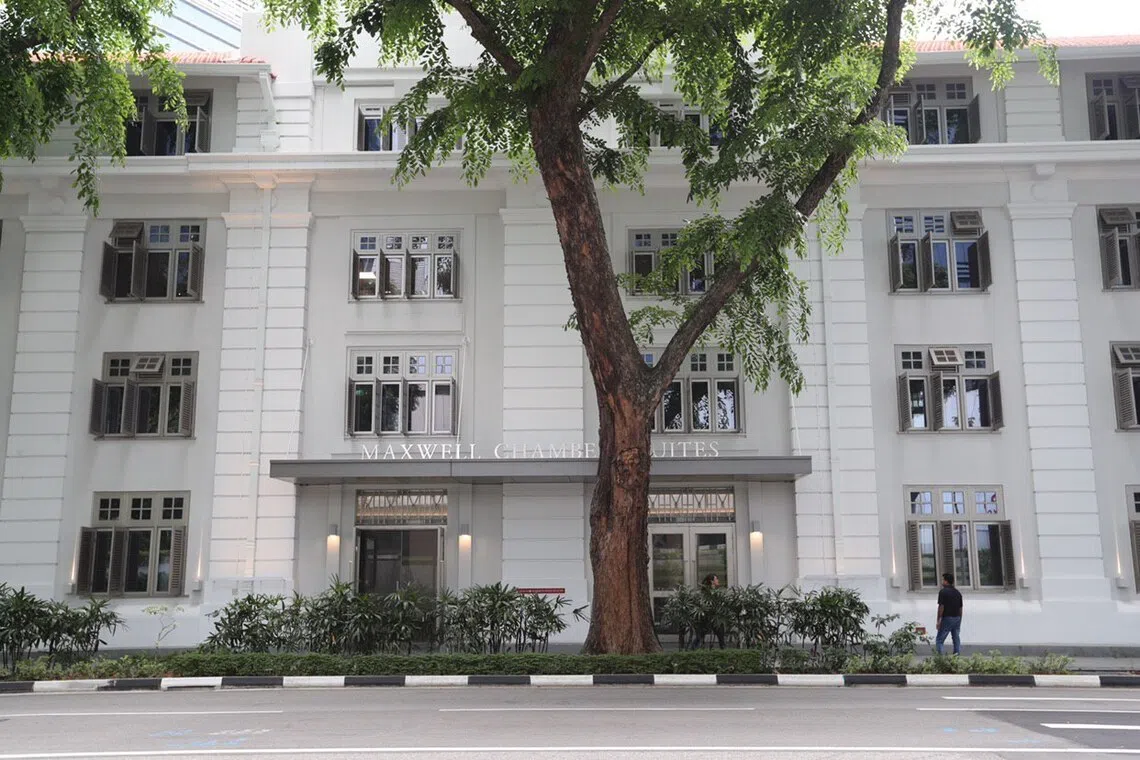
The Law Society of Singapore is the representative body for all lawyers in Singapore, with about 6,400 members.


The Law Society of Singapore is the representative body for all lawyers here, with about 6,400 members.

Dec 18, 2025

SINGAPORE – The Ministry of Law (MinLaw) on Dec 18 said it looks forward to a “full and thorough investigation” into allegations of workplace issues at the Law Society of Singapore, and to the probe being completed “as expeditiously as possible”.

Responding to queries from The Straits Times, a MinLaw spokesman said the ministry first received information regarding the allegations in September.

After receiving the information, the ministry sent the claims to the Law Society for review, “given the serious nature of these allegations”.

The spokesman said the Law Society is a statutory body established under the Legal Profession Act, and added that matters relating to internal workplace policies and conduct fall under the purview of the society’s management and council.

MinLaw said the Law Society informed it on Oct 11 that the matter had been referred to its audit committee for investigation, and that a report would be furnished to its council in due course.

“We requested to be kept informed of the findings,” the spokesman said.

“The ministry has not received any reports or findings to date from the Law Society, including the progress report which has been referred to in the media.

“We look forward to a full and thorough investigation into the allegations, to be completed as expeditiously as possible.”

The spokesman added that the ministry’s interest is in upholding Singapore’s standing as a leading legal hub built on strong institutions and high professional standards.

“We expect all organisations within the legal sector to uphold professionalism and maintain appropriate workplace standards,” the spokesman said.

ST had reported on Dec 16 that TSMP Law was commissioned by the Law Society to conduct investigations into allegations of workplace bullying at the organisation.

The society is the representative body for all lawyers in Singapore, with about 6,400 members.

The allegations had first appeared online.

TSMP’s joint managing partner, Senior Counsel Thio Shen Yi, confirmed that there was an ongoing probe, and said a progress report had been submitted to the audit committee. He declined to give further details.

Following ST’s report, the outgoing Law Society president, Ms Lisa Sam Hui Min, said in a LinkedIn post that she was asked to provide information to TSMP for the purpose of investigations.

She added in her post that she had repeatedly asked TSMP for written details of the allegations to no avail.

ST learnt that a number of issues were highlighted during the probe.

They include claims of excessive spending during overseas trips, and a complaint about how an allegation of sexual harassment was handled.

Ms Sam said in her post that she was “surprised and deeply troubled” because details of an independent, confidential process were provided to the press, even before she was given the details.

She also noted that some of the allegations in anonymous complaints had occurred even before her time in office.

Ms Sam, who has been president of the organisation since 2024, said she was “at a loss to understand what meaningful update on progress or interim report could have been provided”.

“The review must still be ongoing and nowhere near complete, given that TSMP (has) yet to provide me with written details of the actual allegations,” she added.
 
Back
Top