

- Joined
- Aug 20, 2022
- Messages
- 31,316
- Points
- 113
F&B industry mulls higher menu prices, offshoring and closures with wages set to rise
www.businesstimes.com.sg
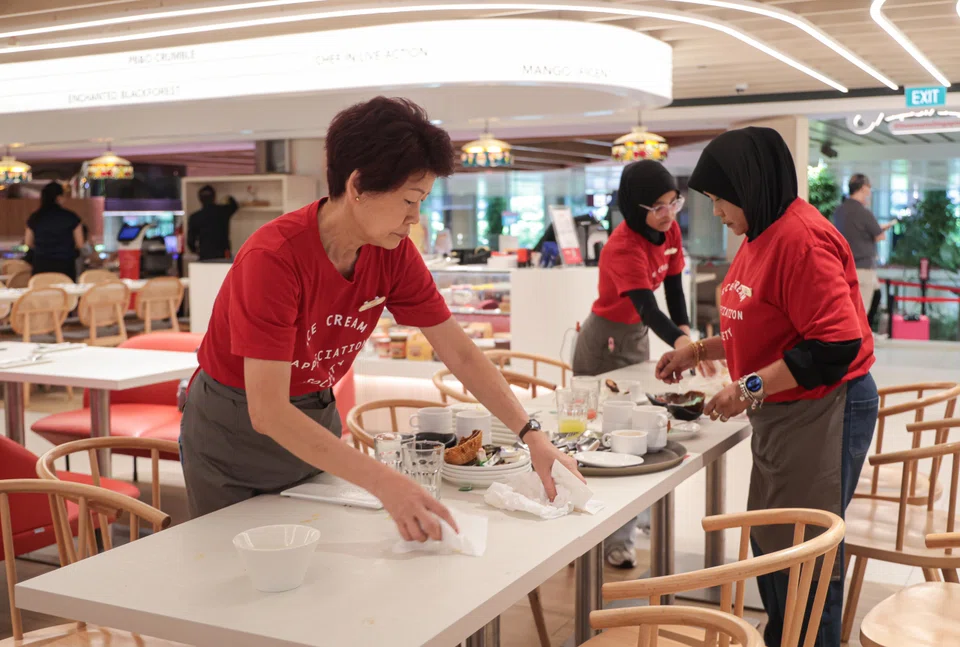 Companies may get co-funding support under a government scheme, but not all businesses will qualify
[SINGAPORE] With minimum salaries for food-services workers set to rise under upcoming Progressive Wage Model (PWM) updates, food and beverage (F&B) industry players and watchers anticipate higher menu prices, offshoring of some functions and further closures.
On Monday (Mar 16), the government announced a three-year schedule of wage increases under the food-services PWM for resident full-time and part-time workers, enforced through employers’ eligibility for foreign manpower work passes.
Boon Tong Kee director Jason Thian said that this will likely result in a 10 to 15 per cent increase in wages for Singaporean workers, with about 100 employees who will see salary hikes. This also takes into consideration overtime pay, “something inevitable in (the) current labour crunch”.
Dian Xiao Er will also need to adjust salaries under the PWM, primarily for front-line operational roles, said human resources manager Tay Jing Jing, adding that this will affect a “significant portion” of its workforce.
“While we are still assessing the exact figures, the overall cost increase is expected to be substantial, especially when considered across all outlets,” she said.
To manage costs, Tay said Dian Xiao Er will enhance its app and automation at its central kitchen; it will also continue to invest in training.
Rasel Catering pays above the baseline salaries to “fairly compensate and retain” its team, said co-owner Chris Loh.
Khoh Wan Chin, chief executive officer of In Great Company Group, which operates ice cream brand Creamier, said it has been paying above the minimum for the last eight years.
“Rising wage benchmarks across the industry will increase overall staffing costs and expectations, creating a ripple effect on our operations,” said Loh, noting “some concern” that the PWM increases will affect the competitiveness of its rates.
Association of Small & Medium Enterprises (Asme) president Ang Yuit pointed out that PWM increases are not strictly mandatory; businesses can pay below the stipulated salaries if they do not need foreign manpower.
But Khoh said locals do not want careers in F&B. She noted that while blue-collar jobs reserved for locals are “so bountiful that it degrades work commitment” and leads to job-hopping, foreigners value the opportunity to hold a good job.
“The reality is that the industry is facing rising costs on multiple fronts, including rent, utilities and manpower,” said Dellen Soh, chairman and CEO of Minor Food, which operates brands such as Poulet and Thai Express.
“And many operators are reaching the limit of what the current cost structure can sustain.”
Existing cost pressures will be compounded by geopolitical tensions in the Middle East that are driving up energy and materials costs, said a Restaurant Association of Singapore (RAS) spokesperson.
Asme’s Ang believes more businesses may increasingly offshore back-end operations, such as finance and human resources, to bring down overall costs, since front-end costs are going to rise.
Noting that government grants are for small businesses to outsource food preparation to larger players, Khoh is worried that this will boost big players at the expense of small independent businesses and “multi-faceted food culture that needs artisanal skills”.
The landscape may also change, with slower expansions – or more exits, as even survival may be a struggle for some.
“Chains may be less aggressive in expansion as margins come down,” Ang said.
The wage increases will continue to pressure businesses to think carefully about their business models. As more are “looking at the projections and realising that it won’t be feasible”, more food establishments will close, he added.
Boon Tong Kee’s Thian believes that “increasing productivity and cost-cutting no longer suffice” with attrition in the industry. The company must identify its edge, and cut non-profitable business units “if push comes to shove”.
Said Khoh: “Businesses that can pass down the costs will survive. Businesses that can’t will not.”
Loh said that Rasel Catering will continue to optimise operational efficiency and manpower deployment, but rising costs “leave (it) no choice but to review pricing and pass on necessary increases to consumers”.
“There is only so much productivity and automation can do,” the RAS spokesperson said, echoing the expectation of menu price increases.
Khoh believes consumers are “on the losing end”, and cost-of-living support from the government “can only do so much”.
Still, the government has emphasised that the scheme is meant to provide transitional support and aims to be a catalyst, not a substitute, for productivity improvement.
Thian noted that Boon Tong Kee will still need to forecast the increments and find means to defray the costs, as PWCS is credited after salaries are paid out.
“Operating cash flow will be greatly affected if not managed properly,” he said.
RAS also pointed out that not all businesses may be eligible for the support. The government announced in Budget 2026 that the minimum qualifying threshold for wage increases will be raised from S$100 to S$200 for qualifying years 2027 and 2028.
This S$200 minimum requirement is a “significant hurdle for operators”, when the PWM is mandating a S$140 increment across most positions, the RAS spokesperson said, adding that he hopes the government can review and enhance the support.
For Minor Food’s Soh, balancing both sides is key. “While we fully support fair wages and career progression for workers, it is important that the overall cost structure of the industry remains sustainable so that businesses can continue operating, investing and creating employment opportunities in the long run.”
Decoding Asia newsletter: your guide to navigating Asia in a new global order. Sign up here to get Decoding Asia newsletter. Delivered to your inbox. Free.
www.businesstimes.com.sg
Elysia Tan
Published Wed, Mar 18, 2026 · 07:08 PM
[SINGAPORE] With minimum salaries for food-services workers set to rise under upcoming Progressive Wage Model (PWM) updates, food and beverage (F&B) industry players and watchers anticipate higher menu prices, offshoring of some functions and further closures.
On Monday (Mar 16), the government announced a three-year schedule of wage increases under the food-services PWM for resident full-time and part-time workers, enforced through employers’ eligibility for foreign manpower work passes.
Boon Tong Kee director Jason Thian said that this will likely result in a 10 to 15 per cent increase in wages for Singaporean workers, with about 100 employees who will see salary hikes. This also takes into consideration overtime pay, “something inevitable in (the) current labour crunch”.
Dian Xiao Er will also need to adjust salaries under the PWM, primarily for front-line operational roles, said human resources manager Tay Jing Jing, adding that this will affect a “significant portion” of its workforce.
“While we are still assessing the exact figures, the overall cost increase is expected to be substantial, especially when considered across all outlets,” she said.
To manage costs, Tay said Dian Xiao Er will enhance its app and automation at its central kitchen; it will also continue to invest in training.
Spillover effect
As they jostle for limited manpower, some F&B companies already pay above the minimum salaries set out by the PWM just to secure staff. But this does not mean they are unaffected.Rasel Catering pays above the baseline salaries to “fairly compensate and retain” its team, said co-owner Chris Loh.
Khoh Wan Chin, chief executive officer of In Great Company Group, which operates ice cream brand Creamier, said it has been paying above the minimum for the last eight years.
“Rising wage benchmarks across the industry will increase overall staffing costs and expectations, creating a ripple effect on our operations,” said Loh, noting “some concern” that the PWM increases will affect the competitiveness of its rates.
Association of Small & Medium Enterprises (Asme) president Ang Yuit pointed out that PWM increases are not strictly mandatory; businesses can pay below the stipulated salaries if they do not need foreign manpower.
But Khoh said locals do not want careers in F&B. She noted that while blue-collar jobs reserved for locals are “so bountiful that it degrades work commitment” and leads to job-hopping, foreigners value the opportunity to hold a good job.
At their limits
Watchers and players alike acknowledged the need to support local workers, but they are worried about the impact of higher costs.“The reality is that the industry is facing rising costs on multiple fronts, including rent, utilities and manpower,” said Dellen Soh, chairman and CEO of Minor Food, which operates brands such as Poulet and Thai Express.
“And many operators are reaching the limit of what the current cost structure can sustain.”
Existing cost pressures will be compounded by geopolitical tensions in the Middle East that are driving up energy and materials costs, said a Restaurant Association of Singapore (RAS) spokesperson.
Asme’s Ang believes more businesses may increasingly offshore back-end operations, such as finance and human resources, to bring down overall costs, since front-end costs are going to rise.
Noting that government grants are for small businesses to outsource food preparation to larger players, Khoh is worried that this will boost big players at the expense of small independent businesses and “multi-faceted food culture that needs artisanal skills”.
The landscape may also change, with slower expansions – or more exits, as even survival may be a struggle for some.
“Chains may be less aggressive in expansion as margins come down,” Ang said.
The wage increases will continue to pressure businesses to think carefully about their business models. As more are “looking at the projections and realising that it won’t be feasible”, more food establishments will close, he added.
Boon Tong Kee’s Thian believes that “increasing productivity and cost-cutting no longer suffice” with attrition in the industry. The company must identify its edge, and cut non-profitable business units “if push comes to shove”.
Said Khoh: “Businesses that can pass down the costs will survive. Businesses that can’t will not.”
Loh said that Rasel Catering will continue to optimise operational efficiency and manpower deployment, but rising costs “leave (it) no choice but to review pricing and pass on necessary increases to consumers”.
“There is only so much productivity and automation can do,” the RAS spokesperson said, echoing the expectation of menu price increases.
Khoh believes consumers are “on the losing end”, and cost-of-living support from the government “can only do so much”.
Seeking support
Some help comes in the form of the Progressive Wage Credit Scheme (PWCS), which co-funds wage increases under the PWMs. In this year’s Budget, the scheme was extended by two years to 2028.Still, the government has emphasised that the scheme is meant to provide transitional support and aims to be a catalyst, not a substitute, for productivity improvement.
Thian noted that Boon Tong Kee will still need to forecast the increments and find means to defray the costs, as PWCS is credited after salaries are paid out.
“Operating cash flow will be greatly affected if not managed properly,” he said.
RAS also pointed out that not all businesses may be eligible for the support. The government announced in Budget 2026 that the minimum qualifying threshold for wage increases will be raised from S$100 to S$200 for qualifying years 2027 and 2028.
This S$200 minimum requirement is a “significant hurdle for operators”, when the PWM is mandating a S$140 increment across most positions, the RAS spokesperson said, adding that he hopes the government can review and enhance the support.
For Minor Food’s Soh, balancing both sides is key. “While we fully support fair wages and career progression for workers, it is important that the overall cost structure of the industry remains sustainable so that businesses can continue operating, investing and creating employment opportunities in the long run.”
Decoding Asia newsletter: your guide to navigating Asia in a new global order. Sign up here to get Decoding Asia newsletter. Delivered to your inbox. Free.


