• IP addresses are NOT logged in this forum so there's no point asking. Please note that this forum is full of homophobes, racists, lunatics, schizophrenics & absolute nut jobs with a smattering of geniuses, Chinese chauvinists, Moderate Muslims and last but not least a couple of "know-it-alls" constantly sprouting their dubious wisdom. If you believe that content generated by unsavory characters might cause you offense PLEASE LEAVE NOW! Sammyboy Admin and Staff are not responsible for your hurt feelings should you choose to read any of the content here.

    The OTHER forum is HERE so please stop asking.

EV is like mRNA vaccines

Ng Cheh Hwang

Alfrescian
Loyal
Joined
Oct 5, 2018
Messages
19,726
Points
113
The amount of resources and pollution it takes to make an EV is 3-5 times that of a conventional ICE(petrol) vehicle.

Then came the amount of inconvenience to own an EV, spending numerous hours charging and unable to cold start in winter. EV owners ended up spending more time thinking about their cars than their parents.

Of course, with government policies advocating EVs over petrol-vehicles, EVs were priced cheaper and given more tax concessions to encourage the adoption. More silly with Petrol + EV which complicate the vehicle and creates more flaws.

It kinda reminds me of the mRNA vaccine days. Logic and common sense told us that the efficacy benefits were over-rated and it was side-effects aplenty but government policies advocated it and pushed it down our throats.
 
IMG_8188.jpeg
 
If u really buy EV, I think only Tesla is worth it
At least there is 10yrs of reliability record
 
The amount of resources and pollution it takes to make an EV is 3-5 times that of a conventional ICE(petrol) vehicle.

Then came the amount of inconvenience to own an EV, spending numerous hours charging and unable to cold start in winter. EV owners ended up spending more time thinking about their cars than their parents.

Of course, with government policies advocating EVs over petrol-vehicles, EVs were priced cheaper and given more tax concessions to encourage the adoption. More silly with Petrol + EV which complicate the vehicle and creates more flaws.

It kinda reminds me of the mRNA vaccine days. Logic and common sense told us that the efficacy benefits were over-rated and it was side-effects aplenty but government policies advocated it and pushed it down our throats.
Lol your LLM stuck in 2015?

Now 2025 already. Wake up from your slumber.
 
It's all based on lies. The anti-carbon cult takes instructions from their Davos masters.

Follow the money and you will know the truth.

 
Cheapest Tesla Model 3 is about $190K now
Basic Honda civic costs even more.

Model Y is about $230K
2.5L Honda costs even more
Accord is $300K
New car and inclusive of COE ? But Toyota rav4 is cheaper than model y ?
 
The amount of resources and pollution it takes to make an EV is 3-5 times that of a conventional ICE(petrol) vehicle.

Then came the amount of inconvenience to own an EV, spending numerous hours charging and unable to cold start in winter. EV owners ended up spending more time thinking about their cars than their parents.

Of course, with government policies advocating EVs over petrol-vehicles, EVs were priced cheaper and given more tax concessions to encourage the adoption. More silly with Petrol + EV which complicate the vehicle and creates more flaws.

It kinda reminds me of the mRNA vaccine days. Logic and common sense told us that the efficacy benefits were over-rated and it was side-effects aplenty but government policies advocated it and pushed it down our throats.
Wot idiocy.
EV's usage increases air quality in urban areas.
The chinese petrol + EV is remarkable.
The petrol engine used occasionally on long distance trips or when battery runs out sbd tuned to Operate at maximum efficiency at controlled rpm and only to charge the batteries achieving 47% efficiency at all times .
Its not like other petrol engine in ICE cars where its rpm may vary from 800 -5000rpm and efficiency range from 30-47%.
And if you have hone chargers, in town you font really need to use the petrol. Engine. Just charge every night or two nights.
Data centres and AI uses a lot of power. If you want to save the planet, dont use the web.
 
Wot idiocy.
EV's usage increases air quality in urban areas.
The chinese petrol + EV is remarkable.
The petrol engine used occasionally on long distance trips or when battery runs out sbd tuned to Operate at maximum efficiency at controlled rpm and only to charge the batteries achieving 47% efficiency at all times .
Its not like other petrol engine in ICE cars where its rpm may vary from 800 -5000rpm and efficiency range from 30-47%.
And if you have hone chargers, in town you font really need to use the petrol. Engine. Just charge every night or two nights.
Data centres and AI uses a lot of power. If you want to save the planet, dont use the web.
And you can died suddenly,just like mRNA.

FB_IMG_1762406512975.jpg
 
The amount of resources and pollution it takes to make an EV is 3-5 times that of a conventional ICE(petrol) vehicle.

Then came the amount of inconvenience to own an EV, spending numerous hours charging and unable to cold start in winter. EV owners ended up spending more time thinking about their cars than their parents.

Of course, with government policies advocating EVs over petrol-vehicles, EVs were priced cheaper and given more tax concessions to encourage the adoption. More silly with Petrol + EV which complicate the vehicle and creates more flaws.

It kinda reminds me of the mRNA vaccine days. Logic and common sense told us that the efficacy benefits were over-rated and it was side-effects aplenty but government policies advocated it and pushed it down our throats.

The claim that manufacturing an electric vehicle (EV) requires 3-5 times the resources and pollution of a conventional internal combustion engine (ICE) vehicle is overstated and not supported by most lifecycle assessments (LCAs). While EVs do have a higher upfront environmental impact—primarily due to battery production—the multiplier is typically 1.3-2 times higher for greenhouse gas (GHG) emissions during manufacturing, depending on the study and region. Broader "pollution" (e.g., including non-GHG pollutants) or resource extraction can push this slightly higher in some cases, but rarely reaches 3-5 times. Over a vehicle's full lifecycle (including use and disposal), EVs emit 50-78% fewer GHGs than ICE vehicles, especially as grids decarbonize.Key Factors in Manufacturing ImpactsEV production is more resource- and emissions-intensive upfront because:

  • Battery materials: Mining and processing lithium, cobalt, nickel, and graphite require significant energy and water, often in fossil-fuel-dependent regions like China (where ~70% of batteries are made).
  • Energy use: Battery assembly is energy-hungry, contributing ~30-50% of an EV's total manufacturing emissions.
  • Vehicle assembly: EVs have fewer parts (no engine/transmission), but the battery adds weight and complexity.
In contrast, ICE vehicles have higher impacts from steel/aluminum for engines and exhaust systems, but these are offset by the lack of battery production.Data from Reliable LCAsHere's a comparison of manufacturing GHG emissions based on recent studies (focusing on mid-size sedans/SUVs; values in kg CO₂e per vehicle):


Lifecycle PerspectiveThe upfront hit is quickly offset:

  • EVs break even on emissions after 13,000-30,000 miles (1-2 years average driving).
  • Total lifecycle: EVs emit 20-40 tons CO₂e less over 150,000-200,000 miles.
  • Future improvements: Cleaner battery production (e.g., via renewables) could cut EV manufacturing emissions 50% by 2030.
In short, while EVs aren't perfect, the 3-5x claim exaggerates the manufacturing gap to downplay their overall benefits. For context-specific advice (e.g., your local grid), tools like the EPA's emissions calculator can help.
 
Samsters have this satik car?

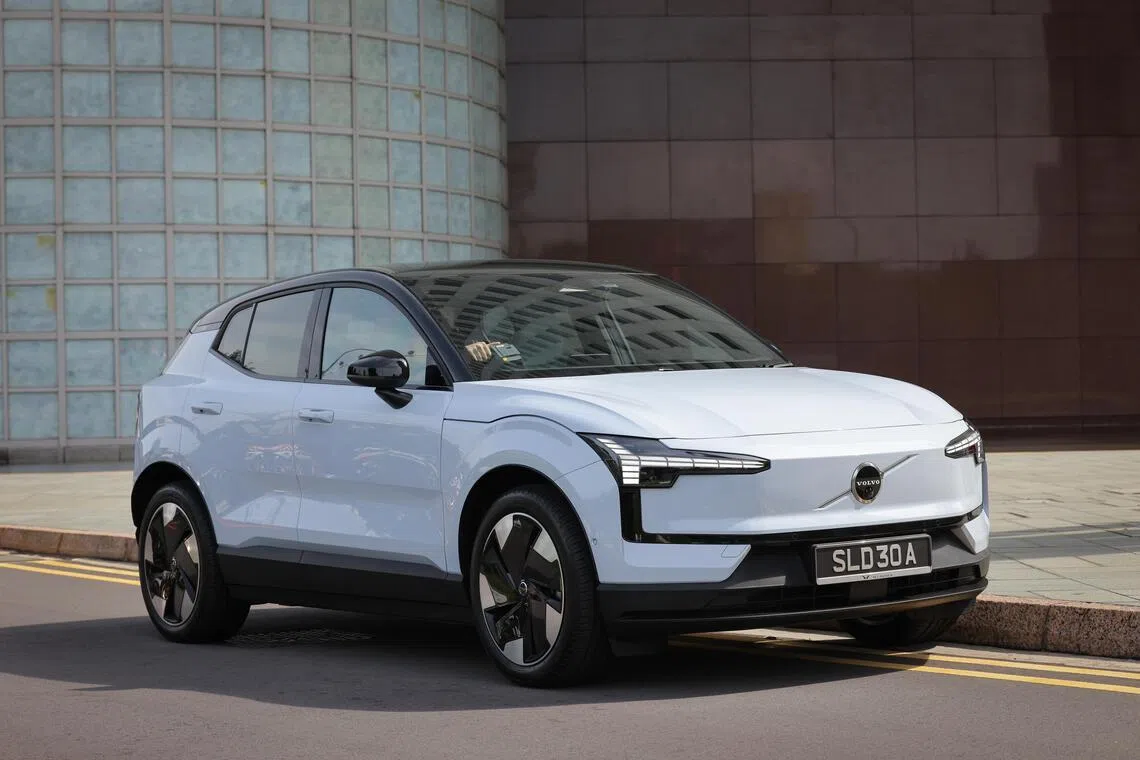
Volvo identifies battery fire risk in EX30 Ultra EVs; owners told to limit charging to 70%​

Get ST's newsletters delivered to your inbox
Only some of the 200kW, Category B COE version of the Volvo EX30 are affected in Singapore.

Only some of the 200kW, "Category B COE" version of the Volvo EX30 are affected in Singapore.

ST PHOTO: ONG WEE JIN


Follow topic:​

Electric and hybrid vehicles

Summary
  • Volvo advises 143 Singapore EX30 Ultra owners to limit charging to 70% due to a battery fire risk, part of a global recall.
  • The recall affects 33,777 vehicles globally, specifically the 200kW (Category B COE) version, but no incidents reported in Singapore.
  • Volvo will notify owners of a permanent fix; Zeekr X, sharing components, is unaffected due to a different battery.
AI generated


Published Jan 15, 2026, 12:35 PM
Updated Jan 15, 2026, 02:30 PM

SINGAPORE – Some 143 owners of the Volvo EX30 Ultra electric car in Singapore are being advised not to charge their vehicles beyond 70 per cent due to a fire risk linked to a battery defect.

This is an interim solution while Volvo develops a permanent fix.

The Swedish carmaker said it will notify affected owners once a permanent solution is available and advise them if a physical recall is required.
 
Another IQ test?

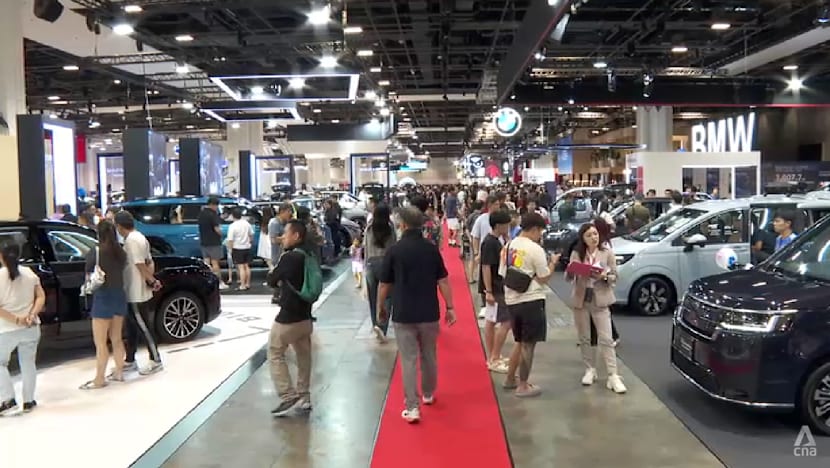
Growing buzz around EVs draws 25% more visitors to Singapore Motorshow​

More players are expected to enter the luxury EV market to meet growing demand in Singapore, said carmakers.
Growing buzz around EVs draws 25% more visitors to Singapore Motorshow

This year's Singapore Motorshow at the Suntec Singapore Convention & Exhibition Centre featured 37 automotive brands and over 200 vehicle models, with the bulk of exhibitors showcasing electric or hybrid models.


Listen
6 min
New: You can now listen to articles.
close.svg


Calvin Yang
Eugene Chow
Eugene Chow & Calvin Yang
12 Jan 2026 04:43PM (Updated: 12 Jan 2026 11:00PM)
BookmarkShare

Read a summary of this article on FAST.


FAST
SINGAPORE: Growing interest in electric vehicles (EVs) drew larger crowds to this year’s Singapore Motorshow.

Attendance at the four-day event, which ended on Sunday (Jan 11), rose by about 25 per cent compared to last year. The increase was driven by increasing consumer interest in EVs, including those from Chinese brands, the organiser said.
 
Samsters have this satik car?

Volvo identifies battery fire risk in EX30 Ultra EVs; owners told to limit charging to 70%​

Get ST's newsletters delivered to your inbox
Only some of the 200kW, Category B COE version of the Volvo EX30 are affected in Singapore.

Only some of the 200kW, "Category B COE" version of the Volvo EX30 are affected in Singapore.

ST PHOTO: ONG WEE JIN


Follow topic:​

Electric and hybrid vehicles

Summary
  • Volvo advises 143 Singapore EX30 Ultra owners to limit charging to 70% due to a battery fire risk, part of a global recall.
  • The recall affects 33,777 vehicles globally, specifically the 200kW (Category B COE) version, but no incidents reported in Singapore.
  • Volvo will notify owners of a permanent fix; Zeekr X, sharing components, is unaffected due to a different battery.
AI generated


Published Jan 15, 2026, 12:35 PM
Updated Jan 15, 2026, 02:30 PM

SINGAPORE – Some 143 owners of the Volvo EX30 Ultra electric car in Singapore are being advised not to charge their vehicles beyond 70 per cent due to a fire risk linked to a battery defect.

This is an interim solution while Volvo develops a permanent fix.

The Swedish carmaker said it will notify affected owners once a permanent solution is available and advise them if a physical recall is required.
heng ah, I didn't buy this. Want to buy EV, stick to BYD, Xpeng, Zeekr.
 
Back
Top