
• IP addresses are NOT logged in this forum so there's no point asking. Please note that this forum is full of homophobes, racists, lunatics, schizophrenics & absolute nut jobs with a smattering of geniuses, Chinese chauvinists, Moderate Muslims and last but not least a couple of "know-it-alls" constantly sprouting their dubious wisdom. If you believe that content generated by unsavory characters might cause you offense PLEASE LEAVE NOW! Sammyboy Admin and Staff are not responsible for your hurt feelings should you choose to read any of the content here.

    The OTHER forum is HERE so please stop asking.

Dutch court convicts mother of war crimes for letting son become an Islamic State fighter

duluxe

Alfrescian
Loyal
Joined
Mar 11, 2013
Messages
17,380
Points
113


A district court in The Hague on Friday convicted a 49-year-old Dutch woman of war crimes and sentenced her to seven years in prison for allowing her then 14-year-old son to become a fighter for Islamic State.
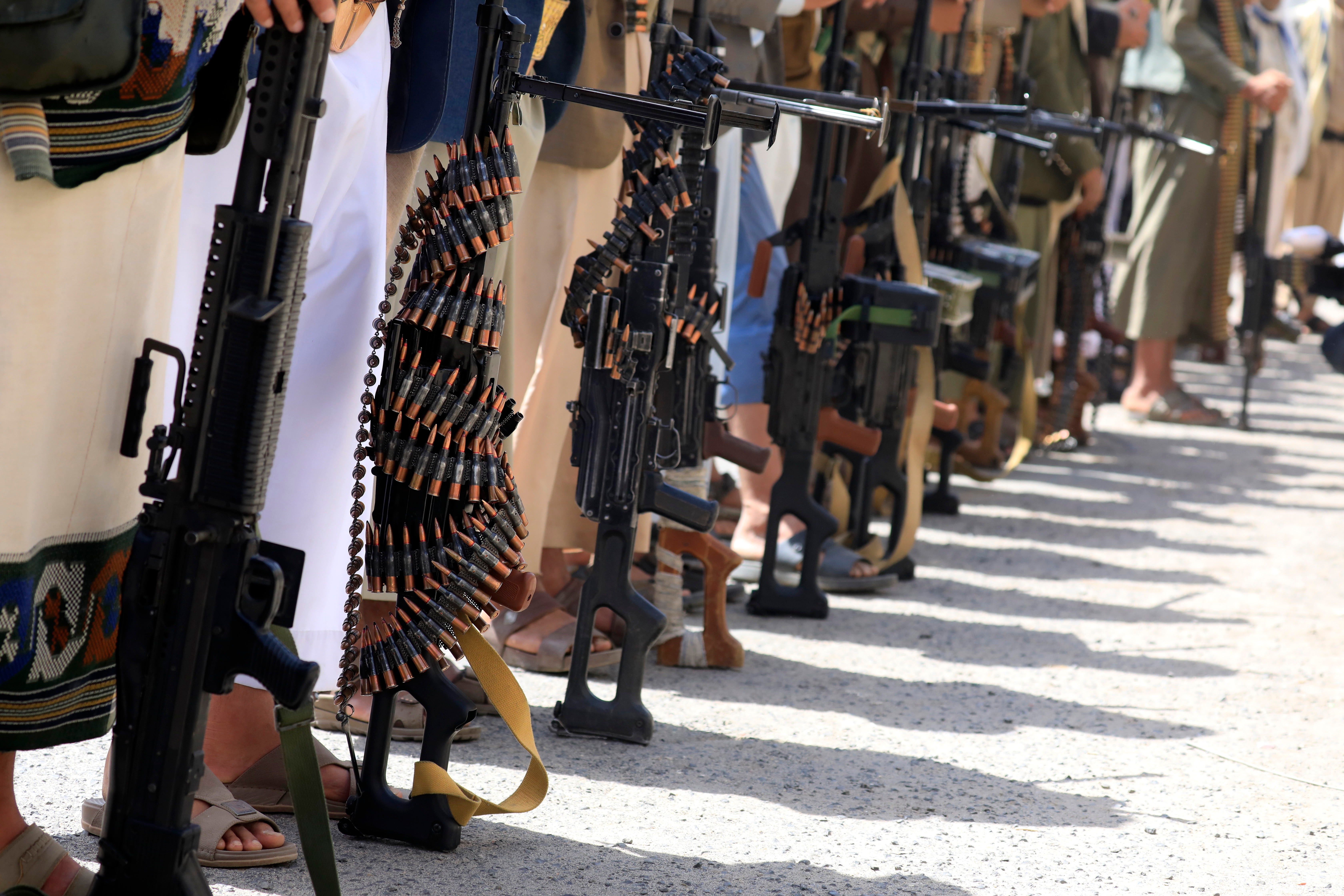

Armed tribesmen hold machine guns during an anti-US and anti-Israel gathering mobilizing more fighters, in Sana'a, Yemen, 06 April 2026. Yemen's Houthis have been recruiting more fighters as part of a mobilization campaign in anticipation of a possible confrontation with the United States and Israel amid current regional tensions. The Houthis have launched missile-drone attacks against Israel in support of Iran and its allied groups in the Middle East. EPA/YAHYA ARHAB

The woman, identified only as Ayada K., was convicted of the war crime of aiding and abetting the recruitment of a child soldier by allowing a minor to take up arms for Islamic State, the court said in a press release.

She was also convicted of aiding and abetting a terrorist organisation and endangering her minor children.

K. took her teenage son and daughter from the Netherlands to live in Islamic State-held territory in Syria in 2014. Judges say she then let her son join the Islamic State military police at 14. He died two years later while serving in an Islamic State military unit, according to the verdict.

During the trial K. invoked her right to remain silent. After the fall of Islamic State in 2019 she remained in Syria until she was repatriated in 2024 with her remaining children and arrested on arrival.
 
  • Like
Reactions: Nut
dutch rule in indonesia


+13


The Dutch occupation of Indonesia began in the early 17th century as a trading venture and evolved into 347 years of colonial rule over the archipelago, known as the Dutch East Indies. This era was marked by intense resource exploitation, forced labor, and a brutal independence war, permanently shaping the modern Indonesian nation
 
dutch rule in indonesia


+13


The Dutch occupation of Indonesia began in the early 17th century as a trading venture and evolved into 347 years of colonial rule over the archipelago, known as the Dutch East Indies. This era was marked by intense resource exploitation, forced labor, and a brutal independence war, permanently shaping the modern Indonesian nation

They already balik kampung for coming to 100 years. Why you think is still an issue?
 
Now the Dutch thieves are getting poorer and poorer because they have spent all the looted money from the Indonesians
Dulux contribute to the Dutch and work for them for free


The total economic and human cost of Dutch colonization in Indonesia is staggering, spanning over 300 years of extraction, forced labor, and severe wartime losses. The Dutch established monopolies, created the Cultuurstelsel (Forced Cultivation System), and extracted an estimated $31 trillion in today's wealth through the systematic drain of natural resources.

Evaluating the total cost effect involves looking at several key factors:

1. Extracted Wealth & "Colonial Drain"

  • Macro-economic Impact: Economists and Indonesian officials estimate the wealth extracted by the Dutch East India Company (VOC) and later the Dutch colonial government at roughly $31 trillion in modern terms.
  • The Cultuurstelsel: During the 19th century, this forced planting system required Indonesian farmers to dedicate a fifth of their land to export crops. At its peak, this single policy contributed up to 30% of the Netherlands' GDP.
  • Resource Plunder: The archipelago was effectively stripped of spices, coffee, sugar, tea, rubber, tin, and oil, heavily financing the Netherlands’ post-17th-century "Golden Age" and subsequent industrialization.

2. The Cost of Independence & Debt
  • Debt Transfer: To secure full sovereignty in 1949, newly independent Indonesia was pressured by the UN and the United States into assuming a staggering 4.3 billion guilders (roughly $1.13 billion at the time) in Dutch colonial debt.
  • Paying for Colonization: This debt largely covered the costs of the Dutch military administration and the wars waged by the Netherlands to crush the Indonesian independence movement. This massive financial drain crippled the early Republic's capacity to invest in its own infrastructure and social services.

3. Demographic & Human Cost
  • Wars of Subjugation: The Dutch conquest of the archipelago resulted in immense loss of life. During the colonial wars in the 19th and early 20th centuries, estimates range from hundreds of thousands to up to 4 million deaths directly from warfare or indirectly from resulting famine and disease.
  • Exploitation: The economic structure left the indigenous population largely impoverished, with limited rights, land, or access to higher education, treating them as second-class citizens in their own country.

4. Long-Term Economic Structures
  • Underdevelopment: The Dutch fostered a "dual economy" where European plantations and businesses thrived, while the indigenous agricultural sector was largely kept at a subsistence level.
  • Export-Driven Vulnerability: The economy was heavily tilted toward raw material exports, leaving the region highly vulnerable to global commodity price crashes.
While the Dutch did construct some early infrastructure (such as railways and limited road networks), historians largely agree this infrastructure was primarily designed to facilitate the extraction and exportation of wealth to Europe rather than to benefit the local population.
 
Back
Top