

- Joined
- Aug 20, 2022
- Messages
- 32,144
- Points
- 113
David Neo watches Dear You with seniors amid backlash over Parliament remark
Acting Minister David Neo attended a Tampines screening of Dear You, days after telling Parliament ministers had no time to watch movies, prompting renewed criticism online.The Online Citizen15 Jul 2026
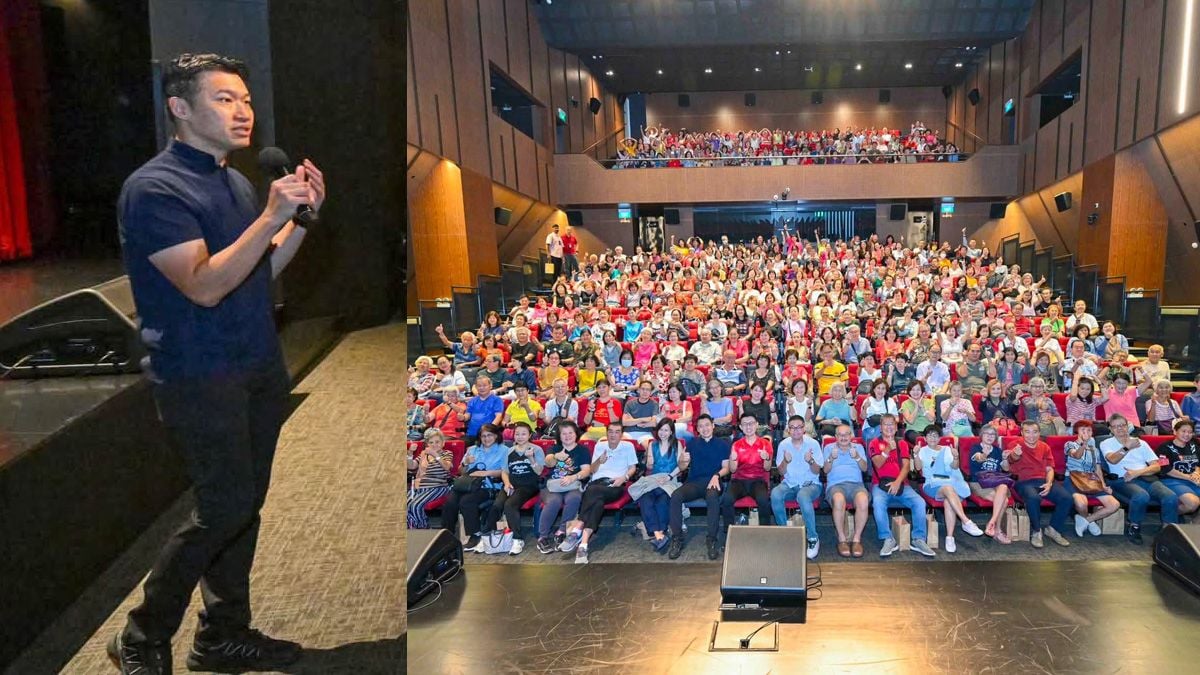
Acting Minister for Culture, Community and Youth David Neo attended a community screening of the Teochew-dialect film Dear You in Tampines, as an outing that drew fresh criticism online despite his attempt to engage with the dialect-film debate.
Neo described the event in a social media post on 14 July 2026,, writing that there was laughter, touching moments and conversations sparked about family and memories.
He said his personal takeaway was the phrase 做人要有情义, which he described as living with loyalty and heartfelt regard for others.
The post followed a Parliament sitting on 7 July, 2026, at which Neo told Aljunied GRC MP Kenneth Tiong that ministers had no time to watch movies, when asked whether he had watched Dear You.
That remark and his latest post prompted a wave of criticism from Reddit users, many of whom accused Neo of contradicting himself by attending the Tampines screening. Commenters questioned whether he had misled Parliament and called for a formal inquiry into the remark.
Some users described the screening as a public relations exercise staged only after public backlash, with several suggesting the outing amounted to a photo opportunity rather than a genuine change of heart. Others noted that comments on the original Instagram post appeared to be limited.
A minority of commenters defended Neo, arguing that attending a community event as part of his ministerial duties did not necessarily contradict his earlier remark, and that ministers often have limited personal time.
Members of the arts and heritage community had already criticised the no time remark, arguing it reflected a disconnect between policymakers and Singapore's cultural sector.
Veteran film producer Daniel Yun wrote on Facebook that the remark carried something dismissive, and implied that the arts, media and entertainment were considered lower priority. He said he took offence as a pioneer filmmaker.
Film director Eric Wong argued that films did more than entertain, saying they built empathy and preserved languages, traditions and shared memories. He urged political leaders to watch more films.
Heritage researcher Khoo Ee Hoon said popular culture should not be treated as trivial, and that Neo's response suggested a disconnect from ordinary Singaporeans. She suggested a more empathetic answer would have acknowledged public interest in the issue.
Publisher Denon Lim and social sector leader Samuel Ng, writing separately in Mandarin, said the remark had touched a nerve and that the film had become a cultural phenomenon extending beyond a typical cinema release, reconnecting generations through language and family memory.
Author Crystal Lim-Lange said the remark was not a good joke and risked trivialising an issue tied closely to cultural identity, though she added that Neo did not necessarily need to have watched the film himself.
The original Parliament exchange also touched on the Speak Mandarin Campaign and restrictions on dialect content. Neo said the campaign had enabled Chinese Singaporeans from different dialect backgrounds to communicate more easily.
The Government also told Parliament that the Infocomm Media Development Authority is reviewing the film classification framework governing the use of dialects, though it stopped short of committing to lift existing restrictions.
In his latest post, Neo said Singapore had been built on the hard work of an earlier generation, and that his ministry and heritage organisations had encouraged young Singaporeans to learn their dialect heritage alongside Mandarin.
"We do not have to choose one over the other, they each have a place in telling the Singapore story", Neo wrote, adding that he was grateful for volunteers and the North East Community Development Council for organising the screening.


