

- Joined
- Aug 20, 2022
- Messages
- 32,516
- Points
- 113
Crowding and waiting times, air-con in trains among 3 areas for improvement on public transport: PTC
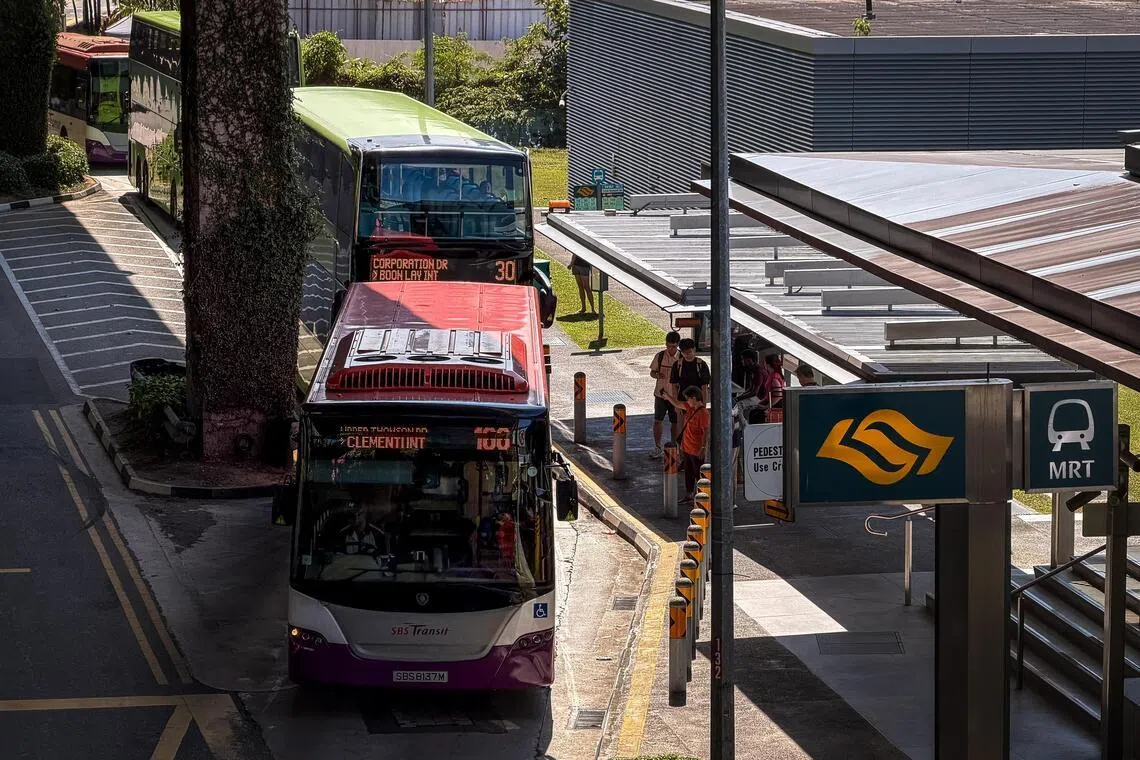
The Public Transport Council said it will continue to strengthen efforts to foster a more gracious commuting culture.
ST PHOTO: GAVIN FOO
Published Jul 20, 2026, 12:05 PM
Updated Jul 20, 2026, 02:54 PM
SINGAPORE – Three key areas on the public transport network have been identified for improvement, including crowding in buses and trains, irregular bus waiting times, and uneven air-conditioning on the MRT.
Courtesy and consideration shown by other commuters on buses and trains was another area of concern, said the Public Transport Council (PTC), in a statement on July 20.
The pain points were identified based on findings from the public transport customer satisfaction survey and feedback from focus groups, PTC added.
Commuters honed in on irregular bus waiting times and difficulty in boarding crowded buses and trains as a key concern, and wanted more accurate and timely information on bus and train arrival timings, to help them better plan their journeys.
Being able to choose less crowded services and wait a shorter time for their train or bus services are also on the commuter wishlist, PTC said.
The survey found that peak-hour crowding on buses was felt most acutely by those travelling with young children or mobility aids like wheelchairs.
Commuters cited unreliable bus arrival information as a source of frustration, with services sometimes feeling inconsistent because buses were arriving quickly one after another, or at irregular intervals.
As for train services, commuters felt carriages appeared increasingly packed, and there were not always enough trains running to keep up with commuter demand.
To address these issues, commuters called for trains to arrive more frequently, longer trains or more of them added to the fleet, and better crowd management.
The parts of island covered by the bus network and the frequency of bus services have become better under the Bus Connectivity Enhancement Programme, and rail capacity has been beefed up with the Thomson-East Coast Line, but crowdedness and waiting times remain an issue for commuters, PTC added
Launched in July 2024, the $900 million bus programme will beef up the network from 2024 to 2031, with a key focus on expanding services in newer housing estates islandwide.
So far, there have been 35 new or extended bus services rolled out, and improvements made to 71 existing services.
PTC said the Land Transport Authority (LTA) has been adding more double-decker buses to the fleet, which means more than 40 per cent of buses on the road have a larger passenger load.
Recruiting and keeping bus drivers are key challenges for transport operators, the survey found. The problem is tied to the ability to keep services reliable during traffic delays or unexpected staff absences, PTC added.
Commuters are also affected by how others do not give way or move in on the bus and train, even when there is space. That is why some passengers are unable to board the first service that arrives and need to wait for the next bus or train, PTC said.
PTC added that it will engage LTA, commuters and operators on ways to further improve boarding efficiency, including using the rear door for boarding on buses or deploying marshals or digital screens at busier train platforms to guide passengers to less crowded train carriages.
It added that passenger load indicators, similar to the one on the Downtown Line, could be deployed to all MRT lines to better assist passengers in picking a less crowded carriage to board.
Commuters also raised concerns about inconsiderate behaviour from other passengers on public transport, including playing music or videos loudly, and being unwilling to give up seats to those who need them.
PTC said it will continue to strengthen efforts to foster a more gracious commuting culture.
Staying cool and comfortable on trains was another issue for commuters, who felt they experienced uneven temperatures and weak airflow, particularly during peak travel periods and on certain train lines.
Cooling in some trains was “barely perceptible”, resulting in some carriages feeling warm and poorly ventilated, said commuters who were polled.
PTC said the temperature of MRT train carriages was set at around 25 deg C, and train carriages are equipped with temperature sensors to continuously monitor and maintain the temperature.
However, the temperature can feel different for commuters depending on the time of the day, whether they are on a train line that is above ground or underground, the passenger load of the train, and personal preferences.
PTC said: “The warmer climate in recent years may also have contributed to greater sensitivity to onboard temperatures for commuters during their journeys, even where cooling systems are operating as intended, especially during hotter periods of the year.”
PTC added that it will engage LTA and public transport operators to look into ways to improve travel comfort. One solution could be to improve air-conditioning on older train fleets, and review maintenance regimes.
For instance, the new North-South Line and East-West Line trains feature higher cooling capacities and enhanced airflows, and are expected to replace the older trains on these lines entirely in 2026.
On the whole, the survey found that 87 per cent of commuters were satisfied with the public transport system.
The public transport customer satisfaction survey was conducted from Aug 18 to Sept 5, 2025. The survey polled 5,505 passengers aged 15 and above, through online surveys and face-to-face interviews at bus interchanges and MRT stations.
After gathering feedback from the authorities, public transport operators and commuters, PTC said other areas for improvement, including better journey planning tools, have been singled out.
It said: “LTA’s efforts to improve the accuracy and resilience of the ETA system are welcome. Beyond that, we should examine what information commuters desire to enhance journey planning.”
For instance, Google Maps and Citymapper are popular around the world because the tools offer a host of information beyond what the local equivalents offer.
That includes train arrivals, detailed transfer information, alternative routes with less walking or barrier-free accessibility, travel time or fare comparisons and real-time crowd information, PTC said.
Beyond the three main areas for improvement identified, the survey highlighted other commuter concerns such as smoothness of bus rides, comfort level at bus stops, interchanges and train stations, and ease of transferring to other trains on other platforms.


