

- Joined
- Sep 2, 2023
- Messages
- 6,197
- Points
- 113

Medical Mysteries
Two brothers diagnosed with Sanfilippo syndrome, a rare disorder dubbed ‘childhood dementia’
Medical Mysteries is a series that spotlights rare diseases or unusual conditions.Sign up now: Get ST's newsletters delivered to your inbox
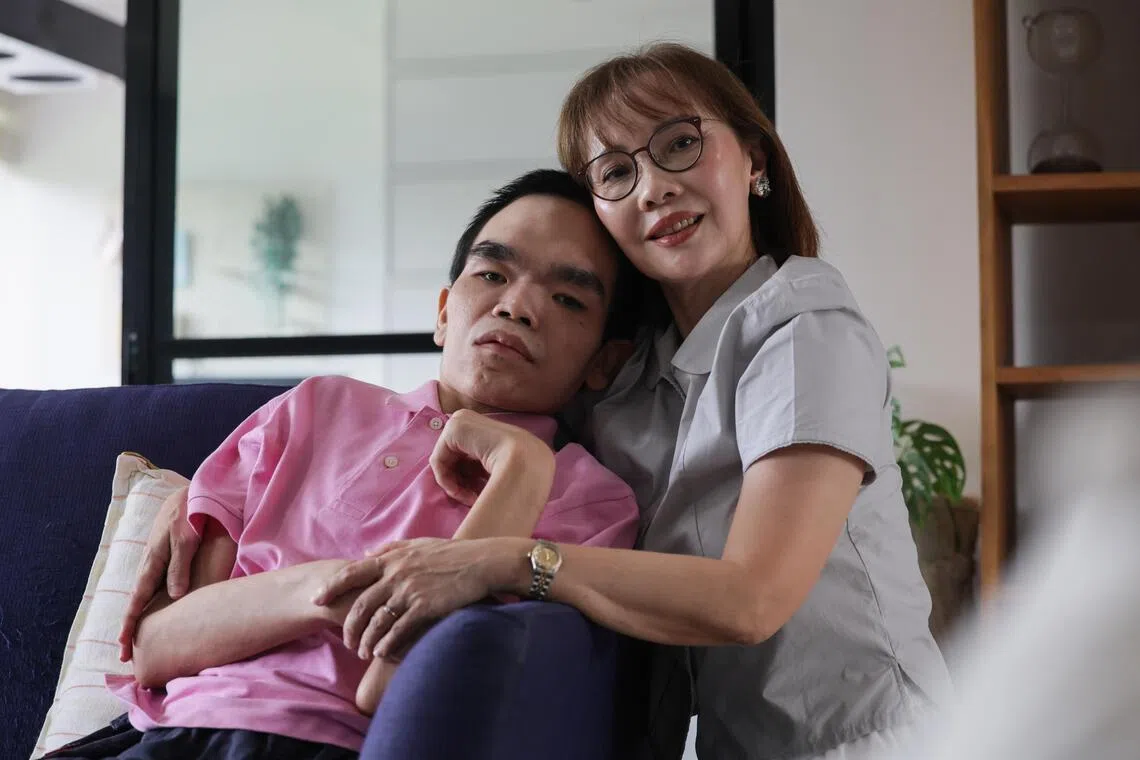
Sharmaine Lau with her son Matthew Leong, who was diagnosed with Sanfilippo syndrome, a rare and devastating disorder often known as “childhood dementia”.
ST PHOTO: GIN TAY

Judith Tan
Published Jun 27, 2026, 12:00 PM
Updated Jun 28, 2026, 09:43 AM
Set as preferred source
Listen
Summarise
SINGAPORE – Sharmaine Lau and her husband, S.K. Leong, will never forget the day they found out why their son Matthew was different.
“When Professor (Denise) Goh told us, we just sat in the car in the hospital carpark afterwards and cried,” Lau said, eyes brimming as she recalled the moment.
Matthew was 10 when he was diagnosed with Sanfilippo syndrome, a rare and brutal disorder often dubbed “childhood dementia” because of its devastating symptoms. He is now 29.
Denise Goh heads the division of genetics and metabolism at the Department of Paediatrics at the National University Hospital’s (NUH) Khoo Teck Puat-National University Children’s Medical Institute.
She said the syndrome is an inherited condition caused by faulty genes from both parents.
These genes stop the body from producing the enzymes needed to break down a complex sugar called heparan sulfate.
“When these enzymes do not work properly, this sugar builds up in cells throughout the body, particularly in the brain... leading to inflammation and progressive damage to brain cells. It primarily affects children’s brain development and function,” said Goh.
Top stories
Explore top stories from all sections in one place
Singapore
Pritam Singh re-elected, cementing his position as Workers’ Party chief
Singapore
Unpaid wages: Director behind firms linked to case back in S’pore, assisting in MOM probe

World
11 killed in skydiving plane crash in north-eastern France

Singapore
Study finds that teenage boys in S’pore get physically punished twice as often as girls

Singapore
Commandos named Best Combat Unit for 40th time, extending Red Berets’ winning streak to 23
Singapore
askST: Why is there so much rubbish on the beach in East Coast Park?

Life
Want a friend in the AI age? Get a dog
The condition is rare, affecting between one in 53,000 births and one in 360,000 births worldwide.However, it is not routinely detected through standard newborn screening programmes.
Since there is currently no cure, Goh said management focuses mainly on symptom control and supportive care to maintain quality of life.
“Children typically appear completely normal at birth and throughout early infancy. The first signs usually do not become noticeable until around one to four years of age. However, newborn screening methods are being developed, which would allow earlier diagnosis even without a family history,” Goh added.
When Matthew was born, he met his early developmental milestones and grew like any other baby, his mother told The Straits Times.
“He was the happiest, most content little boy and has the most contagious smile,” said the 58-year-old housewife.
When he turned two, his parents noticed he could not pronounce hard-C words like “cat” and “car”. Later, at age five, he became hyperactive, had difficulty concentrating and could not count past three.
“We took him to NUH, where he was psychologically tested and diagnosed with attention deficit hyperactivity disorder. Not long after, he became fixated on everything mechanical, especially vehicles,” Leong, 63, said. Matthew was later diagnosed with autism.
At age six, Matthew’s cognitive development plateaued. That was the year his younger brother Isaac was born.
Matthew managed to get into a school under the Association for Persons with Special Needs, but it was not long before staff raised concerns about his regression.
“As parents, we had suspected there was something more, so we consulted the late professor Lee Wei Ling (then director of the National Neuroscience Institute), who put him through MRI scans.
“She suspected that what he had was one of the lysosomal storage diseases, which are rare genetic metabolic disorders caused by deficiencies in specific enzymes, and she referred us to Prof Goh for genetic testing,” Leong said.
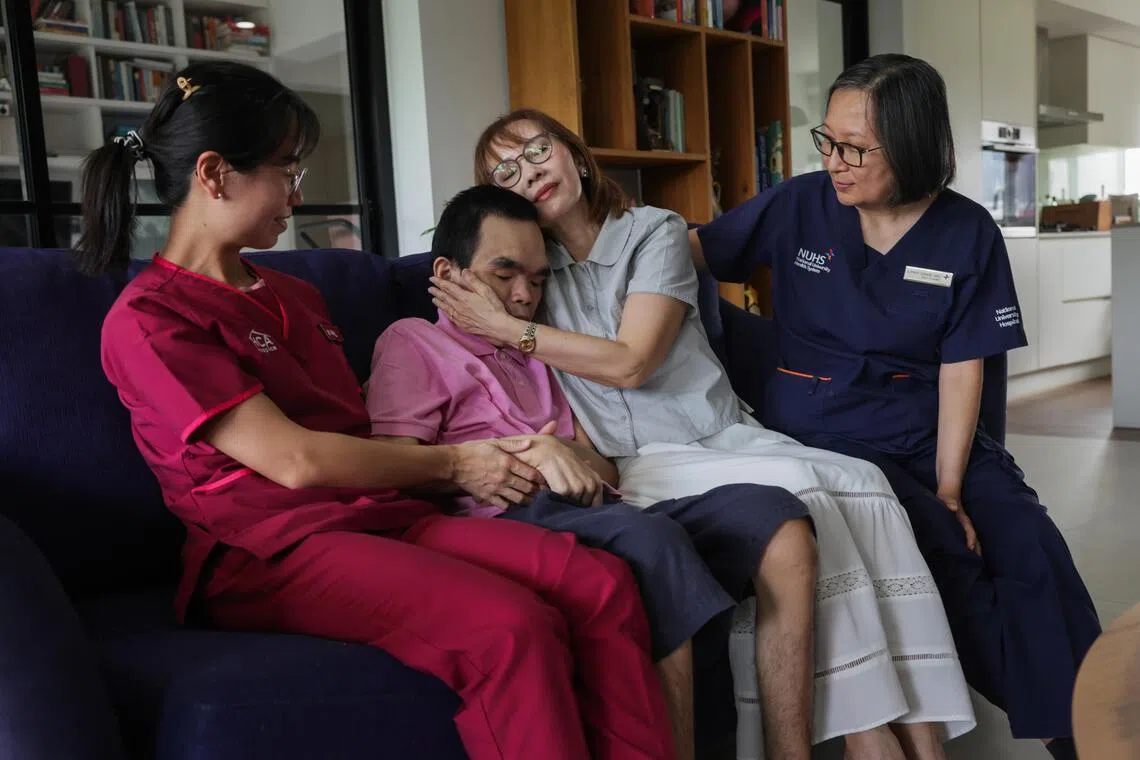
(From left) Star PALS (Paediatric Advanced Life Support) associate consultant Kang Zhi Lin visiting Matthew and his mother at home. Denise Goh, who diagnosed Matthew with Sanfilippo syndrome, continues to oversee his care.
ST PHOTO: GIN TAY
Around that time, their younger son Isaac was also showing signs of the condition.
“At two, Isaac was still non-verbal, so we decided to have him genetically tested as well,” Lau said.
The test confirmed that Isaac also had Sanfilippo syndrome. He died at the age of 19 from a lung infection in 2022.
Goh told ST that the syndrome typically progresses through three distinct stages – early, middle and late. The rate of progression varies among individuals and the different subtypes, with Type A, the most common form, progressing most rapidly.
During the early stage, which occurs between the ages of one and four, parents often notice delayed speech and language development. Hyperactivity, sleep problems and behavioural difficulties may also emerge.
S’pore launches $350m longevity challenge to tackle cognitive decline and loss of physical function
‘He went into his shell’: Mum gets help from new service for reclusive adults and their parents
Behavioural problems become more severe, including aggression and hyperactivity, in the middle stage when affected children are between the ages of four and 10.
“Here, intellectual abilities begin to decline noticeably, and some children may be misdiagnosed with autism. Mild facial changes may appear, such as distinct ‘coarse’ features that become increasingly prominent as they grow older,” Goh said.
Hallmark features include an enlarged head, a prominent forehead, thick bushy eyebrows and a low nasal bridge. These changes result from the progressive accumulation of complex sugars in the body’s cells.
In the later stage, which occurs from around age 10 onwards, behavioural problems are replaced by a progressive loss of motor skills.
“The children lose the ability to walk, develop stiffness in their limbs, have difficulty swallowing, and may develop seizures. Communication becomes increasingly difficult, and cognitive abilities continue to decline to severe dementia,” Goh said.
When the boys became increasingly aggressive in their pre-teen years, Leong built two padded rooms for them out of concern that they might hurt themselves or those around them.
“They would be in the rooms until they calmed down, before they could be let out,” he said.
The behavioural issues experienced by the Leongs are among the many challenges families face as the disease progresses.
Said Goh: “These include managing behavioural problems and sleep disturbances, treating seizures when they occur, addressing feeding difficulties and swallowing problems as they develop, providing physical therapy to maintain mobility for as long as possible, managing respiratory infections promptly and providing palliative and comfort care as the disease progresses.”
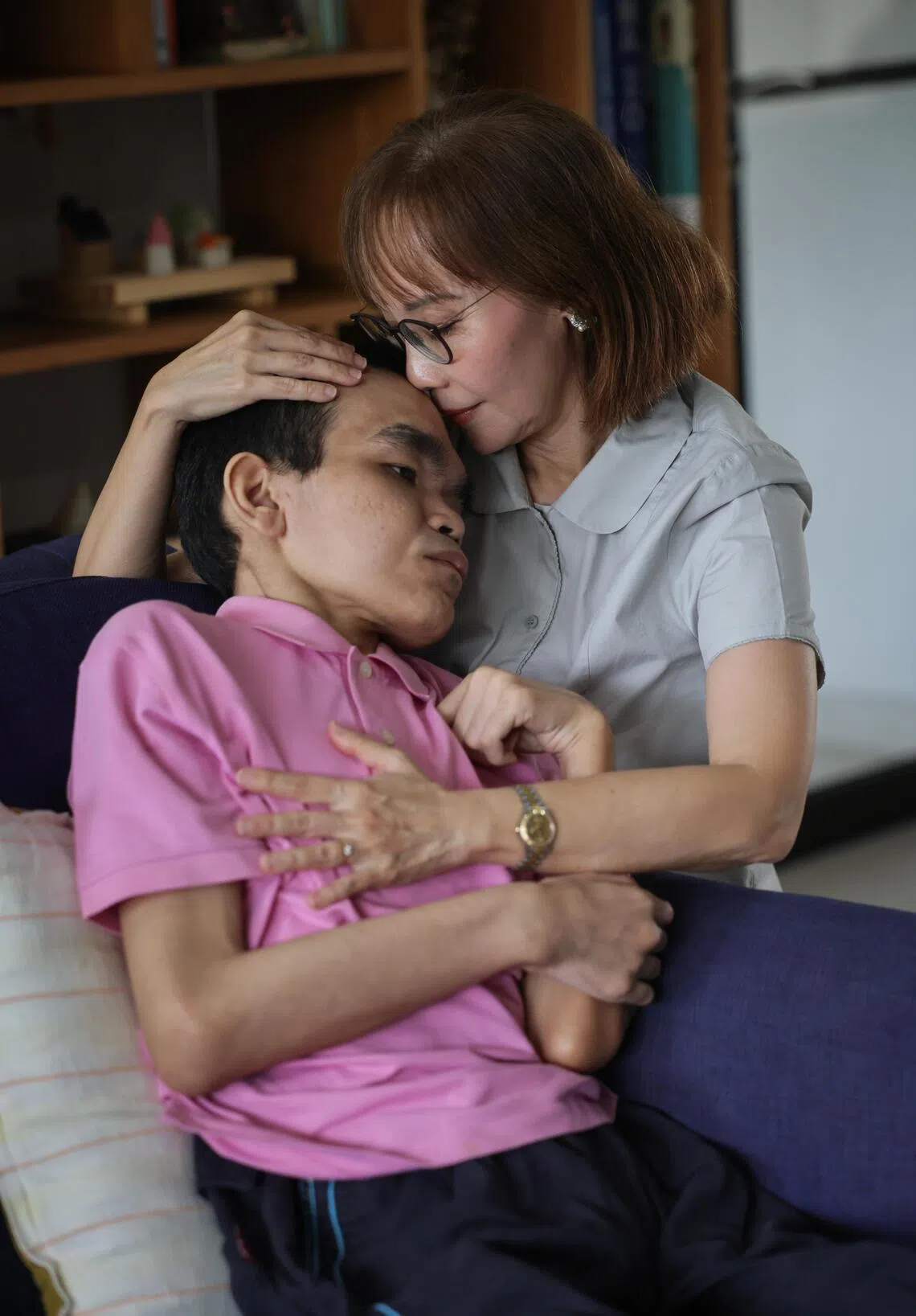
Feeling guilty came with the territory of raising Matthew, his mother, Sharmaine Lau, said.
ST PHOTO: GIN TAY
She added: “At NUH, care is typically provided through a multidisciplinary team that may include neurologists, genetic specialists, nurses, physiotherapists, occupational therapists, speech therapists, dietitians, psychologists, medical social workers and palliative care specialists, depending on the child’s needs.”
When taking their sons to hospital appointments became increasingly challenging because the boys were too disruptive, the couple decided to have them cared for at home.
They approached Star PALS (Paediatric Advanced Life Support), a service run by HCA Hospice that supports children with life-threatening or life-limiting conditions. Palliative care doctors Grace Ng and Kang Zhi Lin have cared for Matthew and Isaac through the programme, with Ng involved since late 2019 and Kang from January 2023.
“We have watched them grow and seen how the condition progressed. We also helped the parents accept the circumstances, especially by providing bereavement support when the younger son died,” Kang said.
For Lau, the greatest challenge was coming to terms with the fact that there was little doctors could do to halt the progression of the disease. “Feeling guilty is par for the course when bringing up my sons. Almost every aspect of our life is different now. Knowing that there is no treatment, no cure is perhaps the hardest for us as parents,” she said.
Successful gene therapy on child with rare Parkinson’s disease offers hope for other patients
AI-powered app accurately identifies pre-dementia seniors, to be available in 2026
See more on
ST Medical MysteriesNational University Hospital
Dementia
Back to top
E-paper
Newsletters
Podcasts
RSS Feed
About Us
Terms & Conditions
Personal Data Protection Notice
Need help? Reach us here.
Advertise with us
Download the app
https://itunes.apple.com/sg/app/the-straits-times-for-iphone/id547465441?mt=8
https://play.google.com/store/apps/details?id=com.buuuk.st&hl=en
Get unlimited access to exclusive stories and incisive insights from the ST newsroom
Subscribe

MDDI (P) 046/10/2025. Published by SPH Media Limited, Co. Regn. No.202120748H. Copyright © 2026 SPH Media Limited. All rights reserved.


