

- Joined
- Aug 20, 2022
- Messages
- 32,043
- Points
- 113
Caring for the dying in S’pore: From death houses in Sago Lane to dealing with a super-aged society
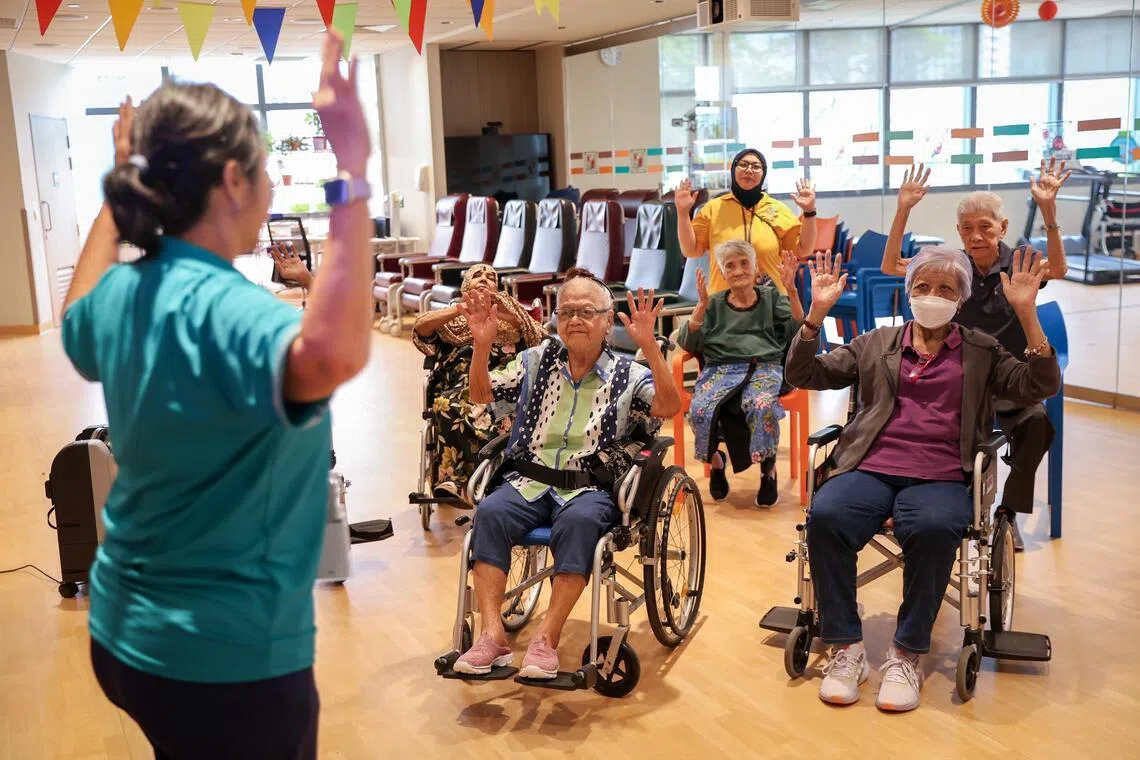
Patients at Dover Park Hospice's day care performing a volunteer-led seated exercise activity.
PHOTO: SARAH LEE
Published May 26, 2026, 02:30 PM
Updated May 28, 2026, 10:49 AM
SINGAPORE – “I can’t cure you any more, don’t come back,” Mr Christopher So jokingly recalls what his doctor told him about his terminal kidney condition, before referring him to Dover Park Hospice’s day care service.
For the 86-year-old former primary school teacher, the hospice is a less menacing place compared with the hospital. “No needles here,” he explains.
Still, he says he would rather be outside, eating what he wants to eat – even it goes against his diet. “I cheat,” he confesses to this reporter.
Part of the reason he keeps coming back is that the hospice’s day care is free, and he loves the board games that patients play after lunchtime.
Dover Park Hospice’s day care, which runs every weekday from 10am to 3pm, is a service which complements its inpatient and home care services, bringing together people with advanced illnesses for therapy and exercise sessions, while easing the load of their caregivers.
When The Straits Times visits earlier in May, volunteers make and serve kopi before patients partake in a seated group exercise to Hokkien and Zumba music.
One of the attendees is 88-year-old Lily Ng, who has a terminal heart condition. She tells ST that part of the appeal of coming here is being able to raise medical concerns to staff, who can take them to doctors, without the hassle of the revolving door of hospital visits.
While Dover Park Hospice began its day care service in 2019, Singapore’s first was launched in 1997 by Assisi Hospice.
With the Singapore Hospice Council (SHC) reporting more than 12,000 patients referred to specialist palliative care services like these between April 2023 and March 2024, they also form part of a century-long shift in how Singapore cares for the dying.
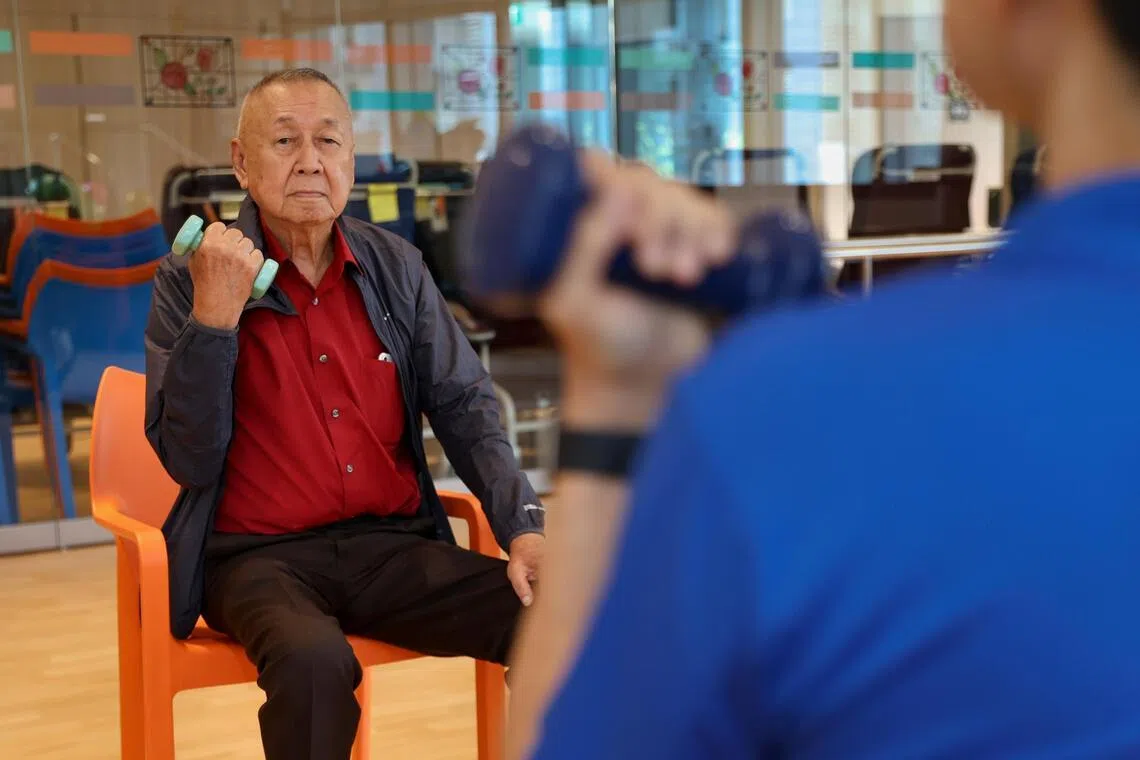
Day care patients like Mr Christopher So, 86, can take part in rehabilitation exercises to maintain their independence and autonomy.
ST PHOTO: SARAH LEE
Death houses
“Long before you reach the buildings, you become aware of the smell of tung oil and the peculiar odour associated with the houses of death,” according to a 1947 report by the Sunday Tribune about Singapore’s “biggest health scandal”, its Chinatown death houses.Before the first hospices were established in Singapore, their predecessors were licensed sick receiving houses – also colloquially known as “death houses” or “dying houses” – first established in the 19th century to shelter the sick and dying.
In the years leading up to Singapore’s independence, they were concentrated around Sago Lane, Jalan Ampas and Balestier Road.
These death houses were cramped spaces, with the lower floors occupied by the deceased and dying, and the upper floors by the dying who could afford to pay more. Outside, mourners and religious leaders would come to perform last rites, filling the streets with the smell of smoke and the noise of mourning.
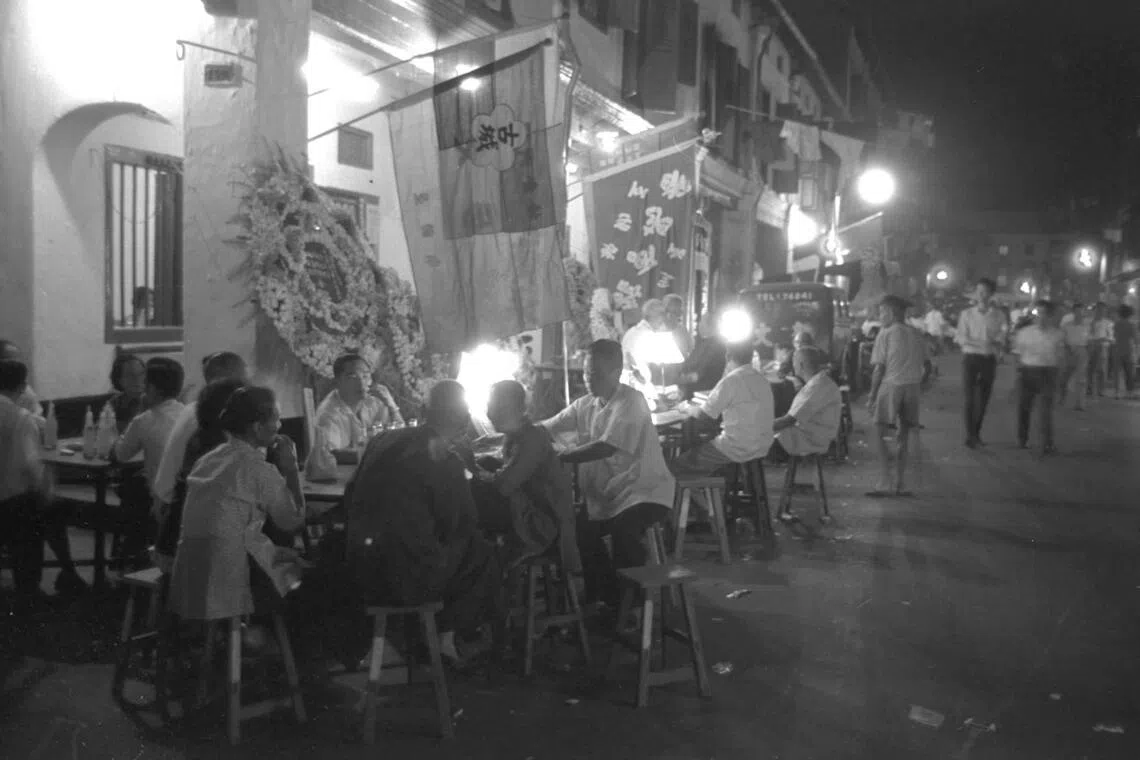
A photo of the Sago Lane death houses taken in 1962 by K.F. Wong.
PHOTO: NATIONAL ARCHIVES SINGAPORE
The Sunday Tribune’s correspondent writes of a 72-year-old woman huddled over a dirty stool, so sick that she could no longer lie down. “I wonder what must be her thoughts and feelings to be dying in such surroundings. Surprisingly enough, I was told that, as repulsive as they are, these receiving houses are often looked upon as a refuge.”
Standard charges at a death house were $150, including a $10 admission fee and $1 a day for the night and day attendants, according to a 1948 report by the Singapore Free Press. This included the fee for laying out the dead in the funeral silken robes that every Chinese, no matter how poor, hopes to be buried in.
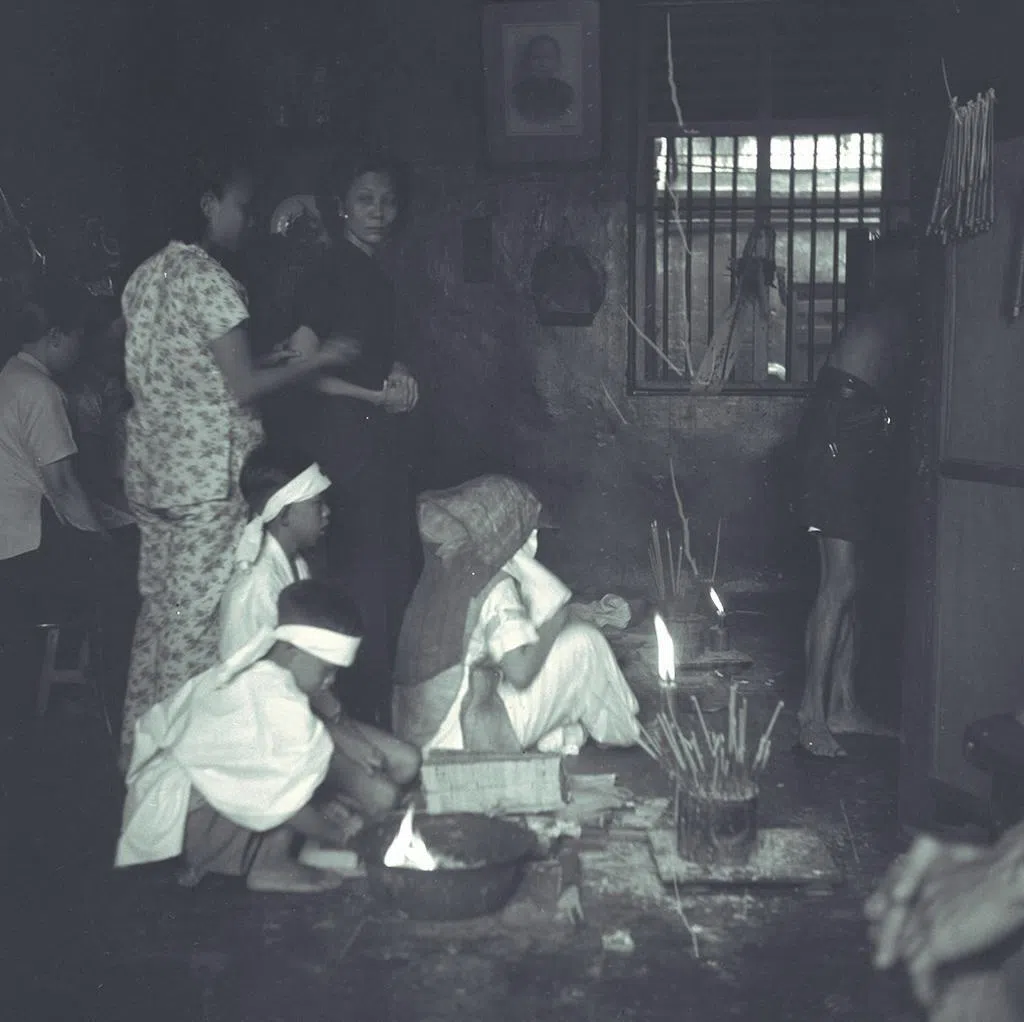
A funeral in Sago Lane in 1951.
PHOTO: ST FILE
In a time when the average hourly wage for non-government workers was 65 cents, these were exorbitant rates. Still, the services proved popular – with an average of six deaths in Sago Lane every day – often because of superstitions surrounding death in the home and the lack of affordable alternatives.


