

- Joined
- May 16, 2023
- Messages
- 44,762
- Points
- 113
When the Arctic opens, what happens to Singapore?
The Northern Sea Route is one of the Arctic routesSummarise
阅读简体中文版 (beta)
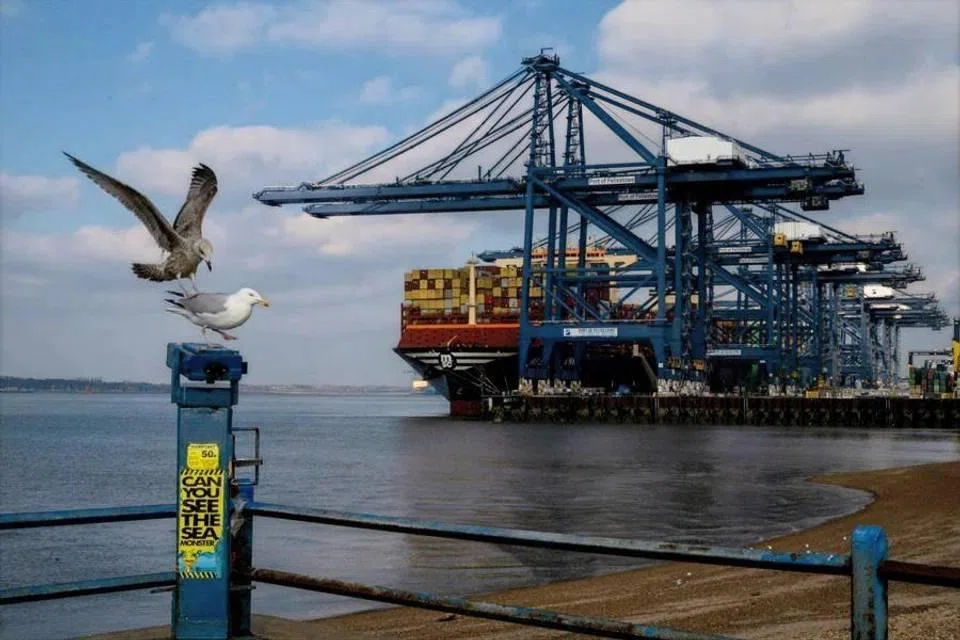
- The cost to operate in the NSR is currently quite high due to the requirements of special-class vessels, as well as higher insurance premiums resulting from higher risks of accidents. PHOTO: REUTERS
Lewis Ong Yong Huat
Published Sun, Feb 15, 2026 · 09:00 AMIN JUST 21 days from September to October 2025, a Chinese container vessel called Istanbul Bridge arrived at Felixstowe, the UK’s largest container port, at the end of a roughly 7,500-nautical-mile journey from Ningbo, China. It had made use of the Northern Sea Route (NSR).
There is a significant difference, given that the traditional route via the Suez Canal covers about 11,000 nautical miles and typically takes 40 to 50 days. Yet the Istanbul Bridge has not taken the NSR since then – this begs the question, why?
Not a preferred route for all
The NSR is one of the Arctic routes. Passing along Russia’s coastline, it is also the most likely to be developed first.Punit Oza, president of the Institute of Chartered Shipbrokers (ICS), told Lianhe Zaobao that a journey from Murmansk, Russia, to Yokohama, Japan, via the Suez Canal would span 12,840 nautical miles and take about 40 days (plus two days in canal transit) at a speed of 13 knots; taking the NSR instead would reduce the distance to 5,770 nautical miles and the number of days to about 19 at the same speed.
“This shorter route translates into approximately 50 per cent less sailing time while substantially decreasing fuel consumption and CO2 emissions from maritime transport. So, from the economic perspective, it is a no-brainer. However, operationally and geopolitically, it is not a preferred route for all,” he said.
Yuen Kum Fai, an associate professor at the Nanyang Technological University (NTU)’s School of Civil and Environmental Engineering, highlighted several issues. The cost to operate in the NSR is currently quite high due to the requirements of special-class vessels, as well as higher insurance premiums resulting from higher risks of accidents.


