
-
IP addresses are NOT logged in this forum so there's no point asking. Please note that this forum is full of homophobes, racists, lunatics, schizophrenics & absolute nut jobs with a smattering of geniuses, Chinese chauvinists, Moderate Muslims and last but not least a couple of "know-it-alls" constantly sprouting their dubious wisdom. If you believe that content generated by unsavory characters might cause you offense PLEASE LEAVE NOW! Sammyboy Admin and Staff are not responsible for your hurt feelings should you choose to read any of the content here. The OTHER forum is HERE so please stop asking.
You are using an out of date browser. It may not display this or other websites correctly.
You should upgrade or use an alternative browser.
You should upgrade or use an alternative browser.
Anyone heard of agarwood b4?
- Thread starter Johnrambo
- Start date

- Joined
- Jul 14, 2008
- Messages
- 91,700
- Points
- 113
I heard of agar agar.


- Joined
- Sep 22, 2008
- Messages
- 97,924
- Points
- 113
Protect our forests' 'Liquid Gold'

By Zakri Abdul Hamid
March 19, 2019 @ 10:55pm

NEWS from Penang of more illegal felling of the aquilaria trees which produce agarwood (gaharu in Malay) confirms the ongoing theft of this valuable species.
What is disturbing are the reports that the poachers are foreigners from neighbouring countries to the north.
Reportedly, agarwood cartels have been harvesting and smuggling trees from our jungles since the late 1980s.
How could such blatant poaching of our natural resource be allowed to happen under our very noses? If the problem goes beyond the purview of one ministry (as is strongly suggested here), then an inter-agency task force should be established to root out the menace once and for all.
MORE NEWS
- Preserve natural forests to protect Malayan Tigers
- Protecting Earth's precious forests, water and the environment
- A five-point plan to protect our planet and health
- Yayasan MySDG will help change lives for the better, protect our environment
The situation recalls the comment of Dr Dionysus Sharma, recently retired CEO of WWF-Malaysia, referring to tigers facing a similar fate to the agarwood trees: “Malaysian wildlife officials are routinely understaffed and outgunned. Whereas there is at least one well-trained anti-poaching ranger for every 10 square km of protected forest with resident wild tiger populations in Thailand and India, only 10 per cent of protected forests in Malaysia have gold-standard specified rangers.”
In other words, many poachers, who are often armed, can enter forests with little fear of getting caught.
Poachers, he said, “could not care less” about the prospects of endangered species.
If the poaching continues, one of the most sought-after agarwood species in the world — aquilaria malaccensis — could go extinct.
The use of agarwood, which forms in the heartwood of aquilaria trees when they become infected with a type of mould, can be traced to ancient times when it was traded from India. It was one of the most popular substances in China over 1,000 years ago. The precious resin used for incense and perfume was valued by many cultures.
Almost 3,500 years ago, the agarwood fragrance was described in Sanskrit texts, and about 2,100 years ago several medical applications were detailed.
Agarwood cultivation about 2,300 years ago was taken up by the Chinese, who learned that cutting into a tree would cause the precious resin to develop within a year.
Oud (or “liquid gold”) refers to both the resin-saturated agarwood as well as the oil distilled from it. One reason oud is so expensive (as much as RM120,000 per kg, depending on its purity) is its rarity; by some estimates, fewer than two per cent of wild trees produce it.
Experts claim that the very best oud comes from the oldest trees, which are even scarcer.
“Oud is astonishingly rare,” says Chandler Burr, the former New York Times perfume critic and author of The Emperor of Scent. It has a very particular scent and there is nothing like it on the market. It’s dark, rich and opaque.”
In the Middle East, where oud is most common, it is considered a cultural touchstone and highly prestigious.
“Oud is so ubiquitous in the Middle East,” says Burr. “Anyone there can recognise its scent immediately.”
These days one has only to walk the streets of London or Paris to see fashionable stores selling dedicated oud perfumes and related products.
Beyond halting the blatant poaching of this natural resource, we need to consider the opportunity available to us to expand our economic thinking, as Prime Minister Tun Dr Mahathir Mohamad has been urging Malaysians to do.
The minister of primary industries, Teresa Kok, has been suggesting that oil palm smallholders look to bamboo, pineapple and coconut to supplement their income.
Perhaps greater support for fledgling efforts to establish agarwood plantations should be added to that list.
Although the price of plantation-grown agarwood is nowhere near its wild sibling, it’s still promising.
This is where serious research and development by the likes of the Malaysian Agricultural Research and Development Institute, Forest Research Institute Malaysia and local universities could eventually yield superior trees or clones and high-quality resin that could fetch a good price in the global market.
The Malaysian Biotechnology Corporation could also explore the prospect of collaborating with the established production houses of oud in the Middle East or Europe and get involved in more value-added activities.
It is time to stop being content to be producers of primary commodities and transform ourselves into a majo
- Joined
- Jan 11, 2021
- Messages
- 1,143
- Points
- 63
haha I also thought it was some sort of agar agarI heard of agar agar.
- Joined
- Jul 17, 2017
- Messages
- 1,960
- Points
- 83
Agarwood, also known as oud, oodh or agar, is a dark resinous heartwood that forms in Aquilaria and Gyrinops[1] trees (large evergreens native to southeast Asia) when they become infected with a type of mould. Prior to infection, the heartwood is relatively light and pale coloured; however, as the infection progresses, the tree produces a dark aromatic resin in response to the attack, which results in a very dense, dark, resin embedded heartwood. The resin embedded wood is commonly called gaharu, jinko, aloeswood, agarwood, or oud (not to be confused with 'Bakhoor') and is valued in many cultures for its distinctive fragrance, and thus is used for incense and perfumes.
Uninfected Aquilaria wood lacking the dark resin.
One of the main reasons for the relative rarity and high cost of agarwood is the depletion of the wild resource.[2] Since 1995 Aquilaria malaccensis, the primary source, has been listed in Appendix II (potentially threatened species) by the Convention on International Trade in Endangered Species of Wild Fauna and Flora.[3] In 2004 all Aquilaria species were listed in Appendix II; however, a number of countries have outstanding reservations regarding that listing.[3]
First-grade agarwood is one of the most expensive natural raw materials in the world. A whole range of qualities and products are on the market, varying in quality with geographical location and cultural deposition. Oud oil is distilled from agarwood, it fetches high prices depending on the oil's purity. The current global market for agarwood is estimated to be in the range of US$ 6 – 8 billion and is growing rapidly.[4]
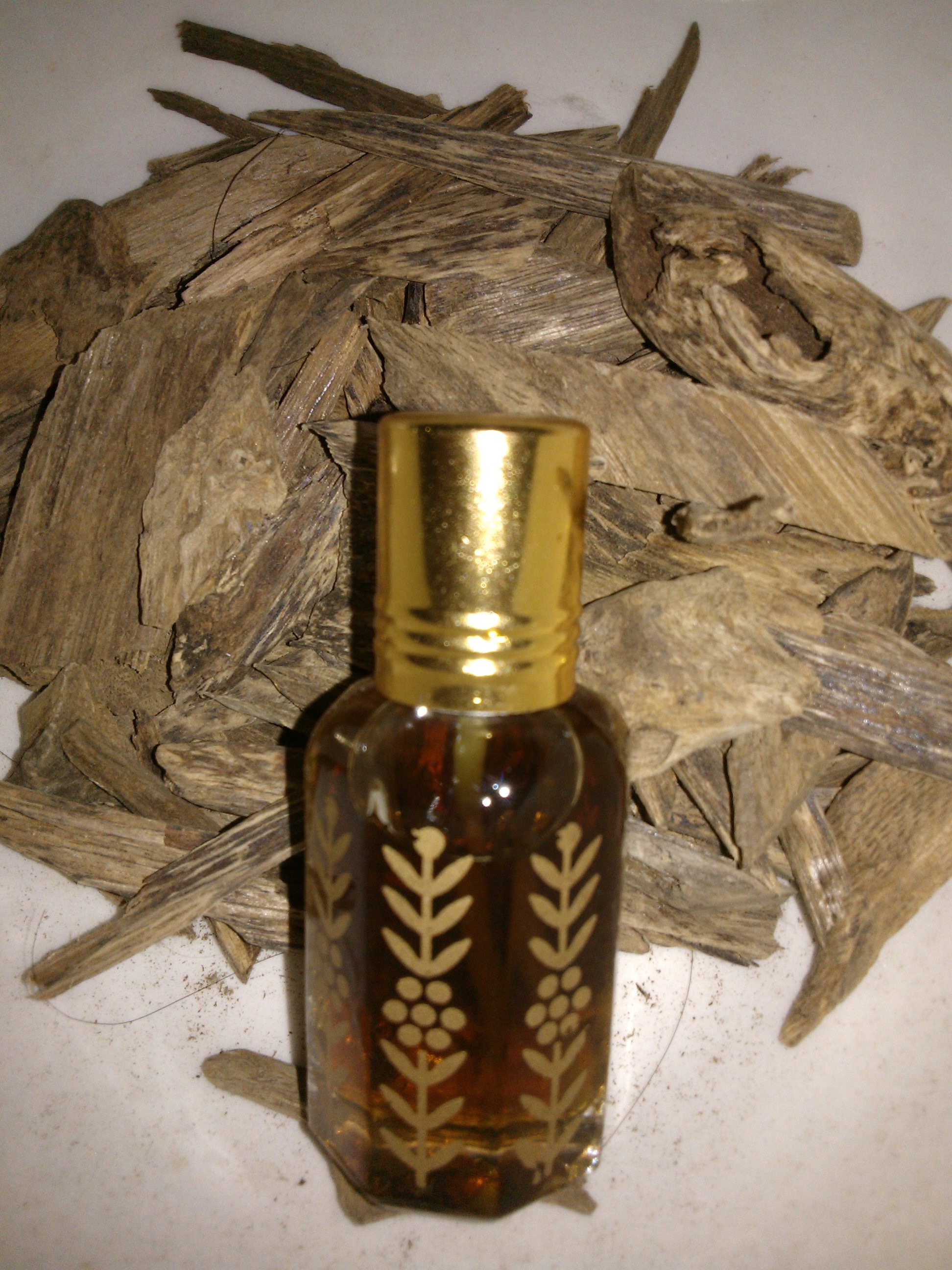
http://en.wikipedia.org/wiki/Agarwood
Uninfected Aquilaria wood lacking the dark resin.
One of the main reasons for the relative rarity and high cost of agarwood is the depletion of the wild resource.[2] Since 1995 Aquilaria malaccensis, the primary source, has been listed in Appendix II (potentially threatened species) by the Convention on International Trade in Endangered Species of Wild Fauna and Flora.[3] In 2004 all Aquilaria species were listed in Appendix II; however, a number of countries have outstanding reservations regarding that listing.[3]
First-grade agarwood is one of the most expensive natural raw materials in the world. A whole range of qualities and products are on the market, varying in quality with geographical location and cultural deposition. Oud oil is distilled from agarwood, it fetches high prices depending on the oil's purity. The current global market for agarwood is estimated to be in the range of US$ 6 – 8 billion and is growing rapidly.[4]
http://en.wikipedia.org/wiki/Agarwood
- Joined
- Jul 17, 2017
- Messages
- 1,960
- Points
- 83
- Joined
- Jan 27, 2016
- Messages
- 648
- Points
- 28
Of all places why set up shop in Geylang?
Maybe tiong cheekons are into buying such stuff who knowsOf all places why set up shop in Geylang?
- Joined
- Jul 12, 2011
- Messages
- 6,970
- Points
- 113
Said to be used by Arab woman, burn and placed under their CB for the fragrance smell.

- Joined
- Aug 10, 2008
- Messages
- 115,104
- Points
- 113
Said to be used by Arab woman, burn and placed under their CB for the fragrance smell.
I thought they use kemenyan.
- Joined
- May 27, 2021
- Messages
- 3,998
- Points
- 113
Use it to make incense powder. Very expensive can be found in Indonesia and Vietnam forests.
- Joined
- Jul 12, 2011
- Messages
- 6,970
- Points
- 113
I thought they use kemenyan.
Kermenyan for the lower grade smurfs, Arabs are considered the atas kind.

- Joined
- Feb 13, 2017
- Messages
- 3,708
- Points
- 113
coffin is use which wood leh?Agarwood = 沉香木
Sandalwood = 檀香木
- Joined
- Aug 10, 2008
- Messages
- 115,104
- Points
- 113
coffin is use which wood leh?
Plywood.

- Joined
- Dec 29, 2022
- Messages
- 191
- Points
- 18
I’m a bit late here, but I’ve been curious if anyone in the thread has actually tried burning different grades of agarwood. The scent can vary a lot depending on how the tree was infected and where it came from. Has anyone compared wild vs. farmed pieces? Would be interesting to hear what kind of aroma or效果 you all got.

- Joined
- Jan 17, 2023
- Messages
- 222
- Points
- 18
I got curious about scents after messing with different woods, and the vibe changed a lot once I tried some soy blend scented candles usa at home. They gave off a warm, clean smell that didn’t overpower anything else I was burning. If you’re trying to compare different aromas, pairing them like that helps you catch the subtle notes without your nose getting wiped out.
- Joined
- Sep 22, 2008
- Messages
- 97,924
- Points
- 113
Using candles for scents may irritate the nostrils of some people. Its just like breathing polluted air. My thoughts,

- Joined
- May 16, 2023
- Messages
- 48,071
- Points
- 113
老极不在,木头当金卖Protect our forests' 'Liquid Gold'
By Zakri Abdul Hamid
March 19, 2019 @ 10:55pm
Agarwood, or gaharu in Malay, is used to make incense, perfume and small carvings. Pix courtesy of SABAH FORESTRY DEPARTMENT
NEWS from Penang of more illegal felling of the aquilaria trees which produce agarwood (gaharu in Malay) confirms the ongoing theft of this valuable species.
What is disturbing are the reports that the poachers are foreigners from neighbouring countries to the north.
Reportedly, agarwood cartels have been harvesting and smuggling trees from our jungles since the late 1980s.
How could such blatant poaching of our natural resource be allowed to happen under our very noses? If the problem goes beyond the purview of one ministry (as is strongly suggested here), then an inter-agency task force should be established to root out the menace once and for all.
MORE NEWS
- Preserve natural forests to protect Malayan Tigers
- Protecting Earth's precious forests, water and the environment
- A five-point plan to protect our planet and health
- Yayasan MySDG will help change lives for the better, protect our environment
The situation recalls the comment of Dr Dionysus Sharma, recently retired CEO of WWF-Malaysia, referring to tigers facing a similar fate to the agarwood trees: “Malaysian wildlife officials are routinely understaffed and outgunned. Whereas there is at least one well-trained anti-poaching ranger for every 10 square km of protected forest with resident wild tiger populations in Thailand and India, only 10 per cent of protected forests in Malaysia have gold-standard specified rangers.”
In other words, many poachers, who are often armed, can enter forests with little fear of getting caught.
Poachers, he said, “could not care less” about the prospects of endangered species.
If the poaching continues, one of the most sought-after agarwood species in the world — aquilaria malaccensis — could go extinct.
The use of agarwood, which forms in the heartwood of aquilaria trees when they become infected with a type of mould, can be traced to ancient times when it was traded from India. It was one of the most popular substances in China over 1,000 years ago. The precious resin used for incense and perfume was valued by many cultures.
Almost 3,500 years ago, the agarwood fragrance was described in Sanskrit texts, and about 2,100 years ago several medical applications were detailed.
Agarwood cultivation about 2,300 years ago was taken up by the Chinese, who learned that cutting into a tree would cause the precious resin to develop within a year.
Oud (or “liquid gold”) refers to both the resin-saturated agarwood as well as the oil distilled from it. One reason oud is so expensive (as much as RM120,000 per kg, depending on its purity) is its rarity; by some estimates, fewer than two per cent of wild trees produce it.
Experts claim that the very best oud comes from the oldest trees, which are even scarcer.
“Oud is astonishingly rare,” says Chandler Burr, the former New York Times perfume critic and author of The Emperor of Scent. It has a very particular scent and there is nothing like it on the market. It’s dark, rich and opaque.”
In the Middle East, where oud is most common, it is considered a cultural touchstone and highly prestigious.
“Oud is so ubiquitous in the Middle East,” says Burr. “Anyone there can recognise its scent immediately.”
These days one has only to walk the streets of London or Paris to see fashionable stores selling dedicated oud perfumes and related products.
Beyond halting the blatant poaching of this natural resource, we need to consider the opportunity available to us to expand our economic thinking, as Prime Minister Tun Dr Mahathir Mohamad has been urging Malaysians to do.
The minister of primary industries, Teresa Kok, has been suggesting that oil palm smallholders look to bamboo, pineapple and coconut to supplement their income.
Perhaps greater support for fledgling efforts to establish agarwood plantations should be added to that list.
Although the price of plantation-grown agarwood is nowhere near its wild sibling, it’s still promising.
This is where serious research and development by the likes of the Malaysian Agricultural Research and Development Institute, Forest Research Institute Malaysia and local universities could eventually yield superior trees or clones and high-quality resin that could fetch a good price in the global market.
The Malaysian Biotechnology Corporation could also explore the prospect of collaborating with the established production houses of oud in the Middle East or Europe and get involved in more value-added activities.
It is time to stop being content to be producers of primary commodities and transform ourselves into a majo
https://www.trustpilot.com/review/agroforestrygroup.com
Unquote.
Believe this company plants Agarwood Trees together with Durian Trees in Msia.
They were selling Durian Trees as Investment, at about myr 7k per tree,..and they promise annual returns of 7-8% pa for the first 5 years,
then returns based on the output of that specific durian tree.
Every Durian tree I saw at their plantation, located north of Kulai, had a tag with a QR code.
Has anyone direct experience with such operators ?
Unquote.
Believe this company plants Agarwood Trees together with Durian Trees in Msia.
They were selling Durian Trees as Investment, at about myr 7k per tree,..and they promise annual returns of 7-8% pa for the first 5 years,
then returns based on the output of that specific durian tree.
Every Durian tree I saw at their plantation, located north of Kulai, had a tag with a QR code.
Has anyone direct experience with such operators ?
Similar threads

- Replies
- 16
- Views
- 1K

- Replies
- 13
- Views
- 595

- Replies
- 16
- Views
- 740

- Replies
- 3
- Views
- 198
