- Joined
- Sep 11, 2010
- Messages
- 42,122
- Points
- 113
Shit's going to get real.
Last Updated: April 15, 2026, 09:18 IST
Share
Amid Strait of Hormuz tensions, a US-Indonesia defence pact signals possible strategic focus shift toward the Strait of Malacca, a vital global trade chokepoint
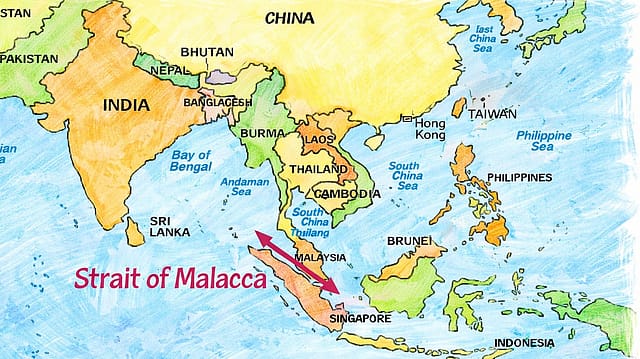
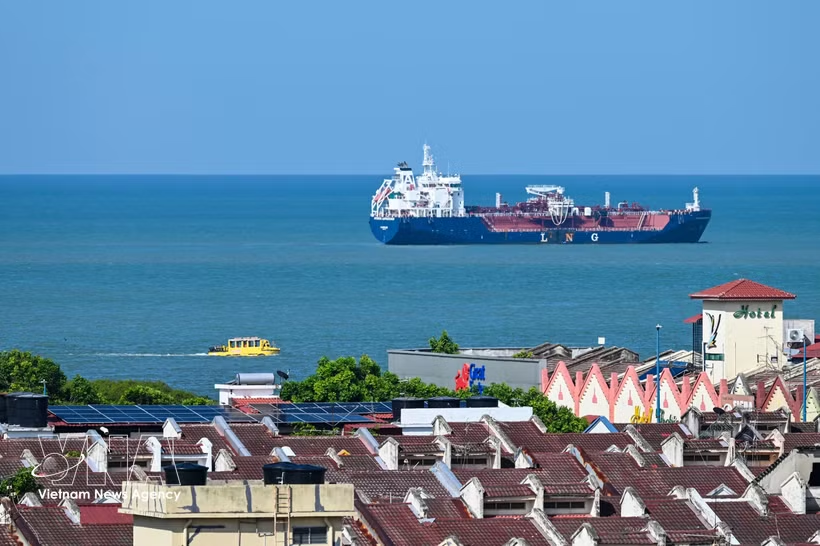
Along with Malaysia and Singapore, Indonesia controls the Malacca Strait, one of the world’s busiest sea lanes through which 40 per cent of global trade flows. Credits: AI-Generated image
A fresh defence arrangement between the United States and Indonesia has triggered speculation that Washington’s focus may be widening toward the Strait of Malacca, a vital artery of global trade.
Escalating tensions around the Strait of Hormuz have coincided with this parallel development in Southeast Asia, prompting questions over whether Donald Trump is shifting attention toward another critical maritime chokepoint closer to India.
On Monday, the US and Indonesia sealed a major defence cooperation partnership. As per multiple media reports, the agreement grants US military aircraft expanded operational access to Indonesian airspace.
According to an NDTV report, strategic observers have pointed out that such access would enable the US to strengthen its ability to monitor activity over the Malacca Strait.
While the deal is officially framed as a step toward deeper defence cooperation, it could also enhance Washington’s surveillance and operational reach across the waterway linking the Indian Ocean with East Asia.
The timing of the agreement has raised questions about whether the US is recalibrating its Indo-Pacific strategy to secure key maritime chokepoints beyond the Middle East.
The distinction between the two corridors is stark. While Hormuz moves oil, Malacca moves everything, from oil to cars to semiconductors and finished goods.
The strait’s importance lies in the sheer volume of trade it handles, including a significant share of global oil flows.
It remains especially crucial for East Asian economies, with China heavily reliant on the route for energy imports. This dependency is widely referred to in Beijing as the "Malacca Dilemma".
Trump is well aware of the fact. Iran’s grip on Hormuz has offered a live demonstration of how a chokepoint crisis can unfold and disrupt the global economy.
Although the United States is not heavily dependent on Malacca from an economic standpoint, the narrow passage, just 3 km wide at the Phillip Channel, holds considerable military and strategic significance. The Malacca Strait is around nine times narrower than Hormuz.
https://openthemagazine.com/world/f...alacca-is-the-us-expanding-its-strategic-grip
From Strait of Hormuz to Malacca: Is the US Expanding Its Strategic Grip?
Open Bureau & AgenciesLast Updated: April 15, 2026, 09:18 IST
Share
Amid Strait of Hormuz tensions, a US-Indonesia defence pact signals possible strategic focus shift toward the Strait of Malacca, a vital global trade chokepoint
Along with Malaysia and Singapore, Indonesia controls the Malacca Strait, one of the world’s busiest sea lanes through which 40 per cent of global trade flows. Credits: AI-Generated image
A fresh defence arrangement between the United States and Indonesia has triggered speculation that Washington’s focus may be widening toward the Strait of Malacca, a vital artery of global trade.
Escalating tensions around the Strait of Hormuz have coincided with this parallel development in Southeast Asia, prompting questions over whether Donald Trump is shifting attention toward another critical maritime chokepoint closer to India.
On Monday, the US and Indonesia sealed a major defence cooperation partnership. As per multiple media reports, the agreement grants US military aircraft expanded operational access to Indonesian airspace.
According to an NDTV report, strategic observers have pointed out that such access would enable the US to strengthen its ability to monitor activity over the Malacca Strait.
While the deal is officially framed as a step toward deeper defence cooperation, it could also enhance Washington’s surveillance and operational reach across the waterway linking the Indian Ocean with East Asia.
Why Is the Strait of Malacca So Crucial to Global Trade?
Along with Malaysia and Singapore, Indonesia controls the Malacca Strait, one of the world’s busiest sea lanes through which 40 per cent of global trade flows.The timing of the agreement has raised questions about whether the US is recalibrating its Indo-Pacific strategy to secure key maritime chokepoints beyond the Middle East.
The distinction between the two corridors is stark. While Hormuz moves oil, Malacca moves everything, from oil to cars to semiconductors and finished goods.
The strait’s importance lies in the sheer volume of trade it handles, including a significant share of global oil flows.
It remains especially crucial for East Asian economies, with China heavily reliant on the route for energy imports. This dependency is widely referred to in Beijing as the "Malacca Dilemma".
Trump is well aware of the fact. Iran’s grip on Hormuz has offered a live demonstration of how a chokepoint crisis can unfold and disrupt the global economy.
Although the United States is not heavily dependent on Malacca from an economic standpoint, the narrow passage, just 3 km wide at the Phillip Channel, holds considerable military and strategic significance. The Malacca Strait is around nine times narrower than Hormuz.
https://openthemagazine.com/world/f...alacca-is-the-us-expanding-its-strategic-grip