

- Joined
- Oct 5, 2012
- Messages
- 24,525
- Points
- 113
1 in 3 new lawyers may quit within 3 years due to workload, poor culture: Chief Justice
Citing a survey conducted among lawyers at this year's mass call, Chief Justice Sundaresh Menon says 92 per cent of new lawyers were already using AI in their work.
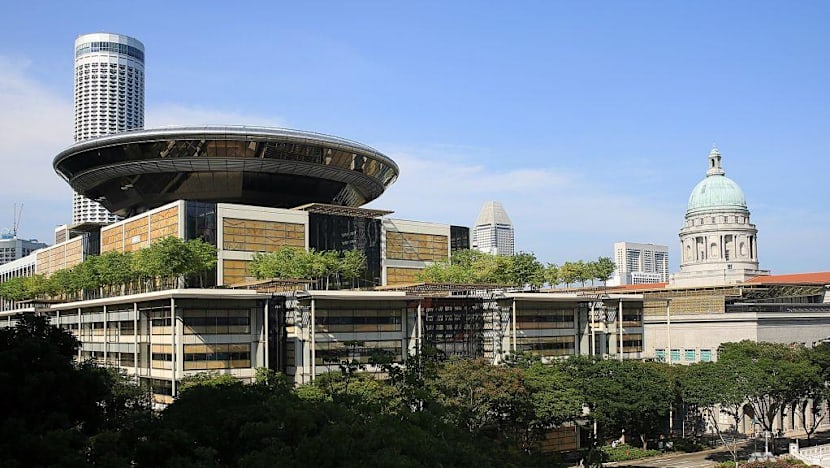
The Supreme Court in Singapore.
Listen
5 min

Koh Wan Ting
20 Apr 2026 01:17PM (Updated: 20 Apr 2026 02:58PM)
FAST
SINGAPORE: About one in three newly admitted lawyers said they were likely to leave the profession within three years, with excessive workload, poor workplace culture and a lack of mentorship among the key reasons, Chief Justice Sundaresh Menon said on Monday (Apr 20).
"There are many causes, but I would suggest that among the most significant is the increasing complexity of legal work, both in the law itself and in the environments in which lawyers operate," Chief Justice Menon said during his address at the High Court auditorium for this year's mass call.
ADVERTISEMENT
In his speech welcoming 321 new lawyers to the Bar over three sessions on Monday and Tuesday, the Chief Justice outlined several challenges faced by the legal sector, echoing the concerns he flagged in past speeches.This year, he highlighted two particular concerns for lawyers entering at a time of considerable flux: the rapid advancement of artificial intelligence (AI) and the sustainability of the legal practice.
“These pressures are not isolated,” the Chief Justice said, adding that they “converge most sharply at the junior end of the profession”.
IMPACT OF AI ON JUNIOR ROLES
The concern over attrition comes as the profession undergoes rapid transformation driven by technology.Citing a survey conducted among the new lawyers present, Chief Justice Menon noted that 92 per cent of respondents were already using AI in their work. In the same survey, a third of respondents indicated that they are likely to leave the profession entirely within the next three years.
While AI can improve efficiency, it may also reshape these entry-level roles by reducing the need for routine tasks — such as research and drafting — which were once considered foundational training for young lawyers, Chief Justice Menon said.
"It is through this iterative process that they have acquired not only technical competence, but also the habits of mind that underpin good lawyering.
"If these foundational tasks are increasingly outsourced to machines, and if it becomes uneconomic to have them performed by young lawyers, then we must confront a serious question: how are we going to redesign our workflows and processes to ensure that our young lawyers acquire the instincts, the discipline, and the professional judgment that these very tasks once helped cultivate?"
The economics of legal practice may also evolve due to AI, said the Chief Justice.
As clients come to expect faster turnaround times, lower costs and greater efficiency, the market for legal services will likely be reshaped, with work that has "traditionally formed part of the core offering of law firms" outsourced to alternative legal service providers.
These efficiencies could exert downward pressure on fees and drive calls for the pricing of legal services to be more transparent.
"The combined effect may well be to reduce both volume and the value of traditional legal work, and in turn, perhaps for a time, to weaken the demand for junior lawyers," Chief Justice Menon said.
SUSTAINABILITY OF LEGAL PROFESSION
Technological disruption and the increasing complexity of legal work could affect the sustainability of the profession."These developments matter because their implications run deep. They affect whether talented people will be attracted to the profession and whether they will remain within it," he said.
He added that these factors also affect their work performance, the sustainability of their mental well-being and "whether the ethical standards of the profession can withstand the pressures under which many lawyers now work".
Against this background, leadership within these organisations — including their conduct, expectations and the culture they foster — will be critical in shaping how lawyers practise, the Chief Justice said.
In response, the legal sector is rolling out initiatives to strengthen professional development, develop technical competence in the use of AI and foster more sustainable workplace practices.
Lawyers should understand the limits of AI and how its outputs should be critically evaluated, Chief Justice Menon said.
Efforts are underway to deepen AI fluency within the profession, he added, pointing to how the Singapore Academy of Law has collaborated with Microsoft to develop practical guides for lawyers, accompanied by hands-on training clinics.
"But technical competence, important though it is, will never be enough ... the capabilities that may become even more important in the age of AI are precisely those that cannot be replicated by machines - ethical reasoning, sound judgment in conditions of uncertainty, empathy for clients, and the moral courage to tell a client what the client may or may not wish to hear," said the Chief Justice.
The task, he said, was not just to teach lawyers how to use AI, but also to ensure that even as technology takes on a more routine role, greater weight is placed on cultivating "what is distinctly human" - judgment, ethicality, responsibility, discernment and integrity.
Attention is also being directed towards finding solutions for the long-term health of the profession, such as through training initiatives and career guidance programmes


