

- Joined
- Mar 11, 2013
- Messages
- 17,442
- Points
- 113
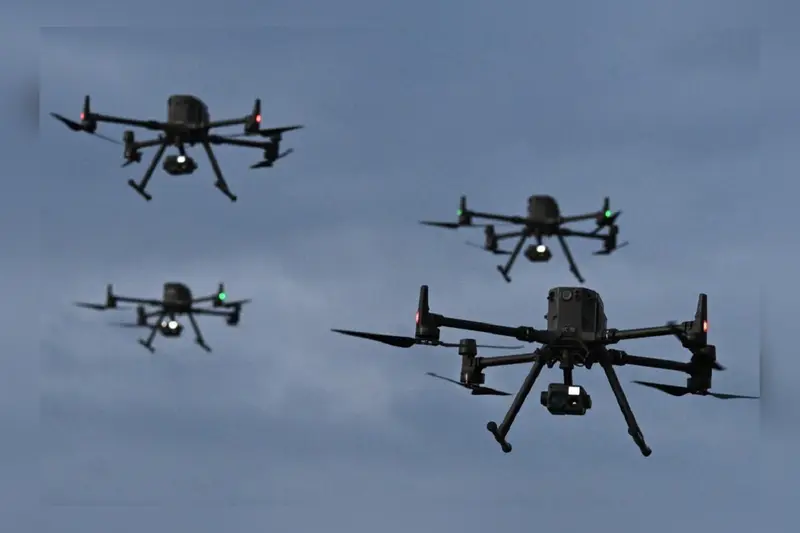
The number of sightings of rogue drones near military bases in the UK has doubled in the last year, from 126 incidents reported in 2024 to 266 events in 2025, a rise of over 100 per cent, following which the government is planning to give military personnel new powers to shoot down unidentified drones near British bases. Government sources have said that they cannot rule out the role of ‘hostile state actors’ in some of the drone incidents. UK Defence Secretary John Healey said, “The doubling of rogue drones near military sites in the UK in the last year underlines the increasing and changing nature of the threats we face.”
UK military personnel do not have power to shoot down drones
As of now, military personnel do not have the legal power to shoot down drones, and they have to rely on the police, but the government is now going to change that by introducing a legislation, which will give powers to the military to take action against drones operating underwater.“Through the Armed Forces Bill we’re giving our military greater powers to take out and shoot down threatening drones near bases, and stepping up investment in counter-drone technology to keep Britain secure at home and strong abroad,” Healey added.
As per the existing protocol, soldiers have to divert drones or disrupt their GPS signal using counter-drone equipment. While the new powers are mostly focused on military sites, the provision could be extended to civilian locations like airports.
Stricter drone operating rules now in place
Last year, multiple drones were spotted over four British air bases used by the US Air Force, namely, RAF Lakenheath and RAF Mildenhall, in Suffolk, RAF Feltwell in Norfolk and RAF Fairford in Gloucestershire.Stricter drone operating rules came into effect in the UK at the start of this year. Flier IDs are required for anyone flying a drone or model aircraft
.
An uptick of drone incursions across Europe last year, including at commercial airports and power stations, was blamed on Russia's suspected programme of "hybrid warfare", almost four years into its full-scale invasion of Ukraine.


