

- Joined
- Sep 22, 2008
- Messages
- 98,580
- Points
- 113
- Data Visualization
- Recommendations
- Research & Analysis
- Series
- Interviews
- About This Site
- Submission Guidelines
Newsletter
SubmitFood
Gaza's Food Crisis Began Long Before the Israel-Hamas Conflict
The threat of famine has deepened with war and will continue after the conflict ends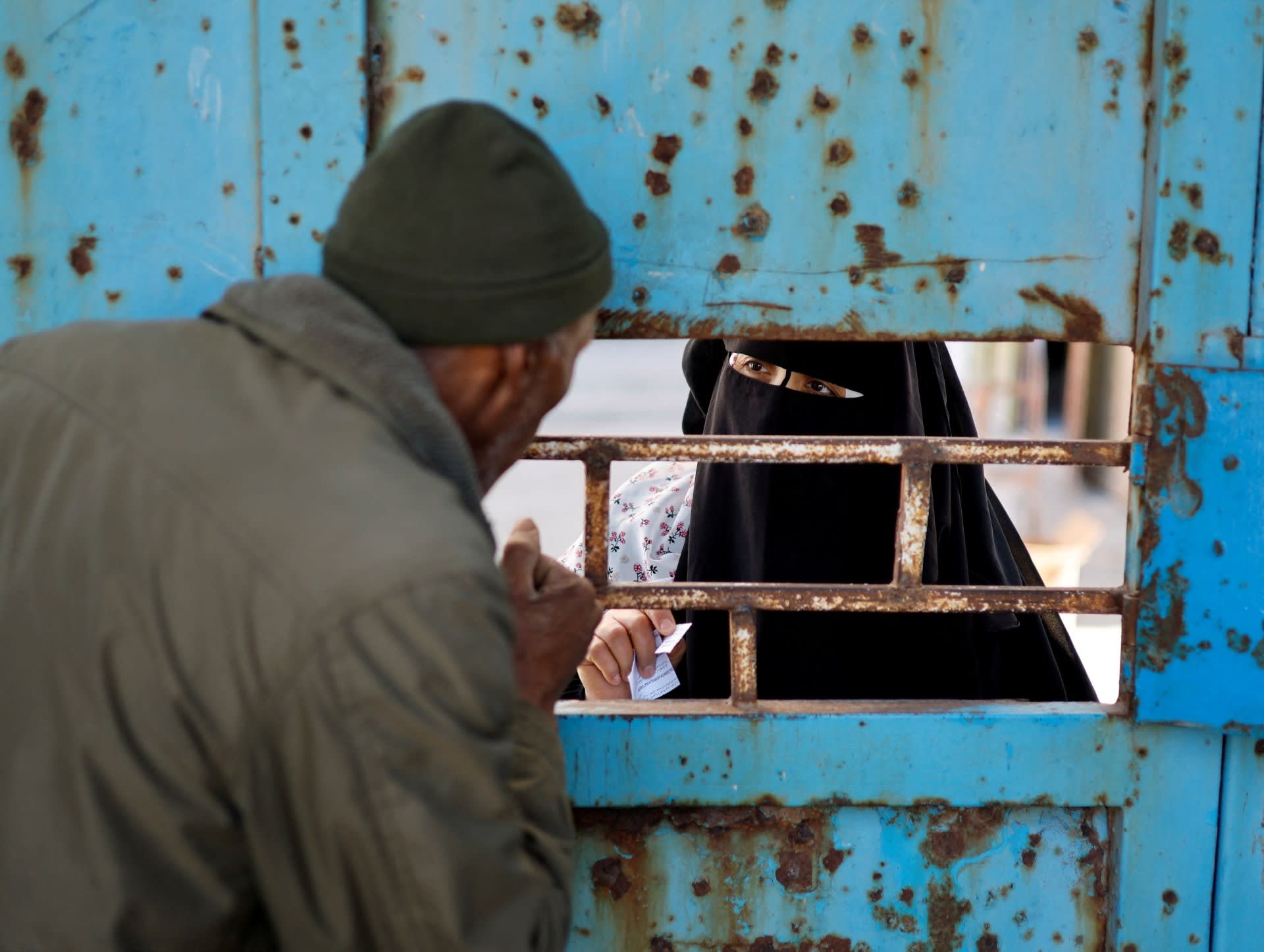
A Palestinian woman waits to receive food supplies at an aid distribution center run by United Nations Relief and Works Agency (UNRWA), at Beach refugee camp, in Gaza City, on March 10, 2022. REUTERS/Mohammed Salem
by Simone Lipkind
April 18, 2024
Ten days after an Israel Defense Forces (IDF) drone strike killed seven aid workers distributing food with the World Central Kitchen, USAID Director Samantha Power confirmed on April 11 what many humanitarian experts had claimed long prior: Famine is under way in the northern Gaza Strip.
Yet the seeds of Gaza's famine were sown long before these aid workers' deaths and even before the devastating October 7 attack by Hamas. In 2022, 64.3% of Gaza's population was already classified as being moderately or severely food insecure, and 77% of residents reported that all of their family members had reduced the number of meals they consume per day.
Even though Israel's war with Hamas has brought Gaza's population to the brink of famine, Israeli policies that predate October 7 created a food insecure environment that was uniquely vulnerable to this threat. Israeli government officials have emphasized Hamas's role in precipitating the hunger crisis, specifically, its history of diverting aid and stockpiling resources to benefit a select few, but a wide variety of aid groups insist that the biggest challenge to their famine prevention efforts is Israel's military campaign, not Hamas's hoarding of humanitarian assistance.
Farms and Fish
Starting in 2007, after Hamas took control of Gaza, Israel instituted new security regulations that hampered the territory's infrastructure and limited access to food throughout the strip. To protect its civilian population in southern Israel, the IDF carved a thousand-kilometer buffer zone out of Gaza's territory, taking 29% of its farmland out of its normal circulation in one of the world's most densely populated territories. Both Israel and Egypt also enforced a blockade of the strip, and Israel strictly regulated whether items it considered dual use, anything that could have both a civilian and military purpose, could enter the territory.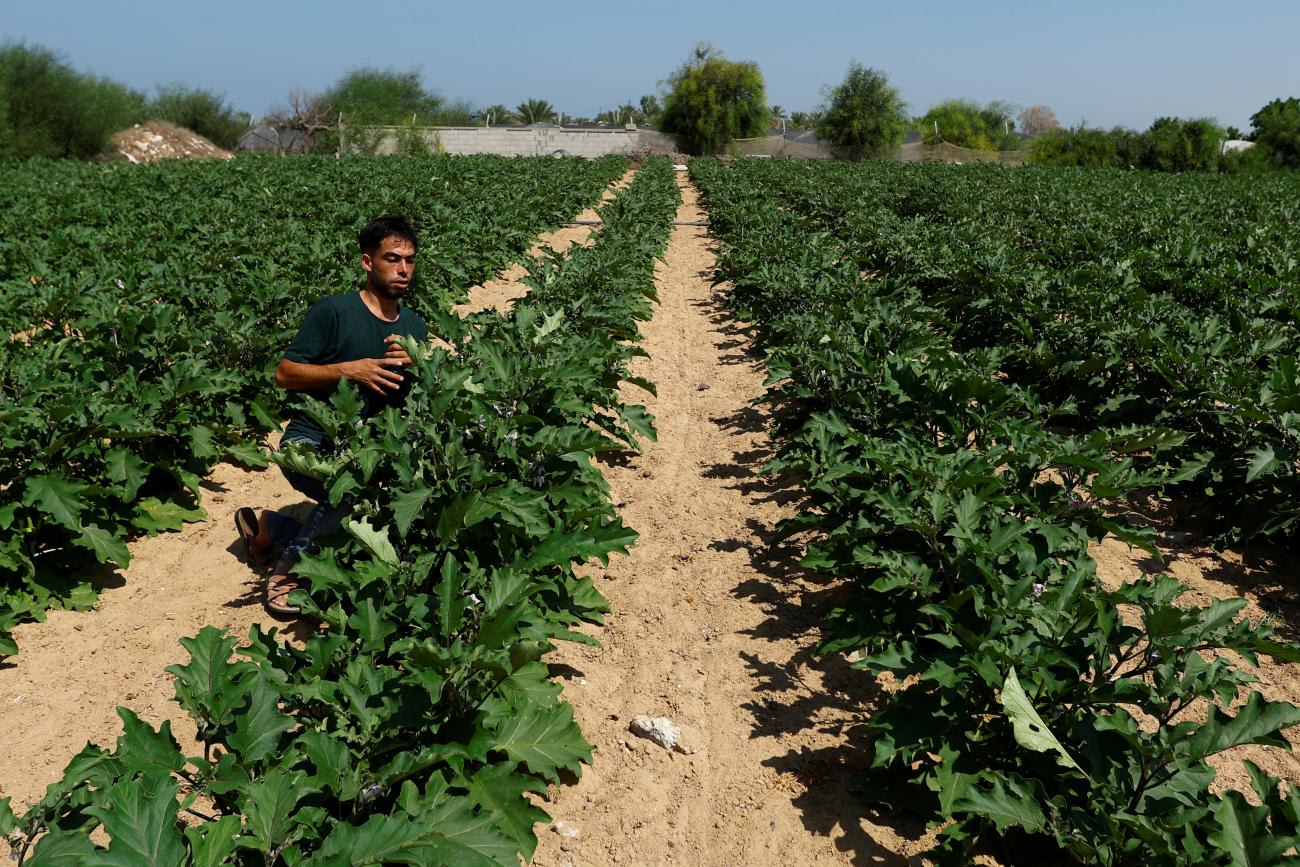
Those import restrictions kept food items including dates, certain agricultural fertilizers, and materials critical to developing and maintaining infrastructure, such as concrete, out of Gaza. Controls on dual-use items have devastated electricity infrastructure and contributed to chronic energy deficits throughout Gaza, exacerbating food insecurity by making refrigeration unreliable.
Some 70% of water-, sanitation-, and hygiene-related materials also appear on Israel's dual-use list, and, before October 7, less than 16% of the materials critical to water infrastructure were reaching Gaza. Almost one-third of Gazan households were not connected to sanitation systems, and Gaza's sole freshwater aquifer had been overdrawn, the void filled by seawater and untreated sewage. As a result, 97% of Gaza's freshwater supply was unsuitable for human consumption by 2019.
This water contamination, in addition to being the leading cause of infant mortality in the strip, had also driven food insecurity given Israeli restrictions on fishing off Gaza's coast. Israel maintains full control of the waters off of Gaza, and although the exact perimeter has fluctuated depending on negotiations, the Israeli military has set firm limits on fishing areas for Gazans, ranging from 3 to 15 nautical miles. Those restrictions compelled Gazans to fish mostly in shallow, sewage-filled waters and contributed to the persistent overfishing of polluted fish. Even when restrictions were looser, many fishermen did not have boats capable of traversing deeper waters because more powerful engines are also considered dual-use materials.
Hamas made matters worse by continuously prioritizing regime survival over the needs of Gazan civilians. Hamas imposed steep tax hikes on many food items in 2015, 2019, 2022, and 2023 even though its leadership often claimed that these revenues were meant to benefit its civil servants. The group also reportedly stockpiled months of food for its fighters leading up to October 7 but not for unaffiliated Gazan civilians.
Two-Thirds
Given the plethora of obstacles, two-thirds of Gaza's population depended on food assistance before the war
Given the plethora of obstacles, two-thirds of Gaza's population depended on food assistance before the war.
These challenges existed before Israel's current offensive in Gaza, but conflict has long and consistently intensified Gaza's food shortages. After Operation Cast Lead in 2009, Israel limited fishing grounds to three nautical miles from Gaza's shore, leading to a 47% decrease in total catch. That same war also damaged 17% of Gaza's cultivated land by both bulldozing and chemical contamination in agricultural areas. In 2014, during another outbreak of violence between Israel and Hamas, the Israeli military killed almost 2,000 cattle and destroyed or partially destroyed 10 dairy processors. The total loss just to the dairy sector exceeded $43 million.


