
-
IP addresses are NOT logged in this forum so there's no point asking. Please note that this forum is full of homophobes, racists, lunatics, schizophrenics & absolute nut jobs with a smattering of geniuses, Chinese chauvinists, Moderate Muslims and last but not least a couple of "know-it-alls" constantly sprouting their dubious wisdom. If you believe that content generated by unsavory characters might cause you offense PLEASE LEAVE NOW! Sammyboy Admin and Staff are not responsible for your hurt feelings should you choose to read any of the content here. The OTHER forum is HERE so please stop asking.
You are using an out of date browser. It may not display this or other websites correctly.
You should upgrade or use an alternative browser.
You should upgrade or use an alternative browser.
The truth about BYD?
- Thread starter Leongsam
- Start date

- Joined
- Jul 10, 2008
- Messages
- 67,559
- Points
- 113
The YouTube video from the channel Statrys (uploaded April 17, 2026) is titled **" BYD : The UGLY TRUTH behind the miracle..."**. It presents a skeptical, dramatic narrative about **BYD** (Build Your Dreams), the Chinese electric vehicle and battery giant, framing its rapid rise as less of a market success and more of a state-backed disruption with underlying vulnerabilities.
### Video Summary
The ~15-minute video follows this structure:
- **Intro/The Massacre (0:00–3:45)**: It claims that in just three years, BYD has turned the global auto industry into a "bloodbath." Examples include Mercedes profits down 28%, Porsche losing 92% of profits in a year, Volkswagen cutting 50,000 jobs, and Stellantis posting a $26 billion loss—allegedly all linked to BYD's aggressive low-cost EV and plug-in hybrid push. It highlights BYD's dominance in markets like Thailand (quickly gaining ~40% EV share, leading to local factory issues), Singapore, Malaysia, Europe (11%+ of some EV sales), Brazil (~70%+ EV share), Mexico, and others. The U.S. is noted as blocking BYD for security reasons.
- **The Playbook (3:45–8:04)**: BYD started as a battery maker in the 1990s under Wang Chuanfu. It achieved vertical integration (making nearly everything in-house, from batteries to components), survived supply chain shocks better than rivals, focused heavily on affordable plug-in hybrids (PHEVs) for China's massive market, and developed the "Blade Battery" (LFP chemistry, marketed as safer and cheaper—briefly supplied to Tesla). This system is portrayed as hard for Western competitors to replicate.
- **It's Not a Company, It's a Weapon (8:04–10:20)**: BYD is depicted as an instrument of China's "Made in China 2025" industrial policy under Xi Jinping. It allegedly received billions in subsidies (e.g., free land, cheap loans, tax breaks, and consumer incentives of $2,000–4,000 per vehicle), allowing it to sell below cost in some cases while still reporting profits.
- **The Rot Underneath (10:20–13:58)**: Here the tone turns sharply negative. Claims include massive "hidden debt" (~323 billion yuan vs. reported ~42 billion, via extended supply chain financing with 275-day supplier payments), "zero-mileage used cars" schemes that inflate reported sales (new cars registered and then sold/exported as "used" via shell companies), quality problems (e.g., 2024 recalls of ~97,000 and ~115,000 vehicles for defects; complaints about features like radios/GPS in models like the Sea Lion), labor issues (allegations of poor conditions in Brazil), and recent financial cracks (19% profit drop in 2025, sharp sales declines early 2026, losing ground to Geely, government warnings on destructive price wars). It draws parallels to Evergrande's debt-fueled collapse.
- **What Comes Next**: BYD remains huge but "fragile." China will push dominance in more sectors, shifting global auto power toward places like Shenzhen. The video positions itself as revealing the "real story" beyond glowing Harvard-style case studies.
Overall, it's a classic "rise and potential fall" story: praising operational ingenuity and vertical integration while heavily emphasizing state support, accounting tricks, quality risks, and unsustainability in a brutal price war.
### Are the Claims True? (Fact-Checked Assessment)
The video mixes **well-supported facts**, **exaggerations for drama**, and **plausible but interpretive claims**. It's not outright fabricated, but the sensational framing ("massacre," "weapon," "rot," "ugly truth") amplifies negatives while downplaying BYD's genuine innovations and market achievements. Here's a breakdown:
**Largely Accurate Claims**:
- **Competitor struggles and market disruption**: Legitimate. Legacy automakers have faced EV transition pains, China competition, and slowing demand in some segments. Volkswagen announced plans to cut ~50,000 jobs in Germany by 2030 amid profit drops (lowest since 2016), citing China competition, tariffs, and EV costs. Stellantis reported a massive ~$26 billion net loss for 2025, largely tied to EV strategy write-downs and charges (~€22–25 billion) as it pivoted back toward hybrids/gas amid slower-than-expected electrification. BYD has rapidly gained share in emerging markets (e.g., dominant EV position in Brazil ~70–85% of electrified sales in recent periods; strong in Thailand, Mexico, etc., with Chinese brands taking large portions of EV sales there).
- **Vertical integration, Blade Battery, and history**: True. BYD started in batteries, bought a failing auto factory, integrated deeply (helping it weather chip/lithium shocks), and its Blade LFP battery is a real, safer/cheaper design. It has supplied (or was contracted to supply) batteries to Tesla in limited cases (e.g., for some European Model Y production).
- **Subsidies**: Substantiated. BYD benefited heavily from Chinese government support for new energy vehicles (NEVs), including direct subsidies estimated at ~$3.7–4.3 billion in various periods (e.g., 2015–2020 or 2018–2022), plus broader ecosystem aid, tax breaks, and consumer incentives. This was part of national policy to build EV leadership.
- **Financial pressures and recalls**: Current as of early 2026. BYD posted its first annual profit decline in four years (~19% drop to ~32.6 billion yuan in 2025), with revenue growth slowing, domestic sales weakening amid intense competition/price wars (Geely gaining), and early 2026 sales drops. It has faced major recalls (e.g., ~97,000 in 2024 for steering issues; ~115,000 in late 2025 for design/battery defects in older Tang/Yuan models).
- **Zero-mileage cars and sales practices**: Real issue in China's auto sector. Regulators have investigated/summoned makers (including BYD) over new cars being registered and sold/exported as "used" (zero-mileage) to inflate figures, clear inventory, or game incentives—often backed by local governments chasing targets.
**Partially Accurate or Contextual Claims**:
- **"Bloodbath in three years" and specific profit/job losses**: Directionally true but overstated as solely BYD's doing. Legacy makers' issues stem from multiple factors (slow EV adoption in some markets, high costs, tariffs, overinvestment in EVs, broader economic pressures). BYD is a major disruptor via low prices, but not the only cause. Porsche/Mercedes figures appear selective or from specific periods; the video ties them loosely to BYD.
- **Hidden debt (~323 billion yuan)**: Based on analyst reports (e.g., GMT Research, known for flagging Evergrande issues). It adjusts for off-balance-sheet supply chain financing (long payables, notes to suppliers—BYD has extended terms like 275 days). Official net debt is much lower (~27–42 billion yuan range in reports). This is a valid critique of opacity/leverage risks, but not undisputed "hidden" fraud—common in Chinese firms and debated in scale/impact. Similar tactics have strained suppliers.
**Interpretive/Opinion-Heavy**:
- Framing BYD as a "weapon" of the state rather than a (heavily supported) company: Common geopolitical view, especially amid trade tensions. Subsidies and policy alignment are real, but BYD also executes well on cost, scale, and tech (e.g., vertical integration is a strength, not just a subsidy artifact). Many governments subsidize strategic industries.
- "Rot" and Evergrande comparison: Alarmist. BYD is profitable overall (despite the 2025 dip), cash-generative in parts of the business, and expanding overseas production. The price war is brutal (chairman has called it a "knockout stage"), and risks exist, but it's not collapsing. Quality complaints and recalls happen across the industry, especially in rapid scaling.
**Overall Verdict**: The video's core facts check out against public reports, earnings, and news from 2025–early 2026. BYD's rise involves real strengths (integration, affordable PHEVs/EVs, battery tech) plus heavy state support, and it now faces genuine headwinds (domestic saturation, price wars, slowing growth, quality/leveraging scrutiny). However, the presentation is one-sided and hyperbolic—portraying success as mostly "ugly" manipulation while underplaying innovation and adaptability. It's more opinionated analysis (from a channel focused on Asia business insights) than neutral reporting. Legacy automakers' pain is multifaceted, not just a BYD "massacre."
If you're evaluating BYD as an investment, competitor, or policy issue, the video highlights legitimate risks (subsidies distorting markets, financial opacity, overcapacity) but should be balanced with BYD's scale advantages and ongoing global expansion. For the latest, check primary sources like company filings, IEA EV reports, or Reuters/Bloomberg coverage.
### Video Summary
The ~15-minute video follows this structure:
- **Intro/The Massacre (0:00–3:45)**: It claims that in just three years, BYD has turned the global auto industry into a "bloodbath." Examples include Mercedes profits down 28%, Porsche losing 92% of profits in a year, Volkswagen cutting 50,000 jobs, and Stellantis posting a $26 billion loss—allegedly all linked to BYD's aggressive low-cost EV and plug-in hybrid push. It highlights BYD's dominance in markets like Thailand (quickly gaining ~40% EV share, leading to local factory issues), Singapore, Malaysia, Europe (11%+ of some EV sales), Brazil (~70%+ EV share), Mexico, and others. The U.S. is noted as blocking BYD for security reasons.
- **The Playbook (3:45–8:04)**: BYD started as a battery maker in the 1990s under Wang Chuanfu. It achieved vertical integration (making nearly everything in-house, from batteries to components), survived supply chain shocks better than rivals, focused heavily on affordable plug-in hybrids (PHEVs) for China's massive market, and developed the "Blade Battery" (LFP chemistry, marketed as safer and cheaper—briefly supplied to Tesla). This system is portrayed as hard for Western competitors to replicate.
- **It's Not a Company, It's a Weapon (8:04–10:20)**: BYD is depicted as an instrument of China's "Made in China 2025" industrial policy under Xi Jinping. It allegedly received billions in subsidies (e.g., free land, cheap loans, tax breaks, and consumer incentives of $2,000–4,000 per vehicle), allowing it to sell below cost in some cases while still reporting profits.
- **The Rot Underneath (10:20–13:58)**: Here the tone turns sharply negative. Claims include massive "hidden debt" (~323 billion yuan vs. reported ~42 billion, via extended supply chain financing with 275-day supplier payments), "zero-mileage used cars" schemes that inflate reported sales (new cars registered and then sold/exported as "used" via shell companies), quality problems (e.g., 2024 recalls of ~97,000 and ~115,000 vehicles for defects; complaints about features like radios/GPS in models like the Sea Lion), labor issues (allegations of poor conditions in Brazil), and recent financial cracks (19% profit drop in 2025, sharp sales declines early 2026, losing ground to Geely, government warnings on destructive price wars). It draws parallels to Evergrande's debt-fueled collapse.
- **What Comes Next**: BYD remains huge but "fragile." China will push dominance in more sectors, shifting global auto power toward places like Shenzhen. The video positions itself as revealing the "real story" beyond glowing Harvard-style case studies.
Overall, it's a classic "rise and potential fall" story: praising operational ingenuity and vertical integration while heavily emphasizing state support, accounting tricks, quality risks, and unsustainability in a brutal price war.
### Are the Claims True? (Fact-Checked Assessment)
The video mixes **well-supported facts**, **exaggerations for drama**, and **plausible but interpretive claims**. It's not outright fabricated, but the sensational framing ("massacre," "weapon," "rot," "ugly truth") amplifies negatives while downplaying BYD's genuine innovations and market achievements. Here's a breakdown:
**Largely Accurate Claims**:
- **Competitor struggles and market disruption**: Legitimate. Legacy automakers have faced EV transition pains, China competition, and slowing demand in some segments. Volkswagen announced plans to cut ~50,000 jobs in Germany by 2030 amid profit drops (lowest since 2016), citing China competition, tariffs, and EV costs. Stellantis reported a massive ~$26 billion net loss for 2025, largely tied to EV strategy write-downs and charges (~€22–25 billion) as it pivoted back toward hybrids/gas amid slower-than-expected electrification. BYD has rapidly gained share in emerging markets (e.g., dominant EV position in Brazil ~70–85% of electrified sales in recent periods; strong in Thailand, Mexico, etc., with Chinese brands taking large portions of EV sales there).
- **Vertical integration, Blade Battery, and history**: True. BYD started in batteries, bought a failing auto factory, integrated deeply (helping it weather chip/lithium shocks), and its Blade LFP battery is a real, safer/cheaper design. It has supplied (or was contracted to supply) batteries to Tesla in limited cases (e.g., for some European Model Y production).
- **Subsidies**: Substantiated. BYD benefited heavily from Chinese government support for new energy vehicles (NEVs), including direct subsidies estimated at ~$3.7–4.3 billion in various periods (e.g., 2015–2020 or 2018–2022), plus broader ecosystem aid, tax breaks, and consumer incentives. This was part of national policy to build EV leadership.
- **Financial pressures and recalls**: Current as of early 2026. BYD posted its first annual profit decline in four years (~19% drop to ~32.6 billion yuan in 2025), with revenue growth slowing, domestic sales weakening amid intense competition/price wars (Geely gaining), and early 2026 sales drops. It has faced major recalls (e.g., ~97,000 in 2024 for steering issues; ~115,000 in late 2025 for design/battery defects in older Tang/Yuan models).
- **Zero-mileage cars and sales practices**: Real issue in China's auto sector. Regulators have investigated/summoned makers (including BYD) over new cars being registered and sold/exported as "used" (zero-mileage) to inflate figures, clear inventory, or game incentives—often backed by local governments chasing targets.
**Partially Accurate or Contextual Claims**:
- **"Bloodbath in three years" and specific profit/job losses**: Directionally true but overstated as solely BYD's doing. Legacy makers' issues stem from multiple factors (slow EV adoption in some markets, high costs, tariffs, overinvestment in EVs, broader economic pressures). BYD is a major disruptor via low prices, but not the only cause. Porsche/Mercedes figures appear selective or from specific periods; the video ties them loosely to BYD.
- **Hidden debt (~323 billion yuan)**: Based on analyst reports (e.g., GMT Research, known for flagging Evergrande issues). It adjusts for off-balance-sheet supply chain financing (long payables, notes to suppliers—BYD has extended terms like 275 days). Official net debt is much lower (~27–42 billion yuan range in reports). This is a valid critique of opacity/leverage risks, but not undisputed "hidden" fraud—common in Chinese firms and debated in scale/impact. Similar tactics have strained suppliers.
**Interpretive/Opinion-Heavy**:
- Framing BYD as a "weapon" of the state rather than a (heavily supported) company: Common geopolitical view, especially amid trade tensions. Subsidies and policy alignment are real, but BYD also executes well on cost, scale, and tech (e.g., vertical integration is a strength, not just a subsidy artifact). Many governments subsidize strategic industries.
- "Rot" and Evergrande comparison: Alarmist. BYD is profitable overall (despite the 2025 dip), cash-generative in parts of the business, and expanding overseas production. The price war is brutal (chairman has called it a "knockout stage"), and risks exist, but it's not collapsing. Quality complaints and recalls happen across the industry, especially in rapid scaling.
**Overall Verdict**: The video's core facts check out against public reports, earnings, and news from 2025–early 2026. BYD's rise involves real strengths (integration, affordable PHEVs/EVs, battery tech) plus heavy state support, and it now faces genuine headwinds (domestic saturation, price wars, slowing growth, quality/leveraging scrutiny). However, the presentation is one-sided and hyperbolic—portraying success as mostly "ugly" manipulation while underplaying innovation and adaptability. It's more opinionated analysis (from a channel focused on Asia business insights) than neutral reporting. Legacy automakers' pain is multifaceted, not just a BYD "massacre."
If you're evaluating BYD as an investment, competitor, or policy issue, the video highlights legitimate risks (subsidies distorting markets, financial opacity, overcapacity) but should be balanced with BYD's scale advantages and ongoing global expansion. For the latest, check primary sources like company filings, IEA EV reports, or Reuters/Bloomberg coverage.

- Joined
- Sep 22, 2008
- Messages
- 96,611
- Points
- 113
BYD buses were used in California 10 years or more ago.

- Joined
- Jun 17, 2020
- Messages
- 17,160
- Points
- 113
While everyone is buying EV, I will still go for old fashion petrol car. I do not feel that ev is safe. Fire after fire. How safe is the battery? Some more it is made in China.

- Joined
- Jul 2, 2021
- Messages
- 5,392
- Points
- 113
and yes one would better start singing the garhmen praises and stick to the party's narrative before the EV starts driving itself off the cliff or burst into flames with the door tightly locked.... BTW, I am not joking. I am serious.While everyone is buying EV, I will still go for old fashion petrol car. I do not feel that ev is safe. Fire after fire. How safe is the battery? Some more it is made in China.

- Joined
- Aug 10, 2008
- Messages
- 114,212
- Points
- 113
Reminder: during the height of the Covid scamdemic, BYD manufactured face masks. Sinkies have received a few boxes of BYD face masks in the PAP regime's (Temasek Foundation) 'Stay Masked' campaign.
A normal, privately owned EV manufacturer would not be able to suka suka change its production line like that. It was a directive from the CCP govt, and BYD is another one of China's GLCs.
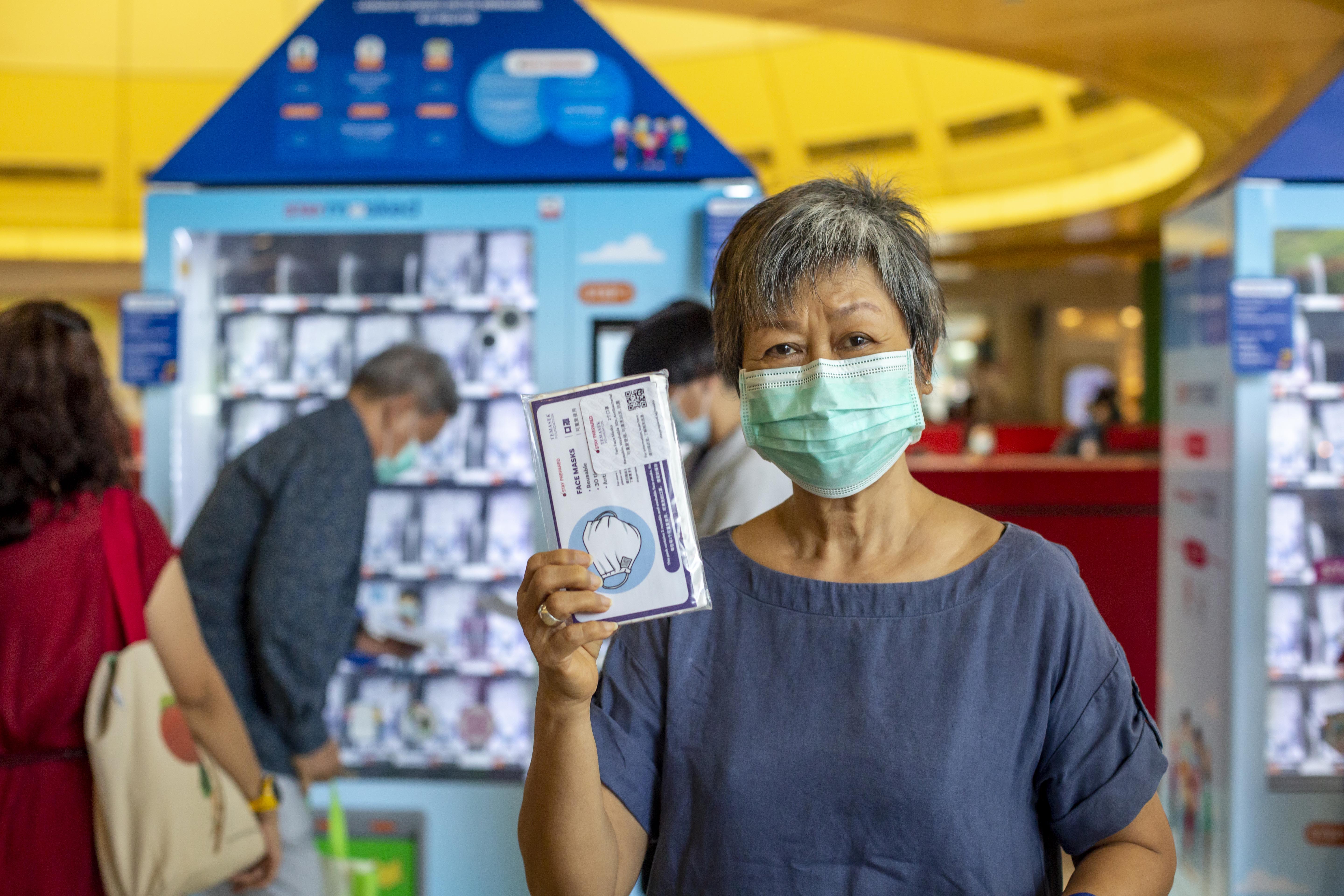
A normal, privately owned EV manufacturer would not be able to suka suka change its production line like that. It was a directive from the CCP govt, and BYD is another one of China's GLCs.

- Joined
- Jun 27, 2018
- Messages
- 31,647
- Points
- 113
Uh look at your house..how many things inside is made in China?While everyone is buying EV, I will still go for old fashion petrol car. I do not feel that ev is safe. Fire after fire. How safe is the battery? Some more it is made in China.
- Joined
- Jun 27, 2018
- Messages
- 31,647
- Points
- 113
Are those buses still running?BYD buses were used in California 10 years or more ago.
- Joined
- Sep 22, 2008
- Messages
- 96,611
- Points
- 113
Its assembled thereAre those buses still running?
BYD (Build Your Dreams) manufactures battery-electric buses in Lancaster, California, featuring over 70% U.S. materials and utilizing safe Lithium Iron Phosphate (LFP) batteries. With over 1,000 vehicles on the road or in production across the U.S., they are a major provider for California transit agencies.
Key Details About BYD Buses in California:
- Manufacturing: The buses are produced in a large, dedicated facility in Lancaster, California, focusing on sustainability and local job creation.
- Performance: A study by LADOT found that BYD electric buses outperformed compressed natural gas buses in efficiency, maintenance, and emissions, notes the California Energy Commission.
- Adoption: Major agencies in California, including the Los Angeles Department of Transportation (LADOT), use BYD buses to replace diesel fleets and meet clean energy goals.
- Technology: These buses use LFP batteries, which are recognized for safety and reliability.
California Energy Commission (.gov) +3

- Joined
- Jul 18, 2014
- Messages
- 6,593
- Points
- 113
Buying BYD nao!
- Joined
- Sep 22, 2008
- Messages
- 96,611
- Points
- 113
Geely makes better cars. If you want value, leap motors. B10. Cheap and well made. Put german cars to shame.Buying BYD nao!
- Joined
- Jun 27, 2018
- Messages
- 31,647
- Points
- 113
Uh all nip cars put Kraut cars to shameGeely makes better cars. If you want value, leap motors. B10. Cheap and well made. Put german cars to shame.

- Joined
- Jul 25, 2008
- Messages
- 65,186
- Points
- 113
i rode in a byd yesterday. smooth ride plus plenty of electric juice for a relative large screen and other gadgets. gimmicky interior with elegant curves although the front dash can be better. porsche macan lookalike sexterior. very copy cat in style especially taking not just a page but almost the whole book from porsche. if it can go 699 miles on 1 charge, i.e. from sf to sd, without recharging midway, i’ll buy one for the price of an equivalent tesla.
- Joined
- Apr 19, 2015
- Messages
- 5,037
- Points
- 113
Bullcrap. If byd have toh, why yterday star award still advertise them??
- Joined
- Sep 22, 2008
- Messages
- 96,611
- Points
- 113
The moment range reaches 700km, there'll be a major shift to EV.. Right now tesla model 3 LR, new BMW's and mercedes EV models already there.i rode in a byd yesterday. smooth ride plus plenty of electric juice for a relative large screen and other gadgets. gimmicky interior with elegant curves although the front dash can be better. porsche macan lookalike sexterior. very copy cat in style especially taking not just a page but almost the whole book from porsche. if it can go 699 miles on 1 charge, i.e. from sf to sd, without recharging midway, i’ll buy one for the price of an equivalent tesla.
- Joined
- Jul 25, 2008
- Messages
- 65,186
- Points
- 113
for me it has to be 699 miles which equals 1125 km. game changer.The moment range reaches 700km, there'll be a major shift to EV.. Right now tesla model 3 LR, new BMW's and mercedes EV models already there.
Similar threads


- Replies
- 11
- Views
- 1K


- Replies
- 1
- Views
- 240