
- Joined
- Apr 14, 2011
- Messages
- 20,449
- Points
- 113
Steamed!
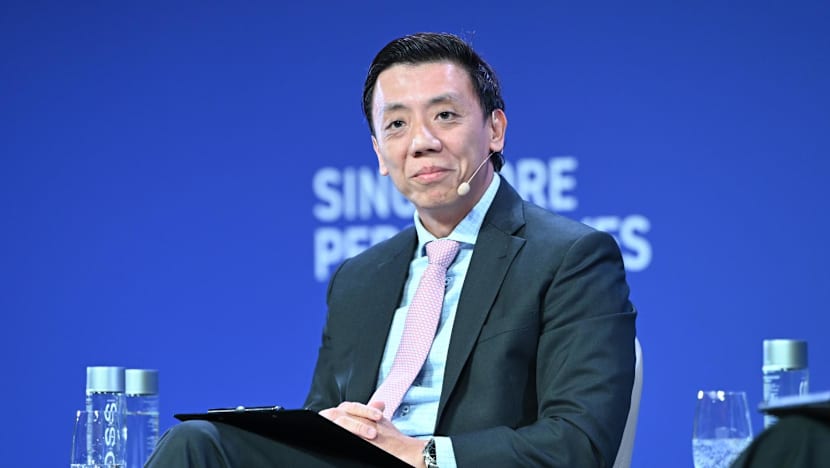
Acting Transport Minister Jeffrey Siow speaking on a panel at the Institute of Policy Studies’ Singapore Perspectives 2026 conference. (Photo: IPS)

Bookmark
WhatsAppTelegramFacebookTwitterEmailLinkedIn
Set CNA as your preferred source on Google
Add CNA as a trusted source to help Google better understand and surface our content in search results.
Read a summary of this article on FAST.
FAST
SINGAPORE: Singapore needs to do more with integration so that the country can do more immigration, said Acting Transport Minister Jeffrey Siow on Monday (Jan 26).
Speaking at the Institute of Policy Studies’ Singapore Perspectives 2026 conference, he called Singapore's total fertility rate of 0.97 "abysmal" and noted that it was far below the replacement rate.
Advertisement
"The truth that we have to confront is that immigration is crucial to retain the dynamism of Singaporean society and economy," he added.
"But immigration can only go as far as integration allows, and we can only stay open and welcoming to newcomers if we are able to integrate them well.
"So, I think we need to do a better job with integration so that we can do more immigration. Let me repeat that. We need to do more with integration so that we can do more immigration."
To do this, the country has to make newcomers feel Singaporean and also make Singaporeans feel that the newcomers are Singaporean, said Mr Siow.
“In theory, Singapore is a young immigrant nation, but why is this difficult? Maybe it's because we don't feel secure enough about what it means to be Singaporean,” he said, adding that this attitude is natural.
Advertisement
It is also natural that it is harder to forge understanding and trust when newcomers come from much more diverse backgrounds than before, he said.
He added that all sides will have to make "an extra effort", and that newcomers need to want to integrate, contribute to the community, abide by Singapore's norms and "understand what it means to be Singaporean".
“Singaporeans also have to be open-minded too. Accept that the identity we have today will evolve, and understand that it takes time for newcomers to adapt to our local customs and practices," said Mr Siow.
Quoting former Deputy Prime Minister S Rajaratnam, Mr Siow stressed that being Singaporean is not about ancestry or birthplace. “It’s about choice, conviction and contribution, and I believe very strongly in that.”
According to the latest Population in Brief report by the National Population and Talent Division of the Prime Minister’s Office and its partner agencies, there were 3.66 million citizens as of June 2025.
Advertisement
In 2024, 22,766 people were granted citizenship. The average number of citizenships granted per year over the last five years - 2020 to 2024 - was 21,300, slightly higher than the preceding five years at 20,500.

“Alternative affiliations” are emerging because of immigration, with a higher proportion of international marriages and because Singapore has been an open society for a long time.
“In Singapore, we do want people to preserve these varied and alternative affiliations. For example, we love that we have people from all over the world,” said Mr Siow.
The country's varied food scene is a good example of how differences and commonalities can bind people together, he added.
Advertisement
"But it's not easy to keep this balance. It's not easy, especially when we are open and connected, or when we have disagreements and conflict," he said.
"It's also not easy because Singapore is a small country, and we are very easily affected by what happens around us."
Preserving social cohesion is an "unending task", and there will be new faultlines and divisive forces, he said.
Noting that the government plays a critical role in maintaining social cohesion, he raised examples such as Racial Harmony Day and the Ethnic Integration Policy.
This policy mandates racial quotas in public housing blocks and neighbourhoods to prevent ethnic enclaves and to promote social cohesion.
Common spaces, such as schools, parks and community facilities, encourage interaction and mingling across different groups.
“When you have this deliberate mixing strategy across different groups, there will be differences in perspectives from time to time. Therefore, common spaces must also come together with common conversations,” he added.
This is where work on the ground and grassroots leaders are critical, said Mr Siow, adding that opportunities for people to get to know each other will lead to existing relationships built on trust and understanding. When conflict arises, there is a will to work together.
"We have Harmony Circles, which are curated opportunities for religious leaders to come together with grassroots leaders to build bonds during peacetime," Mr Siow said.
When issues arise, these circles come together “very quickly” and mobilise the community to provide support, such as when a parcel containing meat that appeared to be pork was sent to a mosque in Serangoon, and when issues arose at St Joseph’s Church in Bukit Timah last year.
“At the national level, we take these issues seriously," he said, adding that senior politicians come together often for closed-door dialogues with grassroots leaders.
Singapore needs to do more with integration so it can do more immigration: Jeffrey Siow
Calling Singapore's total fertility rate "abysmal", he said immigration is crucial to retain the dynamism of Singapore's society and economy.
Acting Transport Minister Jeffrey Siow speaking on a panel at the Institute of Policy Studies’ Singapore Perspectives 2026 conference. (Photo: IPS)
Ang Hwee Min
26 Jan 2026 07:06PM(Updated: 26 Jan 2026 07:07PM)Bookmark
WhatsAppTelegramFacebookTwitterEmailLinkedIn
Set CNA as your preferred source on Google
Add CNA as a trusted source to help Google better understand and surface our content in search results.
Read a summary of this article on FAST.
FAST
SINGAPORE: Singapore needs to do more with integration so that the country can do more immigration, said Acting Transport Minister Jeffrey Siow on Monday (Jan 26).
Speaking at the Institute of Policy Studies’ Singapore Perspectives 2026 conference, he called Singapore's total fertility rate of 0.97 "abysmal" and noted that it was far below the replacement rate.
Advertisement
"The truth that we have to confront is that immigration is crucial to retain the dynamism of Singaporean society and economy," he added.
"But immigration can only go as far as integration allows, and we can only stay open and welcoming to newcomers if we are able to integrate them well.
"So, I think we need to do a better job with integration so that we can do more immigration. Let me repeat that. We need to do more with integration so that we can do more immigration."
To do this, the country has to make newcomers feel Singaporean and also make Singaporeans feel that the newcomers are Singaporean, said Mr Siow.
“In theory, Singapore is a young immigrant nation, but why is this difficult? Maybe it's because we don't feel secure enough about what it means to be Singaporean,” he said, adding that this attitude is natural.
Advertisement
It is also natural that it is harder to forge understanding and trust when newcomers come from much more diverse backgrounds than before, he said.
He added that all sides will have to make "an extra effort", and that newcomers need to want to integrate, contribute to the community, abide by Singapore's norms and "understand what it means to be Singaporean".
“Singaporeans also have to be open-minded too. Accept that the identity we have today will evolve, and understand that it takes time for newcomers to adapt to our local customs and practices," said Mr Siow.
Quoting former Deputy Prime Minister S Rajaratnam, Mr Siow stressed that being Singaporean is not about ancestry or birthplace. “It’s about choice, conviction and contribution, and I believe very strongly in that.”
According to the latest Population in Brief report by the National Population and Talent Division of the Prime Minister’s Office and its partner agencies, there were 3.66 million citizens as of June 2025.
Advertisement
In 2024, 22,766 people were granted citizenship. The average number of citizenships granted per year over the last five years - 2020 to 2024 - was 21,300, slightly higher than the preceding five years at 20,500.
Related:
Locals and foreigners divided on issues of jobs and identity, but dialogue helps bridge differences: IPS study
Singapore's total fertility rate stays at historic low of 0.97 in 2024
NATIONAL IDENTITY
With each subsequent generation of Singaporeans, the country’s national identity has strengthened, said Mr Siow, adding that this was not something to be taken for granted.“Alternative affiliations” are emerging because of immigration, with a higher proportion of international marriages and because Singapore has been an open society for a long time.
“In Singapore, we do want people to preserve these varied and alternative affiliations. For example, we love that we have people from all over the world,” said Mr Siow.
The country's varied food scene is a good example of how differences and commonalities can bind people together, he added.
Advertisement
"But it's not easy to keep this balance. It's not easy, especially when we are open and connected, or when we have disagreements and conflict," he said.
"It's also not easy because Singapore is a small country, and we are very easily affected by what happens around us."
Preserving social cohesion is an "unending task", and there will be new faultlines and divisive forces, he said.
Noting that the government plays a critical role in maintaining social cohesion, he raised examples such as Racial Harmony Day and the Ethnic Integration Policy.
This policy mandates racial quotas in public housing blocks and neighbourhoods to prevent ethnic enclaves and to promote social cohesion.
Common spaces, such as schools, parks and community facilities, encourage interaction and mingling across different groups.
“When you have this deliberate mixing strategy across different groups, there will be differences in perspectives from time to time. Therefore, common spaces must also come together with common conversations,” he added.
This is where work on the ground and grassroots leaders are critical, said Mr Siow, adding that opportunities for people to get to know each other will lead to existing relationships built on trust and understanding. When conflict arises, there is a will to work together.
"We have Harmony Circles, which are curated opportunities for religious leaders to come together with grassroots leaders to build bonds during peacetime," Mr Siow said.
When issues arise, these circles come together “very quickly” and mobilise the community to provide support, such as when a parcel containing meat that appeared to be pork was sent to a mosque in Serangoon, and when issues arose at St Joseph’s Church in Bukit Timah last year.
“At the national level, we take these issues seriously," he said, adding that senior politicians come together often for closed-door dialogues with grassroots leaders.


