Himalayan vulture seen in S'pore euthanised after rescue due to injuries, ailment & parasites
RIP.

Gawain Pek
January 14, 2026, 03:08 PM


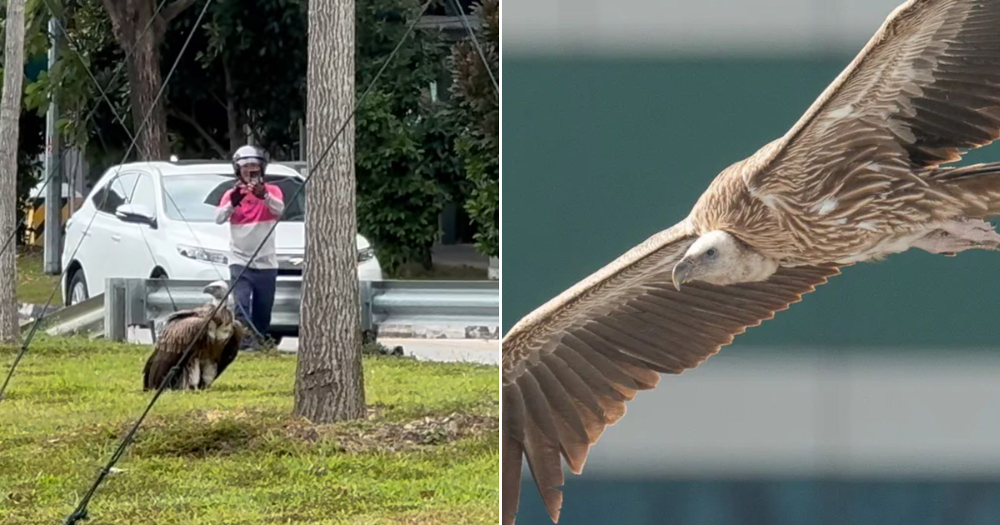
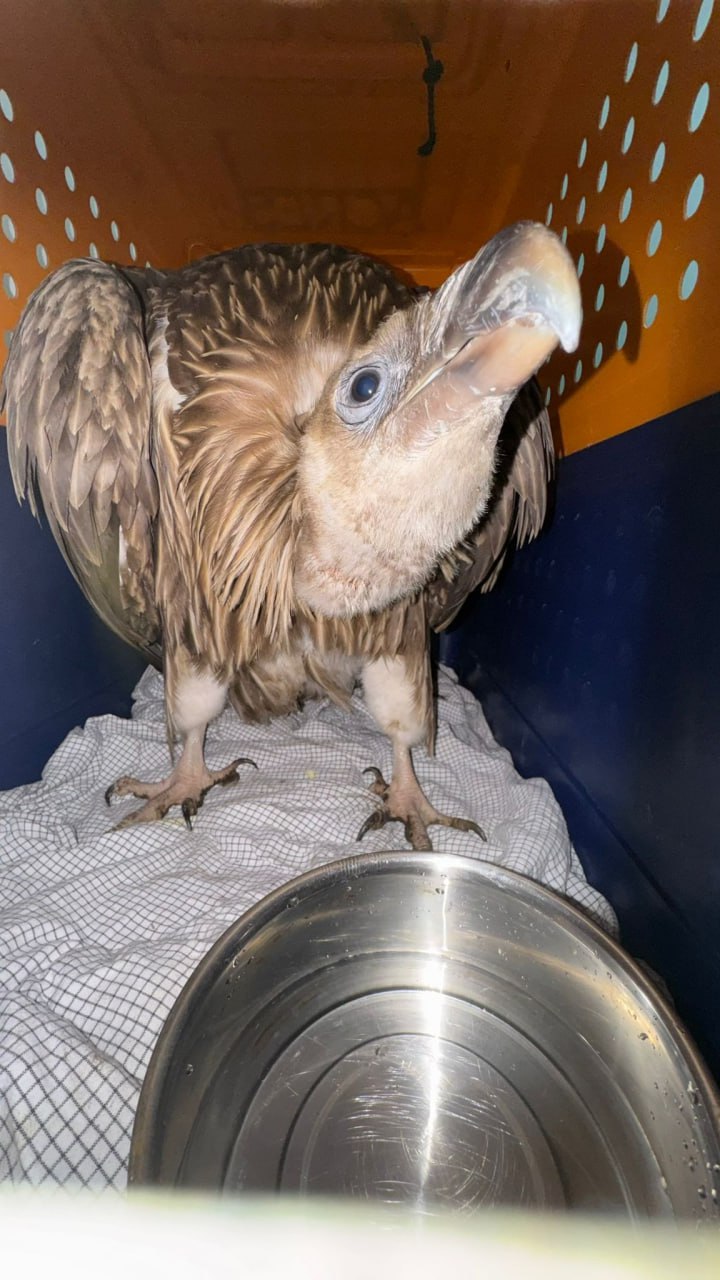
One of the Himalayan vultures that was sighted around Singapore was euthanised after it was rescued on Jan. 3.
It was found with several ailments, including being infested with parasites, muscle injury, anameia and kidney function deficiency.
Another Himalayan vulture was picked up by Acres volunteers on Jan. 11 along the ECP.
Rescued on Jan. 3, euthanised five days later
Responding to queries from
Mothership, Charlene Yeong, a veterinarian at Mandai Wildlife Group and Mandai Nature shared that the Himalayan griffon vulture was rescued by the National Parks Board (NParks) and transferred to Mandai Wildlife Group for specialised veterinary assessment and treatment on Jan. 3, 2026.
"Clinical assessment found the vulture to be severely underweight, weak, and heavily infested with parasites. Further examinations revealed anaemia, possible muscle injury, and kidney function deficiency," Yeong said.
The bird was immediately placed under intensive care.
"Despite these efforts, the vulture’s condition deteriorated on the fifth day. Its kidney function declined rapidly, and the bird became progressively debilitated," Yeong added.
After careful consideration and consultation between Mandai Wildlife Group’s veterinary team and NParks, a joint decision was made to euthanise the vulture.
A post-mortem examination was conducted by Mandai Wildlife Group to investigate the cause of the bird’s declining condition.
Why vultures seen in Singapore?
Yeong explained that recent sightings of Himalayan griffon vultures in Singapore are usually of vagrants that go off course from their usual distribution range.
Juveniles, which tend to venture further, may face a decrease in food sources due to habitat loss and alterations, likely contributing to vultures found in a state of exhaustion and dehydration in Singapore.
Carcass retained by Lee Kong Chian National History Museum
The carcass has been retained at the Lee Kong Chian National History Museum for education and research.
The carcass was placed under the care of
Tan Yen Yi, curator of birds, Lee Kong Chian Natural History Museum, at the National University of Singapore.
Tan shared that this is the first specimen of the species for the museum and for Singapore, joining six other Gyps vulture specimens that were collected in the late 1930s.
"This rare specimen is a valuable addition to Singapore's natural heritage collection that underscores the importance of specimen salvage in supporting proper documentation of our natural landscape," she added.
Another vulture rescued along ECP on Jan. 11
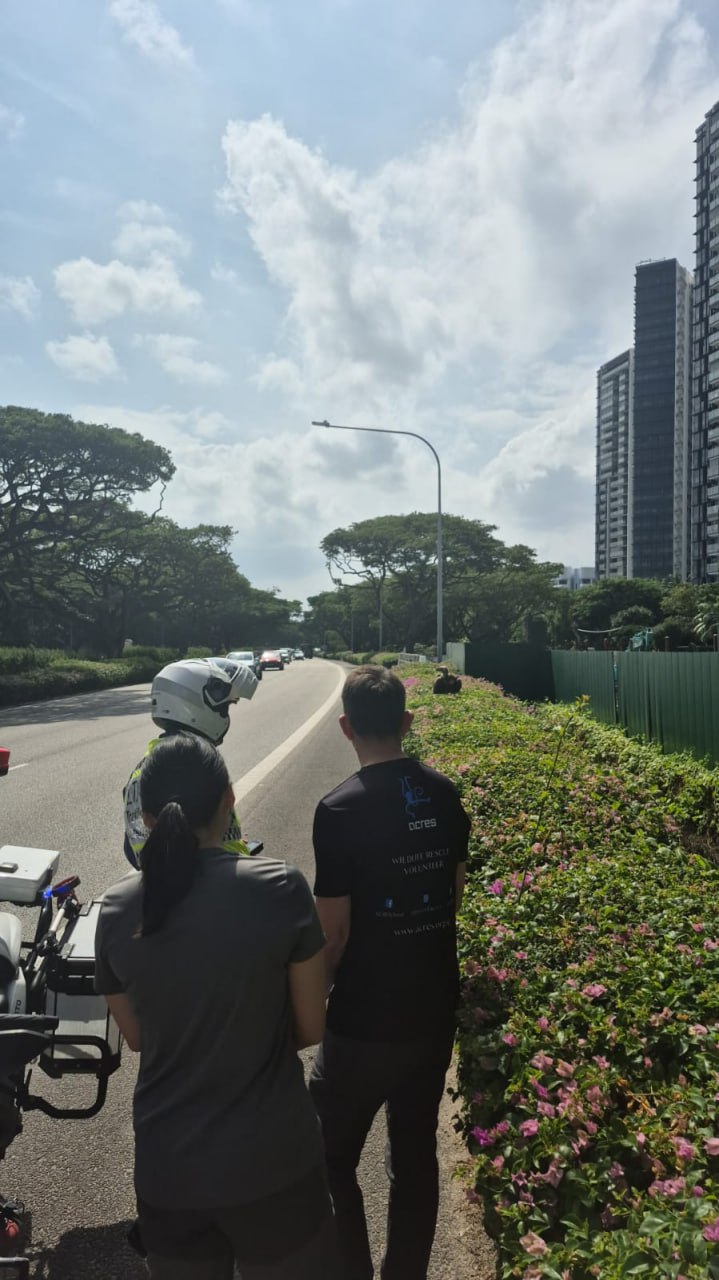
Another vulture was rescued by Acres on Jan. 11 after the public reported that it appeared to be in distress.
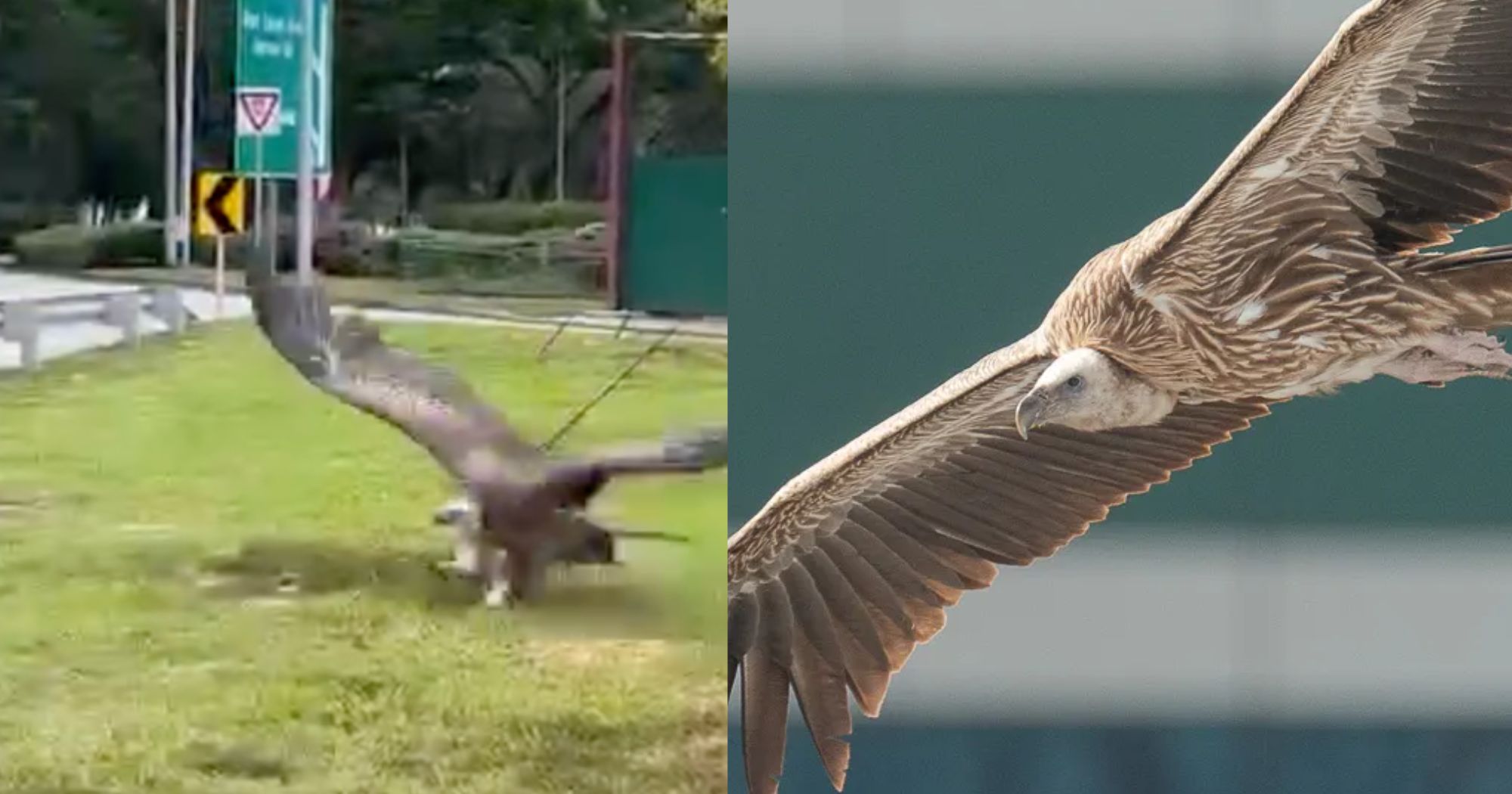
The vulture was reportedly seen struggling to take flight.
Acres CEO Kalai Vanan said the bird got stranded in a canal along the ECP expressway.
Three volunteers from the Acres Rescue Team attended and rescued the vulture.
Photo via Acres.
Photo via Acres.
"The vulture is currently under Acres's vet team care. Dehydration, overall weakness, and overall exhaustion from the long voyage seem to be the initial diagnosis," Kalai shared on Jan. 12.
"We are still assessing him and hope to fully rehabilitate the large bird for release in the near future," Kalai said then.
Members of the public can contact the Acres Wildlife Rescue team at 97837782 if they see any wild animals in distress.
Why are they in Singapore?
A total of four Himalayan vultures have been spotted so far, according to birdwatchers online.
They were recently seen in the vicinity of East Coast Parkway and Tanah Merah Coast Road.
Birdwatchers also reported seeing them in the West, around Clementi and Maju Forest.
According to
records by the Bird Society of Singapore, the previous sighting of a Himalayan vulture in Singapore was in February 2025.
ADVERTISEMENT
President of Bird Society of Singapore, Movin Nyanasengeran, told
The Straits Times that the vultures’ presence is part of their post-breeding dispersal period.
This is when juvenile birds become independent and leave their parents’ territory.
“Young birds tend to wander more than adults, and these vultures were probably lost during their dispersal,” he said.
He added that the birds are usually sighted in Singapore every two to three years around the start of the year.




 Would make a great pet.