
- Joined
- Apr 14, 2011
- Messages
- 20,390
- Points
- 113
Most Singaporeans not upbeat on future of next generation: survey
But the city state also ranks highest in trust among people with differences in society, tied with Saudi Arabia in the Edelman global report
Jean Iau
Published: 7:00am, 19 Jan 2026Updated: 8:17am, 19 Jan 2026
Just under a third of Singapore residents in a recent survey by global communication firm Edelman believe that the next generation would be better off than the current one – a drop of 11 percentage points from last year’s findings.
The Edelman Trust Barometer 2026 figures showed Singapore as being among four other Asian countries that registered a double-digit decrease, with the city state’s 31 per cent mark just under the global average of 32 per cent.
The 26th edition of the annual survey, released on Monday at the World Economic Forum in Davos, Switzerland, covered 28 countries, including Australia, China, India and the United States, with more than 1,200 respondents per nation.
It measures public trust in four key sectors – businesses, government, media and NGOs – and is aimed at providing insight into societal sentiment to guide policymaking. Singapore scored 64 in its overall trust index for 2026, down from 65 last year. The global average is 57.
Observers who were not involved in the survey say the increased pessimism reflects mounting anxiety from geopolitical and economic tensions on the global stage.
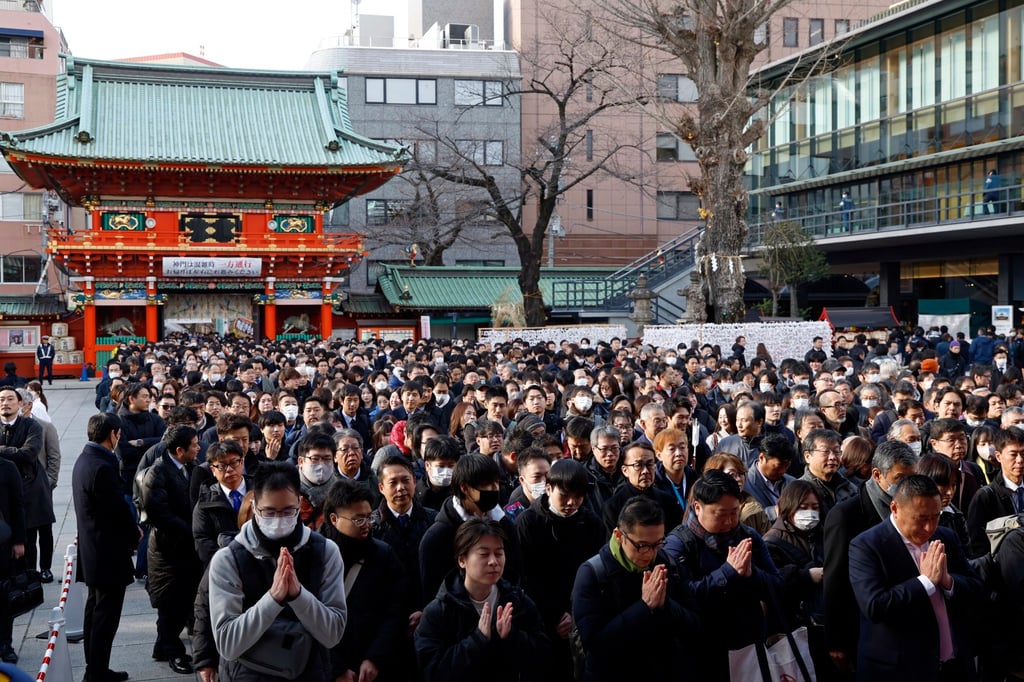
Businesspeople offer prayers for prosperity for their companies and the economy on the first business day of the year at the Kanda Myojin Shrine in Tokyo, Japan, on January 5. Photo: EPA
“The uncertain economic outlook, geopolitical tensions, and simmering faultlines between some religious and ethnic communities compounded the challenge. Singapore – while remaining on positive high trust territory, is not immune to these global forces,” said Leong Chan Hoong, senior fellow and head of the Social Cohesion Research Programme at the S. Rajaratnam School of International Studies.
The decline in optimism that the next generation would be better off reflected the current transition from a stable rule-based economy to one determined by global trade barriers, differing political ideologies as well as economic and military supremacy, he added.
“Our place in the world as a small, open economy compounded the challenge,” Leong said.
Despite Singapore being handed the baseline 10 per cent American tariff by the Donald Trump administration last year, it remains vulnerable to headwinds as trade is more than three times the country’s gross domestic product.
Societal factors that could dent optimism included rising costs of living and fiercer competition as well as a rapidly ageing population – all applicable to Singapore’s context, Mathew Mathews, head of IPS Social Lab and a principal research fellow at the Institute of Policy Studies, told This Week in Asia.
He also pointed to global events last year such as the Trump tariffs and the uncertainty of how artificial intelligence would affect jobs as potential causes for the recent pessimism over the future.
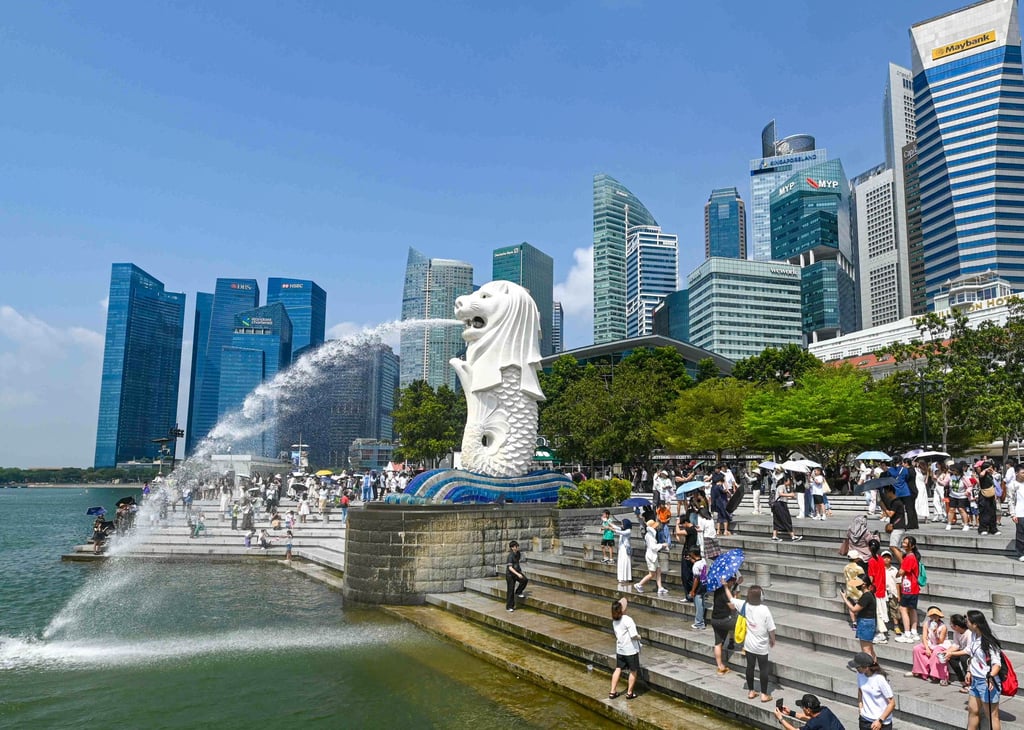
People take pictures next to the Merlion statue at the Marina Bay waterfront in Singapore on July 30 last year. Photo: AFP
Sociologist Tan Ern Ser likewise listed the tariffs and AI disruptions as key factors, but also highlighted turbulence brought on by the US-China rivalry.
“As for the sharp decline between 2025 and 2026, it could be that while GDP increase in 2025 seems pretty positive, the sense that we are not out of the woods yet may still be lingering,” Tan said.
On a question about whether respondents worried about foreign actors peddling falsehoods that may inflame differences, two-thirds of Singapore respondents agreed, representing an 18 percentage point climb year on year.
Mathews noted that recent cases in which Singapore invoked its foreign interference laws made the risk more palpable.
In April last year, the home affairs ministry designated Hong Kong-based Sino Group chairman Robert Ng and his three children as politically significant persons under the foreign interference law. They had all reportedly held positions in the Chinese People’s Political Consultative Conference, China’s top political advisory body.
Mathews also warned of a broader threat now amplified by AI which would contribute to anxiety over falsehoods.
“People increasingly feel that information is harder to trust and social media can quickly inflame divisions. The 18 point climb may reflect a growing sense of vulnerability.”
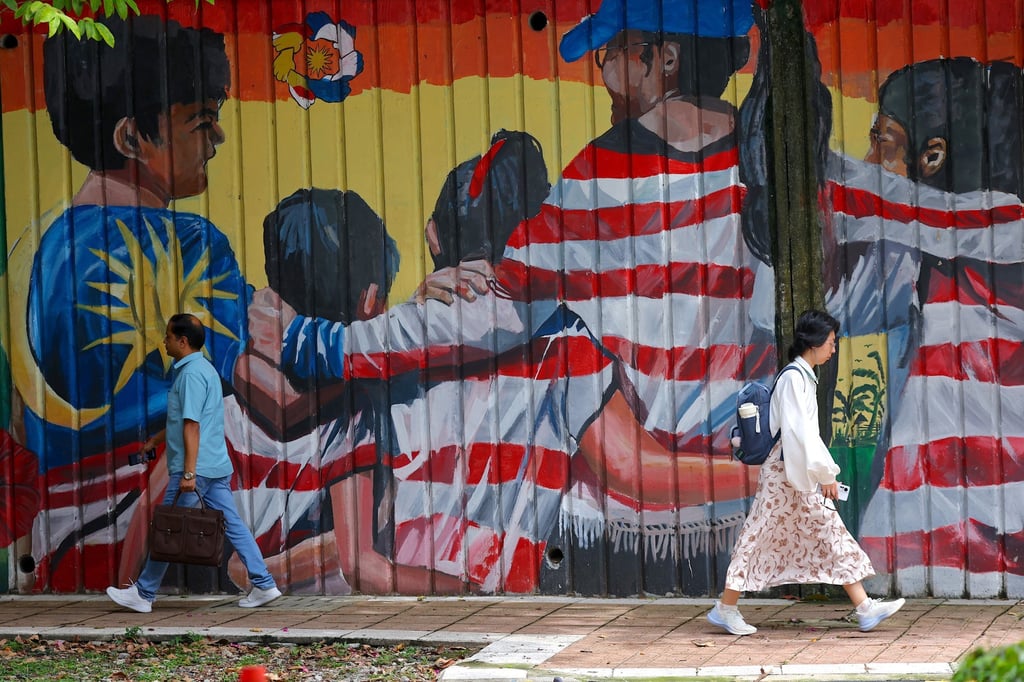
Pedestrians pass by a mural of the Malaysian national flag in Kuala Lumpur, Malaysia, on April 7, last year. Photo: EPA-EFE
The figures were significant in proportion, Tan said, noting that cyberspace had also become more dangerous with the risk of foreign interference in the form of misinformation and disinformation, especially when it came to elections or issues of race or religion.
There was also some distrust among people with differences, the survey found. Asked if people distrust those who were different so much that they actively tried to make things worse for one another, Singapore tied with Saudi Arabia for lowest at 65 per cent saying yes. Some 30 per cent said this was a large problem, while 35 per cent considered it moderate.
Malaysia registered the highest distrust in this aspect, with 87 per cent agreeing – beyond the global average of 76 per cent.
Tan suggested that distrust in this area for Singapore could stem from resentment towards foreign professionals perceived to be taking away jobs from locals or competing for advancement – a perennial issue but one which he said authorities had been managing well.
“The fact is we don’t have the kind or extent of xenophobia found in some other places in the world. Still, it helps to stay focused on a well-calibrated immigration policy while facilitating local-foreign integration.”


