
Breakthrough in HIV study
Shanghai Daily, September 13, 2013
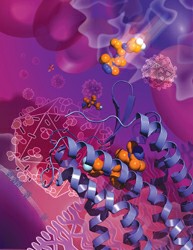
Scientists in Shanghai teamed up with US experts to successfully decode the structure of one of the two co-receptors HIV virus uses to get its foot in the door of human cells.
The discovery could give birth to new HIV drugs.
The research led by scientists from Shanghai Institute of Materia Medica under the Chinese Academy of Sciences was published in a leading journal Science today.
CCR5, a receptor on the surface of human cells, is one of two main entry points the HIV virus uses to initiate its attack on the human immune system; by binding to it, an HIV protein can fuse to the cell membrane beneath, digging its way into the cells. The other receptor that HIV uses to perform this feat is CXCR4.
Both CCR5 and CXCR4 are members of a big family of receptor proteins called G-protein-coupled receptors, or GPCRs, which involves 80 percent of cell surface activities in human being and is target of over 40 percent of marketed drugs.
“Structural studies of GPCRs are enormously challenging but crucial for understanding how HIV affects human,” said Wu Beili from Shanghai Institute of Materia Medica and the chief researcher of the study.
As CXCR4’s structure has already been solved, Wu and her colleagues got the first precise look at CCR5, which HIV strains use more often.


