

- Joined
- May 16, 2023
- Messages
- 43,567
- Points
- 113
Brain implant smaller than grain of salt developed by Cornell, NTU researchers
Get ST's newsletters delivered to your inbox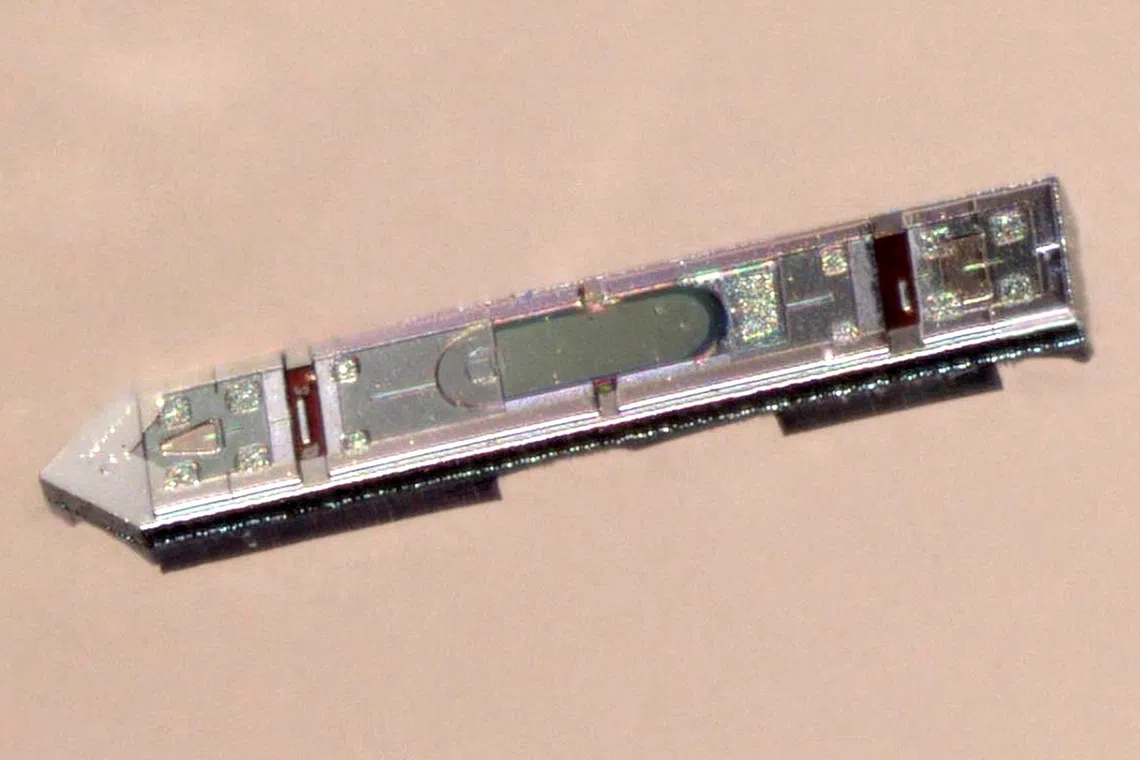
The microscale optoelectronic tetherless electrode is a wireless neural implant measuring about 300 microns in length and 70 microns in width.
PHOTO: LEE SUNWOO AND ZHENG YUMIN
Follow topic:
NTUSummary
- Findings on the wireless neural implant were published in scientific journal Nature Electronics on Nov 3.
- The electrode used red and infrared lasers to wirelessly transmit brain activity data from a living animal for over a year, causing minimal damage.
- Potential applications include seizure detection and glucose monitoring.
Published Nov 24, 2025, 05:00 AM
Updated Nov 24, 2025, 05:00 AM
SINGAPORE – Neural implants, used to monitor brain activity, often require wired connections or bulky hardware to perform their function.
A new implant, however, has been developed to operate wirelessly, and measures just about 300 microns long and 70 microns wide – smaller than a grain of salt.
Dubbed the microscale optoelectronic tetherless electrode, this implant successfully transmitted brain activity data wirelessly from a living animal for over a year.


