

- Joined
- Aug 20, 2022
- Messages
- 31,324
- Points
- 113
‘Like a caged bird that was set free’: First-generation Singaporean on becoming a citizen
Published Mar 20, 2026, 05:00 AMUpdated Mar 20, 2026, 09:38 AM
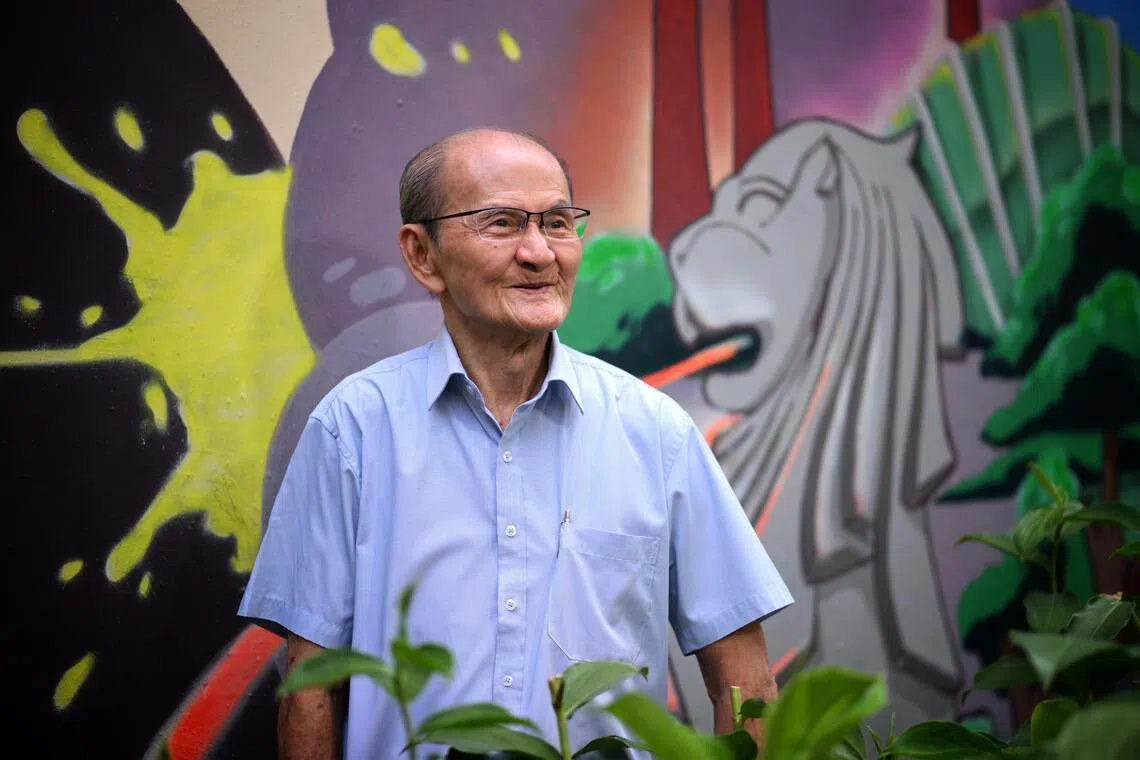
Mr Yang Sin Pu, a first-generation Singaporean, was born in Selangor, Malaysia.
ST PHOTO: CHONG JUN LIANG
SINGAPORE – He may have been comfortably retired for 17 years, but recalling an episode from early in his adulthood when he was without a job still brings Mr Yang Sin Pu, 90, to tears.
Back then, the Selangor-born Mr Yang had been fired after working for about four years as a bartender in a mess at the British Royal Air Force’s Tengah base.
With two young children to feed, he found himself considering a move back to Malaysia with his family as he approached his 30s.
It was in the late 1960s and Singapore had been separated from Malaysia in August 1965.
Mr Yang, who moved to Singapore in 1961 and was holding permanent resident (PR) status post-separation, believes his dismissal was predicated on two factors: the British paring down their forces in Singapore before they eventually pulled out in 1971, and priority employment for citizens in the newly independent Republic.
“Staying without a job was difficult. The financial stress was tough to shoulder and my Singaporean wife could not bear to leave her home and family,” said Mr Yang in Mandarin.
The last among his parents and six brothers to move to Singapore, Mr Yang is among about 1,400 seniors who have since April 2025 shared their stories with the Founders’ Memorial as part of an engagement campaign to gather stories from first-generation Singaporeans.
“When it was time to receive the identity cards, all the Singaporeans got pink ones and mine was blue – that was not good,” he recalled.
“Already it was difficult for Singaporeans to find jobs, so for foreigners like me, there was no hope,” said Mr Yang, who had made preparations to relocate his family to Malaysia, including by attaching his sons’ details to his passport – they were very young and without passports of their own at that point.
“But I looked at my wife and she was miserable and anxious every day about leaving, so eventually we decided to stay,” said Mr Yang, adding that he applied for citizenship not long after Singapore became independent.
“As ethnic Chinese, we were hesitant to go to a predominantly Malay Malaysia and potentially be second-class citizens,” he added, referencing racial politics at the time.
But as a non-citizen in Singapore, he found that getting a job was near impossible. Having spent most of his working life since he was 14 in hospitality roles, he applied to work in several hotels but was not favoured because of his PR status.
Eventually, through a friend, he became a chauffeur for a businessman from Hong Kong who had established a company here and wanted a Cantonese-speaking driver.
“I could speak Cantonese so I took it, but I didn’t know if he ever applied for a work permit for me,” he said.
Not long after, a friend brought him back to the hospitality industry, where he worked in food and beverage services at a golf club – a job he was in when he was finally given citizenship in 1976.
He said that at his citizenship ceremony, he could barely grasp what he was saying when it was time to take his oath of allegiance, because the moment felt surreal after he had waited for over a decade.
“All I could think about was the pink IC,” he said.
To him, citizenship meant he could choose from a wider pool of jobs as his immigration status was no longer a hindrance for employers.
“I had waited for a long time and I felt like a caged bird that was set free,” said Mr Yang, who worked as a bus driver for a year or so before becoming a taxi driver – a job he held for three decades until he retired in the late 2000s, aged 73.
He said that as a taxi driver, he could feel Singapore’s rapid development, especially when his passengers were foreigners.
“There were many Japanese businessmen and often they would go to factories in Jurong,” he said of the industrial town, which had been developed since the early 1960s.
“We have come a long way from manufacturing appliances to computer chips, and becoming a major financial centre,” he said.
“It’s a story of going from having nothing to having much, and I have never regretted staying in Singapore because of how the country has grown.”
Stories and memories of first-generation Singaporeans like Mr Yang are being compiled by the Founders’ Memorial through its senior engagement programme, which will run till the end of 2026.
The National Heritage Board said the stories compiled will shape content at the memorial, including a display where selected stories will be featured.
The programme is part of an ongoing Project Citizens campaign, which spotlights independent Singapore’s first citizens.
Also part of the campaign is an exhibition titled Not Mere Spectators, which runs until March 29 at the National Gallery Singapore and explores the value of multiculturalism in the country.
- This Straits Times profile is produced in partnership with the Founders’ Memorial.


